The glittering InterContinental Los Angeles Downtown played host to a magnificent celebration of cinematic artistry this past Saturday night, as the Art Directors Guild (IATSE Local 800) unveiled the recipients of its 30th Excellence in Production Design Awards. The evening was a profound homage to the often-unsung heroes of filmmaking and television: the visionary production designers whose creativity builds the very worlds in which our favorite stories unfold. Their mastery of set, mood, and atmosphere transforms mere scripts into immersive experiences, captivating audiences and shaping our understanding of narrative.
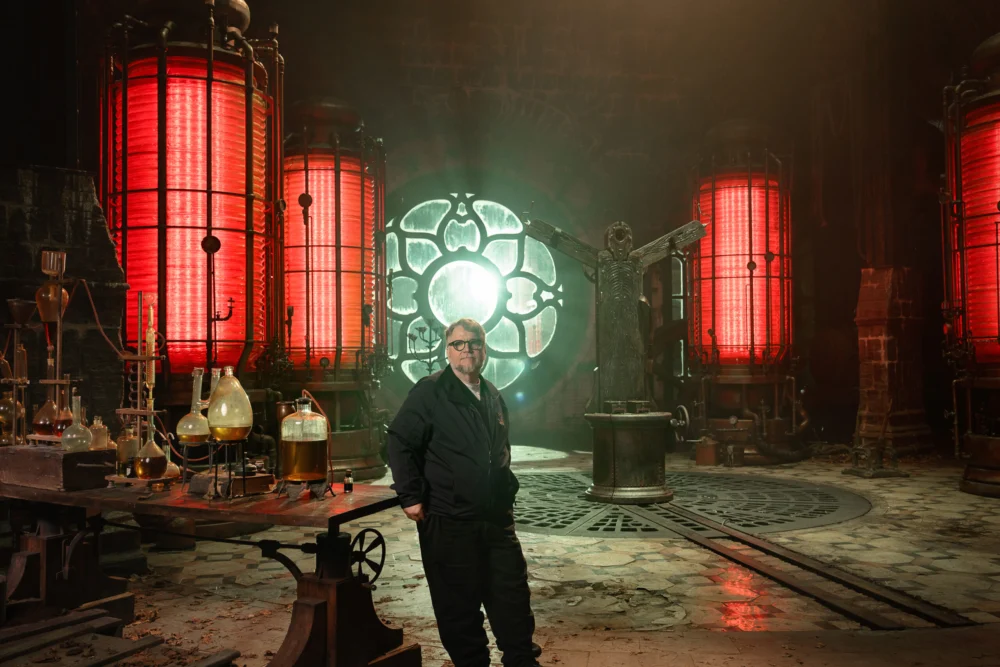
Among the evening’s most anticipated accolades, the top film honors were bestowed upon projects that exemplify the breadth and depth of production design. Tamara Deverell, a luminary in her field, earned the prestigious award for Period Feature Film for her breathtaking work on “Frankenstein.” Her meticulous design transported audiences to a meticulously crafted past, breathing new life into a timeless tale. In the Contemporary Feature Film category, Florencia Martin was recognized for her compelling vision in “One Battle After Another,” demonstrating how design can elevate modern narratives with nuanced realism and emotional resonance. Meanwhile, Kasra Farahani’s inventive world-building for “The Fantastic Four: First Steps” secured the Fantasy Feature Film award, proving that imagination, when paired with skilled execution, knows no bounds.
The significance of these awards, particularly for female production designers like Deverell and Martin, cannot be overstated. In an industry where creative leadership roles have historically been dominated by men, their triumphs underscore a continuing shift towards greater recognition and opportunity for women. Their achievements not only celebrate their individual brilliance but also serve as powerful inspiration for aspiring female artists across the globe, showcasing the profound impact women are making in shaping the visual language of storytelling.
The Art Directors Guild Awards are more than just a ceremony; they are a vital platform that spotlights the intricate craft of production design, a discipline that underpins every visual narrative. From the sprawling galaxies of science fiction to the intimate details of a period drama, production designers are the architects of our imagination, meticulously crafting environments that not only house characters but also define their journeys and inform their emotional landscapes. The Guild’s commitment to honoring this art form helps to educate the wider industry and public about the foundational role these creatives play in bringing stories to life.
Beyond feature films, the television landscape also saw its visual pioneers recognized. Acclaimed series like “Andor,” “Severance,” and “The Studio” were among the television winners, each lauded for their distinctive and impactful production design that has captivated audiences and critics alike. “Andor,” the Star Wars prequel series, was celebrated for its gritty, lived-in aesthetic, creating a tangible sense of rebellion against a dystopian empire. “Severance” garnered praise for its stark, minimalist yet unsettling corporate environments, perfectly reflecting the show’s psychological tension and themes of identity. “The Studio,” a fan-favorite, also received its due for its unique visual signature, demonstrating that even in more intimate settings, design is paramount to storytelling.
Florencia Martin’s exceptional talent was doubly recognized during the evening. In addition to her feature film win, she also took home an award for her exquisite work on the Prada “Galleria Bag” commercial. This dual victory highlights her versatility and ability to craft compelling visual narratives across diverse formats, from expansive cinematic universes to high-fashion advertisements, each demanding a distinct and impactful aesthetic. Her success across categories further cements her status as one of the most sought-after and innovative designers working today.
The animation world also celebrated a major victory with “Kpop Demon Hunters” continuing its impressive winning streak by collecting the ADG Award for Animated Feature Film. This triumph adds to an already stellar collection of accolades, including 10 Annie Awards – the highest honors in animation – and three Visual Effects Society trophies. The film’s vibrant, dynamic, and culturally rich production design, helmed by Mingjue Helen Chen and Dave Bleich, has clearly resonated with industry peers, demonstrating the power of animation to create immersive and unforgettable visual experiences. Its recent Producers Guild award win further solidifies its position as a standout creative achievement across the industry.
With Oscar voting currently underway, the ADG Awards often serve as a significant indicator of potential Academy Award success. Both Tamara Deverell and Florencia Martin find themselves in contention for the coveted Oscar in Production Design, a testament to the exceptional quality of their work recognized by the Guild. They stand among a formidable group of nominees, including Fiona Crombie for the visually rich “Hamnet” (with Set Decoration by Alice Felton), Jack Fisk for the distinctive “Marty Supreme” (Set Decoration by Adam Willis), and Hannah Beachler for the evocative “Sinners” (Set Decoration by Monique Champagne). The ADG’s recognition places a spotlight on these talented individuals, offering a powerful endorsement as the Academy members cast their final votes.
The evening was not solely about competitive awards; it also featured poignant moments of recognition for individuals whose careers have left an indelible mark on the industry. Filmmaker Jon M. Chu was honored with the Cinematic Imagery Award, a tribute to his visionary storytelling and his ability to craft visually stunning narratives across genres. Rep. Laura Friedman (D-CA) was presented with the President’s Award, acknowledging her unwavering advocacy for the film and television industry. The late Thomas E. Sanders, renowned for his iconic production design in films such as “Saving Private Ryan” and “Bram Stoker’s Dracula,” was posthumously inducted into the ADG Hall of Fame, a fitting tribute to his enduring legacy. Additionally, four Lifetime Achievement Awards were bestowed upon industry legends: set designer and art director Jann Engel, production designer Bo Welch, production designer Tom Southwell, and scenic artist Stephen McNally, celebrating their decades of invaluable contributions to the visual arts of cinema.
In a heartfelt moment, production designer Bo Welch, known for his distinctive work on films like “Men in Black,” “The Birdcage,” and “Beetlejuice,” dedicated his Lifetime Achievement Award to his beloved family. He spoke movingly of his “brilliant beautiful wife Catherine O’Hara and our sons Matthew and Luke,” declaring them his daily inspiration and “greatest lifetime achievement.” His words underscored the personal sacrifices and profound love that often fuel the passion of these creative professionals, reminding everyone that behind every cinematic spectacle lies a deeply human story.
Rep. Laura Friedman’s acceptance speech for the President’s Award was a stirring call to action, delivered with raw passion and conviction. She began by eloquently articulating the profound role of film in shaping global perceptions of America, stating, “It’s why people want to immigrate here in the first place. It’s why people in other countries that don’t enjoy those freedoms understand what that would mean to their lives and to the lives of their children. So what you do does move hearts and minds.” Stepping away from the teleprompter, she spoke from the heart, vowing to relentlessly defend the film and television industry. Friedman passionately declared her commitment to securing a national film tax credit, emphasizing that “Hollywood is worth fighting for. The film industry is worth fighting for.” Her powerful message resonated deeply within the room, a testament to the ongoing challenges faced by the industry and the crucial need for legislative support.
Friedman did not shy away from addressing the pressing threats facing the creative community. She pledged to “defend this industry… from offshoring productions… from corporate consolidation,” and most emphatically, “from AI taking away the work of artists.” Her unwavering commitment to protecting the livelihoods and creative integrity of industry professionals drew enthusiastic applause. She further emphasized the broader economic impact, stating, “We’re going to fight for it in Georgia, New York, New Jersey, all across this country, because when we have a strong film and TV industry, America succeeds. So we are going to continue working on this tax credit. I have great faith that we are going to deliver for you.” Her impassioned address served as a powerful reminder of the intersection between art, economics, and policy, and the vital role of political advocacy in safeguarding the future of creative industries.
Filmmaker Jon M. Chu delivered a poignant and deeply personal acceptance speech for the Cinematic Imagery Award, reflecting on the bittersweet conclusion of his “Wicked” journey. His words painted a vivid picture of the profound emotional investment inherent in filmmaking. “Have you ever put so much love into something like true love that you never wanted it to end like it hurts, like it physically hurts your stomach to think about your life without it?” he asked, his voice tinged with emotion. “That’s where I’m at right now with ‘Wicked.’ That’s what it feels like for me to say goodbye to ‘Wicked,’ because this may be one of the last times I get to celebrate it.” His honest reflection on the creative process, and the deep connection artists form with their work, resonated deeply with the room full of designers and storytellers.
Chu then turned his attention to the very craft being celebrated, underscoring the indispensable role of production design. He acknowledged the many talented individuals he has collaborated with throughout his illustrious career, from Nelson Coates, with whom he worked on “In the Heights,” to Nathan Crowley, his partner in creating the magical world of “Wicked.” Chu articulated that filmmaking is “an empathy exercise built into our culture for generations, and design is what makes it possible. It is the official language of this connection.” He concluded by offering a profound tribute to the production designers and set decorators in the room, proclaiming, “You are not simply designers. I think you are explorers.” His words beautifully encapsulated the adventurous spirit and deep emotional intelligence required to craft the visual foundations of our most beloved stories, truly honoring the essence of the Art Directors Guild and its mission.
The 30th Art Directors Guild Awards once again proved to be a night of profound recognition, celebrating the visual architects who build the worlds of our imagination. It was a powerful reminder that behind every frame, every scene, and every unforgettable moment on screen, there is a meticulous and visionary design team whose artistry elevates storytelling to new heights. The evening’s blend of celebratory triumph and heartfelt advocacy underscored the vibrant, dynamic, and critically important role that production design plays in the global entertainment landscape.
The full list of winners at the 30th ADG Awards is as follows:
FEATURE FILM NOMINEES:
PERIOD FEATURE FILM
“Frankenstein”
Production Designer: Tamara Deverell
FANTASY FEATURE FILM
“The Fantastic Four: First Steps”
Production Designer: Kasra Farahani
CONTEMPORARY FEATURE FILM
“One Battle After Another”
Production Designer: Florencia Martin
ANIMATED FEATURE FILM
“KPop Demon Hunters”
Production Designers: Mingjue Helen Chen, Dave Bleich
TELEVISION NOMINEES:
ONE-HOUR PERIOD SINGLE-CAMERA SERIES
Palm Royale: “Maxine Drinks Martini’s Now,” “Maxine Serves a Swerve”
Production Designer: Jon Carlos
ONE-HOUR FANTASY SINGLE-CAMERA SERIES
Andor: “Who Are You?”
Production Designer: Luke Hull
ONE-HOUR CONTEMPORARY SINGLE-CAMERA SERIES
Severance: “Chikhai Bardo”
Production Designer: Jeremy Hindle
TELEVISION MOVIE OR LIMITED SERIES
Monster: The Ed Gein Story
Production Designer: Matthew Flood Ferguson
HALF-HOUR SINGLE-CAMERA SERIES
The Studio: “The Note”
Production Designer: Julie Berghoff
MULTI-CAMERA SERIES
Mid-Century Modern: “Bye, George”
Production Designer: Glenda Rovello
VARIETY OR REALITY SERIES
Saturday Night Live: “Lady Gaga Host”
Production Designers: Akira Yoshimura, Keith Ian Raywood, N. Joseph De Tullio, Andrea Purcigliotti
VARIETY SPECIAL
SNL50: The Anniversary Special
Production Designers: Akira Yoshimura, Keith Ian Raywood, N. Joseph De Tullio
COMMERCIALS
Prada: “Galleria Bag”
Production Designer: Florencia Martin
SHORT FORMAT & MUSIC VIDEOS
Apple – Someday by Spike Jonze: “AirPods 4 with Active Noise Cancelation”
Production Designer: Shane Valentino