


**Unsung Heroes and Unflinching Truths: How Diverse Creators Are Revolutionizing European Storytelling**
The World Needs New Heroes, Argue Creators at Berlinale: ‘We Made This Series Because We Felt Powerless’
The landscape of European television is undergoing a profound transformation, driven by a new generation of creators determined to reclaim narratives and challenge entrenched stereotypes. At the forefront of this movement are compelling new series like “All Heroes Are Bastards,” “Phoenix,” and “The Marquise,” which collectively signal a powerful shift towards more inclusive, nuanced, and socially conscious storytelling. These productions, recently highlighted at the prestigious Berlinale Series Market, are not merely entertainment; they are vital acts of resistance, born from frustration and fueled by a fervent desire to portray diverse communities and complex societal issues with authenticity and depth.
“All Heroes Are Bastards,” a groundbreaking series centered on migrants who acquire superpowers to combat injustice, emerges directly from a place of profound disillusionment. Esra Phul, who co-directed and produced the show with Patrick Phul for their company Picture Me Rollin’, articulated the driving force behind its creation with striking clarity. “We made this series because we felt very powerless. We wanted to build a world where we had the power,” she explained. This sentiment underscores a broader yearning among marginalized creators to not just witness change, but to actively sculpt the narratives that shape public perception and empower their communities.
Phul’s frustration stems from a deeply personal experience of misrepresentation within traditional media. She passionately argued that for individuals from minority backgrounds, the traditional avenues for justice and accurate portrayal—politics, law enforcement, and even the press—have often fallen short. “If we don’t tell these stories, no one will,” she asserted. “As people from a minority, we can no longer rely on politics, the police or the press, which should challenge institutions but instead acts as their PR machine. So what’s left? This industry, because that’s where we get a chance to speak up.” This stark assessment highlights the critical role the entertainment industry plays as a platform for voices historically silenced or distorted.
The German media landscape, in particular, has been a battleground for these representational struggles. Esra Phul recounted a particularly galling incident at a panel titled “Up Next: Germany,” where HBO Max presented two series featuring “criminal immigrants.” One was even a prequel to “4 Blocks,” a show she described as “very damaging to our community.” The impact of such portrayals, she noted, extends beyond mere entertainment, citing allegations that the Berlin police used “4 Blocks” as training material to familiarize recruits with the demographics they expected to encounter on the streets. This anecdote powerfully illustrates how fictional narratives can seep into and reinforce real-world biases, perpetuating harmful stereotypes and shaping institutional practices.
The experience was so disheartening that Phul and her team felt compelled to leave the room. “It was really hard, and we left the room. I can’t stand it anymore and that’s how this series came to life: because of our anger. We suffer because of these shows,” she stated, her words brimming with a righteous indignation. Her message to industry gatekeepers was unequivocal: “We’re good producers, we’re successful, and it’s important that we tell them what they’re making.” This defiance underscores a growing demand from talented minority creators for accountability and a more responsible approach to representation. Speaking at the Berlinale Series Market panel “Rebel Rebel: Series Battling the Status Quo,” Phul directly challenged the prevailing narrative, asserting, “Wiedemann & Berg Film and HBO Max portray my people as criminals. We chose to show them as they are: as superheroes.” This bold declaration encapsulates the transformative power of “All Heroes Are Bastards” – a show that refuses to accept the limitations imposed by prejudiced perspectives, instead envisioning a world where marginalized individuals are empowered, heroic figures.
Beyond the realm of superhero narratives, other series are also pushing boundaries by tackling complex social and political issues with unprecedented nuance. Philipp Kreuzer, CEO at Maze Pictures, shed light on the meticulous development of “Phoenix,” an eco-thriller focusing on young climate activists. The creators invested four years into researching the show, conducting extensive interviews with activists, legal experts, and political observers. This rigorous approach aimed to ensure that young climate activists were portrayed “responsibly and with nuance,” moving beyond simplistic portrayals often seen in mainstream media.
“We’re not trying to excuse radicalism, and we’re certainly not celebrating it,” Kreuzer clarified, addressing potential misconceptions about the show’s intent. “What interested us was the moral dilemma: the moment when people who believe they’re doing the right thing cross a line. This inner conflict hasn’t often been explored in depth.” This focus on the psychological and ethical complexities of activism is crucial for fostering a deeper public understanding of movements that are frequently demonized or misunderstood. Kreuzer, himself a lawyer, further enriched the show’s authenticity by shadowing legal teams during large-scale protests at the International Automobile Fair in Munich, gaining firsthand insight into the dynamics between activists and authorities.

His observations challenged conventional stereotypes. “When you meet many of the activists, you realize they’re educated, committed, and often deeply thoughtful people,” Kreuzer reflected. Yet, alongside this dedication, he also perceived “a certain helplessness.” This potent combination of idealism and perceived futility, he noted, can lead to intensified frustration “When political or economic systems don’t seem to respond.” He emphasized that “Understanding that dynamic doesn’t mean endorsing radicalization, but if we want to prevent it, we have to understand how it develops.” “Phoenix” thus serves as a powerful exploration of the pathways to radicalization, inviting viewers to empathize with the motivations of activists, even when their methods are controversial.
The creators behind these impactful series understand the profound potential of entertainment to engage audiences who might otherwise disengage from politically charged subjects. Patrick Phul drew a parallel to his own youth, recalling how “The Fresh Prince of Bel-Air” masterfully blended humor with serious discussions on “Black history, identity and injustice.” This ability to sugarcoat weighty topics with engaging storytelling is a core philosophy behind “All Heroes Are Bastards.” “With ‘All Heroes Are Bastards,’ on the surface, it’s about action and superheroes, but it talks about real-life issues. We want to reach people who don’t deal with these topics every day,” he explained. The superhero genre, in particular, offers a unique gateway to these conversations.
“There are some exceptions, like ‘Black Panther,’ but when you think about ‘Iron Man’ or ‘Batman,’ these heroes are billionaires,” Patrick Phul observed, highlighting the genre’s traditional alignment with immense wealth and power. He then delivered a pointed critique: “In real life, billionaires are usually the bad guys.” “All Heroes Are Bastards” consciously subverts this trope, offering a “different approach” while still ensuring “you still know who the villains are. To reach people, you can’t be too abstract.” This strategy ensures that the show’s underlying social commentary remains accessible and impactful, resonating with a broad audience without sacrificing its critical edge.
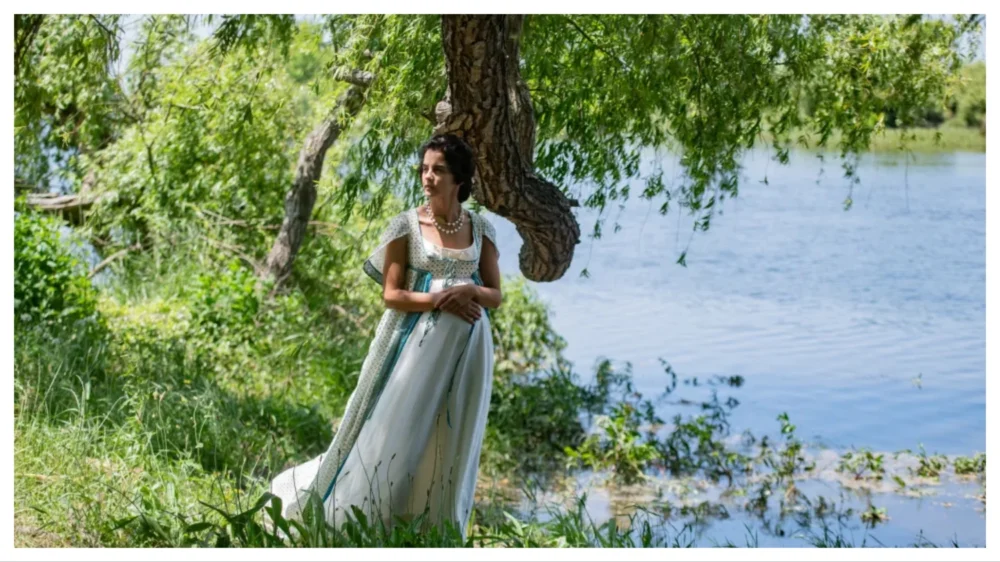
The imperative for rebellious characters who challenge the status quo extends beyond contemporary issues and into historical narratives. Pandora da Cunha Telles, the visionary creator of “The Marquise,” firmly believes such characters are precisely what the world needs. “It’s obvious that there needs to be a rebellion,” she declared, articulating a broader call for societal change. Her series transports viewers to the 18th century, focusing on a protagonist ensnared in a convent, a stark symbol of the “small violences” that, Telles argues, continue to trap many women today.
The core message of “The Marquise” is one of profound empowerment: “The message for someone trapped in her life is that she has the power to be a rebel and a leader.” Telles emphasized that the capacity for change is not exclusive to political elites; it resides within each individual. “It’s not just the politicians – each one of us can change something in our lives. Creating female characters that are not black-and-white helps contemporary viewers understand that,” she argued. This nuanced portrayal of female agency and complexity is vital for reflecting the multifaceted experiences of women throughout history and in the present day.
Crucially, Telles highlighted the importance of having women represented on both sides of the camera. The journey to elevate female creators in Portugal, she noted, remains challenging. “One of the biggest challenges is empowering scriptwriters and creators.” She recounted a telling incident during the editing of “The Marquise,” where the team depicted women “enjoying cakes and long erotic scenes.” When questions arose about the length of these scenes – “Aren’t they too long?” – Telles posed a critical counter-question: “Would you ask the same thing if a man was leading these scenes?” This incident powerfully illustrates the pervasive gender biases that still influence creative decisions and the need for more female voices to shape authentic portrayals of women’s lives and desires. Working on “The Marquise” with a predominantly female crew, Telles found it to be “a whole new ballgame,” underscoring the transformative impact of diverse creative teams.
The inclusion of “All Heroes Are Bastards,” “Phoenix,” and “The Marquise” in the Berlinale Series Market Selects speaks volumes about the industry’s growing recognition of these bold, socially engaged narratives. However, such rebellious content can often make decision-makers nervous, as Philipp Kreuzer attested regarding “Phoenix.” The series became part of a public inquiry in France, a testament to its provocative nature and its ability to ignite public discourse.
“It was striking to see our series discussed in parliament,” Kreuzer remarked. “In a country with such a strong tradition of political art and debate, that shows how sensitive these topics have become. But perhaps that’s not a bad thing. If a story doesn’t create discomfort, maybe it isn’t engaging deeply enough.” This perspective challenges the notion that entertainment should always be palatable, suggesting instead that true engagement often requires confronting uncomfortable truths and sparking necessary conversations.

In an increasingly polarized global climate, content creators bear a significant responsibility to represent all facets of society, including those who feel unheard or whose perspectives might diverge from the mainstream. “Ignoring that frustration won’t make it disappear,” Kreuzer wisely stated. “Fiction can create space for understanding without necessarily agreeing.” This capacity for empathy and dialogue, fostered through compelling storytelling, is perhaps one of the most vital functions of modern media.
National broadcasters, in particular, hold immense power in driving this change. Pandora da Cunha Telles emphasized their crucial role in inspiring societal evolution, a sentiment echoed by Kreuzer, who lauded Europe’s public broadcasting model as “worth defending.” He elaborated on its unique advantages: “It allows fiction to engage seriously with political and social questions. Commercial systems often prioritize different pressures, but our model provides space for stories that aren’t purely market-driven, and that space is valuable.” This distinction highlights the importance of public funding in nurturing narratives that prioritize social impact over commercial viability, allowing for greater creative freedom and thematic depth.
While the path to mainstream recognition can be arduous for unconventional voices, there are encouraging signs of progress. Patrick Phul acknowledged the pivotal role of broadcaster ARD Degeto Film in empowering them “to be real.” Yet, he and Esra Phul, having started their journey on YouTube with no prior industry connections, initially found it incredibly difficult to gain a foothold. “We were lucky because someone with an immigration background opened the door for us,” Esra Phul revealed, underscoring the vital importance of mentorship and allyship within the industry. Their prior success with “Hype” and their self-initiated “Talent Over Privilege” awards show further illustrate the systemic barriers they faced and their proactive efforts to dismantle them. “It’s very, very difficult for people like us to enter these rooms,” she added.
Despite these formidable challenges, they persevered, proving that diverse voices can indeed break through. Patrick Phul concluded with a hopeful message for aspiring creators: “There are those in the industry who recognize good stories and give people a chance.” His final, resonant advice: “Don’t give up.” These stories of struggle and triumph at the Berlinale Series Market serve as a powerful reminder that the most compelling and transformative narratives often emerge from the margins, driven by passion, frustration, and an unyielding commitment to truth and representation.