For those familiar with the seismic talent of Sandra Hüller, the recent label of “breakthrough performer” during her initial U.S. awards season for critical darlings like “Anatomy of a Fall” and “The Zone of Interest” must have struck a chord of wry amusement. While her captivating turns in these globally lauded films undoubtedly introduced her to a broader American audience, Hüller’s brilliance has been a cornerstone of European cinema for nearly two decades. Since her electrifying feature film debut in 2006’s “Requiem,” and cemented by her unforgettable performance in 2016’s “Toni Erdmann,” she has consistently proven herself one of the world’s most formidable and versatile working actors. Her capacity to inhabit complex, often morally ambiguous characters with profound authenticity and an almost unnerving intensity has long been her hallmark, making the notion of a ‘breakthrough’ feel like a belated recognition of an already towering career.
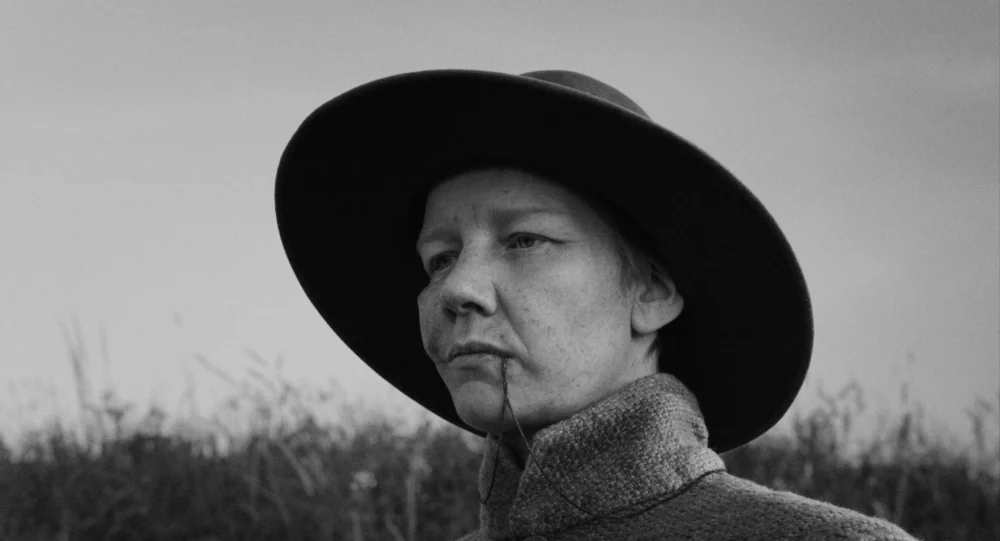
Now, Hüller once again demonstrates her extraordinary range and depth in Markus Schleinzer’s latest offering, “Rose.” Set in the harsh realities of 17th-century Germany, Hüller embodies a war veteran who has meticulously constructed a life steeped in secrecy, most profoundly the concealment of her true gender beneath the rugged work clothes of a man. Her portrayal is a masterclass in controlled intensity, defying conventional expectations at every turn. Where one might anticipate an overt, mannered display of performance, Hüller delivers a stillness, an observant quietude that speaks volumes. Conversely, when a character might be expected to retreat, she unleashes a torrent of suppressed rage, catching the viewer off guard. Her Rose is never transparent; her motives and sense of self remain tantalizingly complex, inviting constant re-evaluation rather than offering easy answers. It’s a performance that is both meticulously crafted and viscerally alive, an intricate dance between concealment and revelation that anchors the film’s profound explorations of identity and societal constraint.
Yet, to categorize “Rose” merely as a performance vehicle for its magnetic lead would be a disservice to the meticulous artistry of its director, Markus Schleinzer. The radical Austrian formalist, known for his unyielding precision and thematic rigor, has crafted a work that is as tightly disciplined as it is emotionally resonant. Every facet of “Rose” — from its haunting monochrome cinematography to its ruthlessly precise editing, from its sparse, ‘no-word-wasted’ script to the deep currents of tacit political commentary that run beneath its surface — functions as an integral component of an immaculate construction. Schleinzer’s background as a revered casting director for cinematic luminaries like Michael Haneke and Jessica Hausner has undoubtedly honed his ability to identify actors capable of not only delivering virtuoso performances but also fully submitting to a film’s overarching vision. For “Rose,” he needed an actor who could embody a character grappling with profound questions of gender performativity and societal privilege, both historically and in terms of contemporary relevance. In Hüller, he found a collaborator whose artistic integrity and unparalleled skill perfectly align with his demanding aesthetic and intellectual thesis.
Schleinzer’s films are not made quickly, nor are they designed for broad commercial appeal. “Rose” marks only his third feature in a span of sixteen years, arriving eight years after his critically acclaimed, though challenging, sophomore effort, “Angelo.” That film, a rigorously revisionist biopic charting the life of Angelo Soliman, an African-born slave who ascended to the role of Viennese courtier, was lauded for its austere confrontation of race, identity, and colonial power. However, its uncompromising nature and intellectual demandingness meant it struggled to secure the wider distribution it undoubtedly merited in many territories. His assured debut in 2011, the stark paedophile portrait “Michael,” similarly offered no easy viewing experience for audiences. Schleinzer’s cinema has consistently been characterized by its refusal to compromise on difficult subjects, presenting narratives with an unblinking gaze that challenges viewers to engage on a deeper, often uncomfortable, level. This commitment to artistic integrity over commercial palatability is a hallmark of his distinctive voice.
While “Rose” remains uncompromising in its portrayal of a supremely sad and socially unforgiving story, it possesses an undeniable elegance that distinguishes it within Schleinzer’s filmography. The film’s linear narrative, coupled with its delicate craft and, crucially, Hüller’s riveting performance, coalesces to create what is arguably the director’s most accessible work to date. This relative accessibility, without sacrificing any of Schleinzer’s thematic depth or formal rigor, positions “Rose” to attract discerning arthouse buyers and wider critical attention following its premiere in competition at the Berlinale. It represents a subtle evolution for a filmmaker who consistently pushes boundaries, demonstrating that profound artistic statements can also resonate with a broader, though still discerning, audience. The synergy between Schleinzer’s vision and Hüller’s embodiment promises a film that is both intellectually stimulating and emotionally captivating, offering a powerful entry point into the director’s singular cinematic world.
The core of Rose’s profound decision to live as a man is articulated with disarming simplicity, a quiet declaration that belies the radical nature of her choice in the 17th century. “There is more freedom in trousers,” she states, “and they’re just a piece of cloth, so I put them on.” This isn’t merely a pragmatic observation; it’s a potent manifesto of personal autonomy in an era where women’s lives were meticulously circumscribed by societal, religious, and patriarchal norms. Her choice is far from casual, particularly in the ascetic Protestant village where she seeks refuge after enduring a brutal stint as a soldier in the devastating Thirty Years’ War. This tumultuous historical backdrop, a period of immense suffering, religious conflict, and societal upheaval, provides crucial context for Rose’s hardened exterior and her strategic embrace of a male identity. In a world defined by violence, scarcity, and rigid gender roles, the simple act of donning trousers becomes a powerful assertion of agency, a means of survival and self-determination against overwhelming odds. The war itself, having stripped away so many societal structures, perhaps also offered a temporary liberation from gendered expectations, a freedom Rose now seeks to maintain.
Upon her arrival, the villagers, shaped by a life of hardship and suspicion, are initially wary of this scarred, soft-spoken, and unusually diminutive figure. He claims to be the long-absent heir to a dilapidated local farmstead, but his past is shrouded in mystery. Schleinzer and Alexander Brom’s screenplay employs a typically geometric detail: we, the audience, know her as Rose, but we never learn the male name she adopts, just as the villagers never learn her female one. This narrative choice underscores the performative nature of her identity and the secrets she carries. Gradually, however, Rose meticulously chips away at their skepticism. Her unwavering work ethic, her quiet determination in resurrecting the crumbling farm, and her diligent attendance at church services slowly win over the community. She embodies the very virtues valued in this austere society – hard work, piety, and an almost stoic resilience. Her acceptance culminates in a profoundly telling proposition: a neighboring farmer offers her the hand of his eldest daughter, Suzanna (played with understated grace by Caro Braun), as part of a strategic land exchange deal. This transaction starkly highlights the grim reality of women as literal currency in this patriarchal world, a chilling reminder of precisely why Rose has chosen to divest herself of that identity and its associated vulnerabilities. Her male presentation is not just about personal freedom; it’s about escaping the systemic commodification and lack of agency inherent in being a woman in this era.
Suzanna, presented as a stolid and servile figure, accepts her fate with quiet resignation. Her father’s concerns about Rose’s reluctance to consummate the marriage are met with less complaint from Suzanna herself, embodying the passive endurance expected of women. The unexpected arrival of a baby, making them three, introduces a slender streak of dark, combustible humor into the film. This absurd domestic setup, born of necessity and societal pressure, becomes a micro-study of the rigid expectations placed upon both women and men in a punishingly conservative society. The film skillfully navigates the delicate balance between the tragic and the subtly comedic, revealing the inherent contradictions and often dehumanizing strictures of the era. While “Rose” is predominantly a fictional narrative, its authenticity is deeply rooted in Schleinzer’s extensive research into historical accounts of male-presenting women across centuries. This meticulous grounding in historical truth lends the film a powerful resonance, ensuring that even as it veers into moments of melodrama, it maintains a compelling ring of veracity. Complementing this historical accuracy are the film’s remarkably weathered production and costume designs. Every patinated timber beam, every scuffed boot heel, appears to have been meticulously excavated from the very earth of the 17th century, creating an immersive and visually tactile world that further solidifies the film’s commitment to historical realism.
A running narration, delivered with an almost academic remove by actor Marisa Growaldt, offers partial access to the inner life of our strategically taciturn and withdrawn protagonist. This narrative device is crucial, providing glimpses into Rose’s thoughts and motivations without fully demystifying her. It’s not an omniscient voice, leaving ample room for ambiguity, a hallmark of Schleinzer’s filmmaking. As the situation within the isolated village tautens and worsens, these ambiguities are allowed to linger, inviting the audience to actively participate in interpreting Rose’s complex character. Notably, Schleinzer deliberately leaves open questions surrounding Rose’s own sexuality or asexuality. She doesn’t explicitly identify as transgender or dysphoric; rather, her male presentation is articulated as a purely pragmatic means of navigating the world unimpeded. This nuanced portrayal challenges contemporary labels, offering a historical perspective where identity might be less about internal feeling and more about external function and survival. While the marriage to Suzanna is initially another purely pragmatic move, a cautious tenderness gradually blossoms between the two women as they come to understand each other better. This flicker of warmth, emerging amidst the film’s brisk and often austere examination of societal constraints, provides a poignant human core, highlighting the unexpected connections that can form even under the most challenging circumstances.
Sandra Hüller’s performance in “Rose” is a tour de force, a masterclass in controlled intensity that is at once armored, guarded, and intensely vulnerable. She embodies a volatile, unpredictable element within Schleinzer’s meticulously constructed world, yet remains entirely attuned to the film’s immaculate shaping and mise-en-scène. Her ability to convey such profound depth and contradiction through subtle gestures and piercing gazes is nothing short of breathtaking. The film’s compact 93-minute runtime, a testament to editor Hansjörg Weißbrich’s (“September 5”) precision, ensures every moment is essential, every frame weighted with meaning. Complementing this narrative economy is Gerald Kerkletz, Schleinzer’s regular director of photography, whose stark, pooling black-and-white lensing creates a visual language as concentrated and patient as Rose herself. Kerkletz often searches Hüller’s face in compassionate close-up, allowing the audience to witness the minute twitches and tells that betray Rose’s carefully concealed emotions. Perhaps most sparely effective of all is the film’s a capella vocal score, composed and performed by the singer-songwriter Tara Nome Doyle. Her high, moaning strains provide an ethereal and deeply moving counterpoint to Rose’s stoicism, containing all the anguish and unspoken longing that the character, in her assumed masculinity, rigidly keeps hidden inside. It’s a testament to the film’s holistic artistry that every element, from performance to visual aesthetic to sound, converges to create a singular, unforgettable cinematic experience.