Agnis Shen Zhongmin’s debut feature, “Shanghai Daughter,” emerges as a profound and unconventional cinematic exploration of China’s tumultuous Down to the Countryside Movement, viewed through the deeply personal lens of a daughter tracing her late father’s footsteps. Premiering in the prestigious Panorama section of the Berlin Film Festival, the film eschews traditional historical narratives, instead treating the southwestern rubber plantations—where countless urban youth, including Shen Zhongmin’s father, were sent during the Cultural Revolution—as a living, breathing "geological theater that already contained all the information of the scripts." This evocative metaphor sets the stage for a film that blurs the lines between memory and reality, history and personal truth, offering a unique and deeply empathetic perspective on a pivotal chapter in Chinese history.
The Down to the Countryside Movement, known in Chinese as Zhiqing (Educated Youth) Movement, was a policy implemented by Mao Zedong in the late 1960s and early 1970s. It saw millions of urban educated youth—estimates range from 12 to 18 million—dispatched from cities to remote rural areas across China. The stated goals were manifold: to reduce urban unemployment, spread revolutionary ideology, integrate intellectuals with the working class, and develop agriculture. However, for those who lived through it, the experience was often one of immense hardship, isolation, and psychological strain. Many zhiqing spent years, sometimes decades, toiling in unfamiliar and often harsh conditions, far from their families and accustomed ways of life. The movement profoundly impacted an entire generation, shaping their worldviews, relationships, and understanding of their nation. It left an indelible mark on individual psyches and family dynamics, creating a complex legacy of resilience, trauma, and unfulfilled aspirations that continues to resonate in contemporary Chinese society.
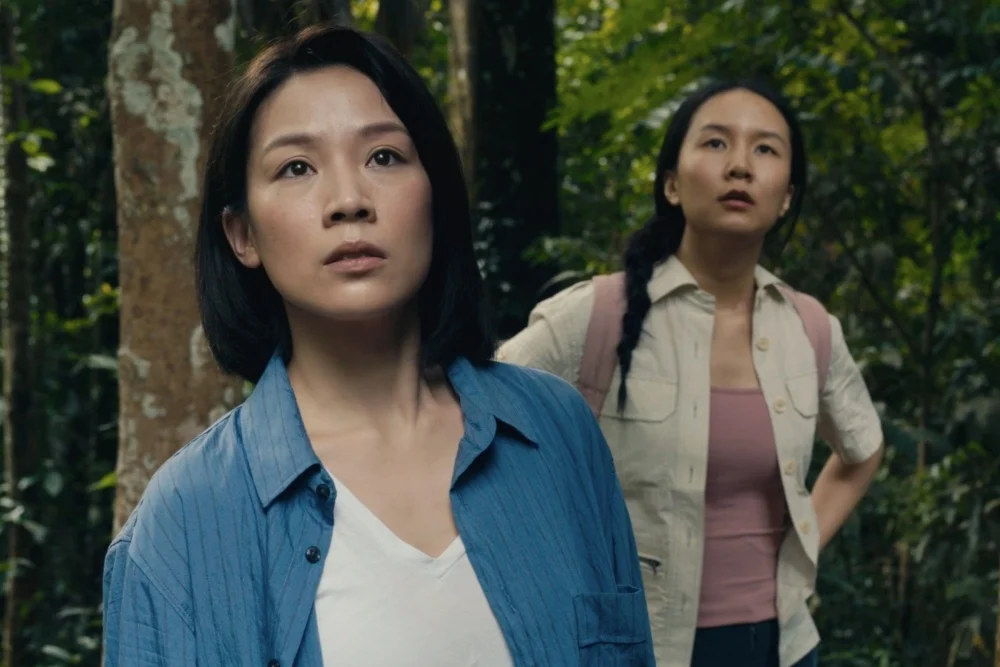
Within this historical backdrop, "Shanghai Daughter" embarks on a solitary journey, following a Shanghai woman who ventures into these very rubber plantations in southwest China. Her quest is not merely historical research but a deeply personal pilgrimage, as she searches for a mysterious woman whose connection to the past is gradually revealed. Along her path, an array of strangers drift unexpectedly into her life, their presence weaving new threads into the narrative tapestry. This narrative structure, driven by a woman’s solitary quest and the serendipitous encounters that shape it, offers a distinctly female gaze on a period often dominated by broader political narratives. It underscores the quiet resilience and emotional fortitude required to confront and process such a complex personal and national history.
Shen Zhongmin’s approach to filmmaking is as unconventional as her narrative. She deliberately blurs the boundaries between fiction and documentary, a choice rooted in a philosophical conviction. "I have never believed that there exists such a thing as pure fiction or pure reality," she states, articulating a vision that sees truth as multifaceted and permeable. This hybrid methodology extends to her cast, which features professional actor Liang Cuishan alongside a remarkable ensemble of non-professional performers. Rather than adhering to traditional hierarchies, Shen Zhongmin treated these non-professionals as indispensable creative collaborators, referring to them as her "screenwriters" and "on-site producers." This radical approach meant that "Not a single non-professional performer in the film ever received a so-called ‘script.’ They had no prior concept of what they were going to shoot or say." This method not only fosters an environment of raw authenticity but also democratizes the creative process, allowing lived experience to organically inform and shape the cinematic narrative.
The genesis of this unique methodology was not a premeditated artistic decision but an organic outgrowth of Shen Zhongmin’s initial, deeply personal quest. Her project began not as a research-based or investigative endeavor, but from "a very primal intuition and emotional impulse within me" to find her father’s old farm residence. This search, fraught with uncertainty and improvisation due to limited archival materials, directly mirrored the protagonist’s journey in the film. The experience of drifting, searching, and navigating an ambiguous past shaped the very narrative structure of "Shanghai Daughter." This profoundly intuitive origin imbues the film with an emotional resonance that transcends mere historical recounting, tapping into universal themes of memory, identity, and the search for belonging. For a women-focused audience, this emphasizes the power of personal instinct and emotional drive as valid and potent forces in artistic creation and historical inquiry.
Central to Shen Zhongmin’s vision is the active role of the natural environment. The rubber plantations and lush forests are far from mere backdrops; they are presented as active narrative forces, repositories of history, and silent witnesses to human struggle. The director draws a poignant parallel between the life cycle of the rubber trees and human existence. "A rubber tree produces latex for only about 20 or 30 years, which is not so different from a person’s youth," she observes. "On many levels, I feel that trees are like people – they have sensations, life cycles and the same impermanence of fate." This profound connection between human and botanical life introduces powerful ecofeminist themes into the narrative. It suggests that the land itself holds memory, that the scars of human history are etched into the landscape, and that our fates are inextricably intertwined with the natural world. This perspective resonates deeply, especially for an audience interested in how environmental consciousness intersects with social history and personal narratives. The film posits nature not just as a setting, but as a protagonist, embodying the enduring spirit and transient nature of life itself.
The collaborative spirit fostered by Shen Zhongmin created what she describes as a kinship-based dynamic on set, blurring the lines between the film’s narrative and the lived experience of its creators. Liang Cuishan, the sole professional actor in the ensemble, was chosen precisely for her ability to bridge this gap. Possessing "a natural, almost non-professional quality" and strong empathetic capacities, Liang seamlessly blended with the non-professional cast. This intentional casting choice further reinforces the film’s commitment to authenticity and its rejection of performative artifice. The set itself became an extension of the film’s hybrid reality: "The state of the set truly was an overlap of real life and fictional creation – for example, after the camera cut, the food on the table could still be eaten, and the conversation could continue," Shen Zhongmin explains. This immersive approach created an environment where the boundaries between character and self, scene and reality, dissolved, enriching the film with an unparalleled sense of immediacy and truth. This fluid creative space allows for a nuanced portrayal of human interaction and memory, making the audience feel like silent observers rather than passive viewers.
Shen Zhongmin’s multidisciplinary background provides a fertile ground for her expansive cinematic vision. With formative experiences in literature, journalism, and contemporary art, she approaches filmmaking with a holistic perspective. "Compared with these, cinema is perhaps more vast and complex, and also more ambiguous and multivalent," she posits. "It can borrow from, transform, and contain all the fields mentioned above." This comprehensive understanding of storytelling mediums allows her to transcend the limitations of any single form, creating a cinematic language that is rich, layered, and deeply resonant. Her artistic journey reflects a growing trend among contemporary filmmakers who draw inspiration from diverse fields to push the boundaries of narrative and visual expression, crafting works that defy easy categorization and invite deeper engagement.
The film subtly touches on weighty themes such as ecofeminism, social history, and intergenerational memory, yet it steadfastly avoids overt didacticism. Instead, Shen Zhongmin aims to create "a space for perception" rather than offering comprehensive explanations. This intentional ambiguity is a core tenet of her artistic philosophy. "Sometimes, ambiguity may actually activate our senses and thinking more effectively," she notes, challenging conventional notions of narrative clarity. She even embraces the possibility of a different kind of audience engagement, provocatively stating, "I even think it’s perfectly fine if an audience member falls asleep in the cinema – because in sleep, our perception can still be stirred." This radical openness to varied audience responses underscores her belief in the power of subconscious engagement and the subjective nature of interpretation. It invites viewers to experience the film on a deeper, more visceral level, allowing emotions and sensory impressions to guide their understanding, rather than relying solely on intellectual decoding. For an audience keen on thoughtful and challenging cinema, this approach offers a refreshing departure from prescriptive storytelling.
The world premiere of "Shanghai Daughter" at the Berlin Film Festival marks a significant moment for both the filmmaker and for contemporary Chinese cinema. Shen Zhongmin expresses her hopes for the film’s global reception: "This film carries both the cultural specificity of China and the universal dimensions of human experience. I hope this premiere in Berlin can serve as a window through which Chinese local filmmakers can convey new reflections on history and the present, as well as a form of subjective lived experience with international audiences." This aspiration speaks to the film’s potential to bridge cultural divides, fostering cross-cultural dialogue through its deeply personal yet universally resonant themes of loss, memory, and the search for truth. It highlights the burgeoning talent of Chinese women filmmakers who are bringing fresh perspectives and innovative storytelling to the global stage, challenging preconceived notions and enriching the tapestry of world cinema.
Beyond Liang Cuishan, the film features a talented ensemble including Zhu Yufei, Kong Chuanzhen, and Li Xiuqiong, whose contributions further enrich its textured narrative. "Shanghai Daughter" is proudly produced by Twelve Oaks Film Art, an independent production company dedicated to fostering unique cinematic voices. International sales for the film are being expertly handled by Parallax Films, ensuring that this compelling and thought-provoking debut reaches audiences worldwide. Shen Zhongmin’s "Shanghai Daughter" stands as a testament to the enduring power of personal history, the resilience of the human spirit, and the transformative potential of an innovative cinematic vision.