



Olympic Figure Skating Schedule Under Fire as Star Falls Short; Japanese Medalists Shine in Surprise Podium Finish
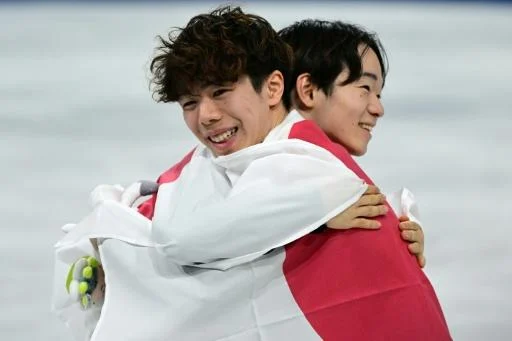
The demanding and “toxic” schedule of the Olympic men’s figure skating competition has been cited as a potential reason behind the unexpected downfall of American favorite Ilia Malinin, who was unable to secure a podium finish despite entering the free skate with a commanding lead. The shock outcome saw Kazakhstan’s Mikhail Shaidorov surge from fifth place to claim a surprise gold medal, while Japan’s Yuma Kagiyama secured silver and compatriot Shun Sato climbed impressively from ninth to bronze.
Malinin, a two-time world champion and a dominant force in the sport for over two years, had appeared poised for Olympic glory. He had entered the free skating final with a significant five-point advantage, a lead built upon a flawless short program performance. However, the pressure of the competition, compounded by the rigors of the Olympic schedule, appeared to take its toll. Malinin faltered during his free skate, executing two falls and making multiple errors that relegated him to 15th place in the segment and a disappointing eighth overall. This marked a stark departure from his usual impeccable performances, leaving many, including his fellow competitors, stunned.
Shun Sato, who ultimately claimed the bronze medal, expressed his surprise at Malinin’s performance. “I feel quite surprised by his performance tonight, he had a perfect season,” Sato remarked, acknowledging Malinin’s remarkable unbeaten streak leading up to the Games. Sato’s own journey to the podium was a testament to his resilience, as he rallied from a ninth-place standing after the short program to deliver a stellar free skate, earning him a spot among the medalists. His performance to Stravinsky’s “The Firebird” was particularly noteworthy, securing him the third-highest score in the free skate segment.
The stark contrast between Malinin’s previous dominance and his Olympic showing was evident in the results of the ISU Grand Prix Final in December, where he had comfortably secured first place, with Kagiyama and Sato finishing second and third, respectively. Malinin had then held a substantial lead of over 30 points ahead of Kagiyama and 40 points over Sato, underscoring his formidable standing in the sport.
Sato directly addressed the scheduling challenges faced by skaters competing in multiple events. “If you think about it, he had the team competition as well as the singles, and it was a very toxic schedule. It’s very bad that this happened to him,” Sato stated, highlighting the immense physical and mental strain placed on athletes. Despite the disappointment of Malinin’s performance, Sato expressed deep respect for the American skater. “He is still someone to look up to. Because of him, I’m here. I tried my best, and I want to thank him for this. I’m thankful for his presence in this competition.” This sentiment underscores the camaraderie and mutual respect that often exists within the figure skating community, even amidst intense competition.
Malinin’s bid for a second Olympic gold medal, following his crucial role in helping the USA secure the team title, was undoubtedly impacted by his participation in both the team event’s short program and free skate, in addition to the individual men’s singles competition. In total, the 21-year-old American navigated four demanding routines in Milan within a compressed timeframe.
Yuma Kagiyama echoed Sato’s observations regarding the demanding Olympic schedule and the pressure Malinin faced. “As everyone knows, he was part of the team’s program, as well as today’s singles, and he has done four very difficult programs. It’s really difficult, there’s this pressure from people who assume that he (Malinin) would probably get gold,” Kagiyama explained. He acknowledged that Malinin’s performance was “a little bit unusual” but emphasized that such unpredictability is inherent to the Olympic Games. “But it proves that this is really the Olympics, things like that happen,” he added, reflecting the inherent drama and uncertainty of the pinnacle of sporting competition.
Kagiyama and Sato themselves had contributed to Japan’s silver medal success in the team event, where they shared the workload. Kagiyama performed in the team short program, while Sato skated in the team free skate, finishing second behind Malinin in that segment. This shared experience in the team event, while contributing to their overall Olympic journey, also meant additional performances on the ice.
Sato, at 22 years old, expressed his profound surprise and joy at achieving a podium finish. “I really didn’t expect myself to be on the podium at all,” he admitted. “I came ninth, and I felt frustrated about that outcome, but I didn’t give up.” His determination and ability to regroup after a challenging short program demonstrated significant mental fortitude. His free skate performance, a powerful rendition of “The Firebird,” captivated the audience and judges, propelling him into medal contention.
Kagiyama, also 22, faced his own challenges during the free skate, scoring sixth for his performance to “Turandot.” He experienced a fall on his second quad flip jump, stepped out of two other quad jumps, and had a stumble during a step sequence. Despite these errors, his overall score was enough to secure the silver medal, marking his second Olympic podium finish in the men’s singles event, following his silver medal performance in Beijing four years prior.
“Olympic Games obviously carry a special feeling, special atmosphere. It’s nerve-wracking for everybody. I feel like that was a tense atmosphere that was felt by all the athletes,” Kagiyama reflected on the unique pressure and intensity of the Olympic environment. This sentiment resonates with athletes across all disciplines, as the Olympic stage presents a unique blend of immense opportunity and overwhelming pressure. The focus on Malinin’s unexpected performance, while a significant talking point, also highlighted the exceptional achievements of Shaidorov, Kagiyama, and Sato, who rose to the occasion amidst the drama.
Shaidorov’s unexpected triumph was a story of consistent performance and seizing opportunity. By placing fifth after the short program, he remained within striking distance of the leaders. His strong free skate, devoid of the major errors that plagued some of his rivals, allowed him to capitalize on the shifts in the standings. His victory represents a significant moment for Kazakh figure skating, bringing home an Olympic gold medal and demonstrating the growing global competitiveness of the sport. The absence of a dominant Malinin from the top of the podium opened the door for a surprise champion, a narrative that has become a recurring theme in various Olympic disciplines.
The conversation around the Olympic figure skating schedule is not new. Skaters and coaches have frequently voiced concerns about the intensity of competitions that require participation in both team events and individual disciplines, often with minimal rest periods. The demanding nature of quad jumps and complex routines places immense physical stress on athletes, making recovery and peak performance challenging under such conditions. Malinin’s situation serves as a stark illustration of these pressures, prompting a renewed discussion about athlete welfare and the design of competition calendars at the highest levels of sport.
The Olympic figure skating competition in Milan, while perhaps not unfolding as many predicted, delivered compelling narratives of resilience, surprise victories, and the enduring spirit of athletic competition. The performances of Kagiyama and Sato, in particular, underscore the dedication and skill of Japanese figure skating, adding further depth to the sport’s rich history. As the sport evolves, the focus on athlete well-being and sustainable competitive structures will likely remain a crucial aspect of discussions surrounding future Olympic Games and major figure skating events.
The performances also highlighted the evolving landscape of men’s figure skating, with a broader range of nations now consistently challenging for top honors. Shaidorov’s gold medal is a testament to this global growth, signaling that the traditional powerhouses are facing increasingly strong competition. The sport’s increasing technical demands, coupled with the artistic interpretation required, make it a captivating spectacle, and the Olympic stage consistently provides moments of both triumph and unexpected drama. The ripple effects of Malinin’s performance will likely be felt within the skating community, prompting reflection and, hopefully, adjustments to ensure the best possible conditions for athletes to showcase their talents on the world’s biggest sporting stage.
The journey to an Olympic medal is a long and arduous one, demanding years of dedication, sacrifice, and relentless training. For Sato, the bronze medal represents the culmination of this effort, a reward for his perseverance and ability to perform under immense pressure. His journey from ninth place to the podium is a powerful reminder that in sports, even when facing significant setbacks, the opportunity to achieve greatness often hinges on one’s ability to remain focused and fight for every point. The medals awarded in Milan are not just symbols of athletic achievement, but also testaments to the mental fortitude and unwavering spirit of the athletes who strive for excellence.
The legacy of this Olympic figure skating competition will undoubtedly include discussions about the physical toll on elite athletes and the need for optimized scheduling. However, it will also be remembered for the inspiring performances of those who overcame adversity, the emergence of new champions, and the enduring allure of figure skating as a sport that combines athleticism, artistry, and profound emotional depth. The “toxic schedule” may have played a role, but the individual stories of triumph and resilience within the competition remain the heart of the Olympic narrative.
© 2026 AFP