


As the world observes World AIDS Day this year, the global health community finds itself at a precarious crossroads. The theme for 2025, “Overcoming disruption, transforming the AIDS response,” is far more than a slogan; it is a desperate rallying cry issued during a period of profound geopolitical and economic instability. While the dream of ending AIDS as a public health threat by 2030 remains within reach, a shadow of uncertainty looms over the progress made over the last four decades. The message from global advocates is clear: the world must step up its commitment, for to pause now is to invite a devastating reversal of hard-won victories.
At the heart of this struggle lies a persistent and lethal barrier: systemic gender inequality. Despite years of medical breakthroughs and the expanded availability of antiretroviral therapies, the biological and social realities of the pandemic continue to disproportionately affect women and girls. Current data reveals a sobering picture of the contemporary landscape of the virus. Out of the 40.8 million people globally living with HIV, 53 percent are women and girls. This is not merely a statistical curiosity; it is a reflection of a world where the rights of women to control their own bodies, health, and futures are still frequently compromised.
The crisis is most acute in sub-Saharan Africa, where the intersection of poverty, social norms, and lack of educational resources has created a perfect storm. In this region, adolescent girls and young women are acquiring HIV at a staggering rate—six times that of their male peers. This disparity is not driven by biology alone. It is fueled by a complex web of structural violence, including early and forced marriage, limited access to comprehensive sexuality education, and the pervasive threat of gender-based violence. When a young woman lacks the agency to negotiate safe sex or the economic independence to leave an abusive relationship, her risk of contracting HIV skyrockets. Furthermore, when healthcare systems are underfunded or culturally insensitive, these same women are often the last to receive testing and life-saving treatment.
Compounding these social challenges is a looming financial crisis in the global health sector. After years of steady investment, there is a palpable fear of disinvestment. Economic shifts and changing political priorities in donor nations are threatening to shrink the very programs that have served as a lifeline for millions. Cuts in global funding do not just mean fewer pills in bottles; they mean the collapse of community outreach programs, the shuttering of clinics in rural areas, and the dismantling of legal aid services that protect women living with HIV from discrimination. For women, who already bear the disproportionate burden of unpaid care and support responsibilities within their families and communities, these funding gaps are catastrophic.
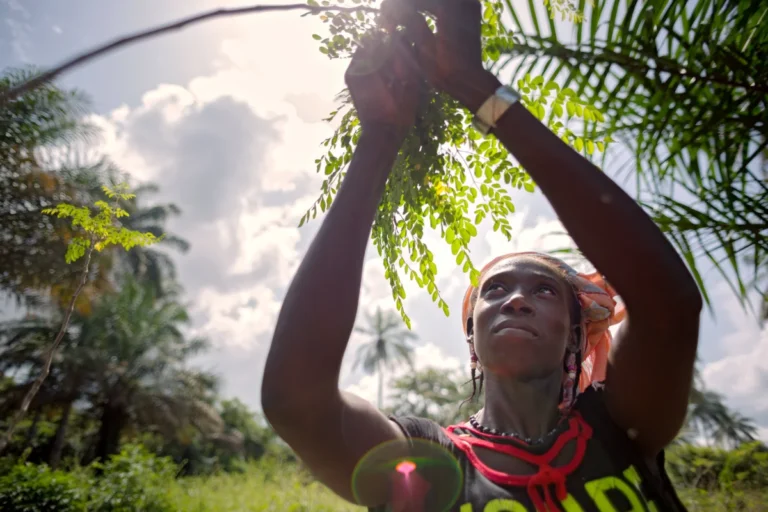
However, the narrative of women in the AIDS response is not one of passive victimhood. On the contrary, women living with HIV have emerged as the most formidable advocates, leaders, and change-makers in the movement. From the grassroots level to the halls of international policy-making, their voices are demanding a seat at the table. They are not just recipients of care; they are the architects of the response. These leaders are proving that when women are empowered with knowledge and resources, they don’t just save themselves—they transform their entire communities.
In response to these challenges, UN Women has intensified its efforts to fortify the leadership of women on the frontlines. Throughout 2024, the organization successfully strengthened the leadership capacities of more than 35,000 women across 36 different countries. This initiative focused on giving women the tools to navigate political systems, manage community health programs, and advocate for policy changes that prioritize gender equality. In Africa and Central Asia, these efforts have expanded significantly, focusing on community-based services that bridge the gap between clinical care and social support. By integrating legal empowerment into the health response, these programs help women fight back against the stigma and rights violations that often follow an HIV diagnosis.
The timing of this renewed push is significant. We are currently approaching the 30th anniversary of the Beijing Declaration and Platform for Action, the most visionary blueprint ever created for the rights of women and girls. The recent Beijing+30 Political Declaration has reaffirmed that women’s health is a critical area of concern. It pledges to advance the health rights of all women and girls, recognizing that the goals of the Beijing Platform cannot be met while the AIDS pandemic continues to claim the lives and potential of millions of women. This political milestone serves as a reminder that the fight against HIV is inextricably linked to the broader struggle for human rights and gender justice.
As we look toward the future of the AIDS response, the necessity of centering gender equality has never been more urgent. This requires a multi-faceted approach that goes beyond medical intervention. It means increasing domestic funding within affected nations to ensure that health systems are sustainable and not solely dependent on fluctuating international aid. It means a zero-tolerance policy toward gender-based violence, recognizing it as both a cause and a consequence of the HIV epidemic. It also means dismantling the legal and social barriers that prevent women and adolescent girls from accessing reproductive healthcare without fear of judgment or retribution.
The "disruption" mentioned in this year’s theme refers to the myriad of global challenges—from climate change to conflict—that threaten to divert attention away from the AIDS response. In times of crisis, the needs of women and girls are often the first to be sidelined. Yet, experience has shown that when the AIDS response is inclusive and gender-transformative, it becomes more resilient to such disruptions. By investing in networks of women leaders, the global community creates a robust infrastructure of care that can withstand political and economic shocks.
The message for this World AIDS Day is one of both caution and hope. We must acknowledge that the pandemic is far from over. The statistics regarding adolescent girls in sub-Saharan Africa should be a wake-up call to every policymaker and donor. We cannot claim to be "ending AIDS" if we are leaving more than half of the affected population behind. The path forward requires a steadfast commitment to maintaining political will and a refusal to let the progress of the last few decades slip through our fingers.
To transform the response, we must resource the power of women. This means ensuring that funding reaches the grassroots organizations led by women living with HIV. It means protecting the sexual and reproductive health and rights of all women, regardless of their status. And it means recognizing that the leadership of women is not an optional "add-on" to the AIDS response—it is the very engine that will drive us toward a world free of the virus.
The fight against AIDS is a litmus test for our commitment to global equality. It challenges us to look at the deep-seated inequalities that allow a virus to thrive and to take bold action to dismantle them. As we recommit to this cause, we must remember that every woman empowered is a community strengthened, and every girl protected is a future secured. The journey is long, and the obstacles are many, but with the leadership of women at the helm, the goal of an AIDS-free generation remains a possibility we can—and must—achieve together. Now is not the time to retreat; it is the time to push forward with more resolve than ever before.