



The world is turning its gaze toward Northern Italy as the countdown begins for the 2026 Winter Olympics, an event officially known as Milano Cortina 2026. This iteration of the Games is poised to make history before the first torch is even lit, marking the first time the International Olympic Committee has ever sanctioned a joint bid between two major host cities. While past Games like Beijing, PyeongChang, and Sochi centered their festivities around a single urban hub, the 2026 Games will be a sprawling celebration of athleticism stretching from the high-fashion metropolitan streets of Milan to the rugged, snow-dusted peaks of Cortina d’Ampezzo. This unique geographical split isn’t just a logistical quirk; it was a strategic move that saw Italy beat out a competitive bid from Sweden, promising a Games that integrates urban sophistication with the traditional charm of the Dolomites.
For the spectators watching from home, the Winter Olympics often appear as a whirlwind of sparkling costumes, razor-sharp blades, and gravity-defying stunts. Yet, beneath the polished exterior lies a world of peculiar traditions and grueling physical realities that often go unmentioned. Take, for instance, the ubiquitous image of an athlete biting their gold medal on the podium. While modern viewers might see it as a simple photo op, the gesture is rooted in ancient commerce. Historically, merchants bit into gold to confirm its purity, as the soft metal would retain teeth marks. Today, however, the gesture is purely symbolic—and occasionally hazardous. Most Olympic "gold" medals are actually composed of 92.5 percent silver, plated with a thin layer of at least six grams of gold. German luger David Möller learned this the hard way during the Vancouver Games when he actually chipped a tooth while posing for a victory photo.
Beyond the hardware, the very iconography of the Games carries deep global significance. The five interlocking rings—colored blue, yellow, black, green, and red—represent the union of the five continents and the gathering of the world’s greatest athletes. The color palette was specifically chosen because at least one of those hues appears on every national flag in existence, reinforcing the theme of universal inclusion. This spirit of inclusion is perhaps most evident in the athletes who hail from tropical climates. Much like the legendary Jamaican bobsled team, modern competitors like Tongan flag-bearer Pita Taufatofua and Malaysian skater Julian Yee have had to innovate to survive. Taufatofua famously pivoted from taekwondo to cross-country skiing by training on roller skis in the heat, while Yee spent years practicing on a public shopping mall rink during off-hours before he could afford to train abroad.
The lifestyle within the Olympic Village also remains a perennial topic of fascination. While rumors of "sexy escapades" between world-class athletes often circulate, many competitors insist that the environment is far more disciplined than the headlines suggest. Figure skating legend Kristi Yamaguchi has noted that most athletes are "zoned in" and entirely focused on their performance, leaving little room for the social distractions that capture the public’s imagination. This discipline extends to the financial and physical sacrifices made by the competitors. In the world of figure skating, for example, a single costume can cost between $1,500 and $5,000. These garments are meticulously engineered by designers like Lisa McKinnon, who must balance aesthetic "sparkle" with the practical need to ensure no crystals fall off during a routine—an error that can lead to a costly score deduction.
Even the most basic human needs become complicated at sub-zero temperatures. Skiers competing in remote mountain locations must carefully time their hydration, often consuming specific amounts of electrolyte-infused water to avoid "comfort breaks" during a race. When nature inevitably calls, cross-country stars like Jessie Diggins admit there is no glamour involved; athletes simply find a pine tree and get back to work. Similarly, the high-volume shouting heard during curling matches is a functional necessity rather than mere excitement. On a 150-foot sheet of ice, the "skip" must use specific commands like "hurry" or "whoa" to direct sweepers, ensuring the stone follows the precise path intended.
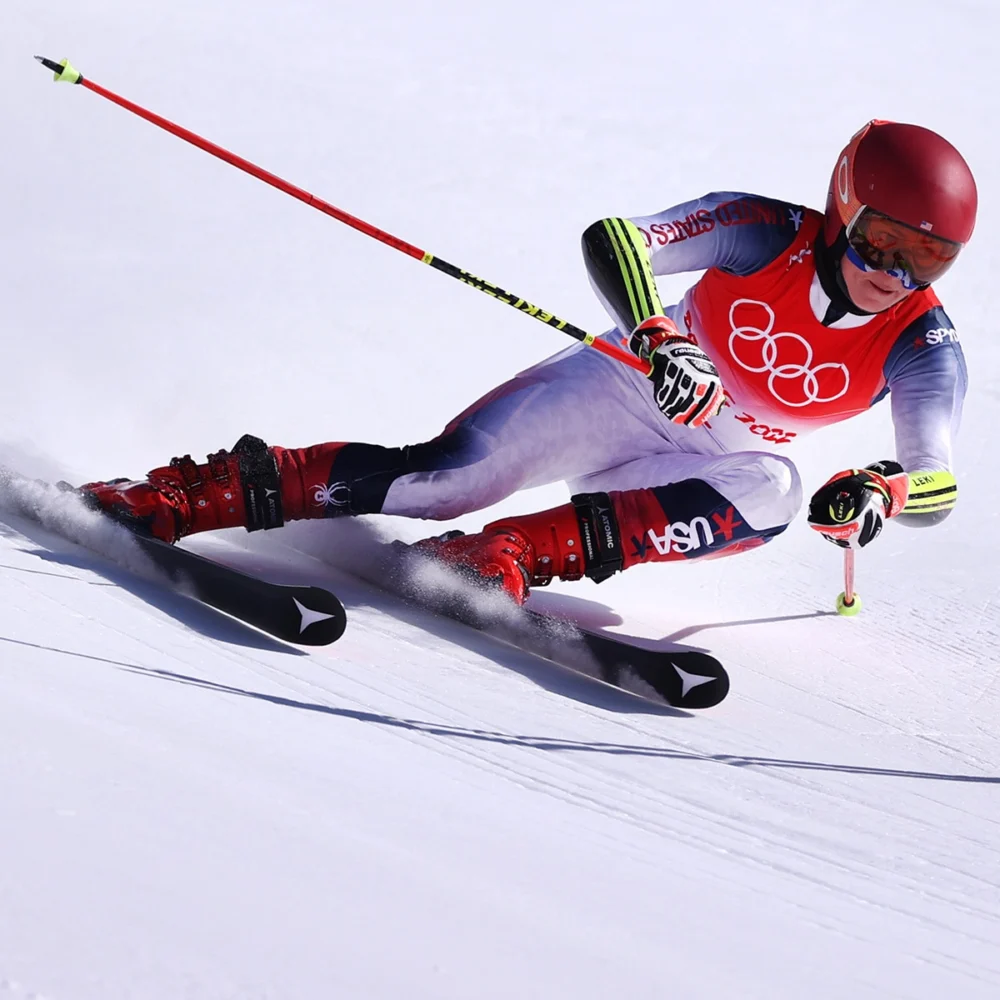
As Team USA prepares to send a record-breaking 232 athletes to Italy, several high-profile stories are already capturing the public heart. Mikaela Shiffrin, arguably the greatest alpine skier of all time, is heading into her fourth Olympics with a renewed perspective. After a challenging run in Beijing and a frightening abdominal injury in late 2024, the 30-year-old is prioritizing her mental well-being and her connection with her support team, which now includes her fiancé, fellow skier Aleksander Aamodt Kilde. Shiffrin has been candid about the unpredictability of the sport, noting that while a medal is the goal, she is prepared to handle whatever the mountain throws at her.
Joining Shiffrin in the headlines is the legendary Lindsey Vonn. At 41, Vonn is staging a comeback that many thought impossible. Following a partial knee replacement that finally freed her from years of chronic pain, the downhill specialist felt the pull of the slopes once more. Despite a recent crash in Switzerland that resulted in a ruptured ACL, Vonn has remained defiant, declaring her intention to compete in Cortina d’Ampezzo. For Vonn, the risk is a calculated trade-off for one last taste of the adrenaline that defined her career.
The 2026 Games will also serve as a final bow for several American icons. Jessie Diggins, the most decorated cross-country skier in U.S. history, has confirmed this will be her final Olympic appearance. Diggins has stated that she is racing for her values and her community, looking forward to a post-retirement life filled with simple pleasures like gardening and time with her husband. Similarly, hockey veteran Hilary Knight will set a record for the most Olympic appearances by any American hockey player as she competes in her fifth and final Games. Knight, who currently stars for the Seattle Torrent, shares her life in Salt Lake City with partner Brittany Bowe, the veteran speed skater who is also preparing for her own Olympic finale at age 37.
While the veterans take their final laps, a new generation is ready to seize the spotlight. Jordan Stolz, just 21, is the heavy favorite in multiple speed skating events, carrying the weight of massive expectations with a preternatural calm. He is joined by Erin Jackson, who made history in Beijing as the first Black woman to win an individual Winter Olympic gold. Jackson will serve as a flag bearer for the Opening Ceremony, a role she views as a vital opportunity for representation. She plans to use her platform to launch an organization helping other Black athletes find their footing in winter sports.
In the mountains, snowboarding superstar Chloe Kim is chasing her third consecutive gold in the halfpipe. Despite a recent shoulder injury, Kim remains optimistic, describing the Olympic experience as a transformation into the "peak version" of oneself. Fellow snowboarder Red Gerard, now 25 and a veteran of the team, is focusing on his role as a mentor to younger athletes while keeping his "blinders on" to block out the noise of the world stage.
The figure skating world will see the return of Alysa Liu, who famously retired at 17 only to find her love for the sport again after a brief stint at UCLA. Liu is hoping to end a long medal drought for American women, skating this time "fully for herself." She will be part of a powerhouse skating contingent that includes "Quad God" Ilia Malinin and the newly married ice dancing pair Madison Chock and Evan Bates. For Chock and Bates, the 2026 Games represent the culmination of a 15-year journey, a "fleeting moment" they intend to savor regardless of the outcome.
From the headfirst bravery of skeleton athlete Mystique Ro—who balances her training with a job as a tour guide—to the "calm and fire" dynamic of curling duo Cory Thiesse and Korey Dropkin, Team USA is a tapestry of professional grit and personal sacrifice. As these athletes descend upon Milan and Cortina, they carry with them not just the hope of gold, but the stories of years spent in the cold, chasing a dream that is finally within reach.