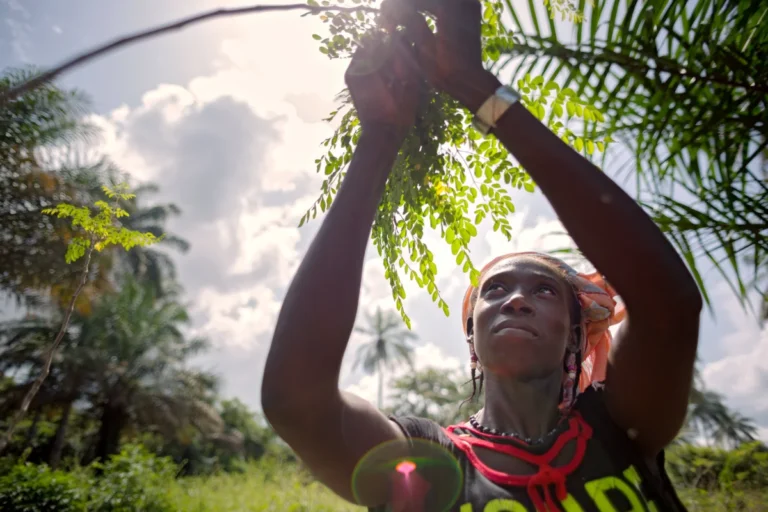



Peace is rarely a product of a single signature on a treaty or a momentary handshake between generals. By its very nature, peacebuilding is a grueling, incremental process, often unfolding in the shadows of systemic stress and chronic underfunding. It is an everyday labor that requires a perspective stretching across generations, rather than election cycles. This long-term reality is precisely why the inclusion of young women is not merely a matter of equity, but a strategic necessity. For lasting stability to take root, those who will inherit the future must be given the tools to build it today. Across the globe, from the fractured streets of Yemen to the divided heart of Cyprus and the ancestral lands of Colombia, a new generation of women is proving that sustainable peace rests on three indispensable pillars: inclusive participation, radical dialogue, and the fundamental right to safety.
In Yemen, a nation grappling with what has often been described as the world’s worst humanitarian crisis, Olla Alsakkaf has seen firsthand how conflict and environmental decay are inextricably linked. For the 30-year-old activist, peace work was never a choice; it was a survival mechanism. "The war was in my city… I was so close to the conflict parties, so close to the victims," Alsakkaf recalls. Her journey began with local conflict mediation, navigating a landscape where the front lines were often just blocks away from her home. As she pursued her master’s degree in economics, she founded the Peace Environment for Development, an organization dedicated to turning abstract climate commitments into tangible local action.
Alsakkaf’s work highlights a glaring irony in international diplomacy: while women and young people bear the disproportionate brunt of both civil war and the climate crisis, they are systematically sidelined from the rooms where decisions are made. In Yemen, the barriers are both cultural and physical. Simple participation is often thwarted by the lack of basic infrastructure. Alsakkaf remembers a pivotal moment in 2020 when she was invited to brief the United Nations Security Council on the challenges facing youth. It was a rare platform for a young Yemeni woman, yet the opportunity was literally severed when her internet connection failed, a casualty of the country’s crumbling power grid.
Beyond technology, social taboos act as a silent blockade. Issues critical to women’s security—ranging from gender-based violence and period poverty to the gendered impact of water scarcity—are frequently deemed too sensitive for public discourse. In Yemen, where water scarcity fuels local skirmishes, women and girls are the primary water collectors, making them the first to face the dangers of resource-driven conflict. "In contexts like Yemen, women take on a lot of responsibilities in the home; they understand the impacts and consequences of the little details," Alsakkaf explains. She argues that young women are not just victims, but innovators who use technology and unconventional methods to build trust faster than traditional power brokers. "Young women—just like me, just like my friends—have innovative ideas and unconventional means to bring peace to the table," she says. "Peace discussions are dominated by men… but young women are more willing to take risks."
While Alsakkaf fights for a seat at the table, Elene Gureshidze is focused on what happens once people are actually sitting there. The 22-year-old from Georgia understands the weight of "frozen conflicts"—disputes that have simmered for decades without resolution, leaving generations of young people to inherit their parents’ prejudices. While participating in a UN Women training program in North Nicosia, Cyprus—one of the world’s last divided capitals—Gureshidze encountered a piece of street art that resonated deeply with her own heritage: "My ancestors have self-harmed for generations."
The message served as a catalyst for her philosophy on reconciliation. To Gureshidze, peace requires a sequential pathway: acknowledging historical harm, accepting responsibility, and creating a vacuum-sealed space for conversation where hope can replace resentment. The workshop she attended brought together young women from communities divided by long-standing ethnic and political lines. The initial atmosphere was thick with the weight of history. "We didn’t really have anything in common other than the ability to speak English and the willingness to build peace," she notes.
Gureshidze’s breakthrough came not through a formal debate, but through play. An athlete at heart, she organized a padel match, intentionally mixing the teams so that no one was playing solely with members of their own "side." The transformation was psychological; the physical act of cheering for a teammate from a "rival" community broke the ice. This "soft diplomacy" paved the way for grueling, honest discussions about displacement and the possibility of cohabitation. Gureshidze emphasizes that the goal of such dialogue isn’t necessarily to reach a total consensus, but to establish a foundation of trust. "We disagreed—like we completely disagreed—but even the disagreements were very valuable information for me," she says. Her work now involves designing board games that challenge stereotypes, inviting participants to listen for the sake of understanding rather than reacting.
However, participation and dialogue are impossible without the third pillar: safety. In the Indigenous territories of Antioquia, Colombia, leadership is a high-stakes endeavor that can often prove fatal. Nil Bailarín, a 29-year-old leader, is acutely aware of the risks. "We don’t want to be made famous after we are dead," she asserts. "We want to be heard before." Bailarín’s perspective is shaped by her identity as a trans woman—or as she describes it, a person of "cuerpos y espíritus diversos" (diverse bodies and spirits).
Growing up amidst the aftershocks of Colombia’s decades-long internal conflict, Bailarín witnessed the intersection of political violence and social prejudice. She recalls the trauma of seeing Indigenous trans girls in her community being forced to suppress their identities. This early exposure to injustice fueled her mission to protect both women and "diverse people" from violence. In 2022, she made history as Colombia’s first trans Indigenous governor, a role that placed her at the vanguard of inclusive governance.
Working with the Indigenous Organization of Antioquia and the ProDefensoras program—a Norwegian-supported initiative that has empowered over 6,000 women human rights defenders in Colombia—Bailarín focuses on making safety a concrete reality. For her, peace is not an abstract concept; it is the ability for a student to access the internet without walking for hours through dangerous territory, or the creation of an ecotourism association that provides local women with economic independence. By fostering connection to the territory and pride in Indigenous culture, she is building a shield of community resilience. "For me, peacebuilding means unity—resistance, justice, respect, connection to territory, and pride in our culture," she says.
The stories of Alsakkaf, Gureshidze, and Bailarín underscore a fundamental shift in the global peacebuilding landscape. These women are moving beyond the traditional "security" paradigm that focuses solely on the absence of gunfire. Instead, they are advocating for a "positive peace" that addresses the root causes of instability: exclusion, lack of communication, and physical vulnerability. Their leadership is a reminder that the most effective peacekeepers are often those who have the most to lose—and the most to gain—from a stable future.
As the international community looks toward the second phase of initiatives like the Young Women Peacebuilders Initiative, the message from the front lines is clear. Leadership is not something that is granted by those currently in power; it is something claimed by those with the courage to envision a different world. As Nil Bailarín puts it, the ultimate key is "showing young people that they have the right and duty to be someone, to dream of a future." In the hands of these architects of change, that future is beginning to look like a place where everyone, regardless of their gender, age, or identity, can finally live in a lasting and sustainable peace.