


On a sweltering Sunday afternoon in July 2002, the quiet suburban atmosphere of Topeka, Kansas, was shattered by a discovery that would spark one of the most convoluted and emotionally charged legal sagas in the state’s history. Mike Sisco, 47, and his fiancée, Karen Harkness, 53, were found brutally murdered in their own home, lying in their bed. They had been shot multiple times with a 9mm semi-automatic pistol. For over two decades, this case has wound its way through the American justice system, involving three separate trials, a disbarred prosecutor, a pair of dedicated amateur sleuths, and a daughter whose conviction of her mother’s guilt never wavered.
The story, which is now the subject of the gripping HBO docuseries A Killer Story, begins with a planned family gathering. Mike and Karen had intended to host their parents for a casual cookout on July 7, 2002. When Mike’s mother, Carol Sisco, and Karen’s father, Harold Worswick, arrived at the residence, they were met with an eerie silence. Finding the front door locked but a rear sliding door slightly ajar, they entered the home only to stumble upon a scene of absolute horror.
From the outset, the investigation was plagued by a lack of physical evidence. There were no signs of forced entry, suggesting the killer may have had a key or was known to the victims. Furthermore, robbery was quickly ruled out as a motive. Karen was still wearing her jewelry, and a significant amount of cash—winnings from a recent trip to a local casino—remained untouched in the house. Despite the recovery of several shell casings, the murder weapon was never found. As the weeks turned into months, and then years, the case grew cold, leaving two families in a state of suspended grief.
However, investigators had a person of interest in their sights from the very beginning: Dana Chandler, Mike Sisco’s ex-wife. Living 540 miles away in Denver, Colorado, at the time of the murders, Chandler was a mother of two who had endured a bitter divorce from Sisco in 1998. When questioned by Detective Richard Volle just four days after the slayings, Chandler claimed she had been home in Colorado on the night of July 6 and spent the following day driving through the mountains. With no DNA, no fingerprints, and no weapon linking her to the crime, the police were unable to make an arrest.
The trajectory of the case shifted dramatically in 2009. A segment on CBS’s 48 Hours thrust the cold case back into the national spotlight, naming Chandler as the prime suspect. This broadcast reignited public interest and, perhaps more importantly, emboldened Sisco’s daughter, Hailey. Only 17 when her father was killed, Hailey had spent years harboring a dark suspicion. She eventually told the Topeka Capital-Journal that she was "100 percent firm" that her mother was the one who pulled the trigger. Hailey became the driving force behind the renewed investigation, even going as far as secretly recording conversations with her mother in hopes of catching a confession.
The pressure from the media and Hailey’s relentless advocacy eventually bore fruit. In July 2011, nearly nine years after the murders, Dana Chandler was arrested and charged with two counts of first-degree murder. Her first trial in 2012 was a spectacle of family tragedy. Both of her children, Hailey and Dustin, took the stand to testify against her. The prosecution painted a portrait of a woman consumed by jealousy and obsession, alleging that Chandler had harassed Sisco for years and had become enraged upon learning of his plans to marry Harkness.
Despite the defense’s insistence that the "lack of evidence" was "overwhelming," the jury was convinced. After a mere 15 minutes of deliberation, they returned a guilty verdict. Chandler was sentenced to two consecutive life terms, a sentence that seemed to bring a definitive, if belated, end to the tragedy.
But the American legal system is rarely so linear. Enter Eileen and Keen Umbehr, a couple who became obsessed with the case after watching the 48 Hours special. Unlike the jury, the Umbehrs were convinced of Chandler’s innocence. Keen, an attorney, began digging into the trial transcripts and discovered what he believed to be a grave miscarriage of justice. He focused his attention on the lead prosecutor, Jacqie Spradling.
In 2016, Keen Umbehr filed a formal complaint, accusing Spradling of egregious prosecutorial misconduct. The core of the allegation was that Spradling had lied to the jury during her closing arguments, claiming Sisco had obtained a protection order against Chandler—an order that never actually existed. The Kansas Supreme Court took the matter seriously, and in 2018, they overturned Chandler’s conviction. The justices ruled that while there was enough circumstantial evidence to warrant a retrial, the prosecutor’s "intolerable acts of deception" had deprived Chandler of a fair trial.
The fallout for Jacqie Spradling was severe. By 2022, she was officially disbarred, with the court citing a "serious pattern of grossly unethical misconduct" across multiple cases. It was a rare and stinging rebuke of a high-profile prosecutor, and it turned Dana Chandler into a cause célèbre for advocates of wrongful conviction reform.
However, being granted a new trial is not the same as being exonerated. The state of Kansas remained convinced of Chandler’s guilt, citing her motive, opportunity, and what they described as "suspicious behavior" following the murders. A second trial in 2022 resulted in a hung jury, unable to reach a unanimous decision. For the first time in over a decade, Chandler was released from custody, albeit under strict GPS monitoring, as the state prepared for a third attempt to convict her.
The third trial, which took place in February 2025, provided the most shocking twist yet. In a move that stunned the courtroom, Chandler dismissed her legal team just as opening statements were set to begin. She announced she would represent herself. This decision led to the harrowing spectacle of a mother cross-examining her own children on the witness stand about the murder of their father.
Chandler spent seven days testifying in her own defense, maintained a stoic and defiant presence. "I have always maintained my innocence," the 66-year-old told the court. "I continue to maintain my innocence. I was not in Topeka, Kansas, on July 7. I never owned or possessed a 9-millimeter firearm. What is happening in this courtroom is a grave injustice."
The defense’s central argument remained the same as it had been for twenty years: the logistics were impossible. How could a woman drive over 500 miles, commit a double homicide without leaving a shred of physical evidence, and return home unnoticed? But for the third jury, the circumstantial evidence—the obsessive phone calls, the history of harassment, and the testimony of her own children—outweighed the lack of forensic proof. Chandler was once again found guilty of double murder.
In June 2025, she was sentenced to two life sentences without the possibility of parole for 50 years. For Hailey, the verdict was a final, painful validation. "I hope that from here out," she said after the sentencing, "the victims and the families can be remembered more."
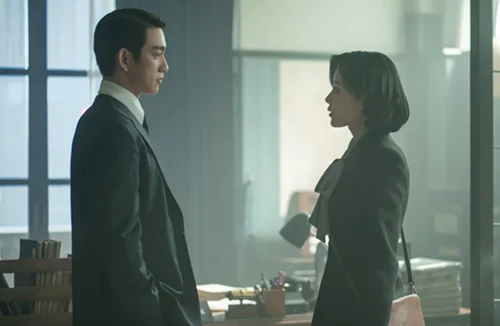
The HBO series A Killer Story delves deep into the psychology of this obsession—not just Chandler’s alleged obsession with her ex-husband, but the public’s obsession with true crime. It also tracks the disillusionment of the Umbehrs. After years of fighting for Chandler, the couple eventually cut ties with her, reportedly wounded by her decision to represent herself and what they perceived as a lack of gratitude for their sacrifices. Director Matthew Galkin noted that the Umbehrs eventually had to reckon with the toll their advocacy had taken on their own lives.
Today, Dana Chandler resides in the Topeka Correctional Facility-Central, a maximum-security prison. Her earliest possible release date is set for December 2063, when she would be over 100 years old. She continues to appeal her conviction, maintaining that she is a victim of a system that prioritized a narrative over the truth. Meanwhile, the community of Topeka and the families of Mike Sisco and Karen Harkness are left to pick up the pieces of a story that has no happy ending—only the cold, hard finality of a prison cell.