
The hallowed emerald-and-gold walls of the United Nations General Assembly Hall vibrated with a rare energy this week as global leaders, activists, and icons gathered for the 2026 commemoration of International Women’s Day. Amidst a global climate of political volatility and a documented "pushback" against feminist progress, the atmosphere was not one of retreat, but of fierce, renewed resolve. The event, headlined by UN Under-Secretary-General and UN Women Executive Director Sima Bahous, served as both a celebration of historical victories and a strategic roadmap for a future where legal and social justice are no longer a luxury for the few, but a guarantee for all.
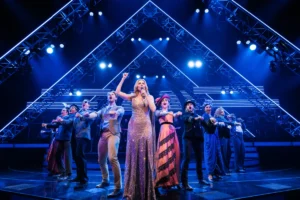
The ceremony opened with a stirring performance by Michelle Williams, whose soaring vocals set a tone of "fearless progress" for the day’s proceedings. Her presence underscored the vital intersection of culture and activism, reminding the delegates that the movement for equality is fueled as much by the heart as it is by policy. Following the performance, Bahous took the podium to deliver a landmark address that addressed the rising tide of opposition to gender equality with a simple, defiant mantra: "We do not back down. We rise higher."
International Women’s Day has always functioned as a dual-purpose milestone—a look back at the arduous journey of the past and a look forward at the hurdles remaining. In 2026, those hurdles have taken on a more complex and "virulent" form. Bahous noted that the resistance to women’s rights is no longer just a passive adherence to tradition; it has become an adaptable, online, and institutionalized movement designed to dismantle the achievements of previous generations. From the erosion of reproductive rights in various regions to the rise of tech-facilitated gender-based violence, the "pushback" is a global phenomenon that requires a global response.
The core theme of this year’s commemoration is justice—specifically, the systemic failures that prevent women and girls from accessing their fundamental rights. Bahous was uncompromising in her assessment of the current state of global affairs, pointing out a sobering reality: in 2026, not a single country on Earth has achieved full legal equality for women and girls. While many nations have made strides in labor laws or political representation, the "fine print" of legal systems often continues to favor patriarchal structures, leaving women vulnerable to economic exclusion and physical danger.
"Justice is the non-negotiable foundation of rights," Bahous declared. She argued that without a functional, fair, and accessible legal system, all other gains—be they in education, health, or economic participation—remain precarious. For millions of women globally, justice remains "selective, inaccessible, and denied." This is particularly true for survivors of domestic and sexual violence, who often face secondary victimization when attempting to navigate the very systems meant to protect them.
To address this "justice gap," the 2026 UN Women agenda calls for a radical overhaul of how legal systems are funded and managed. This includes the implementation of justice systems that are "founded on data and evidence," moving away from anecdotal or biased decision-making. There is also a critical focus on the role of technology. As we move deeper into the 2020s, the digital divide and the biases inherent in Artificial Intelligence have become significant barriers to equity. Bahous emphasized the need to embrace the opportunities of the digital age—such as blockchain for secure land titles or mobile reporting for crimes—while aggressively mitigating the risks of algorithmic discrimination and digital harassment.
Furthermore, the Executive Director highlighted the indispensable role of civil society. In recent years, funding for women’s organizations has faced significant threats, even as these groups do the heavy lifting of community support and advocacy. Bahous called for these "formidable energies" to be supported by robust, sustainable financing. The message was clear: a movement cannot survive on passion alone; it requires the capital to build institutions, train legal professionals, and provide safe havens for those in need.
The context of the 2026 address is particularly poignant as the world nears the 2030 deadline for the Sustainable Development Goals (SDGs). Goal 5, which aims to achieve gender equality and empower all women and girls, is currently off-track according to most metrics. The "pushback" Bahous referred to is a significant factor in this stagnation. By centering "Justice" as the 2026 theme, UN Women is attempting to pivot the conversation from general empowerment to enforceable, legal accountability. It is a shift from asking for equality to demanding it as a matter of law.
Despite the gravity of the challenges discussed, the tone of the event remained overwhelmingly optimistic. Bahous expressed a profound belief that total equality is not a distant, unreachable dream, but a goal within the grasp of the current generation. "I believe all of us here will have the great good fortune not only to work for it, but to witness it, too," she told the assembly. This optimism is rooted in the "unwavering call" of a movement that is simultaneously rich in history and "profoundly contemporary." It is a movement that has learned to be as adaptable as the forces that oppose it.
The 2026 commemoration also served as a reminder of the broader stakes of this struggle. Gender equality is not merely a "women’s issue"; it is the linchpin of global peace and security. Bahous linked the quest for justice directly to the pursuit of a world free from violence. In regions plagued by conflict, women and girls often bear the brunt of the chaos, yet they are frequently excluded from the peace tables where their futures are decided. By advocating for justice systems that recognize the rights of all humanity, the UN is positioning gender equality as the primary driver for a more stable and prosperous world.
As the session drew to a close, the call to action was directed at everyone—from heads of state to individual citizens. The 2026 International Women’s Day message is one of "inspiring through action and words." It is an invitation to join a movement that is "unbending in the face of pressure." For the activists gathered in New York and the millions watching online, the speech was a battery-charge, a reminder that while the opposition may be getting louder, the movement for equality is getting stronger.
The 2026 commemoration will likely be remembered as the moment the international community stopped being polite about the "pushback" and started being strategic about the "push forward." With a focus on well-funded justice, technological integrity, and the protection of civil society, the path toward 2030 looks clearer, if no less difficult.
In her concluding remarks, Bahous thanked the attendees for their "bravery and determination." She left the hall with a vision of a "better future and a better present," one where the rights of every woman and girl are not just recognized in speeches, but protected by the full force of the law. As the delegates filtered out of the General Assembly, the echo of Michelle Williams’ voice and Sima Bahous’ words remained—a dual harmony of art and advocacy, signaling that for the women of the world, the only way is up.
"That is what we celebrate today," Bahous concluded. "It is why we inspire through action and words. Why we are unbending in the face of pressure. It is why we are." The 2026 International Women’s Day did more than just commemorate; it fortified a global front against inequality, proving that when women rise, they do so with a force that no pushback can truly contain.