
Justin Bieber’s Intimate Coachella Confession: A Stripped-Down Journey Through Memory Lane and Modern Sound
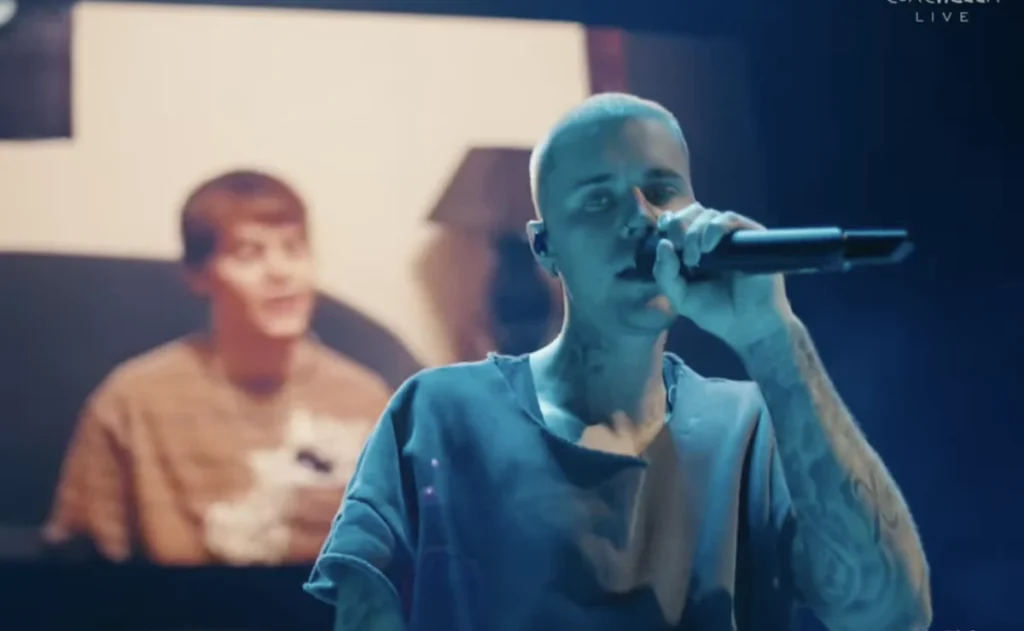
The highly anticipated return of Justin Bieber to the live stage at Coachella on Saturday night delivered a spectacle, not of pyrotechnics and elaborate choreography, but of raw vulnerability and an unexpected, deeply personal retrospective. In stark contrast to the maximalist, high-production sets that often define a headlining performance – such as Sabrina Carpenter’s vibrant, theatrical display the previous evening – Bieber opted for a startlingly minimalist approach. His staging was sparse, his musical design understated, creating an atmosphere that felt less like a global superstar’s comeback concert and more like an intimate gathering, a “Personal Time With Justin,” circa 2026. This deliberate choice immediately set the tone for a performance that defied conventional festival expectations, prioritizing authenticity over ostentation, and in doing so, offered a unique glimpse into the artist’s current creative ethos.
For an artist of Bieber’s stature, renowned since his formative years for both his undeniable talent and the carefully curated pop machine behind him, this bare-bones setup was a bold statement. Gone were the elaborate sets and a full complement of backup dancers; initially, even other musicians were notably absent. It was, in essence, a one-man “Swag” show, focusing almost entirely on his presence and voice. This starkness was met with a mixture of bewilderment and fervent anticipation from the millions watching the late-night livestream, a digital audience far outnumbering those physically present in Indio. The early minutes of the set, featuring a significant portion of new material from his fictional 2025 albums, “Swag” and “Swag II,” saw Bieber clad in a peachy hoodie, often with his head partially obscured, further amplifying the sense of introspection. His choice to open with eleven tracks from these recent, more laid-back albums, characterized by an easygoing, after-hours jam feel, subtly underscored his current artistic direction – a preference for organic soundscapes over bombastic arrangements.
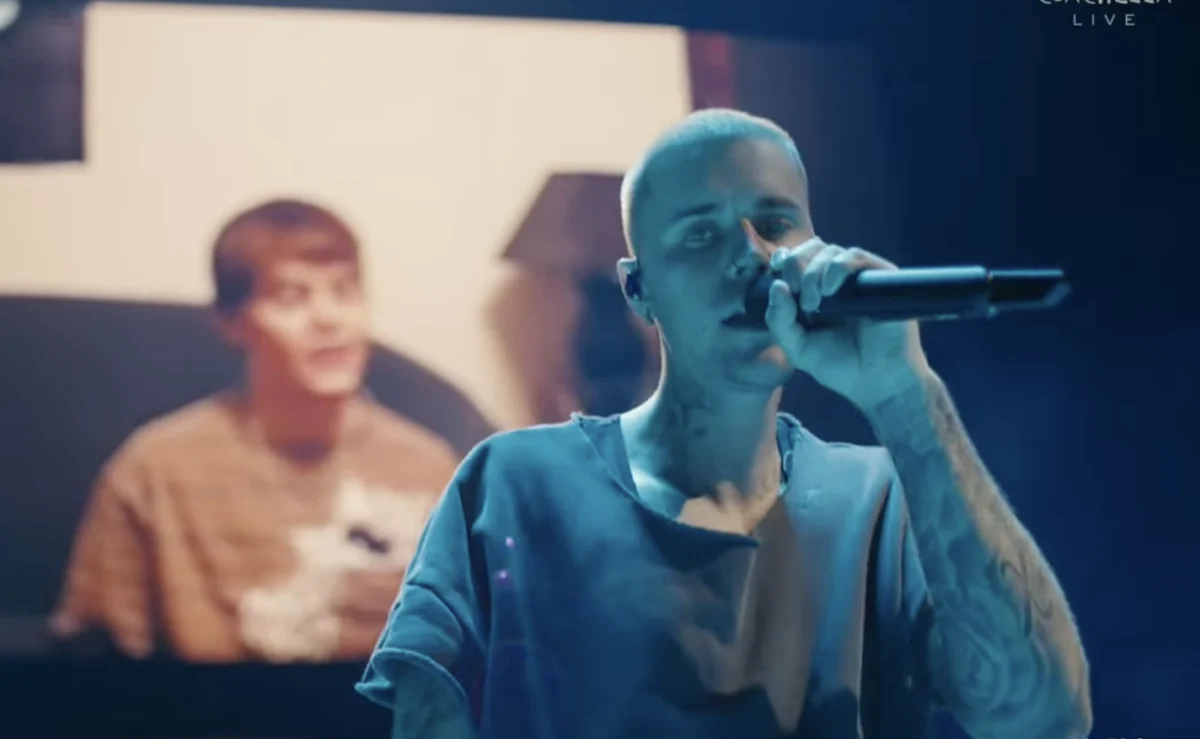
However, what initially appeared to be an almost stubbornly minimalist affair evolved into a multi-faceted exploration of his career, cleverly weaving together past and present in a manner few could have predicted. The most captivating and widely discussed segment of the evening arrived when Bieber, alone on stage, sat down at a desk with a laptop. In a moment of meta-performance art, reminiscent of a casual evening spent reminiscing, he began to spontaneously browse old YouTube videos of himself. This “boy and his MacBook” interlude, spanning nearly 25 minutes, became the unexpected heart of the show. It was the only portion of his hour-and-a-half set that dipped into his extensive catalog, offering fans a poignant and unfiltered trip down memory lane. For those who had worried they wouldn’t hear anything predating “Daisies,” this segment was a profound relief and a source of genuine delight.
The experience was remarkably meta: Justin Bieber, live on YouTube, scrolling through YouTube clips of Justin Bieber. The irony was not lost on the hundreds of thousands of viewers tuning in globally. This real-time internet video self-karaoke, complete with on-screen spinning loading balls and noted dodgy Wi-Fi connections, was a spectacle of digital nostalgia. Was it self-indulgent? Absolutely. Yet, it was also undeniably endearing. This segment revealed a Bieber completely off the cuff, vulnerable in a way rarely seen from an artist of his stature. It was his unique way of being generous to his devoted fanbase, offering them a potent dose of nostalgia without fully orienting his setlist around oldies, which he seemed less inclined to perform in a traditional sense. This charming compromise, while perhaps not suitable for every night of a world tour, resonated deeply within the unique context of Coachella, a festival often celebrated for its unexpected moments.
The initial fan reactions, particularly within the YouTube livestream’s comments section, painted a vivid picture of the audience’s shifting emotions. Early on, anxiety and dissatisfaction were palpable. Comments like “He is serving vocals but it’s still way too chill for a headliner show” and “Shameful performance, no dancing, no production set, embarrassing” reflected a desire for the high-energy, hit-laden spectacle typically expected from a Coachella headliner. Yet, amidst the criticism, the faithful “Beliebers” rallied, offering staunch defenses and holding onto hope: “Omg guys, he’s gonna sing his old songssss, wait for it!!!!” This anticipation was fueled by widespread reports of catalog hits being heard during soundchecks, leading many to believe – or “Belieb” – that the classic tracks were indeed coming, perhaps even in the very manner they were eventually presented, via digital clips and spontaneous singalongs.
As the night progressed, the stage’s human population did eventually grow, signaling a gradual shift from the initial solipsistic focus. Approximately half an hour into the set, after his opening salvo of new material, Bieber was joined by a pair of guitarists for an acoustic segment on the B-stage. This more intimate setup, though only yards from the main stage, further underscored the deliberate choice for a less overwhelming visual experience. This approximately 20-minute acoustic interlude offered a moment of calm, allowing Bieber’s warm and flawless vocals to shine, though for some, the continued resistance to a parade of oldies still stirred a degree of antsiness.
The guest appearances, when they finally arrived, were strategically placed to build momentum and introduce new dynamics. The Kid Laroi was the first celebrity cameo, joining Bieber for a powerful reprise of their hit duet, “Stay.” This collaboration brought a surge of energy, satisfying those looking for more interaction and a recognizable hit. Much later in the proceedings, as the evening transitioned into the early morning hours, the stage welcomed Tems for their sweet “Swag” song, “I Think You’re Special.” The dynamic further expanded into a trio with the addition of Wizkid for a performance of “Essence,” a global hit that infused the set with a vibrant Afrobeat rhythm. The final guest, Mk.gee, appeared at the rear of the stage to personally recreate his fuzzy electric guitar part for the closing track, “Daisies,” providing a fitting, distorted crescendo to the eclectic set. These collaborations served not only to elevate the energy but also to highlight Bieber’s current musical connections and influences, showcasing his evolving taste and willingness to share his platform.
The “tilted cat food dish” stage design, a unique architectural element, became a communal bowl where these guest artists joined Bieber, fostering a sense of shared performance. Tems, in particular, was foregrounded by the video cameras during her segment, emphasizing a more communal and less self-contained turn for the show. “Daisies” served as a pleasant, if somewhat unexpected, closing note. While long-time fans might have preferred a more venerated classic to cap the night, the track’s distorted guitar lines harmonized surprisingly well with the 1 a.m. fireworks, creating a memorable, albeit unconventional, finale.
Justin Bieber’s journey from YouTube sensation to global pop icon has been well-documented, marked by meteoric highs, periods of intense public scrutiny, and profound personal growth. His four-year hiatus from major public live performances prior to Coachella has been a time of introspection and musical evolution. This performance, therefore, wasn’t just another concert; it was a testament to his artistic journey, a mature artist comfortable in his own skin, even if that meant challenging audience expectations. His choice to prioritize new material and a deeply personal reflection over an “Eras”-style career recap spoke volumes about his current artistic priorities. While no one would accuse him of funneling a substantial headliner fee into extravagant production, the performance underscored that charm and genuine vocal chops can go an incredibly long way. Once he shed the hoodie and truly beamed, it became unequivocally clear that his time away had done nothing to diminish his magnetic charisma.
The “laptop interlude” was particularly revealing. Beyond the pure nostalgia of hearing snippets of “Baby,” “Favorite Girl,” “That Should Be Me,” and “Beauty and a Beat” – songs he hadn’t performed live in over a decade – he delved into non-musical moments. He cued up clips of “Mini-Justin” finding internet fame with homespun covers of Chris Brown and Ne-Yo, reminding everyone of his humble origins. He even included a clip of himself walking into a glass door, quipping, “Yep. Did not see that glass there.” Perhaps most strikingly, he played a snippet of his 2025 rant at the paparazzi, speaking along with parts of it from memory, a poignant reminder of the intense pressures of his youth. This inclusion of personal, non-musical “greatest hits” highlighted the unique trajectory of his fame and his enduring connection to his past self, both musical and public.
Ultimately, fan reactions to Bieber’s Coachella set were as diverse as his career itself, ranging from fervent adoration to outright disappointment. The live-comments section during the stream became a fascinating microcosm of this varied reception: “The guy forgot about the show and is just having fun on YouTube!” “We’re just doomscrolling with the Biebs rn.” “Bro is just playing memes.” These critiques were countered by equally passionate praise: “Justin is giving us the purest most intimate performance and he is pouring out his soul.” And, perhaps most tellingly, “It’s good to see Justin smile.” This mosaic of opinions underscored the profound connection many fans feel with him, a relationship that transcends mere musical appreciation to include empathy for his personal journey.
This idiosyncratic performance has certainly given audiences something to anticipate for Weekend 2, knowing that it won’t be a precise rerun. It seems unlikely, for instance, that he would search for the exact same YouTube clips, should that segment be repeated. While the future of his touring – and whether this minimalist, introspective approach will define it – remains uncertain, this Coachella appearance was a powerful declaration. It was a testament to an artist evolving, embracing vulnerability, and finding new ways to connect with his audience, reminding everyone that even a global superstar can find profound artistry in the unexpected, the stripped-down, and the deeply personal.