


Los Angeles-based production powerhouse Gaumont USA has secured the audiovisual rights to “Opus,” an incendiary investigative work by acclaimed financial journalist Gareth Gore. The book promises to rip back the veil on Opus Dei, the influential and often controversial Catholic organization, by tracing its alleged entanglement with the dramatic 2017 collapse of Spain’s Banco Popular—a financial earthquake Gore himself describes as “one of the largest bank failures ever seen in Europe.” This strategic acquisition signals Gaumont USA’s commitment to delivering high-stakes, globally resonant narratives that delve into the complex interplay of power, faith, and finance, a thematic territory ripe for compelling storytelling, especially for audiences keen on understanding the hidden forces shaping our world.
The highly anticipated deal, a collaborative effort between Gaumont USA and the media rights team at Curtis Brown, which proudly represents Gore, sets the stage for what is expected to be a gripping screen adaptation. Gore’s meticulous research and profound insights offer a rare glimpse into the opaque corridors where religious fervor allegedly morphed into unchecked financial and political influence, a narrative that promises to captivate and provoke thought in equal measure.
At the heart of Gore’s investigation lies Banco Popular, once a titan among European financial institutions, renowned for its profitability. Yet, its sudden demise saw it sold to Banco Santander for the astonishingly symbolic sum of just €1 ($1.20). When Gore was initially dispatched to report on the bank’s precipitous fall, he approached it as a familiar tale of “unbridled ambition, poor decision making”—the usual suspects in corporate collapses. However, as he delved deeper, a disquieting realization emerged: “huge pieces of the puzzle were missing.” The official narrative simply didn’t account for the full scope of the disaster, hinting at deeper, more insidious forces at play.
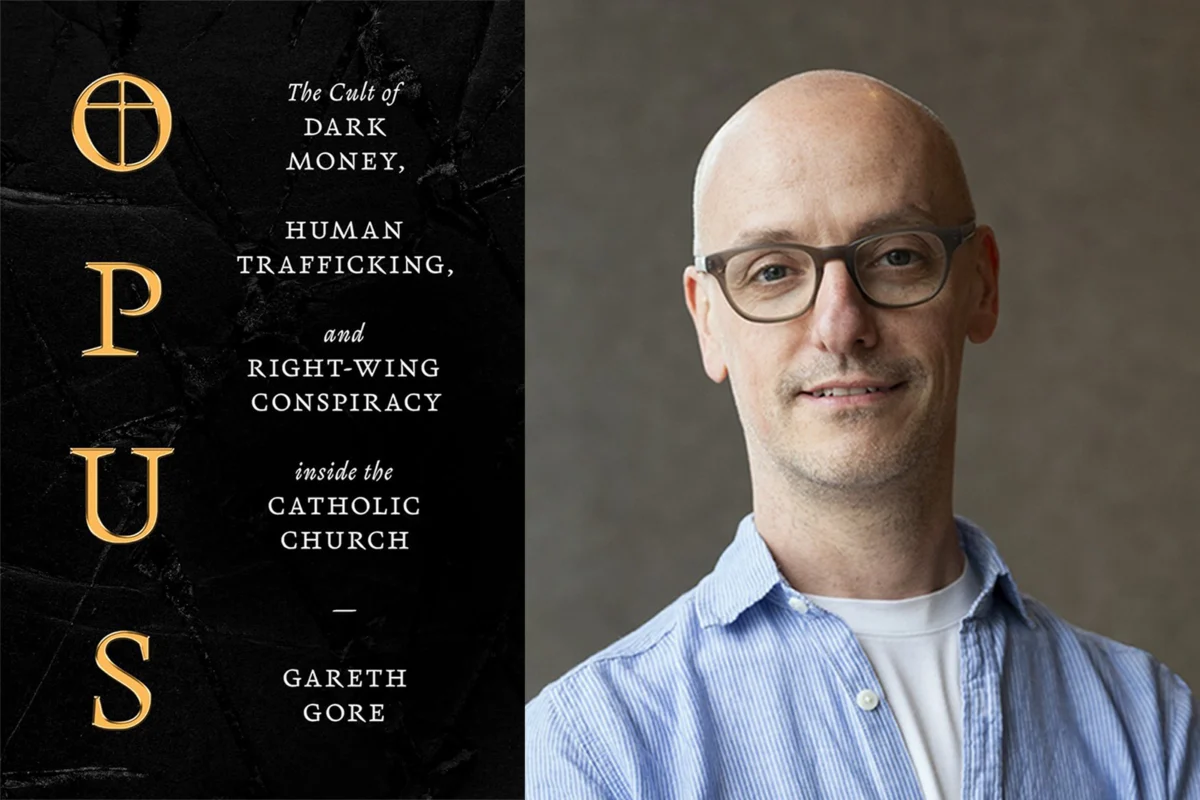
These missing pieces, Gore asserts, are meticulously pieced together in his forthcoming book. Slated for publication in 2025 by Simon & Schuster in English (hardback and paperback editions) and by Crítica in Spanish, the full title of his groundbreaking work leaves no room for ambiguity: “Opus: The Cult of Dark Money, Human Trafficking, and Right-Wing Conspiracy Within the Catholic Church.” The subtitle alone suggests a narrative far more intricate and disturbing than a mere financial exposé, hinting at systemic abuses and a shadowy network operating under the guise of religious devotion.
In a statement released Wednesday, Gaumont USA articulated the chilling allegations at the core of Gore’s work: “Banco Popular was allegedly used for decades as more than just a bank.” The statement continued, “Under the stewardship of a group of celibate men who controlled the bank for decades and had sworn allegiance to Opus Dei, the powerful and often controversial Catholic organization, the bank was slowly turned into a cash machine for Opus Dei, which leveraged that financial power to expand its social influence and political reach, first within Spain and later across the world.” This accusation paints a picture of a religious entity allegedly exploiting a major financial institution to further its global agenda, transcending spiritual mission to embrace temporal power and wealth.
The book “Opus,” Gore promises, will expose precisely how recent, startling, and profoundly consequential this alleged power remains, with tentacles reaching even into the United States. For a women-focused audience, the implications of such unchecked power are particularly resonant. Organizations operating with immense financial backing and shrouded in secrecy can exert significant influence over social norms, political landscapes, and even individual freedoms. The mention of “human trafficking” in the book’s subtitle, while yet to be detailed, immediately raises profound concerns about exploitation and vulnerability, issues that demand urgent scrutiny and awareness.
Gaumont USA’s overarching aim for the adaptation of “Opus” is to craft “a captivating story that removes the veil from the opaque corridors where religion, money and politics converge.” This ambition speaks to a hunger for truth and transparency in an increasingly complex world. The project promises to be more than just a recounting of financial malfeasance; it’s an exploration of how deeply entrenched belief systems can be weaponized for worldly gain, and the ethical quagmire that results when sacred vows are entangled with secular power struggles.
Nicolas Atlan, President of Gaumont USA, underscored the profound relevance of the project. “‘Opus’ is not just a financial story; it is a story about influence and accountability,” Atlan stated. He lauded Gore’s investigative prowess, describing his reporting as “rigorous, layered and deeply cinematic.” Atlan added, “It exposes a system that operated in plain sight yet largely without scrutiny, and that tension makes it extraordinarily relevant for global audiences today.” His words highlight the universal appeal of stories that challenge perceptions and expose hidden truths, resonating with anyone who has questioned authority or sought justice.
Echoing Atlan’s sentiments, Christian Gabela, Gaumont USA’s SVP & Head of Spain, LatAm, and U.S.-Latino, praised the book’s dramatic potential. “The book reads like a political thriller, but every twist is grounded in meticulous investigative work,” Gabela observed. He continued, “The intersection of faith, money and politics creates natural dramatic stakes, complex characters and moral ambiguity. It is precisely the kind of true story that compels audiences because it asks how power is built, protected and ultimately revealed.” This emphasis on the thriller aspect, combined with its basis in rigorous journalism, positions “Opus” as a true-crime narrative with profound societal implications, particularly appealing to audiences drawn to powerful, character-driven dramas rooted in reality.
Gareth Gore himself expressed his eagerness to see his years of investigative work translated to the screen. “I can’t wait to start work on bringing this incredible story to the screen,” Gore enthused. He reflected on the challenging nature of his research: “Reporting the book was like entering a surreal parallel world where nothing was quite what it seemed and it’s exciting to share that world with a wider audience.” His excitement is palpable, especially given his collaboration with a team renowned for its impactful productions. “I’m absolutely thrilled to be working with one of the best teams in the business – the people that brought us award-winning series like ‘Narcos,’ ‘Lupin’ and so many more,” he added, acknowledging Gaumont’s impressive track record in crafting globally successful narratives.
Gaumont USA’s decision to option “Opus” aligns perfectly with its strategic vision: to secure intellectual property (IP) that possesses both strong local resonance and broad global appeal. The company, celebrated for its innovative storytelling, consistently seeks out projects that can bridge cultural divides and speak to universal human experiences. This strategy can involve leveraging Gaumont’s extensive internal film and television library, adapting existing stories for markets like Mexico, Spain, or Brazil, or, as in the case of “Opus,” acquiring external pre-existing IP. Whether drawing inspiration from books, real events, or compelling personal narratives, Gaumont is dedicated to unearthing stories that captivate and resonate across borders.
Gabela had previously articulated this approach to *Variety* just prior to October’s Iberseries & Platino Industria in Madrid, highlighting the company’s proactive search for authentic, impactful stories. While the “Opus” adaptation will specifically target the Spanish market, given the geographical focus of the Banco Popular scandal, the dramatic, indeed exponential, expansion of Opus Dei worldwide imbues the narrative with far broader, undeniable relevance. From its origins in Spain, Opus Dei has established a significant presence in numerous countries, influencing educational institutions, political spheres, and financial sectors globally. This makes the alleged revelations within Gore’s book a matter of international concern, transcending national borders and resonating with a diverse global audience eager to understand the true cost of unchecked power and hidden influence.
For a women-focused platform, the story of “Opus” offers crucial insights. It delves into the dynamics of powerful, patriarchal organizations, their methods of recruitment, retention, and the often-unseen roles and sacrifices of women within them. The very concept of “celibate men” controlling a vast financial empire and wielding global influence raises questions about accountability, transparency, and the potential for abuse when power is concentrated and shielded from external scrutiny. The “cult” aspect, coupled with allegations of “dark money” and “right-wing conspiracy,” speaks to broader societal anxieties about manipulation, the erosion of democratic principles, and the impact of secretive groups on public life. By shining a light on these complex, interwoven threads, Gaumont USA’s adaptation of “Opus” promises not just entertainment, but a vital exploration of truth, influence, and the enduring human struggle against opacity and injustice.