

Philippine Powerhouses Unite for “One More Night to Live”: A Global Action Thriller with a Conscience
In a landmark collaboration poised to redefine Filipino cinema’s global footprint, two of the Philippines’ most dynamic production companies, Fusee and Studio 360, have forged a strategic partnership. Their inaugural joint venture, the Tokyo-set action thriller “One More Night to Live” (internationally known as “Kon’ya Daremo Shinanai,” meaning “Nobody Dies Tonight”), was unveiled at the prestigious Hong Kong FilMart. This highly anticipated project signals a new era for Filipino storytelling, blending visceral action with profound social commentary, and is already drawing significant attention from international distributors and potential co-production partners.
The announcement at Hong Kong FilMart is strategically significant. As one of Asia’s most important film markets, it provides an unparalleled platform for independent producers to secure crucial financing, distribution deals, and forge international alliances. For Fusee and Studio 360, presenting “One More Night to Live” here underscores their ambition to position the film not just as a regional success but as a compelling global narrative, leveraging the market’s reach to connect with diverse audiences and collaborators worldwide. This move is indicative of a broader trend within Southeast Asian cinema to push beyond domestic markets and engage with the international film community on a more substantial level, seeking out partnerships that can elevate production values and broaden thematic scope.
At the helm of this ambitious undertaking is Lester Pimentel Ong, the visionary founder of Studio 360, who will co-direct the film alongside his frequent collaborator, Singapore-based action filmmaker Ace Wang Yan Bin. Their combined expertise promises a unique cinematic experience, fusing Ong’s deep understanding of action choreography and dramatic narrative with Wang’s Shaolin Kung Fu discipline and nuanced directorial approach. The creative synergy between these two accomplished filmmakers is expected to be a defining characteristic of “One More Night to Live,” setting a high bar for action filmmaking that is both technically brilliant and emotionally resonant. With a target release date of 2027, the teams are clearly investing significant time and resources into crafting a meticulously realized production.
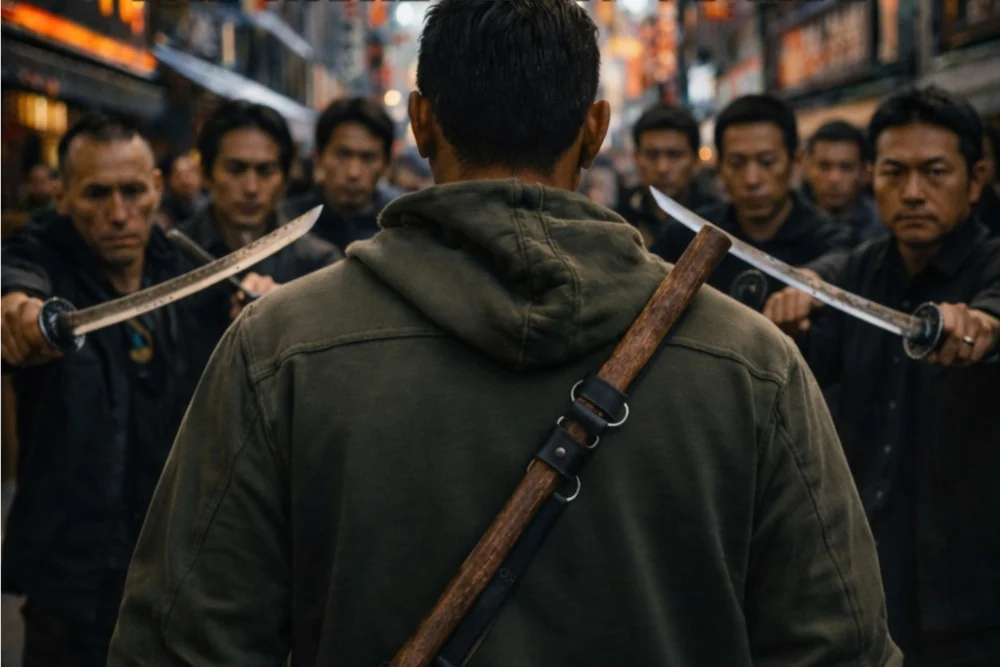
“One More Night to Live” plunges audiences into the harrowing world of Yuta, an undocumented Filipino immigrant desperately trying to carve out an existence on the fringes of Japanese society. His life, already fraught with uncertainty and hardship, spirals into a desperate quest for justice and survival following the death of his mother. This tragic event ignites his determination to settle long-standing accounts with his estranged family and, more critically, to reclaim unpaid wages from his employer, Daido. However, Yuta’s pursuit of what is rightfully his soon uncovers a chilling truth: Daido is not merely a callous employer but the ruthless leader of a Yakuza operation that views undocumented workers as disposable commodities, easily exploited and discarded. This revelation transforms his personal grievance into a fight against a formidable criminal enterprise.
Betrayed, marginalized, and with no recourse through legitimate legal channels in a foreign land, Yuta is thrust into a single, nightmarish ordeal. What begins as a quest for financial recompense quickly escalates into a desperate race against time to save his teenage sister, Fukio, from a ruthless human trafficking network orchestrated by the very same Yakuza syndicate. The narrative, therefore, is not just a thrilling action sequence but a poignant exploration of vulnerability, the brutal realities of modern-day exploitation, and the fierce bonds of family. Yuta’s journey through Tokyo’s underworld is a visceral fight for his sister’s freedom and, by extension, for the dignity and survival of his community. The film promises to be a gripping tale of resilience, courage, and the unwavering human spirit in the face of overwhelming odds.
Beyond its gripping genre mechanics, “One More Night to Live” is underpinned by a sharp, incisive examination of status, identity, and belonging within Tokyo’s complex Filipino community. The film bravely draws a stark line between “Japinos” – a term often used to refer to the largely undocumented offspring of Filipino migrant workers – and “Hafu” individuals, who hold Japanese citizenship by virtue of blood or marriage. This societal fault line is not merely a backdrop but a crucial element that profoundly shapes Yuta’s psychological landscape and drives his intricate relationship with his sister, Fukio.
The struggles of Filipino migrants in Japan are a significant, yet often overlooked, facet of the global diaspora. Many Filipinos arrived in Japan seeking economic opportunities, often working in entertainment, construction, or caregiving sectors. However, strict immigration policies and socio-economic pressures have led to a substantial undocumented population. Children born to undocumented parents face unique challenges, including limited access to education, healthcare, and social services, perpetuating a cycle of marginalization. The term “Japino” often carries a nuanced social weight, reflecting a sense of being caught between two cultures, not fully accepted by either, and often struggling with legal status and identity. In contrast, “Hafu,” which denotes individuals of mixed Japanese and non-Japanese parentage who often hold Japanese citizenship, typically experience a different set of societal interactions, though they too navigate questions of identity and belonging.
By highlighting this nuanced distinction, the film delves into the internal divisions and social hierarchies that exist even within marginalized communities. Fukio, Yuta’s sister, occupies a distinct position within this divided community, perhaps offering a different perspective or experiencing different forms of vulnerability and agency. This thematic depth elevates “One More Night to Live” beyond a mere action spectacle, transforming it into a powerful social drama that sheds light on the lived experiences of a specific, often silenced, demographic. It promises to resonate deeply with audiences who appreciate narratives that combine thrilling entertainment with profound cultural and socio-political insights, offering a window into the complex human condition of displacement and the longing for acceptance.
Central to the film’s action sequences and its cultural identity is the strategic positioning of Kali, the indigenous Filipino martial art, as its defining action grammar. This creative choice is far more than a stylistic flourish; it is a profound statement about Filipino identity on the global action cinema stage. Unlike the often exaggerated and highly choreographed fight scenes typical of much genre filmmaking, “One More Night to Live” intends to foreground the practical, weapon-based, and close-combat techniques that characterize Kali. This commitment to authenticity promises a raw, gritty, and visceral viewing experience, emphasizing realistic combat scenarios over fantastical displays.
Kali, also known as Arnis or Eskrima, is a comprehensive martial art system that originated in the Philippines. It is renowned for its fluid movements, adaptability, and emphasis on weapons training (sticks, knives, swords) alongside empty-hand techniques. Its philosophy emphasizes efficiency, directness, and continuous motion, making it highly effective in practical self-defense situations. For Yuta, Kali is not just a fighting style; it is presented as his last tangible thread to his cultural roots, a deeply personal connection to his heritage in a foreign land where he is otherwise stripped of belonging. It symbolizes his resilience, his heritage, and his innate power, transforming his movements into a silent assertion of identity.
The decision to showcase Kali in such a prominent and authentic manner is a bold artistic and cultural statement. It champions a martial art that, while globally respected, has often been underrepresented in mainstream international cinema. By doing so, the film not only introduces audiences to a unique combat system but also elevates Filipino culture and identity, presenting a powerful image of strength and self-determination. For a professional women-focused news and entertainment website, this emphasis on an indigenous martial art can be particularly compelling. It speaks to themes of empowerment, cultural pride, and the strength found in one’s roots, resonating with an audience that values authentic representation and stories of resilience. It highlights how physical prowess can be intertwined with cultural heritage, offering a refreshing perspective on female and male characters embodying strength and agency.
Wilfredo C. Manalang, the founder of Fusee, articulates the profound vision behind “One More Night to Live” with stirring clarity. “This is more than an action movie,” he states. “It’s a journey through the system of modern slavery that exists in the shadows of the world’s cleanest cities. We are telling a story of the Filipino diaspora that is rarely seen, one of displacement and the fierce struggle to belong.” Manalang’s words underscore the film’s ambition to transcend mere entertainment, aiming instead to serve as a powerful lens through which audiences can confront the uncomfortable truths of exploitation and the human cost of economic migration. His reference to “modern slavery” is a stark reminder that even in seemingly prosperous and orderly societies, deeply entrenched systems of exploitation can thrive in the shadows, preying on the vulnerable and marginalized. The film seeks to give voice to those who are often invisible, bringing their struggles for dignity and recognition into the cinematic spotlight.
Lester Pimentel Ong, echoing Manalang’s sentiment, emphasizes the production’s commitment to balancing visceral impact with profound emotional depth. “Our goal with ‘Kon’ya Daremo Shinanai’ is to deliver an exhilarating, emotionally charged experience,” Ong explains. “By combining Fusee’s grounded storytelling with our Action360 stunt philosophy and the visceral nature of Kali, we’re creating a film that hits as hard emotionally as it does physically.” This statement highlights the meticulous approach to crafting a film that is not only thrilling in its action sequences but also deeply moving in its character arcs and thematic explorations. The “Action360 stunt philosophy” likely refers to Studio 360’s commitment to innovative and realistic stunt work, ensuring that every punch, kick, and weapon strike serves both the narrative and the character’s emotional journey. This fusion of authentic action and heartfelt storytelling promises a cinematic experience that engages both the mind and the heart, leaving a lasting impression on its audience.
The formidable reputations of both Fusee and Studio 360 are built on a track record of critical acclaim and commercial success, lending immense credibility to their partnership. Fusee, under Wilfredo C. Manalang’s leadership, has consistently championed projects that resonate with both festival juries and discerning audiences. The company co-produced the poignant “Plan 75,” which earned a Caméra d’Or special mention at the Cannes Film Festival, a testament to its artistic merit and global appeal. Further cementing its prestige, Fusee also backed “Don’t Cry, Butterfly,” a film that garnered the coveted Grand Prize at Venice’s Critics’ Week, showcasing its knack for identifying and nurturing powerful, internationally recognized narratives. Beyond the festival circuit, Fusee demonstrated its commercial acumen with “Topakk” (internationally distributed as “Triggered”), which premiered at Locarno before securing global sales, proving its ability to craft genre fare that travels well across diverse markets. This dual expertise in prestige cinema and commercially viable action makes Fusee an ideal partner for a project as ambitious and multifaceted as “One More Night to Live.”
Studio 360, led by Lester Pimentel Ong, arrives with equally impressive credentials, particularly in the burgeoning streaming landscape. The company has successfully produced the Netflix series “Incognito,” demonstrating its capacity for creating engaging episodic content for a global audience. Furthermore, its action-drama “The Delivery Rider” achieved the highly coveted number one trending spot on Netflix, a clear indicator of its ability to produce content that captures significant public interest and resonates with a broad viewership. Ong himself brings a unique and invaluable background to the directorial chair. A former martial arts champion, he claimed a gold medal at the 1995 World Wushu Championships in Baltimore, Maryland. This deep-seated understanding of combat, movement, and physical storytelling is undoubtedly a cornerstone of Studio 360’s “Action360 stunt philosophy,” promising action sequences that are not only spectacular but also grounded in authentic martial arts principles. His personal journey from elite athlete to filmmaker injects a layer of authenticity and expertise into the film’s action design, ensuring that Yuta’s struggles are portrayed with realistic intensity and precision.
The directorial synergy between Lester Pimentel Ong and Ace Wang Yan Bin is another cornerstone of this project’s creative strength. Wang Yan Bin, a Singapore-based action filmmaker, brings a distinctive perspective shaped by his upbringing in Henan, China, where he trained in Shaolin Kung Fu from childhood. This rigorous martial arts background imbues his filmmaking with a deep appreciation for disciplined movement, dynamic choreography, and the narrative potential of physical combat. Ong and Wang have cultivated a robust working relationship across multiple previous productions, a partnership built on mutual respect and a shared vision for elevating action cinema. Their alliance on “One More Night to Live” extends this dynamic into a broader Singaporean-Filipino creative framework, symbolizing a burgeoning regional collaboration within Southeast Asian filmmaking. This cross-cultural exchange of talent and expertise promises to enrich the film’s artistic tapestry, bringing together diverse influences to create a truly unique and compelling cinematic vision. The combined martial arts prowess and directorial experience of Ong and Wang are poised to deliver an action thriller that is not only breathtaking in its execution but also deeply authentic in its portrayal of combat and human endurance.