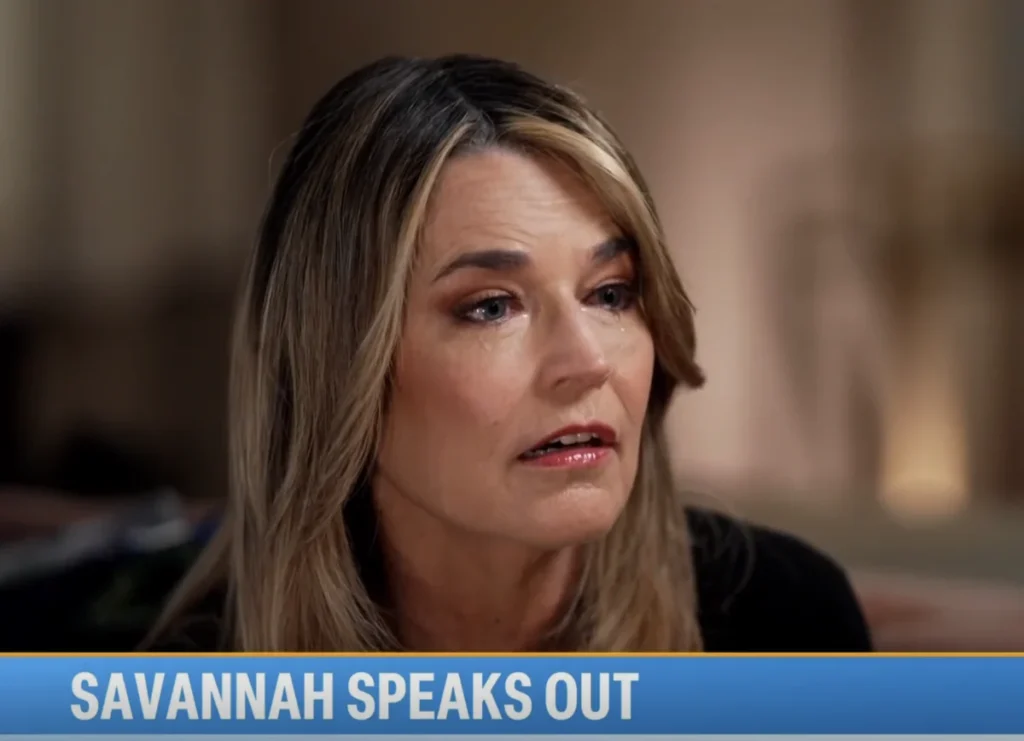


In a powerful testament to resilience and the enduring human spirit, veteran journalist Savannah Guthrie is poised to make her highly anticipated return to the anchor desk of NBC’s “Today” show on Monday, April 6. Her decision to step back into the national spotlight comes at a profoundly challenging time, as her family continues to grapple with the agonizing disappearance of her beloved mother, Nancy Guthrie. The announcement, made amidst the airing of the second part of Guthrie’s deeply emotional interview with co-anchor Hoda Kotb, has resonated across the nation, offering a rare glimpse into the personal anguish of a public figure navigating unimaginable grief while choosing to find strength in her professional calling.
The circumstances surrounding Guthrie’s hiatus and subsequent return are steeped in a harrowing personal tragedy. Her mother, Nancy Guthrie, was reported missing on February 1, plunging the family into a terrifying ordeal. The Pima County Sheriff’s Department, after an initial investigation, escalated the case to a presumed kidnapping, a designation that carries immense weight and signifies the grave concerns of law enforcement. The complexity and seriousness of the situation quickly drew in federal resources, with the Federal Bureau of Investigation (FBI) joining the extensive search effort. Despite the concerted investigations by both local and federal agencies, details surrounding Nancy’s disappearance remain scarce, and crucially, no suspects have been publicly identified or apprehended, leaving the Guthrie family in a torturous state of uncertainty and longing for answers.
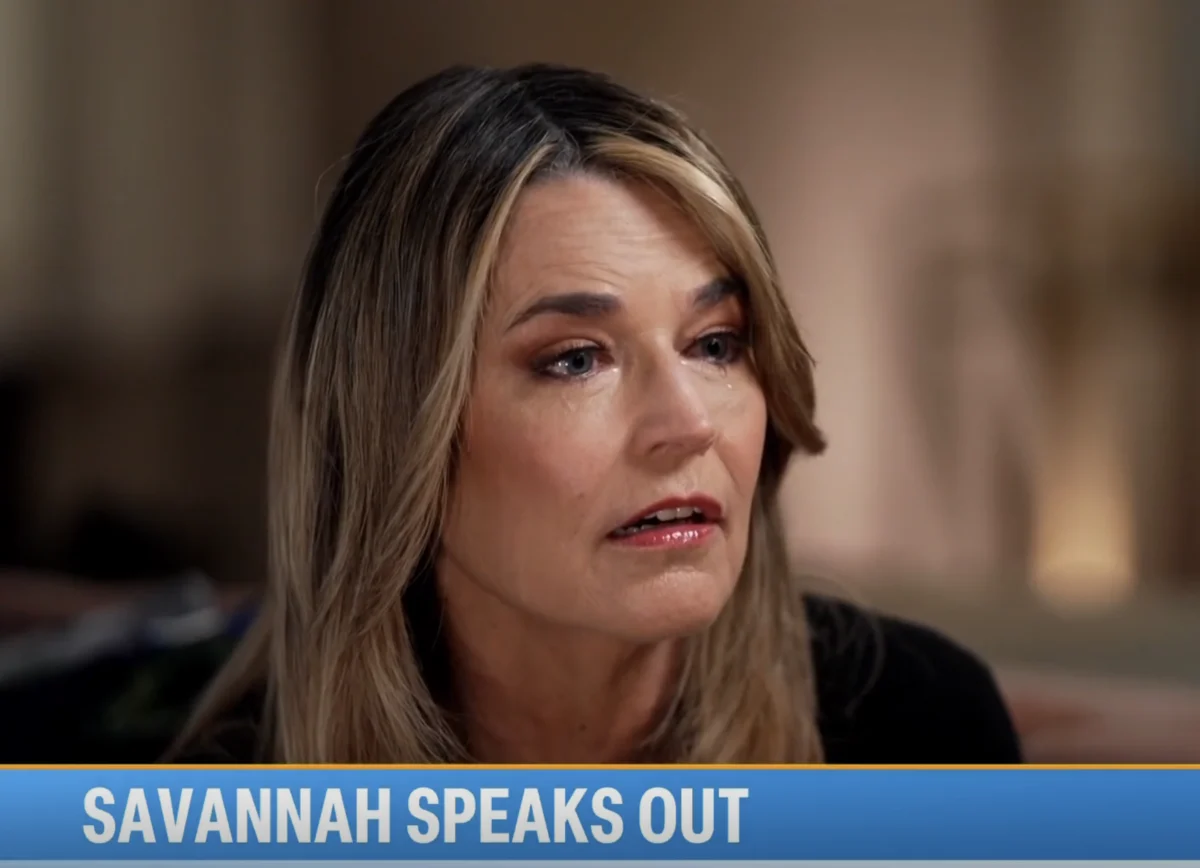
During her candid and tear-filled conversation with Hoda Kotb, which aired on Friday, Savannah Guthrie laid bare the emotional tightrope she walks. She confessed the immense difficulty in contemplating a return to “Today,” a program she described as “such a place of joy and lightness.” For years, “Today” has been a beacon of morning cheer, delivering news with a characteristic blend of camaraderie and optimism. To re-enter such an environment while her private world remains shrouded in darkness presented an almost paradoxical challenge. Her vulnerability underscored the profound disconnect between the public persona she has cultivated and the private sorrow consuming her.
Guthrie articulated this internal conflict with raw honesty, explaining her dilemma: “I can’t come back and try to be something that I’m not. But I can’t not come back, because it’s my family.” This statement speaks volumes about the unique bond forged among the “Today” anchors and crew, a bond often described as familial, extending beyond professional collegiality into a deeper, more personal connection. For Guthrie, returning to Studio 1E isn’t merely a professional obligation; it’s a return to a sanctuary of support, a place where she feels understood and accepted, even in her brokenness. She framed her return as a purposeful act, declaring, “I think it’s part of my purpose right now. I want to smile. And when I do, it will be real. And my joy will be my protest.” This powerful declaration transforms her return from a mere professional duty into an act of defiance against the despair, a conscious choice to embrace light even when surrounded by shadows. It’s a statement that resonated deeply with viewers, many of whom have faced their own struggles and understand the profound courage required to choose joy in the face of adversity.
The announcement of her return was met with overwhelming support from her “Today” family. Following the emotional interview, her colleagues — including Craig Melvin, Hoda Kotb, Al Roker, Jenna Bush Hager, and Dylan Dreyer — collectively shared the news, their voices imbued with a mixture of relief and anticipation. Craig Melvin, speaking for the entire team, articulated the sentiment perfectly: “It is where she belongs. It is where we all want her to be. We cannot wait to welcome her back with open arms here in Studio 1E.” This public embrace not only underscored the genuine affection and solidarity within the “Today” team but also served as a powerful message to Guthrie herself, reassuring her of her place and the unwavering support awaiting her. In a world often characterized by professional distance, the warmth displayed by her colleagues highlighted the unique, family-like dynamic that has long been a hallmark of the morning news program.
Throughout her conversation with Kotb, Guthrie repeatedly emphasized the solace she finds in her “Today” family, echoing a universal truth that “when times are hard, you want to be with your family.” This sentiment speaks to the foundational human need for connection and belonging, especially during periods of profound crisis. Her candid admission, “I don’t know if I can do it. I don’t know if I’ll belong anymore. But I would like to try,” revealed the deep insecurity and self-doubt that can accompany immense personal trauma. The fear of not being the same, of having been irrevocably altered by grief, is a common experience for those enduring loss. Yet, her willingness to “try” signifies a profound act of courage and an embrace of her altered reality. She beautifully articulated this transformation, referencing an “old poem,” stating, “I’m not going to be the same, but maybe it’s like that old poem: ‘More beautiful in the broken places.'” This metaphor, often attributed to Ernest Hemingway and rooted in ancient Japanese art of Kintsugi (repairing broken pottery with gold lacquer), suggests that scars and imperfections can, in fact, enhance beauty and reveal a deeper strength and history. For Guthrie, it’s a philosophical acceptance of her current state, acknowledging that while she is undeniably broken, her experiences may ultimately imbue her with a new, profound form of empathy and understanding, making her an even more compelling and authentic voice for her audience.
The first part of Guthrie’s extensive interview, which aired on Thursday, provided even deeper insight into the depths of her anguish. She revealed the agonizing internal battle against despair, vowing “not to let sadness win” despite the torrent of unanswered questions surrounding her mother’s disappearance. Her resolve was palpable as she declared, “I will not fall apart. I will not let whoever did this take my children’s mother from them. I will not let them take my joy.” This fierce determination to protect her emotional well-being and, by extension, the stability of her own children, highlights the protective instincts of a mother and the profound strength required to resist succumbing to overwhelming sorrow. It’s a promise not just to herself but to her family, a commitment to embody resilience even when the path forward is unclear.
Beyond her personal resolve, Guthrie issued a poignant and direct plea, a raw appeal for humanity and truth. “But our anguish is real. We need help. We need someone to tell the truth,” she implored. Her words were not laced with anger, but with a profound sense of hope and a profound understanding of the human capacity for redemption. “I have no anger in my heart. I have hope in my heart, I have love. But this family needs peace,” she continued. This sentiment speaks to the transformative power of forgiveness, even in the face of unimaginable harm. She extended an olive branch, suggesting that revealing the truth, no matter how difficult, could lead to a solace greater than any retribution. “We need an answer, and someone has it in their power to help. It is never too late, and when you do, the warmth of love and forgiveness that will come will be greater than can be imagined. I know what is to be forgiven, and there is no greater joy. And that joy awaits.” This extraordinary offer of forgiveness, even as her family remains in limbo, underscores a remarkable moral fortitude and a deep belief in the possibility of healing, not just for her family but for anyone involved in her mother’s disappearance.
Adding another layer of torment to an already devastating situation, Guthrie also confronted the cruel reality of social media speculation. She spoke about the “unbearable” rumors circulating online, particularly those baselessly implicating her own family members in Nancy’s disappearance. These unfounded accusations, she stated, “pile pain upon pain,” inflicting additional emotional wounds on a family already reeling from trauma. The pervasive nature of online misinformation and the readiness of some to propagate harmful narratives underscore the unique challenges faced by public figures in times of crisis. Guthrie passionately defended her loved ones, unequivocally stating, “No one took better care of my mom than my sister and brother-in-law. No one protected my mom more than my brother. And we love her and she is our shining light, she’s our matriarch. She’s all we have.” Her defense was a powerful assertion of truth and love against the backdrop of baseless accusations, highlighting the protective instinct for family that transcends even the glare of the public eye.
Perhaps the most heartbreaking revelation from the first part of her interview was Guthrie’s confession of a torturous thought: the possibility that her mother’s disappearance was somehow her fault, a consequence of her own public persona. The idea, she admitted, “is too much to bear.” She recounted a conversation with her brother, who, with an almost agonizing honesty, conceded, “Well, I’m sorry sweetie, but yeah, maybe.” This exchange exposes the heavy burden carried by those in the public eye, where the lines between personal and professional can blur, and the fear that one’s visibility might inadvertently invite danger upon loved ones becomes a crushing weight. “To think that I brought this to her bedside, that it’s because of me,” she tearfully expressed, “And I just have to say, I’m so sorry, mommy. I am so sorry. I’m sorry to my sister and my brother and my kids and my nephew and Tommy, my brother-in-law. I’m so sorry. If it is me, I’m so sorry.” This profound sense of guilt, though likely irrational given the unknown circumstances of the case, is a deeply human reaction to a tragedy that defies explanation, a desperate attempt to find meaning or responsibility where none may exist, and it underscores the immense emotional toll this ordeal has taken on her.
Savannah Guthrie’s return to “Today” is more than just a journalist resuming her duties; it is a powerful public act of defiance and hope. In a society that often pressures public figures to present an image of unwavering strength and perfection, Guthrie has chosen vulnerability. She has allowed her audience to witness her raw pain, her struggle, and her unwavering determination to persevere. Her decision to return, not as her old self but as someone changed and “more beautiful in the broken places,” offers a profound lesson in human resilience. It reminds us that strength is not the absence of pain, but the courage to face it, to acknowledge one’s brokenness, and to find purpose and even joy amidst the fragments. As she steps back into Studio 1E, she carries not just the weight of her personal tragedy but also the hopes of countless viewers who find a reflection of their own struggles and the inspiration to endure in her brave, poignant journey.