


The majestic sweep of historical drama continued its reign over the South Korean box office, as “The King’s Warden” emphatically held onto its top position for the weekend spanning February 27th to March 1st. Data meticulously compiled by KOBIS, the esteemed tracking service operated by the Korean Film Council, revealed the film’s astounding dominance, capturing an unparalleled 82.01% of the total revenue share. This figure not only solidified its status as the nation’s must-see cinematic event but also marked its highest market share since its initial release, a testament to its enduring appeal and critical acclaim.
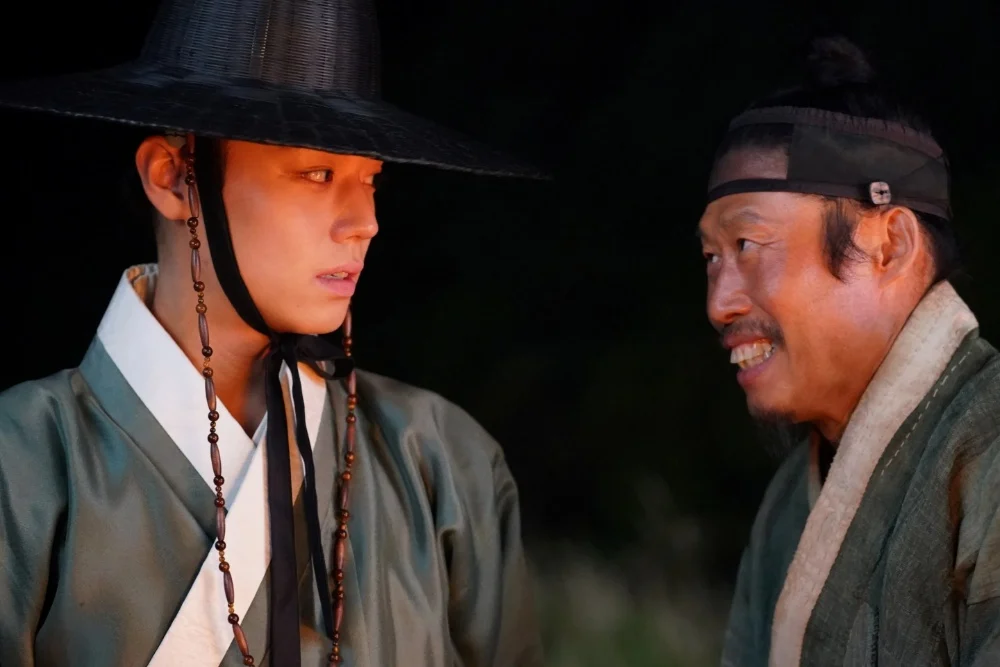
The film’s performance over the three-day weekend was nothing short of spectacular, drawing in an impressive $11.8 million from 1,750,991 admissions. Directed by the visionary Jang Hang-jun and featuring the compelling talents of Yoo Hae-jin and Park Ji-hoon, “The King’s Warden” is a poignant narrative that delves into the profound loyalty and sacrifice of a humble village chief tasked with protecting a deposed teenage king. This intricate tale of duty and destiny has resonated deeply with audiences, propelling its cumulative gross to a staggering $56 million, amassed from 8,484,426 admissions. As it edges ever closer to the coveted 10 million admissions milestone, “The King’s Warden” isn’t merely a box office success; it’s on the cusp of etching its name into the annals of South Korean cinematic history as a genuine cultural phenomenon.
The 10-million admissions mark in South Korea represents a pinnacle of achievement, signifying not just commercial triumph but also a deep societal penetration and widespread critical and popular endorsement. For a film to cross this threshold means it has captivated audiences from all walks of life, transcending demographic boundaries and sparking national conversations. It’s a rare feat, typically reserved for a select few blockbusters each year, and achieving it positions “The King’s Warden” alongside some of the most beloved and impactful films in the nation’s cinematic legacy. Its success underscores the enduring power of the “sageuk” genre – historical dramas that often explore themes of justice, power, and the human spirit against the backdrop of Korea’s rich past. These narratives, often grand in scale and deeply rooted in cultural identity, frequently offer both escapism and a reflective lens on contemporary society, making them perennial favorites among Korean moviegoers.
Jang Hang-jun, known for his nuanced storytelling and ability to elicit powerful performances, has masterfully crafted a film that balances historical authenticity with gripping emotional depth. His previous works have often explored complex human relationships and moral dilemmas, and “The King’s Warden” is no exception. The stellar cast, led by veteran actor Yoo Hae-jin, who brings a compelling blend of gravitas and vulnerability to his role as the protective chief, and the rising star Park Ji-hoon, who imbues the young monarch with a fragile dignity, are central to the film’s resonance. Their on-screen chemistry and the powerful emotional arcs of their characters have captivated viewers, driving repeat viewings and word-of-mouth recommendations that have been instrumental in maintaining the film’s unprecedented hold on the market.
While “The King’s Warden” commanded the lion’s share of attention, the espionage thriller “Humint” secured a respectable second place, demonstrating the diverse tastes of the South Korean audience. The film garnered $895,678 from 124,622 admissions over the weekend. Helmed by the acclaimed Ryoo Seung-wan, a director celebrated for his high-octane action sequences and intricate plots in hits like “Veteran” and “Escape from Mogadishu,” “Humint” has steadily accumulated a cumulative gross of $12.6 million from 1,822,175 admissions since its debut on February 11th.
Ryoo Seung-wan’s reputation precedes him, and “Humint” exemplifies his mastery of the thriller genre, often infused with social commentary and compelling character studies. The film, starring the charismatic Zo In-sung and the versatile Park Jeong-min, plunges viewers into the clandestine world of intelligence gathering, a genre that frequently finds fertile ground in South Korea, often reflecting the nation’s unique geopolitical landscape and historical narratives of conflict and resilience. Zo In-sung, known for his striking screen presence and ability to convey complex emotions, and Park Jeong-min, celebrated for his chameleonic performances across various genres, form a formidable duo that elevates the tension and intrigue inherent in a high-stakes espionage narrative. Their performances are key to “Humint”‘s success, providing a compelling counter-programming option to the historical drama at the top.
Making its debut in third place was the live-action remake of the beloved Japanese anime “5 Centimeters per Second,” a testament to the enduring cross-cultural appeal of Japanese animation maestro Shinkai Makoto. The film earned $217,036 over the weekend, bringing its total to $383,843 since its February 25th launch. Directed by Okuyama Yoshiyuki and starring Matsumura Hokuto, this expanded two-hour adaptation delves deeper into the melancholic and profoundly human story of Takaki and Akari, two childhood friends grappling with the inexorable forces of distance and time as they navigate 18 years of drifting apart across different cities.
Shinkai Makoto’s original 2007 omnibus, renowned for its breathtaking animation, poignant narrative, and exploration of themes like first love, longing, and the pain of separation, holds a special place in the hearts of anime fans worldwide. The decision to undertake a live-action adaptation is a significant one, carrying both the potential for broader audience reach and the inherent challenge of translating the unique visual and emotional language of animation into a new medium. Okuyama Yoshiyuki’s direction and Matsumura Hokuto’s portrayal bring a fresh perspective to this classic, aiming to capture the essence of Shinkai’s vision while offering a new interpretation. The film’s performance suggests a dedicated audience eager to revisit this tender story, highlighting the power of universal themes of connection and loss that transcend national borders and artistic formats. Matsumura Hokuto, a prominent figure in the Japanese entertainment scene as both an idol and an actor, brings a significant fan base and a sensitive performance to the lead role, appealing to a younger demographic familiar with his work.
The weekend’s top ten also showcased a vibrant tapestry of genres, reflecting the diverse cinematic offerings available to South Korean audiences. In fourth place, the musical drama “Choir of God” continued its uplifting run, adding another $154,128 to its impressive cumulative total of $9 million. This film’s sustained success points to the consistent demand for narratives that inspire and uplift, often through the communal power of music and storytelling.
Pixar’s latest animated feature, “Hoppers,” hopped into fifth place on its debut weekend, securing $160,374. Since its mid-week opening on February 25th, the family-friendly film has garnered $167,647. Pixar’s global reputation for innovative animation and heartfelt storytelling ensures a loyal following, and its entry into the Korean market adds a touch of international family entertainment to the domestic landscape.
For those with a penchant for frights, the horror sequel “28 Years Later: The Bone Temple” opened in sixth place, grossing $156,922 from 21,373 admissions. The enduring popularity of the horror genre, both domestically and internationally, guarantees a consistent audience for chilling narratives and psychological thrillers, and a sequel to a known title often benefits from pre-existing fan anticipation.
The global reach of animation was further evidenced by the Chinese animated blockbuster “Ne Zha 2,” which landed in seventh place, earning $123,414 over the weekend. Since its release on February 25th, it has accumulated $215,654. This film’s presence underscores the growing influence of Chinese cinema on the international stage and the increasing appreciation for diverse animation styles beyond traditional Western or Japanese productions.
Literary adaptations also found their niche, with “Hamnet” debuting in eighth place, pulling in $78,955 for a total of $166,711. This film, likely a period drama exploring historical or literary themes, appeals to a more discerning audience interested in nuanced storytelling and historical authenticity.
Rounding out the top ten were two genre-specific entries: the omnibus horror “App the Horror” in ninth place with $76,043, bringing its total to $604,646, and the fantasy drama “Number One” in tenth with $70,207, pushing its cumulative gross to $1.7 million. These films highlight the continued appetite for niche genres, from episodic horror to imaginative fantasy, demonstrating a robust and varied cinematic ecosystem.
The overall market collective gross for the weekend reached $14.4 million, a healthy increase from the previous week’s $13 million. This upward trend signals a buoyant period for the South Korean film industry, fueled by a compelling mix of domestic blockbusters and diverse international offerings. The robust performance across various genres, from historical epics to animated features and psychological thrillers, indicates a dynamic and thriving cinematic landscape, poised for continued growth and innovation. As “The King’s Warden” continues its historic run, it not only celebrates the power of Korean storytelling but also sets a high bar for the cinematic year ahead.