


**Joseon Majesty Reigns Supreme: ‘The King’s Warden’ Commands South Korean Box Office for Sixth Week, Reshaping Historical Drama Landscape**
The cinematic tapestry of South Korea continues to be dominated by the compelling historical drama, ‘The King’s Warden,’ which has not only extended its extraordinary reign at the summit of the national box office for a sixth consecutive weekend but has also etched its name deeper into the annals of Korean film history. During the weekend of March 13-15, this compelling tale of loyalty and royal protection transcended the monumental 13 million admissions milestone, affirming its status as a cultural phenomenon.
According to the meticulously tracked data from KOBIS, the Korean Film Council’s authoritative service, ‘The King’s Warden’ demonstrated an almost unparalleled grip on audience attention, securing a commanding 76.36% revenue share of the entire market. This remarkable figure underscores not only the film’s immense popularity but also its ability to maintain fervent interest weeks into its release, a testament to its powerful narrative and stellar performances. Over the course of the March 13-15 weekend alone, the film garnered an impressive $8.2 million from an additional 1,253,733 admissions, contributing to its already staggering cumulative success.
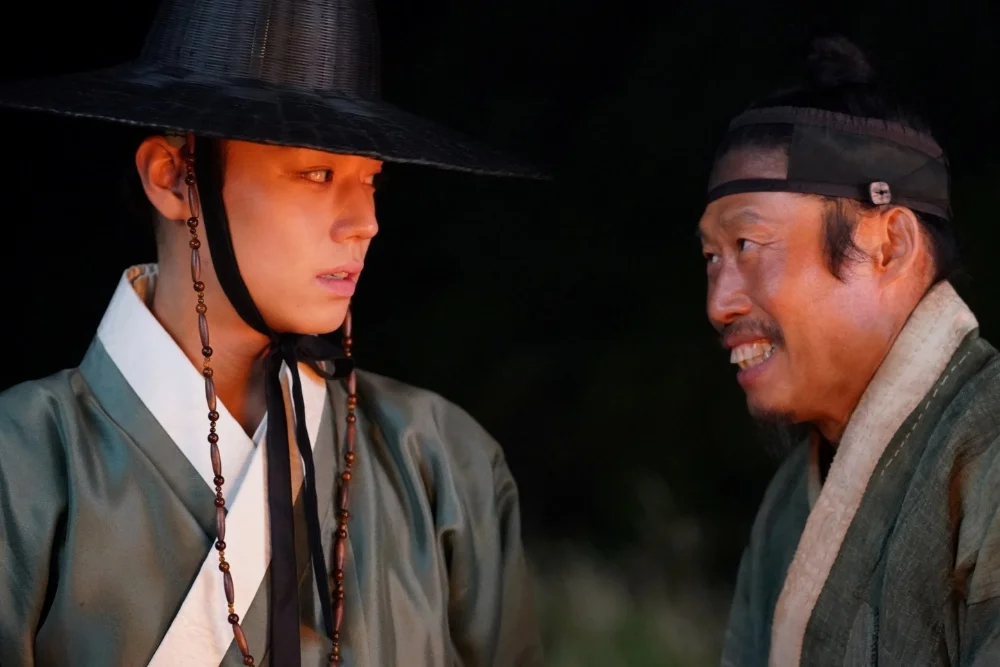
Since its grand debut on February 4, ‘The King’s Warden’ has amassed an astonishing cumulative gross of $86.8 million, drawn from a colossal 13,467,811 admissions. These figures propel the film further up the prestigious list of South Korea’s all-time highest-grossing cinematic achievements, a benchmark that speaks volumes about its widespread appeal and enduring impact. Directed with nuanced precision by Jang Hang-jun, and featuring the captivating talents of veteran actor Yoo Hae-jin alongside the rising star Park Ji-hoon, the film plunges viewers into the tumultuous 15th century Joseon Dynasty. It weaves a poignant narrative centered on a humble yet resolute village chief who finds himself burdened with the grave responsibility of safeguarding a deposed teenage king. This premise, rich with historical intrigue, personal sacrifice, and the universal themes of duty and innocence, has clearly resonated deeply with audiences across all demographics.
The enduring fascination with the Joseon era in South Korean popular culture is a phenomenon that ‘The King’s Warden’ has masterfully tapped into. This period, spanning from the late 14th to the late 19th century, offers a fertile ground for storytelling, characterized by its intricate political landscape, dramatic power struggles, rich cultural heritage, and the evolving social dynamics of a kingdom finding its identity. Historical dramas, often referred to as ‘sageuk,’ have consistently proven to be a cornerstone of Korean cinema and television, captivating audiences with their blend of grandeur, emotional depth, and often, a contemporary resonance through the lens of history. Films like ‘The King and the Clown’ and ‘Masquerade’ have previously demonstrated the immense potential of this genre to break box office records, and ‘The King’s Warden’ now proudly stands among them, reinforcing the public’s appetite for meticulously crafted historical narratives that explore universal human conditions against a majestic backdrop.
The success of ‘The King’s Warden’ is also inextricably linked to its formidable lead actors. Yoo Hae-jin, a beloved figure in Korean cinema, has long been celebrated for his unparalleled ability to embody a diverse range of characters, often infusing them with a unique blend of warmth, resilience, and understated charisma. His portrayal of the steadfast village chief, a common man thrust into an extraordinary situation, is a masterclass in grounded acting, making his character instantly relatable and deeply empathetic. For a women-focused audience, Yoo Hae-jin’s performances often represent the quiet strength and integrity of everyday heroes, figures who inspire admiration through their unwavering commitment to justice and protection. This role, in particular, showcases his dramatic depth, moving beyond his frequently lauded comedic roles to anchor a weighty historical narrative.
Complementing Yoo Hae-jin’s seasoned presence is Park Ji-hoon, a young actor who has successfully transitioned from a celebrated career as a K-pop idol to a serious dramatic performer. His portrayal of the vulnerable, deposed teenage king is a pivotal element of the film’s emotional core. Park Ji-hoon brings a delicate balance of regal innocence and burgeoning maturity to the character, making his plight deeply affecting and his bond with the village chief genuinely touching. This dynamic between the protector and the protected, the seasoned elder and the youthful sovereign, forms the heart of the film’s appeal, drawing viewers into a narrative of loyalty, mentorship, and the profound responsibility that comes with power, whether inherited or assumed. Director Jang Hang-jun’s skillful direction ensures that these performances are not merely captivating but also serve to elevate the film’s broader themes, creating a cinematic experience that is both grand in scope and intimately personal.
The film’s unprecedented dominance also highlights the current landscape of the South Korean film market, where strong local productions frequently outshine international contenders. This preference for homegrown stories, often imbued with cultural specificity and universal emotional resonance, has been a consistent trend, particularly in periods of robust domestic filmmaking. The word-of-mouth buzz surrounding ‘The King’s Warden,’ fueled by positive critical reception and audience enthusiasm, has undoubtedly played a crucial role in sustaining its remarkable run, turning it into a must-see event across the nation.
While ‘The King’s Warden’ continued its relentless march, the rest of the box office presented a diverse array of cinematic offerings, reflecting the varied tastes of the South Korean audience. Holding steady in second place was Pixar’s animated fantasy, ‘Hoppers.’ The film, which launched on March 4, continued to attract family audiences and animation enthusiasts, adding $1.1 million from 173,213 admissions over the weekend. Its cumulative gross now stands at $3.5 million, a respectable showing for an international animated feature in a market often dominated by local fare. Pixar’s brand of heartfelt storytelling and innovative animation continues to find an audience globally, and South Korea is no exception, albeit facing stiff competition from local blockbusters.
Making its debut in third place was the local horror-mystery ‘Samakdo,’ a film that immediately carved out a niche for itself within a genre that has a historically strong following in Korea. Earning $246,268 over its opening weekend, and with a cumulative gross of $354,305 since its March 11 launch, ‘Samakdo’ offers a chilling narrative directed by Chae Ki-jun and starring Jo Yoon-seo and Kwak Si-yang. The film follows an investigative reporting team as they delve into a perplexing mystery believed to have vanished during the Japanese colonial era, only to uncover the insidious presence of an absolute evil. This thematic exploration of historical trauma intertwined with supernatural horror is a potent combination in Korean cinema, often reflecting deeper societal anxieties and the enduring legacy of complex historical periods. For an audience interested in compelling narratives, ‘Samakdo’ offers a glimpse into the darker corners of Korea’s past and the human psyche.
In a surprising re-entry to the top five, the high-octane racing drama ‘F1,’ starring Hollywood heavyweight Brad Pitt, secured fourth place. The film added $322,138 to its coffers over the weekend, benefiting from a strategic re-release. This move underscores the power of star appeal and the enduring draw of spectacle-driven cinema. Its lifetime total in South Korea now impressively stands at $37.1 million from over 5.2 million admissions, demonstrating a sustained interest in the thrilling world of Formula 1 and Pitt’s undeniable screen presence. Re-releases often cater to audiences who either missed the film during its initial run or wish to experience it again on the big screen, tapping into both nostalgia and a renewed appetite for specific genres.
The espionage thriller ‘Humint’ maintained a strong presence in the top ranks, taking fifth place with an additional $109,668 over the weekend. Directed by the acclaimed Ryoo Seung-wan, known for his dynamic action sequences and gritty realism, and featuring the charismatic duo of Zo In-sung and Park Jeong-min, the film has now accumulated a respectable $13.2 million from nearly 2 million admissions. Ryoo Seung-wan’s reputation for delivering intelligent and adrenaline-fueled thrillers ensures a dedicated following, and ‘Humint’ further solidifies his standing as a master of the genre, appealing to audiences who appreciate intricate plots and intense performances.
Further down the charts, the global phenomenon of Japanese anime continued to assert its influence as ‘Attack on Titan The Movie: The Last Attack’ made a notable re-entry in sixth place, earning $92,656. Directed by Hayashi Yuichiro, this cinematic conclusion to the hugely popular series offers fans a final, immersive big-screen experience. Its cumulative total in South Korea now reaches $6.6 million, a testament to the fervent dedication of anime enthusiasts and the widespread cultural impact of the ‘Attack on Titan’ franchise. The re-emergence of this film highlights the power of devoted fan bases and the growing mainstream acceptance of anime as a significant cinematic force.
Adding a touch of timeless romance and literary elegance to the weekend’s offerings, a re-release of Joe Wright’s beloved 2005 adaptation of ‘Pride & Prejudice’ charmed its way into seventh place, garnering $57,934. This enduring tale of love, class, and societal expectations, based on Jane Austen’s classic novel, continues to captivate audiences, particularly women, who find comfort and joy in its witty dialogue, picturesque settings, and the iconic romance between Elizabeth Bennet and Mr. Darcy. The consistent appeal of this film decades after its initial release speaks volumes about the timeless nature of its story and its celebrated place in the romantic drama genre. For many, a re-release offers a chance to revisit a cherished narrative on the big screen, a delightful escape into a world of elegance and emotion.
Rounding out the top 10, a diverse collection of films showcased the breadth of cinematic taste in South Korea. The musical drama ‘Choir of God’ secured eighth place with $40,397, bringing its total to $9.1 million, underscoring the enduring appeal of uplifting, music-centric narratives. The local comedy-drama ‘Mad Dance Office’ took ninth, earning $32,424 for a cumulative total of $254,019, reflecting the public’s appreciation for homegrown humor and slice-of-life stories. Finally, the Oscar-winning Norwegian drama ‘Sentimental Value’ claimed tenth place, adding $37,966 to its total of $394,081. The recognition of international awards often sparks renewed interest in arthouse and foreign-language films, drawing in cinephiles eager to experience critically acclaimed works from around the globe.
Despite the individual successes of several films, the overall market collective gross for the weekend experienced a slight dip, registering $10.8 million, a decrease from the previous week’s $14.2 million. This fluctuation is a natural part of the dynamic film industry, often influenced by the timing of major new releases, seasonal factors, and broader economic trends. However, the sustained performance of ‘The King’s Warden’ continues to be a beacon of strength, demonstrating the immense power of a captivating local story to rally audiences and drive the market, even amidst broader shifts. Its remarkable run is not just a box office success story but a cultural triumph, reaffirming the vitality and artistic prowess of South Korean cinema on both a national and increasingly, an international stage.