



In a crucial diplomatic engagement ahead of a high-stakes summit, Japan’s Minister of Economy, Trade and Industry, Ryosei Akazawa, has issued a clear appeal to the United States, urging Washington to adhere to the tariff agreements established last year. The minister’s remarks come as both nations finalize preparations for an anticipated meeting between Japanese Prime Minister Sanae Takaichi and U.S. President Donald Trump, scheduled for later this month.
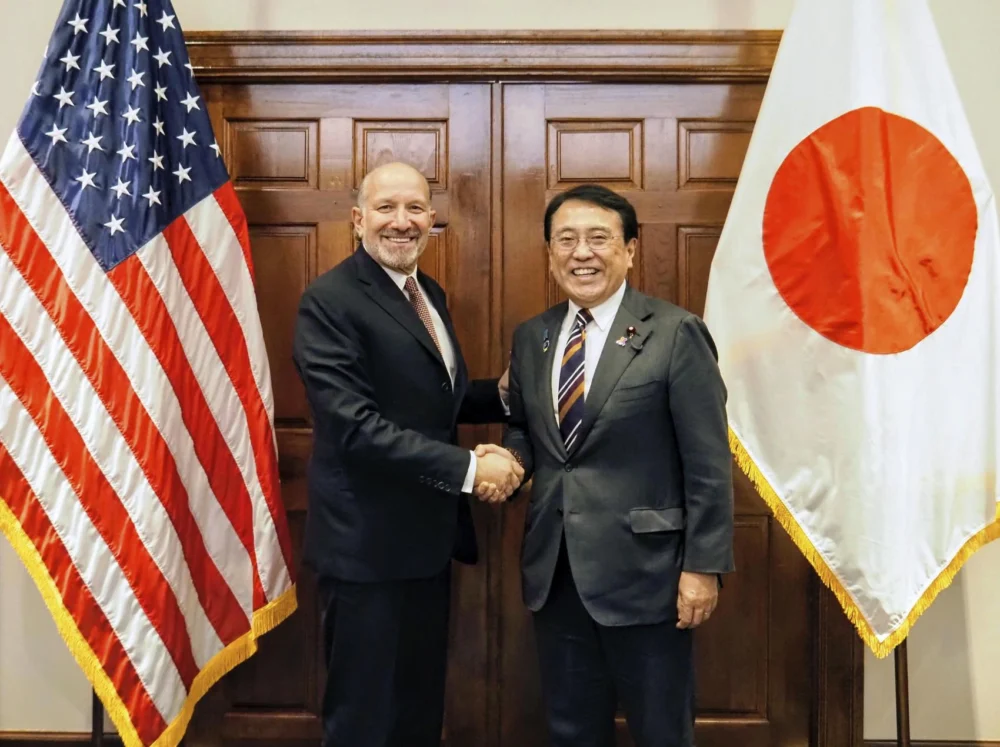
Following a substantive two-hour discussion with U.S. Commerce Secretary Howard Lutnick in Washington D.C., Minister Akazawa conveyed to the press that the bilateral talks extended beyond trade tariffs. The agenda also encompassed the progression of joint business initiatives and collaborative efforts in sectors deemed strategically vital. These include the crucial domains of energy security, the responsible sourcing of critical minerals, and the burgeoning field of artificial intelligence (AI). This broad scope underscores a shared vision for deepening economic ties and fostering innovation across a range of critical industries.
With Prime Minister Takaichi’s visit to the White House on March 19th on the horizon, Minister Akazawa emphasized the commitment of both governments to working collaboratively to ensure the summit is both productive and fruitful. This diplomatic engagement is seen as a pivotal moment to solidify the ongoing trade relationship and address any emerging concerns.
The U.S. Commerce Department, through its social media channels, corroborated the positive tenor of the discussions, highlighting a “shared commitment to building on” the foundational agreement reached just last month. This agreement pertains to the initial set of collaborative projects selected under a substantial $550 billion investment pledge made by Tokyo in the summer of 2025. This pledge was the culmination of extensive tariff negotiations that had spanned several months, indicating a significant breakthrough in resolving trade disputes.
Minister Akazawa’s meeting with Secretary Lutnick occurred in the wake of a significant legal development in the United States: the Supreme Court’s invalidation of former President Trump’s broad, sweeping global tariffs approximately two weeks prior. This judicial decision had cast a shadow over the future of U.S. trade policy, creating a degree of uncertainty in international markets. Despite this legal setback for the U.S. administration’s tariff agenda, Japan has demonstrated a steadfast commitment to honoring the terms of the trade agreement it finalized with the United States in July of the previous year.
The cornerstone of this bilateral trade accord, reached after protracted negotiations, involved Japan’s commitment to invest a staggering $550 billion in strategically important U.S. industries by the end of former President Trump’s second term in January 2029. In return for this significant capital infusion, the Trump administration had agreed to reduce tariffs on a range of Japanese imports. This reciprocal arrangement was designed to foster mutual economic growth and strengthen the strategic alliance between the two nations.
Just days before the Supreme Court’s landmark ruling, Japan and the United States had jointly announced the identification of the first three collaborative projects under this investment framework. These initial ventures, valued at an impressive $36 billion, include the ambitious construction of a new gas-fired power generation facility in Ohio. This facility is poised to be the largest of its kind in U.S. history and is specifically designed to meet the burgeoning energy demands of AI data centers, highlighting the forward-looking nature of the bilateral cooperation.
Further underscoring the deepening collaboration in cutting-edge sectors, discussions are reportedly underway regarding a second wave of projects. Among these, officials familiar with the matter have indicated that the construction of small modular reactors (SMRs) to power AI data centers is a prominent consideration. The development and deployment of SMRs represent a significant technological advancement and a potential pathway towards more sustainable and efficient energy solutions for the digital economy.
However, the recent Supreme Court ruling has undeniably intensified the existing confusion surrounding former President Trump’s tariff strategy. In an attempt to fill the void left by the invalidated broad tariffs, a new 10 percent global tariff was swiftly announced by Trump shortly after the legal defeat. This new levy, intended as a temporary replacement for the struck-down duties, took effect on February 24th, leveraging a different statutory authority. This maneuver has raised questions about the long-term implications and the potential for continued trade friction.
Adding another layer of complexity, both former President Trump and senior administration officials have signaled their intention to escalate the rate of this new blanket tariff to 15 percent. Furthermore, they have indicated that while this temporary levy is in place, which is slated to last for 150 days, the administration will explore the possibility of implementing more durable, country-specific duties. This evolving tariff landscape has created an environment of considerable anticipation and concern among trading partners.
It was in this dynamic and somewhat uncertain trade environment that Minister Akazawa reiterated Japan’s position. During his press conference on Friday, he explicitly requested that the United States refrain from subjecting Japanese imports to the proposed 15 percent tariff or any other potentially higher duties in the future. This plea underscores Japan’s desire for predictability and stability in its trade relationship with the U.S.
The context of this request is crucial. Under the terms of the trade deal negotiated prior to the Supreme Court’s decision, Japanese imports were indeed subject to a 15 percent country-specific tariff. However, Japan had secured a special exemption, often referred to as “no-stacking” treatment, from the Trump administration. This exemption meant that imports from Japan, which already carried tariffs of 15 percent or higher, were shielded from further levies. Conversely, duties on other items were set at the 15 percent rate. This nuanced arrangement highlights the specific concessions Japan had achieved and its desire to maintain these favorable terms.
The strategic importance of this trade agreement extends beyond immediate tariff rates. It reflects a broader commitment to fostering a robust economic partnership that can withstand global economic fluctuations and geopolitical shifts. The focus on joint investments in critical sectors like AI, energy, and critical minerals signals a shared understanding of the future drivers of economic growth and national security. Japan’s proactive engagement and its emphasis on upholding existing agreements demonstrate a commitment to a stable and mutually beneficial trade relationship, even as the U.S. navigates evolving trade policies.
The upcoming meeting between Prime Minister Takaichi and President Trump is therefore expected to be a crucial platform for reinforcing this commitment. It provides an opportunity for direct dialogue to address any lingering concerns about U.S. trade policy and to reaffirm the strategic alignment between the two nations. The success of this summit could have significant implications for the future of bilateral trade and investment, particularly in the rapidly evolving technological landscape.
Japan’s industry minister’s message is clear: while acknowledging the complexities of international trade, Tokyo seeks to maintain the predictability and stability of its bilateral agreements. This approach is vital for Japanese businesses that have based their investment strategies on the existing framework. The anticipated tariff adjustments by the U.S. administration, coupled with the recent Supreme Court ruling, have created a situation that requires careful diplomatic navigation to ensure that the hard-won progress in U.S.-Japan trade relations is not jeopardized.
The broader implications of these discussions also touch upon global trade norms. Japan’s appeal for adherence to agreed-upon terms resonates with other nations seeking a stable and predictable international trading system. The emphasis on collaborative investment in future-oriented industries suggests a shared vision for economic prosperity that transcends traditional trade disputes and focuses on building a more resilient and innovative global economy.
As the March summit approaches, the focus will be on whether the U.S. administration will heed Japan’s call for tariff stability, thereby reinforcing the foundation of a strong and enduring economic partnership. The successful outcome of these diplomatic efforts will be critical for shaping the future trajectory of trade relations between two of the world’s leading economies.
© KYODO