


The Emerald Isle’s ascent in the global screen industry is no longer a fleeting trend but a firmly established reality, akin to a rising tide that has become the unwavering waterline. Ireland has transcended the need to merely announce its presence on the international stage; instead, it consistently delivers a compelling narrative of creative excellence and robust economic growth. This enduring momentum positions Ireland not just as a participant, but as a pivotal player in the worldwide entertainment landscape.
The year 2025 marked an extraordinary milestone, with production expenditure soaring to a record €544 million ($632.7 million) – an impressive 26% increase over the previous year. This remarkable surge occurred against a backdrop of significant global industry disruption, including economic uncertainties and evolving production models, underscoring the resilience and strategic foresight driving Ireland’s success. The nation’s creative talent has garnered widespread international acclaim, exemplified by a multitude of nominations at the prestigious Academy Awards across key categories such as acting, visual effects, and animation. This recognition extends beyond mere nominations, with Irish-backed projects and talent securing top honors at other major awards ceremonies. Notably, “Hamnet,” a compelling drama featuring acclaimed Irish actors Jessie Buckley and Paul Mescal, captivated critics and audiences alike, earning Best Drama and Best Actress at the Golden Globes, and further cementing its dominance with Outstanding British Film and Best Actress wins at the BAFTAs. Its eight Oscar nominations further solidify its status as a critical and commercial triumph. The prevailing discourse has shifted from questioning Ireland’s ability to compete globally to understanding the foundational elements of its enduring success and envisioning the vast potential of its future trajectory.
Désirée Finnegan, the visionary Chief Executive of Screen Ireland – the national agency dedicated to fostering Irish film, television drama, animation, and documentary – reflects on this period with immense pride. “It’s been another incredible year for the industry,” Finnegan states, highlighting the multifaceted capabilities of Irish creators. “It really showcases how skilled Irish creators span so many disciplines, from storytelling to intricate craftwork.” She emphasizes that maintaining a steadfast commitment to investing in talent support across all artistic and technical domains, both in front of and behind the camera, is absolutely critical. This sustained investment, Finnegan asserts, is the bedrock upon which Ireland can continue to operate at such a consistently high international level, ensuring a pipeline of skilled professionals ready to meet the demands of an ever-evolving industry.
The recent string of Oscar nominations is not an anomaly but an extension of a remarkable and consistent awards run that has characterized the Irish screen industry in recent years. Jessie Buckley, already celebrated for her powerful performance in “Hamnet” with Best Actress trophies from both the Golden Globes and the BAFTAs, earned a well-deserved Academy Award nomination in the same category. Her “Hamnet” co-star, Paul Mescal, a talent whose star continues to rise rapidly on the international stage, was recognized with the supporting actor prize at the Irish Film and Television Awards for his compelling work in the film. The technical brilliance of Irish talent was also on full display, with FX wizard Richard Baneham securing a BAFTA and an Oscar nomination for his groundbreaking visual effects work on “Avatar: Fire and Ash,” demonstrating the nation’s prowess in cutting-edge cinematic technology. Further adding to the Oscar nominations were “Retirement Plan,” an animated short film funded by Screen Ireland and RTÉ through its innovative Frameworks scheme, directed by John Kelly and featuring the distinctive voice of Domhnall Gleeson. Element Pictures, a production powerhouse, achieved its fourth Best Picture nomination for “Bugonia,” a testament to its consistent output of high-quality, critically acclaimed films. This milestone is particularly striking given that Element’s first Best Picture nomination was a mere decade ago for “Room,” underscoring its rapid and impactful trajectory. The company’s project “Pillion” also garnered BAFTA nominations for Outstanding British Film, Screenplay, and Outstanding Debut, contributing to Element’s impressive tally of 30 Academy Award nominations over the past ten years.
Emma Norton, a distinguished producer at Element Pictures with an impressive list of credits including “Normal People” and “Pillion,” attributes this extraordinary record to far more than mere good fortune. Having worked in the Irish industry since 2008, navigating both a recession and a global pandemic, Norton has witnessed firsthand the “explosion of growth” that has transformed the landscape. She pinpoints the strategic and substantial investment in Screen Ireland, which reached its highest-ever level this year, and the significant increase in tax incentives as central pillars of this success. “Everything has been aimed towards supporting that growth,” Norton explains, emphasizing the deliberate and coordinated efforts to nurture the industry. Beyond financial mechanisms, Norton also highlights the powerful, cumulative effect of Irish actors achieving global breakthrough status. “A lot of it has to do with people like Paul Mescal going out into the world and just being so internationally recognized,” she notes. These globally celebrated talents, she adds, are deeply proud of their Irish roots and fiercely committed to ensuring Ireland remains a vibrant and essential voice in the global conversation, inspiring a new generation of creators and performers.
At the core of Ireland’s competitive edge lies Section 481, its primary screen industry tax incentive, which offers a robust credit of up to 32% on eligible Irish expenditure. Recent legislative enhancements have significantly bolstered this incentive, raising the eligibility cap from a previous ceiling of €70 million ($81.4 million) to an impressive €125 million ($145.4 million), making Ireland an even more attractive destination for large-scale international productions. Furthermore, the relief has been extended to December 2028, providing long-term stability and predictability for investors. However, the most transformative policy development from the recent budget is the introduction of an enhanced 40% tax relief rate specifically for visual effects (VFX) work. This targeted incentive applies to productions with a minimum of €1 million ($1.2 million) in eligible VFX expenditure, capped at €10 million ($11.6 million) per project. This strategic measure was meticulously designed by the government to empower Ireland to more effectively compete with established VFX hubs like the U.K., France, New Zealand, and Canada, all of which already offer specialized incentives for effects-intensive productions. It signals a clear intent to position Ireland as a leading destination for high-end visual effects.
For Jake Walshe, President and CEO of Screen Scene Post Production Group and Chair of VFX Ireland, this new VFX credit represents a decisive and game-changing shift in Ireland’s competitive landscape. Screen Scene, a pioneering company celebrating its 41st year in the industry, holds the distinction of being the first to leverage Section 481 for post-production and visual effects on the inaugural season of HBO’s monumental series “Game of Thrones.” This early adoption laid the groundwork for what has become a thriving sector. Since then, Irish VFX studios have contributed their expertise to a host of critically acclaimed and high-profile productions, including the recent hit series “Shōgun,” the eagerly anticipated “The Penguin,” and numerous other major studio projects. Walshe observes a palpable increase in interest from international producers. “We’re getting a massive amount of interest now, because obviously the number is good,” he explains, referring to the attractive 40% rate. Crucially, the new credit also allows productions to combine post-production spend with VFX at the same enhanced rate, presenting a highly compelling proposition for international producers seeking to streamline and consolidate their post-production pipeline. “A lot of people are very interested in adding post into it as well,” Walshe notes. “If they were to place $1 million in visual effects, they could effectively add on the post-production as well at 40%. It really opens a really interesting door for a lot of producers,” offering significant financial and logistical advantages.
Despite these significant strides, the question of industry capacity remains a principal concern – one that Walshe and the wider industry are actively working to address. The rapid growth necessitates a continuous expansion of the talent pool and infrastructure. To proactively tackle this, Screen Ireland has established five specialized National Talent Academies, focusing on critical areas such as live action, animation, and VFX. Each academy benefits from robust industry representation on its steering committees, ensuring that training programs are directly aligned with industry needs. Furthermore, these academies include strategically located, geographically dispersed crew hubs across the country, fostering regional development and ensuring accessibility for aspiring professionals. The impact of these initiatives is already evident: the agency logged an impressive more than 6,500 skills placements across the sector in 2025 alone, and over 18,000 since 2021, demonstrating a powerful commitment to nurturing the next generation of Irish screen talent.
Désirée Finnegan points to 2019 as a crucial structural inflection point for the industry. It was in that year that Ireland distinguished itself as one of the first countries in Europe to directly link its tax incentive to skills development. This innovative approach has proven transformative. “That’s really enabled us to assess where there may be skills gaps and respond accordingly, and to have a structural approach to skills development,” Finnegan elaborates. This proactive, data-driven strategy ensures that training efforts are targeted and effective, directly addressing the evolving needs of the industry. Finnegan also highlights that the academies are meticulously designed with inclusion as an explicit and central goal, emphasizing geographic spread and actively reaching out to underrepresented communities, thereby broadening the talent base and fostering a more diverse industry. This strategic investment in talent and infrastructure, she observes, is fueling “a new era of creative confidence” – a vibrant energy that resonates not only across film but also through theater, literature, and music. “It speaks to the fusion and exchange happening across the arts in Ireland at the moment,” Finnegan enthuses, indicating a broader cultural renaissance.
Lee Cronin, the accomplished Irish director behind the global horror hit “Evil Dead Rise,” which grossed an impressive $150 million globally for Warner Bros., experiences Ireland’s evolution as a production base on a daily basis. Based in Ireland and operating through his production company Wicked/Good, Cronin recently picture-locked his latest film, “Lee Cronin’s The Mummy,” at a state-of-the-art Dublin City Centre facility before seamlessly transitioning to a color suite. The film is set for release this spring via Warner Bros. Despite a narrative that transports audiences to locations as diverse as New Mexico and Egypt, Cronin strategically built a studio in Ireland and has meticulously posted all of his features largely within the country. He openly cites Peter Jackson’s remarkable development of a self-sustaining genre production infrastructure in New Zealand as an aspirational model, a testament to his vision for Ireland’s future capabilities.
“We kind of have almost everything we need on the island,” Cronin asserts, underscoring the comprehensive nature of Ireland’s production ecosystem. His one identified gap, however, is a shortage of Dolby Atmos mixing stages – a crucial component for high-end audio post-production in contemporary cinema. “If we can get one or two of those running, we have all of the necessary capability,” he states, expressing his strong advocacy for this infrastructural enhancement. Cronin also points to the recently enhanced VFX tax credit as tangible evidence of the industry’s progressive growth, acknowledging the presence of “some really robust visual effects companies” in Ireland that are indispensable for genre productions. Looking further ahead, Cronin articulates ambitious plans for Wicked/Good to solidify its identity as a significant force in genre cinema, drawing inspiration from Jackson’s WingNut Films and the expansive Weta ecosystem as a benchmark for integrated creative and technical excellence.
The broader strategic challenge for the Irish screen industry lies in maintaining a delicate balance: ensuring that a booming market in international inbound productions does not inadvertently overshadow or crowd out the indigenous storytelling that has historically defined Ireland’s unique global reputation. Rebecca O’Flanagan, Managing Director of Treasure Entertainment, a company deeply committed to fostering Irish stories and filmmakers, describes this dynamic as an ongoing, yet so far remarkably well-managed, tension. “There is a co-dependency on both sides of the industry,” O’Flanagan explains, acknowledging the symbiotic relationship. “You have some huge international productions that come in – that can put a strain on the indigenous industry in terms of crews and studios. So, we’re all very conscious of that.” She commends Screen Ireland as an organization that diligently monitors what she refers to as “that very delicate ecosystem,” emphasizing that, to date, the two sides have proven to be mutually beneficial, with international projects contributing to infrastructure and skills that ultimately benefit domestic productions.
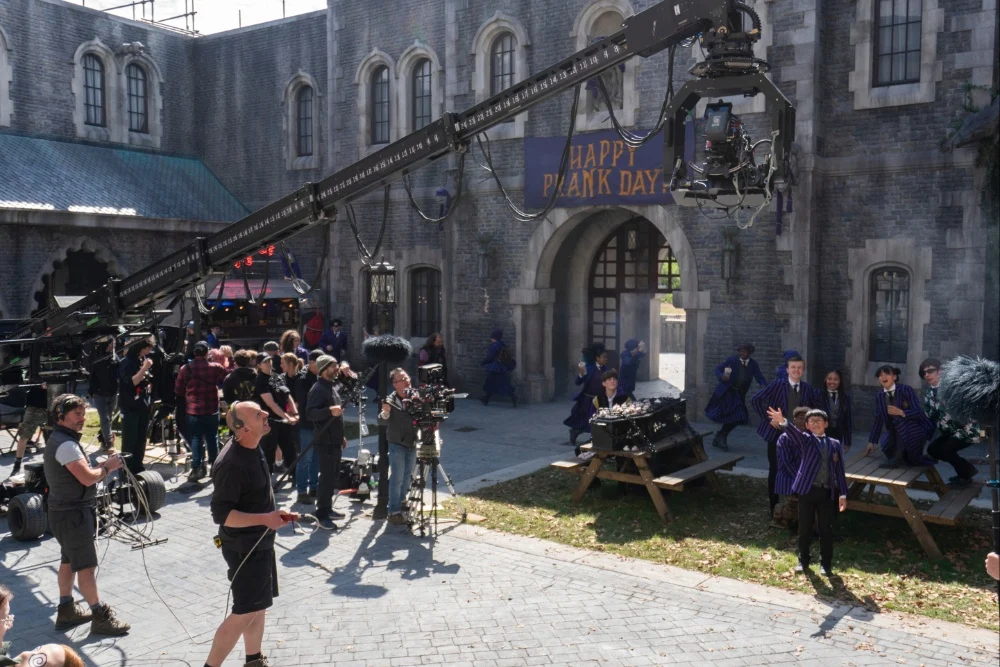
Emma Norton concurs that this vital balance is currently holding strong. “The worry that you ever have is that the larger scale projects will eclipse the ability to keep those smaller projects being made,” she admits. “But at the moment, I think that balance is there.” She highlights the fluidity with which crews can transition between the largest international productions – citing the massively popular series “Wednesday,” which filmed in Ireland – and smaller, more intimate domestic projects. This mobility ensures that the workforce remains consistently employed, highly skilled, and artistically engaged, preventing the “brain drain” that could otherwise occur. However, Norton points to a specific challenge on the television side: domestic shows still largely require international partnerships to achieve a viable budget. “We still can’t fund Irish shows solely out of Ireland,” Norton explains. “You still need those partnerships to finance those shows at a manageable level,” underscoring the ongoing necessity for global collaboration in TV production.
Screen Ireland’s ambitious 2026 slate, comprising an impressive 87 projects – including 22 feature films, 17 documentaries, and 13 TV dramas or animated series – powerfully reflects the expansive breadth and depth of the agency’s investment and strategic vision. Its remit has broadened significantly beyond traditional film, now encompassing television drama and the rapidly growing digital games sector, demonstrating a forward-thinking approach to the audiovisual landscape. In a move to enhance global visibility and accessibility, Screen Ireland has also launched “Where to Watch Ireland,” an innovative platform specifically designed to bring Irish film and television directly to U.S. and international audiences. Further solidifying its global reach, Screen Ireland’s Los Angeles office, which opened in 2019 alongside the Irish consulate, serves as a crucial base for fostering creative co-production development with major U.S. studios and leading streamers, forging vital international partnerships.
Inevitably, any forward-looking conversation about the Irish screen industry’s future must address the transformative question of Artificial Intelligence (AI). For Jake Walshe, AI is perceived not as a looming threat, but rather as a powerful accelerant for innovation and efficiency. “From an AI perspective, we’re quite excited about it, to be honest,” he reveals. “It’s been in our workflows for quite some time – it’s embedded in the software that’s been updated all the time,” highlighting its gradual, yet pervasive, integration into the technical fabric of post-production. While he acknowledges that artists are naturally “skeptical and apprehensive” about new technologies, Walshe draws upon his three decades of experience in the business to contextualize this anxiety within a historical perspective. “We’ve had massive software changes,” he reflects. “That’s always the way – we’re skeptical of things until they come along, and then we see there’s really good value in this,” suggesting that AI will ultimately prove to be a valuable tool for creative professionals.
Rebecca O’Flanagan, while measured in her assessment, shares a similar vein of optimism regarding AI’s impact. “While we stand on a kind of momentous threshold when we’re looking at things like AI,” she muses, “I think we always take hope and optimism from the fact that those unique voices and storytellers are always going to be something that the industry values.” Her perspective underscores a fundamental belief that the irreplaceable human element of creativity and authentic narrative will remain paramount, even as technological tools evolve. This sentiment is echoed in the broader economic impact of the industry: the audiovisual sector in Ireland is now valued at over €1 billion ($1.16 billion) in gross value added, directly supporting more than 15,800 full-time equivalent jobs. For Désirée Finnegan, these impressive figures are meaningful not just as economic indicators, but primarily insofar as they reflect the robust health and vitality of the talent ecosystem upon which they are built. “We’re a creative business, and the human experience is at the heart of creating work that connects with audiences,” Finnegan concludes. “Whatever the disruption might be – being that human experience, the artist being at the core of everything that we do – that is something that will just remain central to everything that we do.” Her words encapsulate Ireland’s enduring commitment to its artistic soul, even as it navigates the complexities and opportunities of a rapidly changing global industry.