



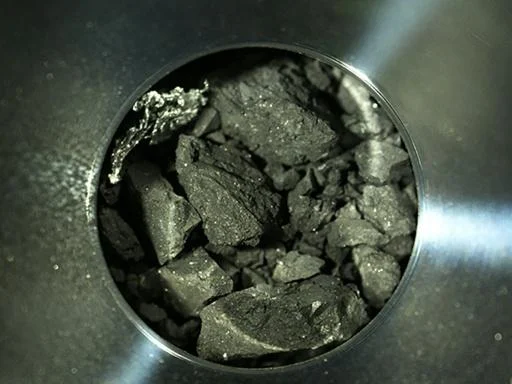
Asteroid Samples Reveal All Key Building Blocks for Life’s Genetic Code Found on Ryugu
In a monumental leap forward for astrobiology, scientists have announced the definitive discovery of all the essential molecular components required to construct DNA and RNA—the very blueprints of life as we know it—within samples retrieved from the asteroid Ryugu. This groundbreaking finding, published in the esteemed journal *Nature Astronomy*, not only solidifies the notion that these fundamental organic molecules are more prevalent in our solar system than previously imagined but also powerfully bolsters theories positing that early Earth’s nascent life may have been seeded by extraterrestrial impacts.
The samples, painstakingly collected by the Japanese Hayabusa-2 spacecraft during its ambitious mission to Ryugu, a near-Earth asteroid approximately 900 meters in diameter, represent a pristine window into the early solar system. Launched in 2014, Hayabusa-2 journeyed some 300 million kilometers to reach its target, successfully gathering two small but precious rock samples, each weighing around 5.4 grams, and returning them to Earth in December 2020. The meticulous analysis of these extraterrestrial fragments has since yielded a cascade of revelatory discoveries.
While previous research in 2023 had already confirmed the presence of uracil, one of the four critical nucleobases that form the backbone of RNA, the latest study confirms the existence of all the requisite nucleobases for both DNA and RNA. These include adenine, guanine, cytosine, and thymine, in addition to uracil. The implications of this comprehensive discovery are profound. DNA, with its iconic double helix structure, serves as the master genetic library, housing the instructions for all cellular functions. RNA, a single-stranded molecule, acts as the crucial intermediary, translating the genetic code from DNA into proteins, the workhorses of the cell. The presence of all these foundational elements in asteroid material suggests a natural and widespread process of their formation throughout the cosmos.
Lead author Toshiki Koga, a biochemist at the Japan Agency for Marine-Earth Science and Technology (JAMSTEC), was careful to emphasize that this discovery does not imply that life itself originated on Ryugu. Instead, he explained, “their presence indicates that primitive asteroids could produce and preserve molecules that are important for the chemistry related to the origin of life.” This distinction is vital: while Ryugu may not have harbored life, it demonstrably held the necessary ingredients for life’s emergence. The study further underscores that these vital molecules are “widespread throughout the Solar System and reinforces the hypothesis that carbonaceous asteroids contributed to the prebiotic chemical inventory of early Earth.”
This finding resonates powerfully with a long-standing scientific hypothesis known as panspermia, or more specifically, lithopanspermia, which suggests that life’s building blocks, or even microbial life itself, could have been transported across space via asteroids and comets. The constant bombardment of early Earth by these celestial bodies billions of years ago could have delivered the essential organic compounds necessary for abiogenesis—the natural process by which life arises from non-living matter. The Ryugu findings lend significant empirical weight to this compelling narrative.
The ubiquity of these prebiotic molecules across different celestial bodies is becoming increasingly evident. Just last year, NASA’s OSIRIS-REx mission returned samples from the asteroid Bennu, which also contained the same fundamental building blocks for DNA and RNA. Furthermore, these molecules have been identified in terrestrial meteorites such as the Orgueil and Murchison meteorites, remnants of asteroids that have fallen to Earth. This consistent detection across multiple, diverse extraterrestrial sources strongly suggests that the conditions necessary for the formation of these complex organic molecules are not unique to a single location but are likely a common feature of planetary formation and early solar system evolution.
A particularly intriguing aspect of the new research involves the detailed comparison of nucleobase quantities found in the Ryugu samples with those from other space rocks. The Japanese research team observed variations in the concentrations of these building blocks, which appeared to correlate with the specific history and composition of each asteroid or meteorite. This granular analysis provides deeper insights into the diverse chemical environments that existed in the early solar system and the varied pathways through which these molecules were synthesized and preserved.
Perhaps the most surprising discovery from the Ryugu analysis is the identification of a strong correlation between the ratios of these nucleobases and the concentration of ammonia, another crucial chemical for life. Ammonia (NH3) is a simple molecule, but it plays a vital role in various biochemical processes. The unexpected link between ammonia levels and nucleobase ratios has led researchers to consider novel formation mechanisms. “Because no known formation mechanism predicts such a relationship,” stated Koga, “this finding may point to a previously unrecognized pathway for nucleobase formation in early Solar System materials.” This suggests that our understanding of prebiotic chemistry may be incomplete, and that complex interactions between simple molecules under extraterrestrial conditions could lead to the synthesis of life’s essential components in ways we haven’t yet fully comprehended.
Astrobiologists not directly involved in the study have lauded the significance of these findings. Cesar Menor Salvan, an astrobiologist at the University of Alcala in Spain, echoed the sentiment that these results do not imply life originated in space. However, he emphasized the broader implications: “with this and the results from Bennu, we have a very clear idea of which organic materials can form under prebiotic conditions anywhere in the universe.” This ability to identify universal chemical pathways for life’s precursors is a cornerstone of astrobiology, paving the way for the search for life beyond Earth.
Morgan Cable, a scientist at Victoria University of Wellington in Australia, described the observed correlation between ammonia and nucleobases as “unique” and highlighted its profound implications. “This discovery has important implications for how biologically important molecules may have originally formed and promoted the genesis of life on Earth,” she commented. The interplay between different chemical compounds under the extreme conditions of the early solar system is proving to be far more intricate and creative than previously assumed. It suggests that the raw materials for life were not simply passively delivered but were actively synthesized and processed in complex chemical reactions within the very asteroids that would eventually populate our planetary neighborhood.
The Ryugu samples, along with those from Bennu, represent a new era in the study of extraterrestrial organic chemistry. By bringing pristine samples back to Earth, scientists can conduct highly detailed analyses that are impossible with remote sensing alone. The meticulous work on these asteroid fragments is not just about understanding the composition of space rocks; it’s about deciphering the cosmic origins of life itself. It’s about understanding whether the ingredients for life are a cosmic accident or a predictable outcome of universal chemical laws. The continued study of these samples, and future missions to similar bodies, promises to further illuminate our place in the universe and the profound question of whether we are alone.
The process of life’s emergence is incredibly complex, involving the transition from simple organic molecules to self-replicating entities. While the discovery of nucleobases on Ryugu is a monumental step, it represents one piece of a much larger puzzle. Scientists are also investigating the presence of other critical biomolecules, such as amino acids (the building blocks of proteins) and lipids (which form cell membranes), within these extraterrestrial samples. The discovery of a diverse array of organic compounds, all present in asteroid material, strengthens the argument that Earth was likely well-equipped with the necessary chemical toolkit from its earliest days.
The chemical environment of the early solar system was dynamic and varied. Asteroids, particularly carbonaceous chondrites like Ryugu and Bennu, are believed to have formed in the outer, colder regions of the solar system. Here, volatile compounds like water and ammonia could have been trapped within the icy matrix. Subsequent heating and processing, perhaps through impacts or radioactive decay, could have driven complex organic reactions. The presence of water is crucial for many chemical reactions, and its abundance in these asteroids, often locked away as hydrated minerals, has been confirmed by previous analyses. This suggests that these “dirty snowballs” of the early solar system were also miniature chemical factories.
The variations in nucleobase ratios observed across different asteroid samples may also provide clues about the specific conditions under which they formed. For instance, differences in temperature, pressure, or the availability of other chemical reactants could lead to distinct molecular signatures. By comparing these signatures, scientists can begin to map out the diverse prebiotic chemical landscapes of the early solar system, understanding which environments were most conducive to the formation of life’s fundamental components.
The discovery of the ammonia-nucleobase correlation is particularly exciting because it points towards a potentially overlooked aspect of prebiotic chemistry. Ammonia’s ability to act as a catalyst or a reactant in the formation of nitrogen-containing organic molecules like nucleobases is well-established. However, a specific quantitative relationship between ammonia concentration and nucleobase ratios suggests a more direct and perhaps tightly regulated process than previously assumed. Future laboratory experiments will likely focus on recreating these conditions to verify this novel formation pathway.
The broader scientific community’s reaction underscores the significance of this research. The consistent findings from both Ryugu and Bennu, coupled with meteorite studies, paint a compelling picture of a solar system rich in the raw materials for life. This provides a solid foundation for astrobiological research, shifting the focus from whether such molecules *can* exist extraterrestrially to understanding the detailed processes of their formation and distribution. It also informs the ongoing search for exoplanets and the assessment of their potential habitability, suggesting that the chemical prerequisites for life might be a common feature of planetary systems throughout the galaxy.
Ultimately, the discovery on Ryugu is more than just a scientific achievement; it is a profound reminder of our cosmic origins. It suggests that the complex molecules that underpin our very existence are not unique to Earth but are woven into the fabric of the solar system itself, potentially present in countless other celestial bodies. This understanding deepens our connection to the universe and fuels our enduring quest to unravel the mystery of life’s origins.