



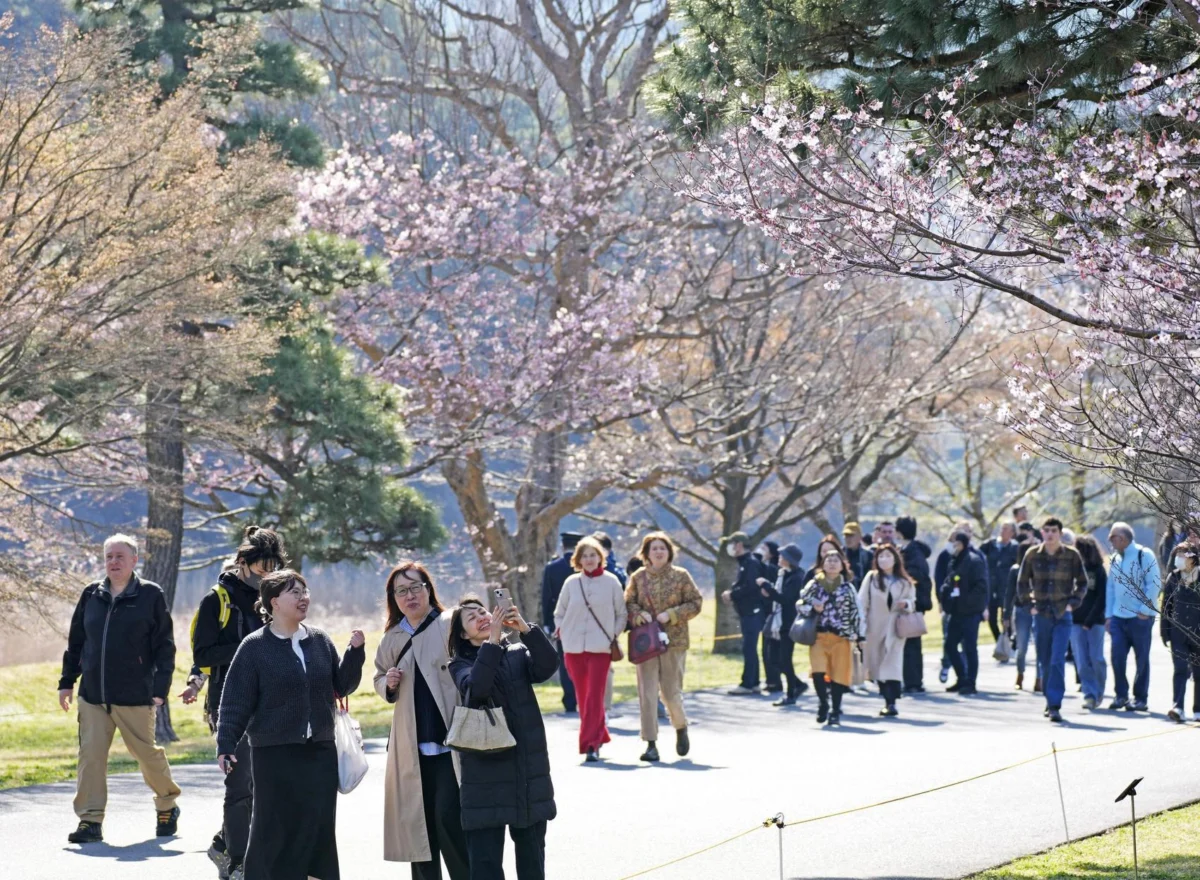
Imperial Palace Gardens Unveil Spring Splendor: A Fleeting Glimpse of Sakura Serenity for the Public
Tokyo, Japan – A rare opportunity to experience the ephemeral beauty of cherry blossoms unfolded at the Imperial Palace grounds this past Saturday, as a normally restricted section of this historic estate opened its gates to the public. Eager visitors, drawn by the promise of spring’s iconic floral display, began to assemble well before dawn, with approximately 500 individuals forming a patient queue from the early morning hours. Their anticipation was for a chance to witness the delicate pink and white hues of the sakura painting the landscape within the hallowed grounds of Japan’s imperial residence.
This special access to the Inui Street, a picturesque pathway stretching approximately 750 meters, is a cherished event that occurs only twice a year, coinciding with the peak blooming periods of both the cherry blossoms in spring and the vibrant foliage in autumn. This year’s sakura season promises a particularly breathtaking spectacle, with the Imperial Household Agency projecting that the trees will reach their full, glorious bloom around Wednesday. The limited nine-day window for public visitation underscores the precious and transient nature of this natural phenomenon, encouraging a mindful appreciation of the fleeting beauty.
Visitors wishing to immerse themselves in this tranquil setting need not worry about advance bookings or complicated registration processes. The Imperial Household Agency has maintained a welcoming policy, allowing anyone to enter and stroll through the designated area between the hours of 9 a.m. and 3:30 p.m. daily. This open-access approach, in place since 2014, ensures that the serene experience of walking beneath the blossoming cherry trees is accessible to a wide range of individuals and families, fostering a sense of shared appreciation for this national treasure.
The initiative to open Inui Street to the public for the enjoyment of its seasonal splendors was first implemented in 2014. This commemorative opening was a thoughtful gesture, marking the 80th birthday of Emperor Akihito in the preceding year. It represented a significant step in making the imperial grounds, often perceived as exclusive and distant, more accessible and relatable to the general public. This tradition has since become a beloved annual event, eagerly anticipated by residents and tourists alike, offering a unique connection to both nature’s grandeur and Japan’s rich imperial heritage.
The Imperial Palace, a sprawling complex of gardens, moats, and fortifications, serves as the primary residence of the Emperor of Japan. While much of the inner grounds remains off-limits to the general public, certain areas are opened periodically, allowing glimpses into the serene beauty and historical significance of this revered location. Inui Street, nestled within the Kitahoshi district, is particularly renowned for its avenue of cherry trees, which, when in full bloom, create an unforgettable visual feast. The decision to open this specific route during the sakura season is a deliberate choice to share one of Japan’s most iconic natural spectacles within a truly unique and historically resonant setting.
The tradition of hanami, or cherry blossom viewing, is deeply ingrained in Japanese culture. It is a time for reflection, celebration, and a profound appreciation of nature’s fleeting beauty. For centuries, the blooming of the sakura has symbolized renewal, the ephemeral nature of life, and the passage of time. Families and friends gather under the blossoms for picnics, to sing, and to simply enjoy the breathtaking scenery. The opening of Inui Street allows this beloved cultural practice to be observed within the very heart of the nation’s imperial history, adding a layer of gravitas and national pride to the experience.
The Imperial Household Agency plays a crucial role in preserving and managing the vast imperial estates, ensuring that these natural and historical treasures are protected for future generations. Their careful stewardship allows for these moments of public engagement, balancing the need for security and privacy with the desire to share the beauty of these special places. The meticulous care taken to maintain the health and vitality of the cherry trees, as well as the grounds themselves, is evident in the stunning displays that draw so many visitors each year.
Beyond the visual spectacle of the cherry blossoms, a visit to Inui Street offers a moment of tranquility amidst the bustling metropolis of Tokyo. The gentle rustling of the petals, the soft murmur of fellow admirers, and the sheer aesthetic beauty create an atmosphere of serene contemplation. It is an opportunity to escape the everyday and connect with a timeless natural event that has inspired poets, artists, and philosophers for generations. The juxtaposition of the ancient imperial architecture with the delicate, transient beauty of the blossoms creates a uniquely Japanese experience.
The historical significance of the Imperial Palace itself adds another dimension to the public’s visit. Once the site of Edo Castle, the former seat of the Tokugawa shogunate, the palace grounds are steeped in centuries of Japanese history. Walking along Inui Street, visitors can imagine the generations of emperors and imperial families who have resided within these walls, their lives unfolding against the backdrop of changing seasons. The opening of the grounds, therefore, is not just about appreciating nature; it is also about fostering a connection with the nation’s past and its enduring symbols of sovereignty and tradition.
The decision to open Inui Street in 2014, coinciding with the former Emperor Akihito’s significant birthday, was a deliberate act of outreach. Emperor Akihito, who reigned from 1989 to 2019, was known for his scholarly pursuits, his commitment to peace, and his efforts to connect with the Japanese people. The opening of this section of the palace grounds can be seen as an extension of his efforts to foster a greater sense of understanding and connection between the imperial family and the public. This gesture has since evolved into a cherished tradition, symbolizing a bridge between the imperial institution and the everyday lives of its citizens.
The timing of the full bloom is always a subject of keen interest and anticipation. While the Imperial Household Agency provides projections, the exact timing is, of course, dictated by nature itself. Factors such as temperature, rainfall, and sunlight all play a role in when the buds will unfurl their delicate petals. This inherent unpredictability adds to the excitement and the sense of urgency to witness the blossoms at their peak. Many visitors plan their trips to Tokyo specifically to coincide with this fleeting period, highlighting the global appeal of the sakura season.
For many visitors, the experience of walking along Inui Street is more than just a pleasant stroll; it is a deeply emotional and cultural experience. It is an opportunity to participate in a national ritual, to witness a natural wonder that is intrinsically linked to Japanese identity, and to gain a rare insight into the secluded world of the Imperial Palace. The accessibility provided by the Imperial Household Agency ensures that this profound experience is not limited to a select few but is shared with all who wish to partake.
The surrounding areas of the Imperial Palace also offer their own unique charms. The East Garden, for instance, is another part of the former Edo Castle grounds that is open to the public and provides historical insights and beautiful landscapes. However, Inui Street, with its specific focus on the cherry blossom avenue, offers a concentrated and intensely beautiful experience that is distinct from other public areas. The careful curation of this access point underscores the desire to share a specific, iconic aspect of the palace’s natural beauty.
As the nine-day period unfolds, the Imperial Household Agency will continue to monitor the condition of the blossoms and provide updates to the public. The hope is that the weather will cooperate, allowing visitors to fully enjoy the breathtaking spectacle. The limited duration of this opening serves as a poignant reminder of the transient beauty of the cherry blossoms themselves, encouraging people to seize the moment and appreciate the present. It is a lesson in mindfulness, delivered through the artistry of nature and the generosity of the imperial institution.
The continued success of this public opening speaks volumes about the enduring appeal of the cherry blossoms and the public’s fascination with the Imperial Palace. It is a harmonious blend of natural beauty, cultural tradition, and historical significance. For women, in particular, the sakura season often evokes feelings of renewal, femininity, and a connection to the changing cycles of life, making this a particularly resonant experience. The serene environment of Inui Street offers a peaceful escape and a chance to reconnect with nature and oneself amidst the demands of modern life.
The tradition of opening Inui Street for cherry blossom viewing is a testament to the evolving relationship between the imperial family and the Japanese people. It represents a move towards greater transparency and engagement, allowing citizens to experience aspects of the imperial realm that were once inaccessible. This initiative has been met with widespread appreciation and has become a highlight of the spring calendar for many, reinforcing the idea that beauty and history can be shared experiences, enriching the lives of all who are fortunate enough to witness them.
© KYODO