

The hallowed green-marbled walls of the United Nations General Assembly Hall served as the backdrop for a moment of profound defiance and renewed hope this week as global leaders, activists, and icons gathered for the 2026 commemoration of International Women’s Day. Amidst a global climate of political volatility and a documented resurgence of anti-gender movements, the message from the world’s most prominent stage was clear: the march toward equality will not be halted by the rising tide of opposition.
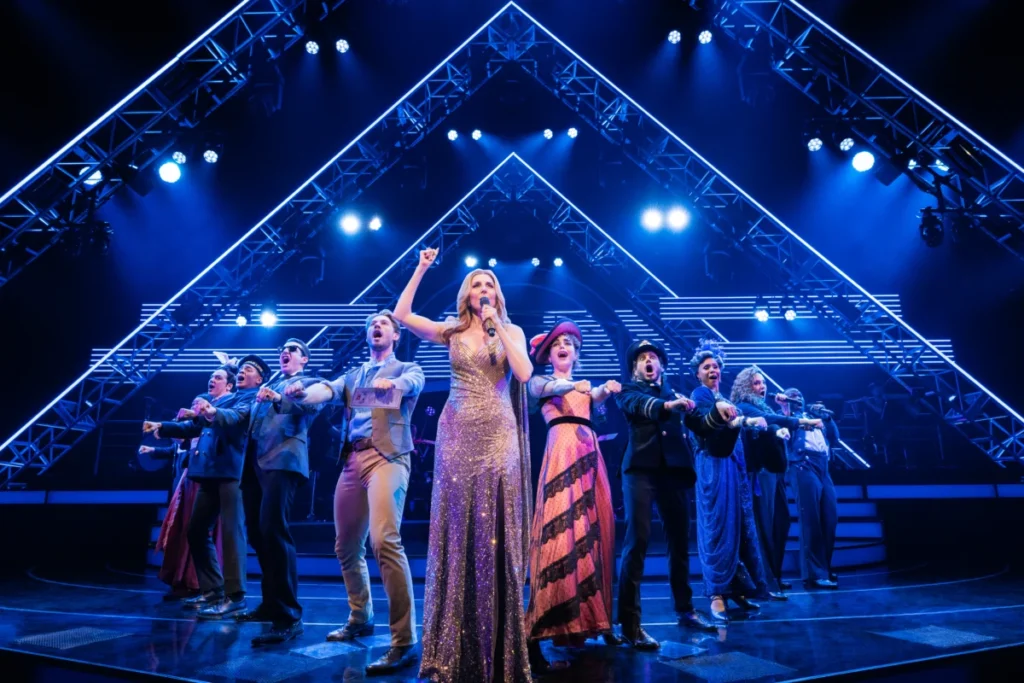
The ceremony opened with a stirring performance by Michelle Williams, whose evocative vocal delivery set a tone of "fearless progress" for the day’s proceedings. Her performance was more than just an artistic interlude; it served as a spiritual invocation for a movement that finds itself at a critical crossroads. Sima Bahous, the UN Under-Secretary-General and Executive Director of UN Women, took the podium following the performance to address an audience that spanned generations of feminists—from the pioneers who fought for suffrage to the Gen Z activists navigating the digital frontiers of human rights.
Bahous’s keynote address was a masterful blend of celebration and strategic mobilization. She began by acknowledging the monumental achievements realized across nations, honoring the courage and leadership of women and girls who have broken glass ceilings in every sector, from aerospace to grassroots community organizing. However, the celebratory tone quickly transitioned into a sober analysis of the current geopolitical landscape. Bahous spoke directly to the "pushback" against gender equality—a phenomenon that has become increasingly virulent, adaptable, and coordinated in recent years.
This pushback, as Bahous described it, is not merely a passive resistance to change but an active, well-funded effort to dismantle the hard-won rights of previous generations. Whether manifested through restrictive legislation, the erosion of reproductive rights, or the systematic harassment of women in digital spaces, the threat is real and growing. Yet, Bahous’s response was one of unwavering resolve. "In its face, we do not back down," she declared to a room filled with delegates and civil society leaders. "We redouble our efforts. We rise higher."
The central theme of the 2026 commemoration is "Justice," which Bahous identified as the "non-negotiable foundation of rights." While the discourse around gender equality often focuses on representation and economic participation, the UN is now pivoting toward a more fundamental examination of how legal and judicial systems either protect or fail women. The statistics remain staggering: as of 2026, not a single country in the world can claim to have achieved full legal equality for women and girls. This systemic failure means that for millions, justice remains selective, inaccessible, or entirely denied.
To bridge this "justice gap," Bahous outlined a comprehensive vision for reform. This vision calls for justice systems that are not only adequately financed but are also fundamentally restructured to recognize the specific rights and needs of survivors. In many parts of the world, survivors of gender-based violence are re-traumatized by the very systems meant to protect them. Bahous argued for a paradigm shift where justice is informed by data and evidence rather than bias and tradition.
A significant portion of the discourse focused on the dual-edged sword of technology. As we move deeper into the 2020s, the intersection of artificial intelligence, digital surveillance, and gender equality has become a primary concern for UN Women. Bahous emphasized that while technology offers unprecedented opportunities for transparency and legal access—such as blockchain for secure land titles or mobile platforms for reporting abuse—it also presents grave risks. The use of AI in predictive policing and judicial sentencing has shown tendencies to bake in existing gender and racial biases, further marginalizing women. The 2026 call to action demands that technology be harnessed as a tool for equity, with robust safeguards to prevent it from becoming a new instrument of patriarchal control.
The Executive Director also turned the spotlight on the engine of the feminist movement: women’s organizations and civil society. These groups are often the first responders in crises, providing essential services where governments fail. Yet, they remain chronically underfunded. Bahous made an impassioned plea for the international community to recognize that supporting these organizations is not an act of charity but a strategic investment in global stability and justice. Without well-funded grassroots movements, the "unwavering call for something better" risks being silenced by the sheer weight of institutional inertia.
Despite the gravity of the challenges discussed, the atmosphere of the event was far from despondent. Bahous expressed a radical optimism, asserting that the goal of true equality is not a distant, unreachable utopia but a reality within our grasp. "I believe all of us here will have the great good fortune not only to work for it, but to witness it, too," she said. This sentiment resonates with a growing body of global sentiment that views gender equality as the "force multiplier" for solving other existential threats, including climate change and economic inequality.
The 2026 International Women’s Day serves as a reminder that the movement is both historically rooted and profoundly contemporary. It is a movement that honors the suffragettes of the 20th century while utilizing the data-driven advocacy of the 21st. The focus on justice this year reflects a maturing of the global conversation—a shift from asking for a seat at the table to demanding a complete redesign of the room itself.
As the ceremony concluded, the message that lingered was one of collective responsibility. The fight for justice is not solely the burden of women and girls; it is a prerequisite for a better future for all humanity. A world where women are free from violence and have equal access to justice is a world that is inherently more peaceful and prosperous for everyone. Bahous’s closing remarks served as both a wish and a mandate: a call to be "unbending in the face of pressure" and to continue inspiring through both action and words.
In the hallways of the UN Headquarters following the speech, the energy was palpable. Activists from across the globe discussed the practicalities of the "rise higher" mandate. For some, it means lobbying for legislative changes that close the gender pay gap or protect digital privacy. For others, it means continuing the dangerous work of defending human rights in conflict zones where justice is often the first casualty.
International Women’s Day 2026 will likely be remembered as the moment the global community stopped playing defense against the pushback and started defining the terms of a new, just era. By placing the judicial system at the heart of the agenda, UN Women has signaled that the next phase of the struggle will be fought in the courtrooms, the legislatures, and the algorithms that define modern life.
The road to 2030—the target date for the Sustainable Development Goals—is short, and the obstacles are many. But as Sima Bahous reminded the world, the resilience of women is a resource that has never been exhausted. With a foundation of justice and a spirit of fearless progress, the vision of a world where every woman and girl can live a life free from violence and full of opportunity is no longer just a dream—it is the inevitable future we are currently building.
The commemoration ended not just with applause, but with a sense of renewed mission. The delegates departed the General Assembly Hall carrying the "inspirational, beautiful voice" of Michelle Williams and the "unbending" resolve of Sima Bahous, ready to turn the rhetoric of the day into the reality of tomorrow. In the face of the pushback, the world did not just stand its ground; it rose higher.