



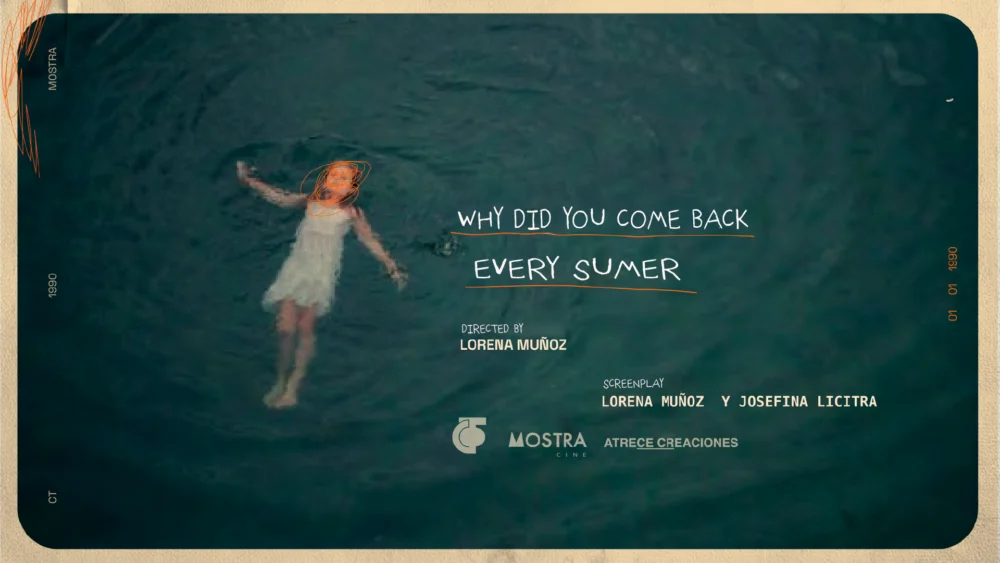
In a significant move poised to amplify a vital narrative, Cindy Teperman, a distinguished figure from the globally recognized production powerhouse Infinity Hill, has officially joined the team behind Lorena Muñoz’s forthcoming feature, “Why Did You Come Back Every Summer?” (Por qué volvías cada verano?). Teperman, whose impressive portfolio includes the Golden Globe-winning and Oscar-nominated triumph “Argentina, 1985,” brings her considerable experience and industry gravitas to a project that promises to tackle themes of profound social importance and personal resilience.
Lorena Muñoz, celebrated for her compelling 2016 biopic “I Am Gilda,” is steering this deeply resonant film, an adaptation of Argentine writer Belén López Peiró’s acclaimed memoir. The project, currently in advanced development, is gearing up for its market debut at the prestigious 2026 Málaga Festival Fund & Co-Production Event (MAFF). This crucial platform will serve as a launchpad for the production team to secure additional co-production partners and an international sales agent, essential steps in bringing such a poignant story to a global audience.
Teperman’s involvement through her banner, CT Producciones, signals a strong endorsement for “Why Did You Come Back Every Summer?” and its urgent message. Her track record with Infinity Hill underscores a commitment to producing impactful cinema that resonates both critically and commercially. The collaboration extends further into a robust network of Argentine and Spanish talent. Teperman is partnering with seasoned Argentine producers Delfina Montecchia, Tomás Eloy Muñoz Lázaro, and Valeria Bistagnino. This formidable local team is joined by Spain’s Anna Saura, representing Madrid-based Atrece Creaciones, solidifying the film’s status as a burgeoning Argentina-Spain co-production.
The synergy among these producers is not new. CT Producciones and Muñoz Lázaro and Bistagnino’s Mostra Cine previously collaborated on “The Freshly Cut Grass,” a project that garnered international attention, notably for its association with legendary filmmaker Martin Scorsese. This established working relationship suggests a seamless and efficient production pipeline, crucial for navigating the complexities of independent filmmaking and cross-border collaborations.
Infinity Hill, the umbrella under which CT Producciones operates, has firmly established itself as one of Argentina’s most internationally recognized production banners in recent years. Their collective credits paint a picture of a company dedicated to diverse, high-quality cinema, ranging from festival darlings to arthouse successes. Beyond “Argentina, 1985,” their roster includes critically acclaimed titles such as “Puan,” “Animal,” “Kill the Jockey,” “The Woman in the Line,” and the highly anticipated Sundance 2025 entry “The Virgin of Quarry Lake,” alongside “The Freshly Cut Grass.” This rich tapestry of productions highlights their expertise in bringing compelling stories to the screen, often with a keen eye for social commentary and human drama.
At the heart of “Why Did You Come Back Every Summer?” lies Belén López Peiró’s courageous book, which unflinchingly recounts the sexual abuse she endured as a child. The adaptation, co-written by director Lorena Muñoz and acclaimed Argentine journalist-author Josefina Licitra, centers on Lourdes, a character whose childhood summers in her mother’s idyllic rural hometown are scarred by the abuse inflicted by her uncle, a figure of respect within the local community – a police commissioner. The narrative powerfully portrays the stark contrast between the outwardly calm, family-friendly setting and the hidden trauma festering beneath the surface.
Years later, Lourdes makes the brave decision to report her abuser, embarking on a harrowing journey that forces her to confront not only the perpetrator but also a community that, through a distorted sense of loyalty or denial, is predisposed to blame her for speaking out. This societal pressure is compounded by a slow, often hostile judicial system that, rather than offering solace and justice, demands an impossibly “perfect” victim, often re-traumatizing survivors in the process. The film promises to be a searing indictment of the systemic failures that perpetuate cycles of abuse and silence.
Lorena Muñoz articulated her profound connection to the source material, stating, “When I read the novel, I understood that I was not just facing a story of abuse, but an act of transformation. Belén did more than denounce: she wrote, and turned pain into a form of resistance. As a director, I feel the responsibility to honor that courage with a film that does not re-victimize, but listens, that looks with humanity and invites reflection.” This statement underscores the artistic and ethical compass guiding the production, promising a nuanced and empathetic portrayal that prioritizes the survivor’s agency and the transformative power of their voice.
Muñoz’s previous work, particularly “I Am Gilda,” cemented her reputation as a director capable of crafting emotionally rich and culturally significant narratives. The 2016 biopic, starring Natalia Oreiro as the beloved late cumbia singer Gilda, was a breakout local hit in Argentina, capturing the hearts of audiences and critics alike. Its success extended internationally, securing a U.S. distribution deal with Paradiso Distribution, showcasing Muñoz’s ability to tell uniquely Argentine stories that resonate universally. Her transition to “Why Did You Come Back Every Summer?” demonstrates a deepening commitment to powerful, often challenging, female-centric narratives.
The strategic partnership with Spanish producer Anna Saura through Atrece Creaciones is particularly noteworthy. Anna Saura is rapidly emerging as a significant producer-director in Spain. Her directorial debut, “The Kid in the Photo,” a knowing and intimate documentary feature portrait of her legendary father, the great Spanish director Carlos Saura, is set to world premiere at Málaga. This personal project not only highlights her artistic sensibilities but also solidifies the established working relationship between Mostra Cine and Atrece Contenidos, who are co-producing “The Kid in the Photo. Carlos Saura,” screening in Málaga’s Documentaries – Special Screenings sidebar. This cross-pollination of talent and projects between the two nations bodes well for the creative and logistical success of “Why Did You Come Back Every Summer?”
The development of “Why Did You Come Back Every Summer?” has already garnered substantial early backing, a testament to the project’s perceived importance and potential impact. This support includes grants from the Carolina Foundation Development Program, an Ibermedia development grant, and recognition from the Guadalajara Coproduction Meeting, the Iberseries Pitching Program, and Málaga’s own MAFF platform. Such early endorsement from influential industry bodies indicates a strong belief in the film’s artistic merit and its capacity to contribute meaningfully to global conversations surrounding trauma, justice, and the resilience of the human spirit. With a targeted second-quarter 2027 shoot, the project is steadily moving towards its realization, promising a powerful and essential cinematic experience.