

From Red Carpet to Real-Time Trading: The Explosive Rise of Oscar Prediction Markets
The glitz and glamour of the Academy Awards have always been a fertile ground for speculation, from who will wear what designer to which acceptance speech will steal the show. Yet, in recent years, the age-old tradition of office pools and friendly wagers has been overshadowed by a new, more sophisticated, and undeniably influential player: prediction markets. These platforms, operating with the precision of financial exchanges, are not merely reflecting public opinion; they are actively shaping the narrative and magnifying the drama of award season, transforming casual interest into high-stakes, real-time engagement.
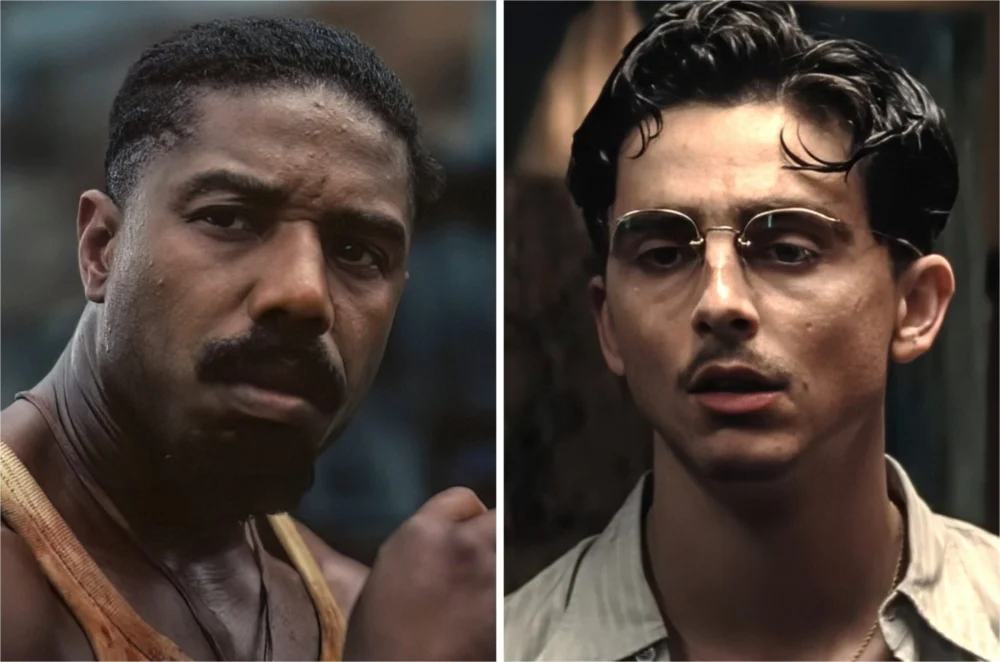
Consider the recent trajectory of the Best Actor race, a compelling microcosm of how these markets operate. Just weeks ago, the charismatic Timothée Chalamet was widely considered the undisputed frontrunner, his performance lauded by critics and audiences alike. His presumed victory was so certain that contracts tied to his Oscar win on Kalshi, a leading prediction market platform, commanded a robust 68 cents. This price, reflective of market confidence, indicated that traders believed there was a 68% chance of him taking home the coveted statuette. However, the seemingly unshakeable consensus began to crack with remarkable speed.
The first significant shift occurred when Michael B. Jordan, another powerhouse performer, clinched the Screen Actors Guild’s Actor Award. This peer-voted accolade, often a strong indicator for the Oscars, sent ripples through the prediction market. Almost instantaneously, Chalamet’s contract price on Kalshi plummeted to 51 cents. The market, ever sensitive to new data and shifts in momentum, recalibrated, signaling a much tighter race. While Chalamet still held a narrow lead, the air of inevitability had vanished.
The narrative took an even more dramatic turn just days later. On March 6, remarks attributed to Chalamet, seemingly deprecating the art forms of ballet and opera, began circulating and drawing considerable backlash across social media and entertainment news outlets. Despite the fact that Oscar balloting had officially closed on March 5 – meaning the controversy could not possibly influence the actual votes – the market reacted with decisive force. By March 7, the collective sentiment had pivoted entirely, and Michael B. Jordan ascended to the position of frontrunner in the prediction markets. This phenomenon perfectly illustrates the dynamic interplay between public perception, media narratives, and market behavior: even if the “truth” (in this case, the ballot closure) is known, a powerful “vibe shift” can override rational assessment and drive market corrections.
This heightened level of engagement is translating into unprecedented financial activity. By March 10, traders on Kalshi alone had collectively bought $48.4 million worth of Oscar-related contracts for the current year, a staggering sum that already far outstripped the $29.6 million total recorded for the entire 2025 Oscar season. With the Academy Awards ceremony still days away, and activity historically ramping up in the final stretch, projections indicate that the final tally for the current year will be significantly higher, potentially setting new records for engagement and trading volume.
Jack Such, a spokesperson for Kalshi, underscores the burgeoning importance of these events for their platform. “It’s definitely one of our faster growing verticals,” Such notes, highlighting the unique appeal of awards season. “It’s one of the tentpole individual events. It’ll do tons of volume.” This sentiment reflects a broader trend: the quaint days of informal $5 office pools, once a staple of awards season, are rapidly becoming a relic of the past as sophisticated prediction markets explode in popularity and reach.
Kalshi is not alone in this booming landscape. Its main rival, Polymarket, has also made significant inroads, particularly by embracing real-time integration with live broadcasts. In January, Polymarket went “all in” on the Golden Globes, featuring real-time odds prominently during the telecast. This innovative approach aimed to encourage viewers to deepen their engagement with the show by actively participating in the market, putting money on outcomes as they unfolded. While some social media users raised concerns that this integration risked overshadowing the awards themselves, it undeniably sparked conversation and demonstrated the potential for prediction markets to become an intrinsic part of the viewing experience.
The figures from Polymarket further underscore the exponential growth. As of Thursday, an astonishing $30 million had been traded on the Best Picture category alone for the current Oscars, dwarfing the $5.3 million traded for the entirety of the Best Picture race in 2025. Across both Kalshi and Polymarket, the combined trading volume on Oscar contracts has already surpassed $100 million, a testament to the surging interest and financial commitment from participants. For instance, a hypothetical film titled “One Battle After Another” stands as the clear favorite on both platforms for Best Picture, trading at approximately 75 cents, indicating strong market confidence in its victory.
The surge in popularity for prediction markets didn’t happen overnight. A pivotal moment arrived in October 2024, when a landmark decision by a federal appeals court granted Kalshi the authority to offer contracts on the upcoming election. This legal victory provided a crucial validation for the nascent industry, distinguishing it from traditional gambling. The subsequent election cycle further cemented their credibility: while many traditional pollsters struggled, often viewing the presidential race as a statistical “coin-flip,” Kalshi users, through their collective trading activity, bet heavily on Donald Trump, a prediction that was ultimately proven correct. This demonstrated a surprising predictive power, suggesting that aggregated market sentiment could, in some cases, be more accurate than conventional polling methods.
Since that watershed moment, prediction markets have experienced an undeniable surge in mainstream popularity. Even major sports betting platforms, recognizing the immense potential and growing appetite for these new forms of engagement, have launched their own prediction market verticals to capitalize on the burgeoning action. This move by industry giants like DraftKings and FanDuel signifies a broader acceptance and integration of prediction markets into the wider entertainment and betting ecosystem.
It’s crucial to understand the nuanced regulatory landscape that governs these platforms. While DraftKings has offered traditional Oscar *bets* since 2019, initially only permissible in New Jersey, the legality of such wagering is determined at the state level. Over time, a handful of other states and territories have followed suit, approving Oscar betting, including Michigan, Indiana, Arizona, Massachusetts, Louisiana, Kansas, Missouri, and Puerto Rico. However, prediction markets like Kalshi and Polymarket operate under a fundamentally different legal framework. They are explicitly *not* considered gambling. Instead, they are regulated as futures contracts by the federal Commodity Futures Trading Commission (CFTC), the same body that oversees commodity markets like oil and agricultural products.
This distinction has inevitably led to a jurisdictional clash. As prediction platforms expand into areas traditionally covered by sports betting, a tense standoff has emerged between state gambling regulators, who believe they should have oversight, and the CFTC, which asserts its sole authority over prediction markets as futures contracts. During the Trump administration, the CFTC made a clear and forceful declaration, affirming that it alone held jurisdiction over these burgeoning markets. This ongoing legal and regulatory debate highlights the innovative and disruptive nature of prediction markets, challenging established categories and forcing a re-evaluation of how speculative activities are classified and controlled.
With the exponential growth and significant financial stakes involved, concerns about market integrity, particularly the specter of insider trading, have naturally arisen. While these issues have not yet manifested concerning the Oscars, where the winners are famously a closely guarded secret known only to the meticulously discreet accountants at PwC, the potential for mischief is palpable. The range of contracts offered extends far beyond simple winner predictions. Platforms now allow trading on which celebrities will attend, or even which specific words will be spoken on stage. For instance, the word “ballet” was reportedly trading at 62 cents on Polymarket, a direct echo of the Chalamet controversy. Such granular predictions open up a Pandora’s Box of possibilities for those with privileged information or an inclination towards manipulation.
Kalshi, acutely aware of these risks, maintains robust surveillance systems designed to flag suspicious trading activity, mirroring the sophisticated mechanisms employed by traditional stock exchanges. “If the system flags something, we look into it,” explains Jack Such, detailing their preventative measures. “And then, because we have everyone’s information, we can be like, ‘Oh, wow. This is Nicole Kidman’s high school best friend,’ or whatever, right? The surveillance system and identity verification does the trick.” Furthermore, Kalshi proactively prohibits Academy members from trading on Oscar contracts, a crucial step to safeguard the integrity of the awards process. While the Academy itself does not have an explicit rule directly forbidding such activity, its overarching Standards of Conduct mandate a general level of professionalism and integrity from its members in all aspects of the voting process, implicitly discouraging any actions that could undermine public trust.
The road for prediction markets hasn’t been entirely without bumps. Kalshi faced a notable controversy in 2025 concerning contracts related to Oscar TV ratings. The platform had offered contracts on whether the year’s viewership would surpass that of previous years. Initial reports indicated a decline in viewership, leading the contracts to resolve as “no.” However, the following day, additional data emerged, revealing that the ratings had, in fact, increased. Kalshi attributed the discrepancy to unclear initial reporting from sources like The New York Times, which was one of the authorities cited in its contract. “It’s just a weird edge case,” Such acknowledged, emphasizing the platform’s adherence to its predefined contract terms. “It’s not really on us — like, we’re not the ones who got it wrong. And in fact, we have to abide by what we say in the contract.” In response to this “weird edge case” and to avoid similar ambiguities, Kalshi opted not to offer an Oscar viewership contract for the current year, illustrating their commitment to learning from past experiences and refining their offerings.
Beyond the legal and ethical considerations, prediction markets are also subtly shifting the demographics of engagement. DraftKings, predominantly known as a sports betting powerhouse, has observed a distinct trend with its Oscar offerings, which now encompass both traditional wagering and prediction markets. These entertainment-focused contracts have proven to be a significant draw for female users, a demographic less traditionally represented in core sports betting. Johnny Avello, director of race and sports operations at DraftKings, articulates this strategic expansion: “We’re not only a sports company. We’re an entertainment company. Our customers tell us what they want, and we oblige.” This diversification speaks to the broader appeal of awards season and the desire for engaging, interactive experiences that transcend traditional sporting events. However, Avello is quick to put the volume into perspective, emphasizing that while growing, Oscar trading remains a novelty compared to the platform’s core business: “Don’t ever confuse this with what we’re going to take on a Sunday NFL game. That is no joke.”
As the red carpet rolls out and the golden statues prepare to find their new homes, prediction markets stand as a compelling testament to the evolving nature of public engagement with entertainment. They have transformed award season from a passive viewing experience into a dynamic, interactive marketplace where public sentiment, media narratives, and real-time financial decisions converge. While challenges remain in terms of regulation, data integrity, and ethical oversight, the explosive growth of these platforms signals a new era for Hollywood’s biggest night, where the drama isn’t confined to the screen but extends to the very pulse of public prediction.