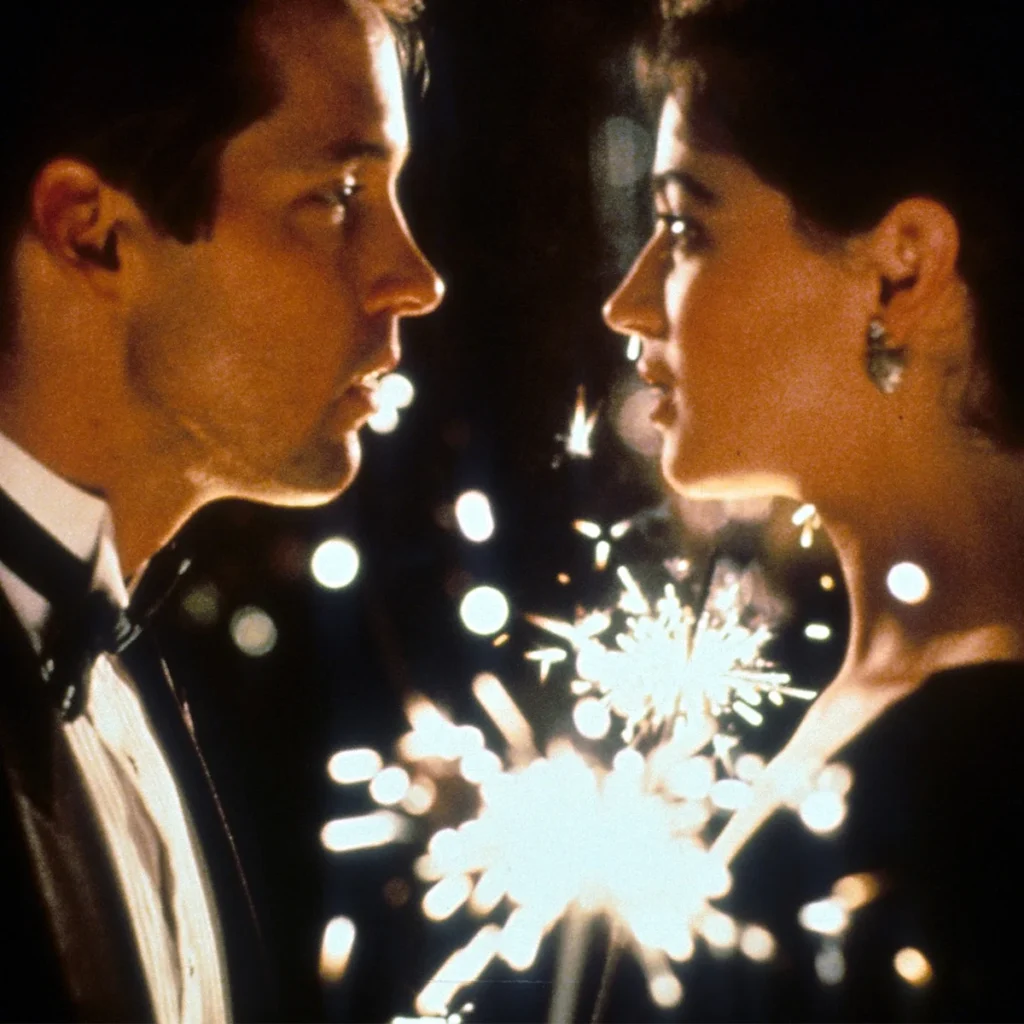



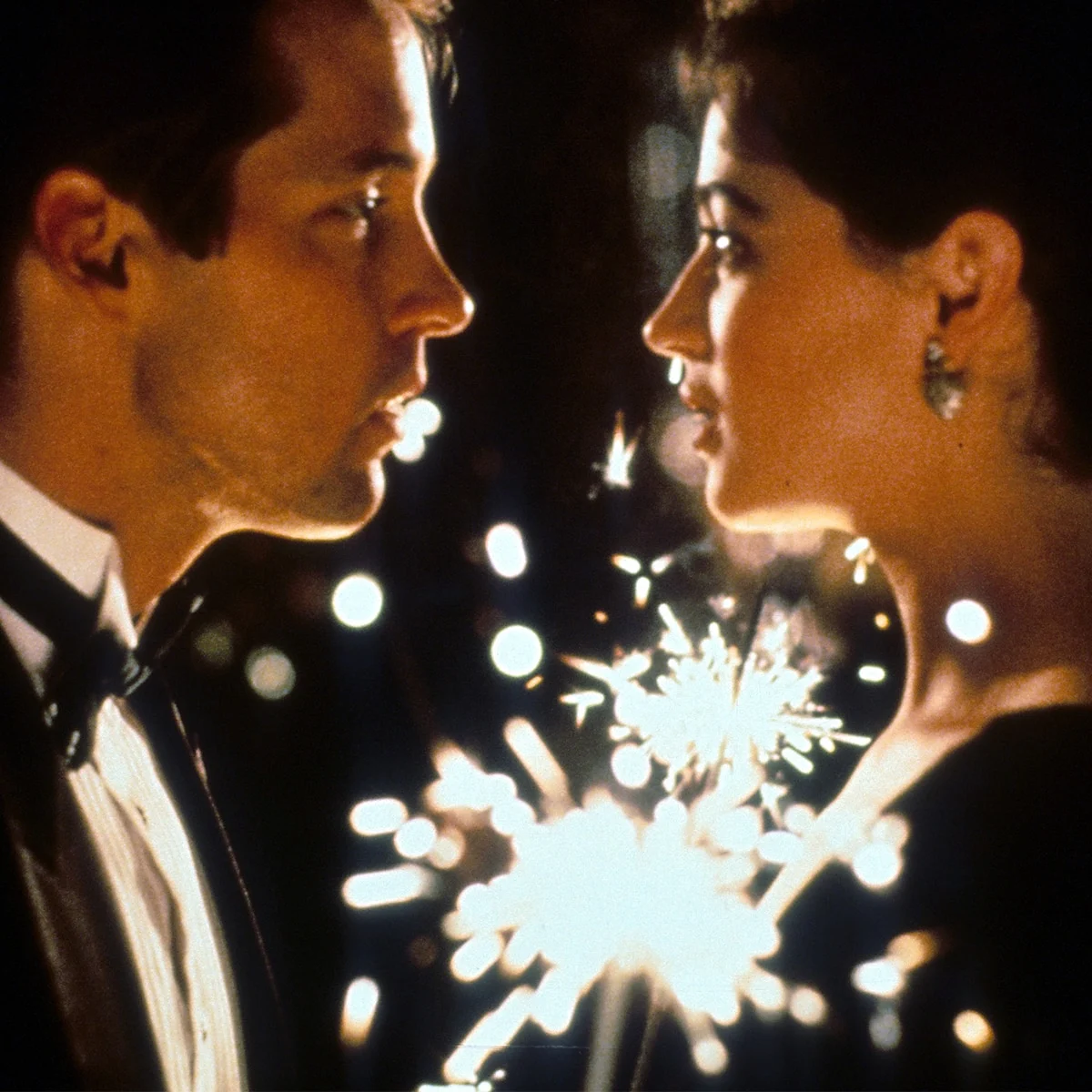
In the landscape of early 1990s cinema, few films managed to capture the specific, high-stakes glitter of professional sports and the slow-burn friction of an enemies-to-lovers romance quite like The Cutting Edge. Released on March 27, 1992, the film introduced audiences to an unlikely pairing: Kate Mosley, a wealthy, temperamental figure skating prodigy, and Doug Dorsey, a blue-collar hockey star whose Olympic dreams were seemingly crushed by a career-altering head injury. Directed by Paul Michael Glaser—better known to many as Starsky from Starsky & Hutch—the movie didn’t just offer a sports narrative; it provided a masterclass in onscreen chemistry that has endured for over three decades.
While modern audiences might be swooning over contemporary ice-bound romances like the viral sensation Heated Rivalry, the foundation for the "melt-the-ice" trope was arguably laid by Moira Kelly and D.B. Sweeney. Despite a lukewarm critical reception at the time—it currently holds a modest 59 percent rating on Rotten Tomatoes—the film struck a chord with the public that critics couldn’t quite quantify. Grossing $25 million at the box office, it eventually transformed into a cult classic, fueled by cable television reruns and a catchphrase that has become synonymous with the sport itself: "Toe pick."
For D.B. Sweeney, the legacy of that two-word insult remains inescapable. Decades after the film’s debut, the actor noted that he still hears the phrase roughly five times a day. He recalled a particularly surreal moment shortly after the film’s release when he stumbled while running through an airport, only to have a chorus of seven strangers immediately shout "Toe pick!" at him. It was a clear sign that the film had not just been watched, but had embedded itself into the collective cultural consciousness.
The journey to creating that cultural footprint was far from effortless. To portray world-class athletes, Kelly and Sweeney—neither of whom had significant skating experience—were thrust into a grueling three-month "bootcamp" in New York City. Moira Kelly candidly admitted that prior to the film, she had only been on the ice twice in her life. The intensive daily training served a dual purpose: it taught them the fundamentals of the sport and allowed them to build a rapport that mirrored their characters’ journey. Sweeney later reflected that the process was a natural and organic way to build a shared history, as they spent months sweating and stumbling together long before the cameras started rolling.
However, the limits of three months of training are real, and the production relied heavily on professional "ice doubles" to perform the more technical maneuvers. British skating legend Robin Cousins, a 1980 Olympic gold medalist who served as the film’s choreographer, recruited U.S. figure skating medalist Sharon Carz and pairs skater John Denton to step in for the leads. Interestingly, the tension between Kate and Doug on screen was mirrored by a real-life power struggle between their doubles. Carz and Denton were former competitors, and in the rigid world of professional figure skating, their pairing was considered "taboo." Denton described their relationship as "oil and water," noting that their natural friction made it easy to portray the adversarial energy required for the film’s early scenes.
The production was also defined by the physical toll of the ice. Filming involved 17-hour days, with the professional skaters often arriving hours before the lead actors for hair and makeup. The strain led to genuine injuries; Denton suffered a detached latissimus muscle after a particularly aggressive throw, and Carz once took a puck to the leg during the filming of the characters’ one-on-one hockey match. Even a $20,000 camera wasn’t safe, losing a lens during a close-up shot of the skaters’ blades.
Perhaps the most famous element of the film’s climax is the "Pamchenko," the high-risk, ostensibly illegal move that secures Kate and Doug’s victory. In reality, the Pamchenko is a feat of cinematic imagination rather than athletic physics. Both Carz and Denton have since debunked the move, with Carz calling it "crazy impossible" and Denton pointing out that the trajectory required defies the laws of science. To bring the move to life, the production used a combination of "movie magic," including a mannequin (whose wig kept flying off during spins), a doll, and a trampoline anchored to the ice. Carz performed the mid-air rotations on the trampoline while wearing a harness, a sequence so demanding that she was warned not to attempt it more than three times a day.
The filming process was further complicated when Moira Kelly suffered a legitimate broken foot during the first week of production. Rather than halting the shoot, the crew utilized selective photography and clever staging to hide her cast. This led to what Sweeney considers his most embarrassing scene: a sequence where the two characters go out dancing. While Sweeney is seen dancing with his full body, Kelly—whose foot was in a cast—was actually seated on a camera dolly, performing using only her upper body. Sweeney joked that despite her injury, Kelly was still a better dancer with "no legs" than he was with two.
Beyond the technical hurdles and physical mishaps, the heart of The Cutting Edge remains the relationship between its two leads. Despite the "Ice Queen" persona Kelly projected as Kate Mosley, her off-screen bond with Sweeney was one of mutual respect and sibling-like affection. Kelly has described Sweeney as a "big brother" figure who supported her through the intense production. Their chemistry was so vital to the film’s identity that both actors eventually turned down offers for a sequel. They had made a pact that they would only return if the other did, and after reviewing scripts they found subpar and offers they considered "insultingly low," they chose to leave the story of Kate and Doug exactly where it ended: on the top of the Olympic podium.
The two did eventually reunite professionally, though not on the ice. In 2007, Kelly appeared in the film Two Tickets to Paradise, which Sweeney directed. Their enduring friendship serves as a testament to the genuine connection formed during those cold months in 1991.
Today, The Cutting Edge stands as more than just a nostalgic relic of 90s cinema. It is a reminder of a time when rom-coms relied on sharp dialogue, earned character growth, and a touch of athletic fantasy. It taught a generation of viewers that "pride is a long way to fall," that hockey players can indeed wear sequins, and that sometimes, the best way to find your balance is to trust the person holding you—even if they’ve spent the last three months telling you to watch out for the toe pick. As the film continues to find new audiences, its "gold medal" status in the hearts of fans remains untouched, proving that some love stories are simply built to glide.