


Global Markets Reel as Escalating Middle East Tensions Ignite Oil Surge and Economic Fears
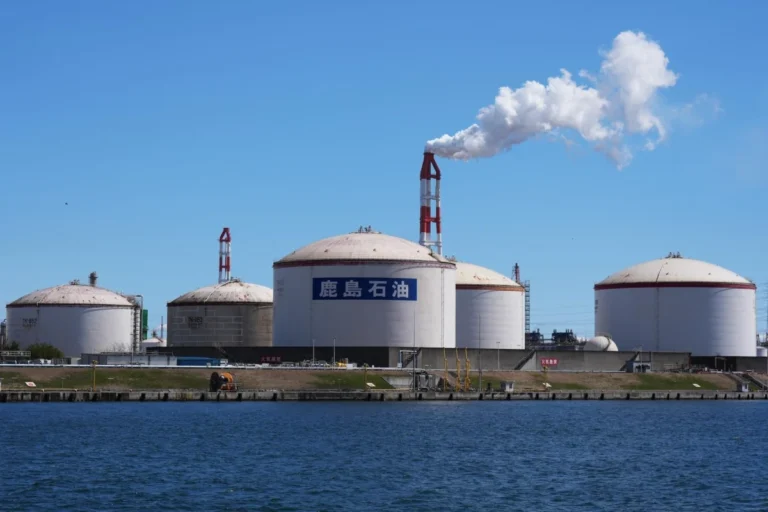
Asian stock markets experienced a sharp downturn on Wednesday, with South Korea’s benchmark index, the KOSPI, plummeting by over 11% as escalating conflict in the Middle East sent oil prices to new heights. The widening war, reportedly involving Iran, has cast a long shadow over global financial markets, injecting a potent dose of investor anxiety. The fear is palpable: a sustained spike in oil prices could severely impede global economic growth and erode corporate profitability across the board.
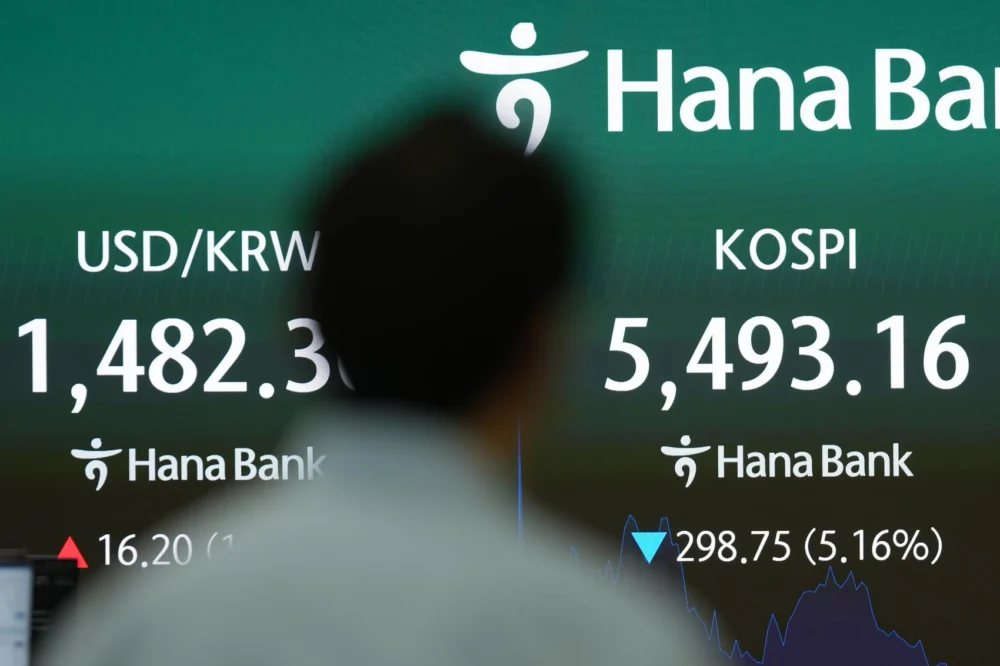
The KOSPI’s significant decline was a stark illustration of this prevailing sentiment. Energy security concerns, driven by the geopolitical instability, overwhelmed the optimistic outlook that had previously buoyed the shares of major computer chip manufacturers like Samsung Electronics and SK Hynix. These tech giants had been benefiting from the burgeoning demand fueled by the artificial intelligence revolution, but the specter of oil supply disruptions proved a far more potent force.
The KOSPI ultimately closed down 11.5% at 5,127.28. The ripple effect was immediate and dramatic. Samsung’s stock price shed 9.1%, while SK Hynix saw its shares fall by 6.5%. In response to the unprecedented volatility, the Korea Exchange was compelled to temporarily halt trading for the KOSPI index. The tech-heavy KOSDAQ also felt the tremor, triggering a circuit breaker after a decline exceeding 8%, and eventually finished the day down 12%.
South Korea’s stock market had been a standout performer globally for much of the year. However, its inherent vulnerability lies in its heavy reliance on international trade and crucial fuel imports. The potential for disruptions to shipping lanes, particularly through the Strait of Hormuz – a vital chokepoint through which approximately one-fifth of the world’s globally traded oil transits – poses a significant threat to its economic stability.
Amidst the market turmoil, there were signs of a potential moderation in the relentless climb of oil prices following an announcement by U.S. President Donald Trump on Tuesday. President Trump stated that he had directed the U.S. Development Finance Corporation to provide political risk insurance and guarantees aimed at securing the financial safety of all maritime trade. Furthermore, he declared, “If necessary, the United States Navy will begin escorting tankers through the Strait of Hormuz, as soon as possible,” according to a message posted by the White House on X.
Despite these assurances, the market’s reaction remained cautious. The price of U.S. benchmark crude oil saw a modest increase of 1.3% to $75.53 per barrel, while Brent crude, the international standard, gained 1.7% to $82.74 per barrel. This rise, while seemingly incremental, follows a more substantial jump of over 13% since the conflict’s escalation. In a commentary, Mizuho Bank noted that President Trump’s assurances, while offering some mitigation, do not entirely eliminate the persistent upside risks to oil prices. The bank suggested that the increased insurance costs, which could filter through to shipping expenses, might ultimately add between $5 and $15 per barrel. Moreover, Mizuho Bank highlighted that the evolving risks in the Middle East, characterized by escalating attacks, mean that a “war premium” remains firmly embedded in oil prices.
The economic interconnectedness of the region meant that other Asian markets also felt the brunt of the sell-off. In Tokyo, the Nikkei 225 index tumbled by 3.61% to close at 54,245.54. Like South Korea and Taiwan, Japan is heavily dependent on oil and natural gas imports from the Persian Gulf, making it particularly susceptible to supply chain disruptions. The Hang Seng index in Hong Kong fell by 2.9% to 25,023.18, and the Shanghai Composite index in mainland China shed 1.2% to 4,074.22. Further south, Australia’s S&P/ASX 200 declined by 1.9% to 8,901.20. Taiwan’s Taiex experienced a significant loss of 4.4%, and shares in Bangkok plunged by 8%.
The fallout extended to U.S. markets. On Tuesday, the S&P 500 index concluded the trading day with a loss of 0.9%, closing at 6,816.63, after having fallen as much as 2.5% during the session due to concerns about the war’s potential damage to the global economy. The Dow Jones Industrial Average managed to pare back some of its losses, finishing down 0.8% at 48,501.27. The tech-heavy Nasdaq composite also saw a decline, falling 1% to 22,516.69.
In the bond market, Treasury yields experienced a notable leap in morning trading, driven by heightened inflation worries. The yield on the 10-year Treasury briefly surpassed the 4.10% mark before settling just below 4.06%. This represented a significant jump from 4.05% late Monday and a stark contrast to the 3.97% recorded on Friday. Higher Treasury yields can translate into increased borrowing costs for both U.S. households and businesses, impacting everything from mortgage rates to the issuance of corporate bonds. They also exert downward pressure on the prices of stocks and other investment assets.
Analysts are divided on the potential for a market rebound. Some suggest that equities could see a recovery if the conflict proves to be short-lived. However, there’s a widespread acknowledgment that clarity on the conflict’s duration may take time, and the sharp market swings observed on Tuesday underscored the prevailing uncertainty. The more immediate and visible impact of the escalating tensions has been on the average price of gasoline. Drivers in various cities across Europe and Asia were seen queuing at fuel stations, a stark visual reminder of the global impact of oil supply concerns.
While the United States, as a net oil exporter, is not facing an immediate shortage, its domestic fuel prices are undeniably influenced by global market trends. In the U.S., the average price for a gallon of regular gasoline rose to $3.11, an increase of 11 cents according to the motor club AAA. This uptick surprised some drivers, especially as gasoline prices were already on an upward trajectory prior to the U.S. strikes on Iran due to the seasonal switch by refiners to summer blends of fuel.
The conflict’s implications could extend far beyond immediate fuel costs. A sustained period of higher inflation, partly exacerbated by the war, could complicate the Federal Reserve’s policy decisions. It might constrain the Fed’s ability to cut interest rates, a move that had been anticipated following several rate reductions last year and indications of further cuts planned for 2026. While lower interest rates are generally seen as a stimulus for economic growth and job creation, they can also contribute to inflationary pressures.
In currency markets, the U.S. dollar weakened against the Japanese yen, falling to 157.61 yen from 157.74 yen. The euro also saw a slight dip, trading at $1.1592 compared to $1.1612 previously. In the precious metals sector, gold prices rose by 0.9%, while silver gained 1.5%, reflecting their traditional role as safe-haven assets during times of geopolitical uncertainty.
© Copyright 2026 The Associated Press. All rights reserved. This material may not be published, broadcast, rewritten or redistributed without permission.