



Global Markets React as Conflict Escalates and Oil Prices Seesaw
Asian stock markets presented a mixed picture on Friday, reflecting a cautious sentiment that followed a modest pullback on Wall Street. The price of crude oil experienced a notable decline, shedding over a dollar per barrel after reaching its highest point since the summer of 2024, a development that added another layer of complexity to an already volatile global economic landscape.
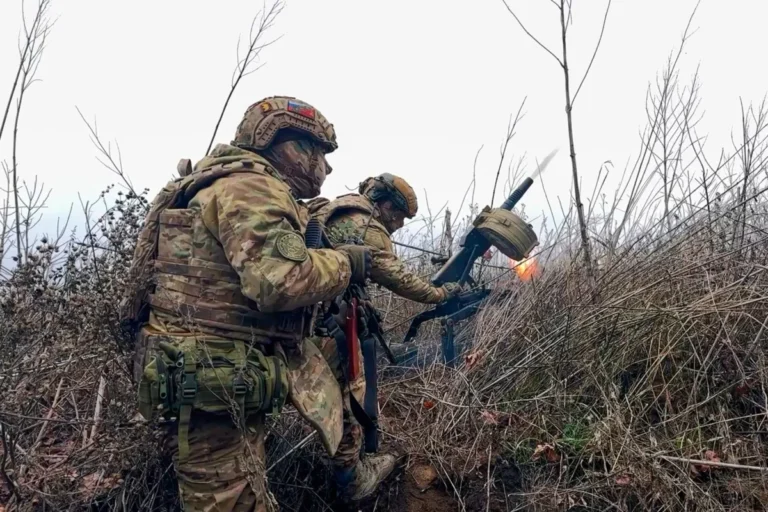
U.S. equity futures signaled a potential rebound as the conflict involving Iran entered its seventh day. Intensified Israeli airstrikes targeted key areas in both Iran and Lebanon, fueling concerns about a broader regional conflagration. This geopolitical tension contributed to a slight upward trend in U.S. market indicators, with futures for the S&P 500 index gaining 0.2%, and those for the Dow Jones Industrial Average rising by 0.3%. The market’s sensitivity to this ongoing crisis was palpable, with investors closely monitoring every development.
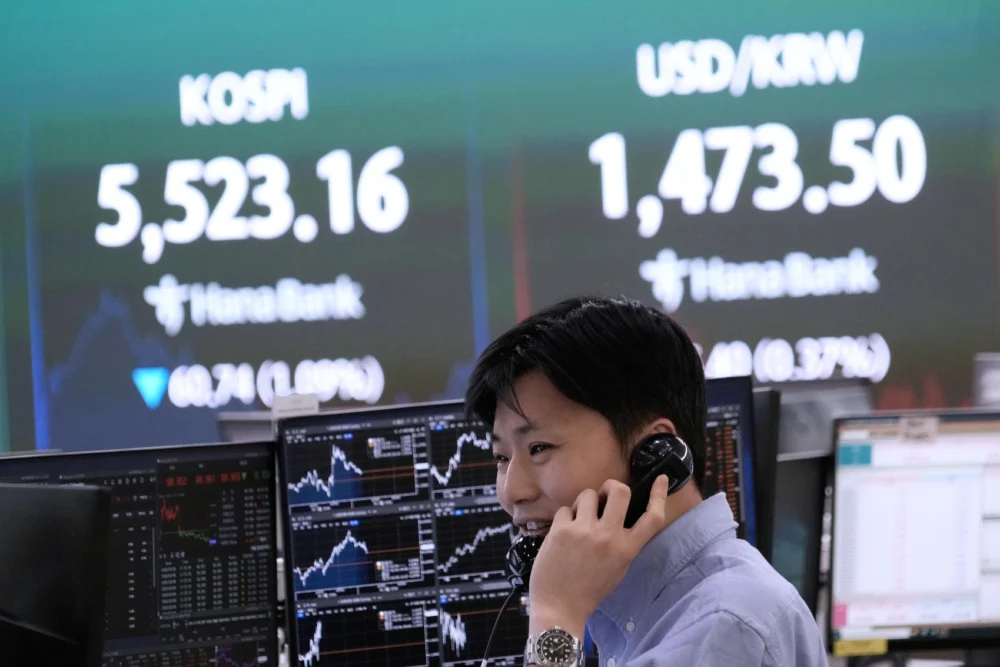
In Asian trading, the South Korean Kospi index bucked the positive futures trend, slipping 0.8% to close at 5,536.40. This downturn came after an exceptionally turbulent week for the Korean market. After experiencing a significant 12% loss on Wednesday, the Kospi had staged a remarkable near 10% recovery on Thursday. Prior to the outbreak of hostilities, the index had demonstrated considerable strength, surging past the 6,000 mark in recent weeks. However, the escalating conflict began to cast a long shadow over financial markets, triggering investor apprehension and leading to sharp price swings.
Conversely, Tokyo’s Nikkei 225 index showcased resilience, gaining 342.78 points to finish the trading day at 55,620.84. The Japanese market, while not immune to global uncertainties, appeared to absorb some of the broader market anxieties with a degree of stability. Hong Kong’s Hang Seng index also displayed robust performance, jumping 1.6% to reach 25,713.49. Meanwhile, the Shanghai Composite index in mainland China saw a more modest uptick, edging 0.1% higher to 4,113.70, indicating a more subdued but positive sentiment in the Chinese market.
Other major Asian indices experienced declines. Australia’s S&P/ASX 200 index retreated 1.1% to 8,845.30, suggesting that the Australian market was more sensitive to the prevailing global headwinds. Taiwan’s Taiex traded 0.4% lower, and India’s Sensex lost 0.6%, illustrating a varied regional response to the unfolding geopolitical and economic events. The divergence in market performance underscored the localized impacts of global events and the differing economic resilience of various regions.
The price of oil, a critical barometer of global economic health and a key indicator of geopolitical stability, experienced a notable easing on Friday. This offered a temporary reprieve from the sharp surges seen earlier in the week, which were largely driven by intensifying concerns over production and supply disruptions stemming from the conflict with Iran. Benchmark U.S. crude oil lost 1.2% in early trading, settling at $80.07 per barrel. This followed a significant surge on Thursday, when the price had reached $81.01 a barrel, marking a substantial increase from its earlier levels and highlighting the market’s sensitivity to supply-side anxieties.
Brent crude, the international standard for oil pricing, also saw a decline, losing 1% to trade at $84.59 per barrel. This followed its own peak of $85.41 a day earlier. The fluctuations in oil prices are closely watched by economists and policymakers worldwide, as sustained high energy costs can have a ripple effect across industries, impacting everything from transportation and manufacturing to consumer spending. The volatility reflects the market’s struggle to price in the potential consequences of prolonged conflict in a region that is a critical hub for global oil production and transit.
The potential for further escalation in oil prices, with some analysts warning of a surge towards $100 per barrel and sustained high levels, poses a significant threat to the global economy. Such a scenario could prove too burdensome for many economies to withstand, potentially triggering inflation, slowing economic growth, and exacerbating existing financial fragilities. The uncertainty surrounding the trajectory of the conflict and its impact on energy markets has been a primary driver of frenetic swings across financial markets throughout the week, with price movements sometimes occurring with dramatic speed, even hour by hour.
The temporary respite in crude oil prices on Friday was partly attributed by analysts at ING, including Warren Patterson and Ewa Manthey, to a 30-day temporary waiver granted by the U.S. to Indian refiners, allowing them to continue purchasing Russian oil. While acknowledging that this measure is unlikely to be a “game-changer” in the broader market dynamics, the analysts noted that it reflects a strategic effort by the U.S. to manage and cap oil prices amidst the current geopolitical tensions. This maneuver highlights the complex diplomatic and economic balancing act underway as global powers attempt to navigate the fallout from the conflict without destabilizing energy markets entirely.
Looking ahead, the stability of oil prices is intrinsically linked to the uninterrupted flow of oil through the Strait of Hormuz, a critical maritime chokepoint. ING analysts emphasized that any further disruptions to tanker activities in this vital waterway could quickly reverse the recent price declines. The Strait of Hormuz, situated between Iran and Oman, is a vital artery for global trade, with an estimated one-fifth of the world’s seaborne oil passing through it. Any threat to this passage sends immediate ripples of concern through global energy markets, underscoring the strategic importance of this narrow waterway.
The performance of U.S. equity markets on Thursday painted a picture of caution and concern. The S&P 500 index closed down 0.6% at 6,830.71, while the Dow industrials experienced a more significant decline of 1.6%, ending the day at 47,954.74. The Nasdaq composite also saw a dip, dropping 0.3% to 22,748.99. These movements indicated a broad-based investor apprehension, influenced by the escalating geopolitical situation and its potential economic ramifications. The market’s reaction demonstrated a clear sensitivity to news flow related to the conflict and its impact on global supply chains and energy prices.
Amidst the broader market downturn, shares of computer chip manufacturer Broadcom provided a notable bright spot, surging 4.8%. This impressive gain was driven by the company’s announcement of stronger-than-expected quarterly profits and revenues, a testament to its robust business performance. Broadcom’s positive results offered a degree of support and helped to partially offset the overall losses experienced on Wall Street, showcasing the resilience of individual companies even within a challenging macroeconomic environment.
Airline stocks, however, were among the hardest hit in the U.S. market. The dual pressures of rising oil prices, which directly translate to increased fuel costs, and the significant disruption to travel caused by the conflict in the Middle East, where hundreds of thousands of passengers have been stranded, weighed heavily on the sector. American Airlines saw its shares fall by 5.4%, United Airlines experienced a 5% decline, and Delta Air Lines was down 3.9%. The impact on the aviation industry serves as a stark illustration of how geopolitical instability can translate into tangible economic consequences for specific sectors and their stakeholders.
In other financial dealings early Friday, the U.S. dollar strengthened against the Japanese yen, trading at 157.80 yen compared to 157.56 yen previously. This movement suggests a preference for the dollar as a safe-haven asset amidst global uncertainties. The euro, however, remained unchanged at $1.1611, indicating a more stable trading range for the European currency. In commodity markets, gold prices rose 1.1%, and silver climbed 2.7%, reflecting their traditional role as safe-haven assets during times of geopolitical stress and economic uncertainty. Investors often turn to precious metals when seeking to preserve capital amidst market turmoil, and the observed price increases in gold and silver underscored this trend.
AP Business writer Stan Choe contributed to this report.
© Copyright 2026 The Associated Press. All rights reserved. This material may not be published, broadcast, rewritten or redistributed without permission.