


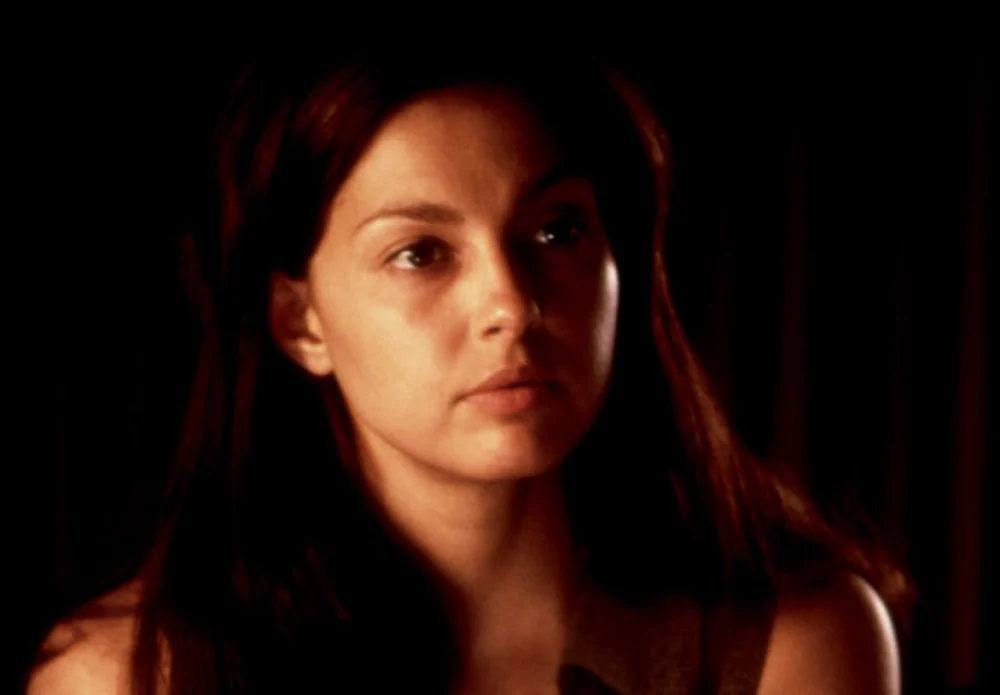
More than two decades after its release, Ashley Judd, the acclaimed actress and humanitarian, is casting a discerning eye upon one of her most memorable box office successes, the 1997 psychological thriller “Kiss the Girls.” In a recent, candid Instagram video post, Judd revealed that her relationship with the film has profoundly “evolved,” prompting her to question the pervasive and often unexamined portrayal of violence against women in popular culture. Her introspective critique opens a vital dialogue about the ethics of packaging female suffering as entertainment and the societal implications of its profitability.
Judd’s re-evaluation centers on the film’s core narrative. As she articulated in her caption, “Kiss the Girls’ centers on male sexual violence and the torture of women’s bodies.” While acknowledging that many viewers, herself included at the time, interpreted such stories through the lens of “female resilience — the strength of surviving,” her perspective has shifted dramatically. Today, she grapples with a more challenging and urgent question: “Why is sexual terror against women something we package as entertainment? Why is it profitable?” This inquiry cuts to the heart of how media constructs narratives around gender-based violence and the underlying motivations that drive its creation and consumption.
“Kiss the Girls” brought to life James Patterson’s gripping 1995 novel of the same name under the direction of Gary Fleder. The film famously starred Morgan Freeman as the brilliant forensic psychologist Alex Cross, a character who would become iconic in cinematic thrillers. Judd portrayed Dr. Kate McTiernan, a successful surgeon and accomplished kickboxer, who becomes entwined in a terrifying abduction plot orchestrated by a masked serial killer known only as Casanova. Dr. McTiernan’s survival and her subsequent collaboration with Cross to track down the elusive predator form the backbone of the film’s tension and narrative arc. Her character, a woman of intellect and physical prowess, was designed to embody strength in the face of unimaginable horror, a depiction that resonated deeply with audiences in the late 90s, often celebrated for its portrayal of a woman overcoming adversity.
Judd’s recent reflections are not a rejection of the film or the affection audiences hold for it, but rather an invitation for deeper critical engagement. Speaking directly to her fans in the accompanying video message, she expressed gratitude: “Thank you for loving the movie, thank you for loving me in it. Thank you for making it such… I was gonna say pivotal, but I would even say a transformative moment in my career.” This acknowledgment underscores the complexity of her stance; she cherishes the positive impact the film had on her career and its resonance with fans, yet she can no longer ignore the troubling aspects of its content. “It’s okay to love the movie and come up to me and say it’s your favorite movie,” Judd clarified, while simultaneously doubling down on her central query: “why filming male sexual violence” and “torture of the female body” is framed as entertainment. She further highlighted the film’s “very misogynistic dialogue,” deeming it “excruciatingly not okay,” a point that often goes unaddressed in discussions of such thrillers.
This nuanced position — celebrating personal and professional milestones while critically examining the problematic underpinnings of the work — reflects a broader societal shift in how we discuss media. Judd’s query extends beyond the individual film to encompass the entire industry’s relationship with violence. “It’s the resilience after male sexual violence. It’s resilience after male sexual torture of the female body and I go… why is that entertainment? Why is that a capitalist enterprise? Why do we create entertainment and earn money off of such a subject?” Her questions challenge the very foundation of how certain narratives are conceived, produced, and marketed. She posits that framing trauma as entertainment constitutes “collective denial” and “making entertainment out of sexual terror,” suggesting a deeper societal discomfort with confronting the realities of violence, preferring instead to package it for consumption.
The discussion Judd initiates is particularly resonant in the current cultural climate, where conversations around gender-based violence, misogyny, and media representation have gained unprecedented momentum. In the 1990s, films like “Kiss the Girls” often drew praise for featuring strong female protagonists who endured and fought back against male aggressors. The narrative typically centered on the survivor’s journey, emphasizing grit and determination. While undeniably empowering in certain respects, this framing sometimes inadvertently sidelined a critical examination of the violence itself, or the systemic issues that enable it. The focus on “resilience” could, in some interpretations, obscure the trauma, transforming suffering into a dramatic device rather than a profound human experience demanding empathy and societal change.
Judd’s comments contribute to a long-standing feminist critique of media, which scrutinizes how women’s bodies and experiences are depicted, particularly in genres like thrillers and horror. Critics have often pointed out that while these films might feature strong female characters, they frequently rely on the spectacle of female vulnerability, torture, or death to generate suspense and drive the plot. This raises uncomfortable questions about voyeurism and whether such portrayals, even when intended to highlight resilience, can inadvertently normalize or fetishize violence against women. The line between depicting violence to condemn it and depicting it for entertainment value can become dangerously blurred, and Judd’s powerful statement forces a re-evaluation of where that line is drawn.
Furthermore, her challenge to the “capitalist enterprise” of such content highlights the economic incentives that fuel these narratives. “Kiss the Girls” was a significant commercial success for Paramount Pictures, grossing $60 million worldwide against a budget of just under $30 million in 1997. This financial triumph underscored the marketability of the genre and its themes. The subsequent sequel, 2001’s “Along Came a Spider,” which also starred Morgan Freeman as Alex Cross, further cemented the franchise’s profitability, earning an even more impressive $105 million worldwide. The box office figures serve as a stark reminder of the financial rewards associated with stories that, as Judd points out, often center on the exploitation and suffering of women. This commercial success complicates the ethical landscape, making it difficult for the industry to move away from proven formulas, even when those formulas might be problematic.
Ashley Judd, a long-time advocate for women’s rights and a survivor herself, brings a unique and powerful voice to this discussion. Her willingness to critically engage with her own professional history, especially a film beloved by many, demonstrates courage and a profound commitment to social consciousness. By asking why society consumes and profits from narratives of sexual terror, Judd compels not just Hollywood, but also audiences, to reflect on the stories we tell, the messages they convey, and the responsibility we all share in shaping a media landscape that is both entertaining and ethically sound. Her statements serve as a poignant reminder that while art often reflects society, it also has the power to shape it, and with that power comes a profound obligation to consider its impact.