
In the vast and ever-evolving landscape of Indian cinema, few figures command as much respect and admiration for their enduring talent and unwavering commitment to storytelling as Anupam Kher. A true doyen of acting, Kher has consistently pushed boundaries throughout his illustrious four-decade career, effortlessly transitioning between a myriad of roles that have captivated audiences globally. Now, the venerable thespian stands at a fascinating juncture, poised to unveil a deeply personal directorial venture, Tanvi the Great, for its global streaming premiere on Prime Video on March 3, while simultaneously crafting a new film set in the ancient city of Varanasi, a project he provocatively describes as a spiritual successor to his 1984 breakthrough, Saaransh. This dual pursuit underscores Kher’s relentless quest for artistic reinvention and his profound belief in the power of human stories to inspire and connect.
The Varanasi-set project, still in its nascent stages of development, is already generating considerable buzz, particularly given Kher’s evocative comparison to Saaransh. That seminal Mahesh Bhatt directorial, released when Kher was a mere 28 years old, saw him deliver an unforgettable performance as a 65-year-old man grappling with profound grief after the loss of his only son. Saaransh was not just a critical triumph, earning India its entry for the Academy Awards that year; it was a watershed moment that firmly established Kher as an actor of immense depth and gravitas, setting the stage for a career defined by versatility and emotional authenticity. Discussing this new venture, Kher shares, "I’m working on a story about Banaras [Varanasi], about a person in Banaras. I was discussing with [Saaransh director] Mahesh Bhatt… it’s a ‘Saaransh 2,’ basically. This time, the man is not passive in the sense he was aggressive in his thoughts. This time I just feel that I need to reinvent myself."
This notion of reinvention is particularly intriguing for an actor who has already achieved so much. At 68, soon to be 71, Kher finds himself contemplating the passage of time and the wisdom it imparts, offering a stark contrast to his youthful portrayal in Saaransh. "When I was 28 I played a 65-year-old man role. Now at that time, I portrayed 65 what I thought 65 will be like, but I’m going to be 71 on March 7, I feel like a 28-year-old man," he muses. This reversal of perspective—a man of advanced years feeling the vibrancy of youth—promises a compelling narrative exploration of age, vitality, and the human spirit’s boundless capacity for resilience. The film, he reveals, will unfold "in the genre of a funny thriller, but human story. I don’t know how to tell other stories. I can only tell stories which are human, which have a human angle, which have a human feeling, but positive. I like happy endings." This commitment to positive, human-centric narratives, even within the framework of a "funny thriller," is a hallmark of Kher’s artistic philosophy, suggesting a story that will ultimately uplift and resonate deeply with audiences seeking meaningful entertainment.
The choice of Varanasi as the backdrop for this deeply personal narrative is equally significant. Known as one of the oldest continually inhabited cities in the world, Varanasi is a crucible of spirituality, philosophy, and everyday life, where death and rebirth are interwoven into the fabric of existence. Its ghats, temples, and winding alleys offer a unique tapestry against which to explore themes of aging, wisdom, and the relentless march of time. For a character who is 70 but feels 28, Varanasi’s timelessness could serve as a powerful metaphor for the eternal spirit within.
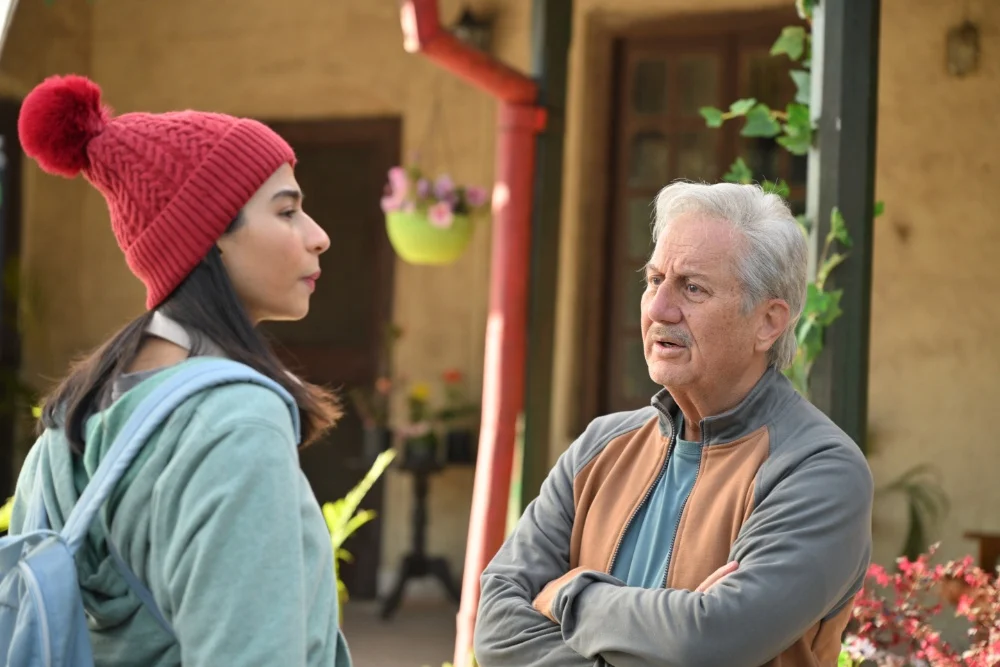
As Kher meticulously crafts his future projects, he is simultaneously bringing his latest directorial offering, Tanvi the Great, to a global audience. This autism-centered drama, a passion project for Kher, is set for its worldwide streaming debut on Prime Video, marking a pivotal moment after a journey that has seen it traverse film festivals and limited theatrical runs. The film introduces audiences to Tanvi Raina, a 21-year-old autistic woman portrayed with remarkable sensitivity by debutant Shubhangi Dutt. Tanvi embarks on an extraordinary mission: to fulfill the unfulfilled dream of her late soldier father—to stand at Siachen, the world’s highest battlefield, and salute the Indian flag. This seemingly insurmountable quest is complicated by societal skepticism and institutional barriers against autistic recruits in the military, yet Tanvi’s determination shines through.
What sets Tanvi the Great apart, and forms the very core of its message, is its revolutionary portrayal of autism not as a disability, but as a "superpower." This perspective aligns with a growing global understanding of neurodiversity, advocating for the recognition and celebration of different neurological wirings rather than viewing them through a lens of deficit. Kher’s decision to champion this narrative is a testament to his belief in inclusive storytelling and his desire to challenge conventional perceptions.
The film’s journey to global streaming has been a testament to its compelling narrative and powerful message. Following its world premiere at the prestigious Cannes Film Market, Tanvi the Great embarked on an international screening circuit, captivating audiences in London, New York—where it notably drew the attention of Hollywood icon Robert De Niro—and Houston. The film’s impact extended to the highest echelons of Indian society, with special screenings held for the President of India, the army chief, and an impressive assembly of 2,000 cadets at the Indian National Defence Academy. This widespread critical acclaim and high-profile endorsements underscored the film’s universal appeal and the resonance of its themes.
However, the film’s theatrical release in India on July 18 presented its own set of challenges, coinciding with the release of the blockbuster Saiyaara. Kher candidly acknowledges the commercial hurdles: "’Saiyaara’ was like a tsunami, so it got lost in that." Despite facing an uphill battle at the box office, Tanvi the Great found its true lifeblood in special screenings, reaching an estimated 20,000 school students and enjoying a remarkable re-release that has sustained it in limited theaters for an impressive 23 weeks. Kher’s perspective on the film’s commercial performance versus its impact is insightful: "If film is to be judged from a box office, it did not do well, but if it is to be judged by appreciation and the kind of response of the Autism Society of India, the army, the children, the school children, the people who saw it, is, it is, I think, priceless." This sentiment perfectly encapsulates the essence of Tanvi the Great: a film whose true value lies not in monetary returns, but in its ability to touch hearts, shift perspectives, and foster understanding.
Perhaps the most significant validation came from an unexpected quarter: Robert De Niro. Kher, who shared the screen with De Niro in the critically acclaimed Silver Linings Playbook, recounts De Niro’s initial intention to make a brief, 10-minute appearance at the New York premiere. "He had come for 10 minutes, but he stayed till the interval," Kher recalls, highlighting the film’s captivating power. De Niro, visibly moved by the story, later requested to see the complete film, offering a profound endorsement: "He said, ‘It’s very moving.’" His praise extended directly to the film’s lead, Shubhangi Dutt, with the legendary actor telling her, "you are terrific." Kher, deeply touched, emphasizes the weight of this compliment: "which I thought was the ultimate compliment for any actor in the world, that the God of acting is telling a person who has done her first film that you are terrific." This seal of approval from one of cinema’s titans serves as a powerful testament to Dutt’s raw talent and the film’s emotional impact.
The response from the autistic community, however, has been the most gratifying for Kher. "We have presented Tanvi as a superpower… they like that because they say that there are some special things about them," Kher explains. This positive affirmation resonates deeply within a community that has often faced misrepresentation or stereotypical portrayals as helpless or tragic. The film’s nuanced depiction of Tanvi’s "quirkiness," her determination to fulfill her father’s dream, and the tender relationship between grandfather and granddaughter, have all been lauded. "They loved the quirkiness of Tanvi. They loved that she takes up a job which her father could not fulfill. They love the portrayal of Shubhangi very well. They love the relationship of grandfather and granddaughter. That she can sing and she can do things and that she’s naughty. She’s not portrayed as somebody with a disability," Kher elaborates, highlighting the film’s success in fostering a sense of pride and recognition.
As Tanvi the Great prepares for its Prime Video release, Kher underscores its unique appeal as a rare family film in today’s fragmented entertainment landscape. "You very rarely can see films where the whole family sits together and can watch it," he notes, emphasizing the film’s ability to bridge generational divides and provide a shared viewing experience. In a world often characterized by cynicism and division, Kher positions Tanvi the Great as a much-needed antidote, particularly as it reaches a global streaming audience. "It makes you believe in humankind. And that’s what we need in today’s time. I think if you want to practice a religion today, that needs to be that of humanity. And this film makes you believe in that," he passionately states. He further suggests a profound insight: "It also makes you feel that the only good people in this world are people who are neurodivergent." This statement challenges conventional notions of ‘goodness’ and encourages a re-evaluation of societal values.
The director’s description of the viewing experience is wonderfully evocative, painting a picture of warmth and solace. "It’s like a first sip of coffee in the morning, which makes you feel good. It’s like sunshine in winter through a window. When I was in Shimla, on the winter nights, the sun used to filter through these chinar trees. I wait for that feeling to happen. It makes you feel warm, like you’re wearing a quilt of goodness around you." This poetic imagery beautifully conveys the emotional comfort and uplifting spirit that Kher hopes his film will impart to viewers, a gentle embrace of hope and positivity.
Beyond these significant projects, Anupam Kher’s creative engine shows no signs of slowing. Shubhangi Dutt, the breakout star of Tanvi the Great, is already "winning awards right now" and is set to feature in another Anupam Kher Studio production titled Flicker, a testament to Kher’s commitment to nurturing new talent. On the acting front, Kher has just completed Khosla Ka Ghosla 2, a sequel to the much-loved 2006 satirical comedy, and is currently finishing an untitled film with renowned director Sooraj Barjatya, known for his heartwarming family dramas. Adding another dimension to his versatile career, Kher is also preparing a new musical play titled Jaane Pehchaane Anjaane (Intimate Strangers), further demonstrating his mastery across different artistic mediums.
Tanvi the Great itself is a collaborative masterpiece, produced by Anupam Kher Studio in association with India’s National Film Development Corporation. The film boasts an impressive creative team, including music by Oscar winner M.M. Keeravani, celebrated globally for his work on RRR, and sound design by Oscar winner Resul Pookutty, acclaimed for his contributions to Slumdog Millionaire. This confluence of world-class talent underscores the artistic ambition and dedication poured into a film that seeks to tell a powerful and empathetic story, destined to resonate with audiences long after the credits roll. Through Tanvi the Great and his forthcoming Varanasi project, Anupam Kher continues to solidify his legacy not just as a prodigious actor, but as a visionary storyteller committed to celebrating the human spirit in all its complex, beautiful forms.