


Six Dead, Including Children, in Devastating Expressway Tunnel Pile-Up in Japan
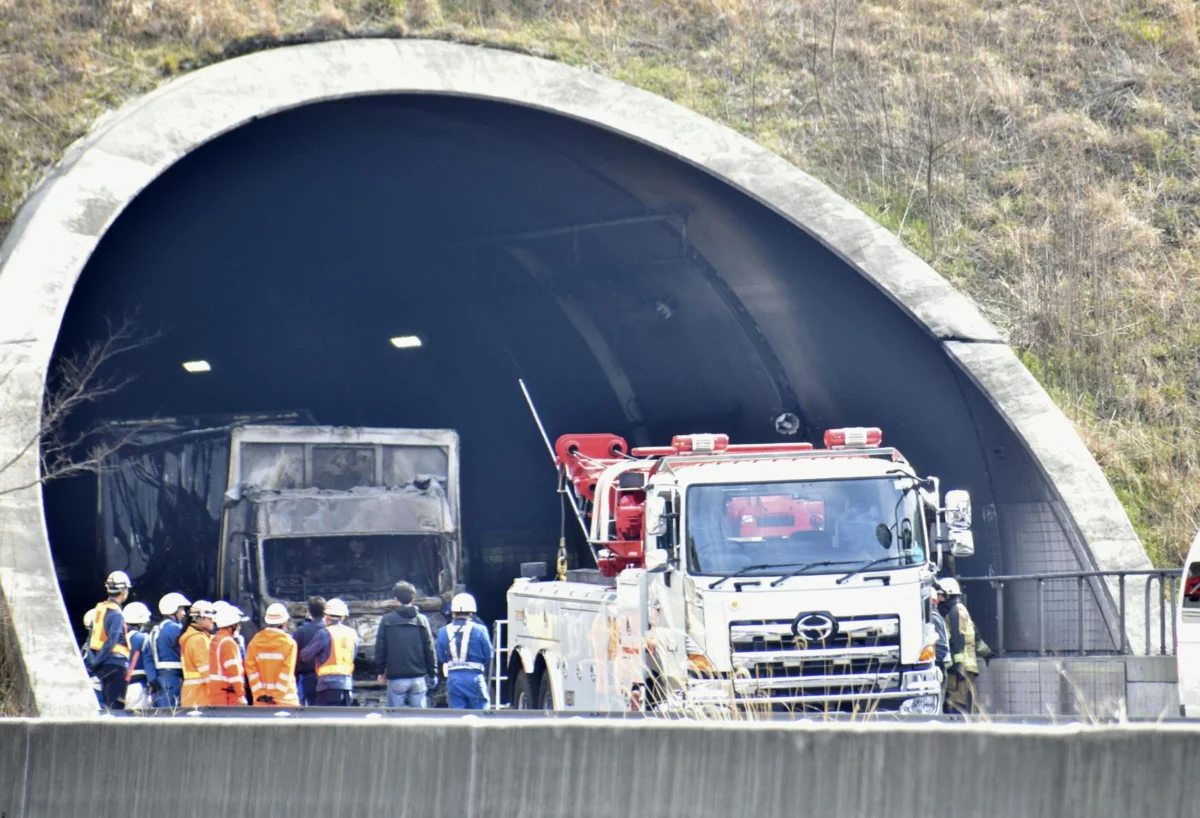
A catastrophic four-vehicle collision, which ignited a fiery inferno within a vital expressway tunnel, claimed the lives of six individuals, including children, in Mie Prefecture, central Japan, early Friday morning. The tragic incident unfolded around 2:20 a.m. within the Shin-Meishin Expressway tunnel in Kameyama, sending shockwaves through the region.
Authorities have pieced together a grim initial account of the disaster, suggesting that a large truck violently collided with two passenger vehicles and a trailer that were already stationary. The impact, described as forceful, immediately triggered a blaze that engulfed the passenger cars, trapping and tragically killing their occupants. The victims are believed to have been inside these passenger vehicles at the time of the collision.
The driver of the truck, identified as Mitsuyo Mizutani, a 54-year-old woman, was subsequently arrested on suspicion of professional negligence resulting in death. Preliminary reports indicate that Mizutani has admitted to the allegations leveled against her. In a stark contrast to the devastating outcome for those in the passenger cars, both Mizutani and the driver of the trailer that was struck were reportedly uninjured, a detail that underscores the selective nature of the tragedy.
The circumstances leading up to the collision paint a picture of a perilous situation exacerbated by pre-existing traffic conditions. At the time of the accident, the section of the Shin-Meishin Expressway where the pile-up occurred was experiencing significant congestion. This slowdown was attributed to ongoing construction work approximately one kilometer ahead, which had necessitated lane restrictions and a considerable bottleneck for vehicular traffic. It was within this constricted flow of vehicles that the devastating chain of events was set in motion.
The harrowing nature of the incident was first brought to the attention of emergency services through a frantic call to the fire department. The caller reported the terrifying sight of a truck crashing into a line of vehicles that were already brought to a standstill due to the traffic jam. This urgent alert initiated the response of emergency personnel, who would soon face the horrific scene of a burning tunnel and the devastating loss of life.
The Shin-Meishin Expressway, a crucial artery connecting major urban centers in Japan, is known for its high-speed limits and modern infrastructure. However, even the most advanced roadways can become sites of unimaginable tragedy when human error or unforeseen circumstances converge. The tunnel, designed to facilitate swift travel, ironically became a tomb for those caught in the fiery aftermath of this collision.
The investigation into the precise sequence of events is ongoing, with authorities meticulously examining the scene for clues that could shed further light on the factors contributing to this fatal crash. The structural integrity of the tunnel itself, the condition of the vehicles involved, and the speed and behavior of the truck driver are all areas of intense scrutiny. The use of dashcam footage from other vehicles that may have been in the vicinity, if available, will undoubtedly play a pivotal role in reconstructing the moments leading up to the impact.
The arrest of the truck driver, Mitsuyo Mizutani, signifies a significant step in the legal process. Her admission of guilt, while providing some clarity, does not diminish the profound grief experienced by the families of the victims. The legal ramifications for Mizutani will be determined through the judicial system, but the human cost of this incident is immeasurable.
The inclusion of children among the deceased is particularly heart-wrenching, amplifying the tragedy and evoking widespread sorrow. Families, friends, and communities are left grappling with unimaginable loss, mourning the young lives cut tragically short and the futures that will never be realized. The impact of such a loss reverberates far beyond the immediate circle of those directly affected, touching the hearts of many who hear of this devastating event.
In the wake of such a disaster, questions inevitably arise regarding road safety, particularly concerning heavy vehicle operations on expressways. The sheer mass and potential force of a truck colliding with smaller vehicles create a significant disparity in vulnerability. This incident will likely prompt a renewed focus on driver fatigue, adherence to speed limits, and the safe operation of large commercial vehicles in Japan.
The construction work that contributed to the traffic congestion also warrants examination. While essential for maintaining and improving infrastructure, construction zones can inherently create hazardous conditions. Authorities will need to assess whether adequate safety measures were in place to manage traffic flow and alert drivers to potential dangers ahead, especially in confined spaces like tunnels.
The psychological impact on first responders who witnessed the horrific scene cannot be overstated. These individuals, who dedicate their lives to serving and protecting others, are often exposed to the most harrowing aspects of human suffering. Support and counseling services for these brave men and women will be crucial in the aftermath of this tragedy.
The economic impact of such an incident, while secondary to the human toll, is also significant. The closure of a major expressway section due to an accident of this magnitude can cause substantial delays and disruptions to commerce and transportation. Repair and investigation costs will add to the financial burden.
As the investigation progresses, the public will be eager for comprehensive answers. Transparency in the reporting of findings will be essential in rebuilding trust and ensuring that all necessary steps are taken to prevent similar catastrophes from occurring in the future. The lessons learned from this tragic event must be translated into concrete actions that enhance road safety for all users of Japan’s extensive highway network.
The cultural context of Japan, with its emphasis on meticulousness and safety, makes this incident all the more shocking. While accidents can happen anywhere, the scale of this tragedy within a modern, well-maintained expressway tunnel is a stark reminder that even in highly developed societies, the risks inherent in transportation remain a significant concern.
The coming days and weeks will be a period of profound mourning and reflection for the communities affected by this devastating tunnel crash. The memories of those lost will endure, and the hope remains that this tragedy will serve as a catalyst for meaningful change, leading to a safer future for all who travel on Japan’s roads.
The initial emergency call, reportedly detailing a truck plowing into a queue of vehicles, paints a vivid and terrifying picture for the dispatchers who received it. This first-hand account from a witness underscores the suddenness and violence of the impact, setting the stage for the grim reality that emergency crews would soon encounter.
The investigation will likely delve into the specifics of the truck’s cargo and weight, as well as the mechanical condition of all vehicles involved. Factors such as tire wear, brake performance, and the presence of any potential driver impairment are standard components of such investigations. The tunnel’s lighting, ventilation, and emergency response systems will also be reviewed to ensure they functioned as intended during the crisis.
The arrest of Mitsuyo Mizutani is based on preliminary evidence, and the legal proceedings will determine her ultimate culpability. However, her admission suggests a willingness to confront the consequences of her alleged actions. The families of the victims will be seeking justice and closure as the legal process unfolds.
The broader implications for the trucking industry in Japan will also be a point of discussion. Regulations concerning driver hours, rest periods, and the mandatory installation of safety technologies like collision avoidance systems are likely to be re-examined in light of this incident. Public perception of truck safety, often a concern for other road users, will also be a factor.
The resilience of the Japanese people in the face of tragedy is well-documented. However, the emotional toll of this incident will undoubtedly be significant, requiring widespread community support and accessible mental health resources for those who are grieving and traumatized.
The long-term impact on the Shin-Meishin Expressway, specifically the affected section of the Kameyama tunnel, will involve extensive repairs and safety assessments before it can be fully reopened. The disruption to traffic patterns will necessitate the implementation of alternative routes and potentially increased congestion on other roadways.
As the news of this devastating accident spreads, it serves as a somber reminder of the fragility of life and the importance of vigilance on our roadways. The collective efforts of law enforcement, transportation authorities, and the public are crucial in fostering a culture of safety that prioritizes the well-being of every individual.
The tragedy in Mie Prefecture is a stark illustration of how a single moment of catastrophic failure can have devastating and far-reaching consequences, leaving a community united in sorrow and demanding answers to prevent future heartbreak.
© KYODO