


Filmmaker Natasha Kermani has consistently demonstrated a singular vision for horror, a genre she approaches not merely as a vehicle for jump scares, but as a profound lens through which to explore the human condition. Her latest offering, “The Dreadful,” arriving in theaters today courtesy of Lionsgate, is no exception. Born from a haunting image that refused to relinquish its grip, Kermani’s film delves into the darkest corners of human relationships, set against a backdrop of historical desolation and primal fear.
The genesis of “The Dreadful” was remarkably vivid and visceral for Kermani. “I couldn’t let go of this idea of two women living in a very desolate, barbaric landscape,” she recounts, emphasizing the starkness of her initial inspiration. This potent visual, stripped bare of modern comforts and societal veneers, immediately suggested a fertile ground for dramatic and psychological exploration. But it wasn’t just the setting that captivated her; it was the specific dynamic between the characters within it. “I felt like that was a relationship I didn’t see a lot, and one I wanted to explore. We see a lot of mothers and daughters, but we don’t see a lot of mothers-in-law and daughters-in-law, two women of two different generations who have been thrust into coexistence.”
This particular insight from Kermani is crucial to understanding the film’s unique emotional core. The mother-daughter bond, while complex, often carries an inherent biological and societal expectation of connection. The mother-in-law and daughter-in-law relationship, however, is a construct of marriage, a bond formed by proximity and circumstance rather than direct lineage. It’s a delicate balance of navigating inherited family structures, differing expectations, and often unspoken tensions. To place such a relationship under the extreme duress of a brutal, isolated world immediately amplifies its inherent friction, making it a powerful conduit for the kind of character-driven horror Kermani excels at.
From this stark vision, “The Dreadful” takes shape as a dramatic horror tale steeped in the grim realities of the War of the Roses, at the twilight of the Dark Ages. This historical period, marked by brutal civil conflict, widespread disease, and profound social upheaval, provides an atmospheric canvas perfectly suited for a narrative of dread and survival. It was a time when isolated homesteads could become veritable islands, cut off from the vestiges of law and order, where fear was a constant companion, and the line between human and monstrous behavior blurred easily. Women, often left to fend for themselves while their husbands, fathers, and sons were embroiled in distant battles, faced unique challenges, making their resilience – and their vulnerabilities – all the more poignant.
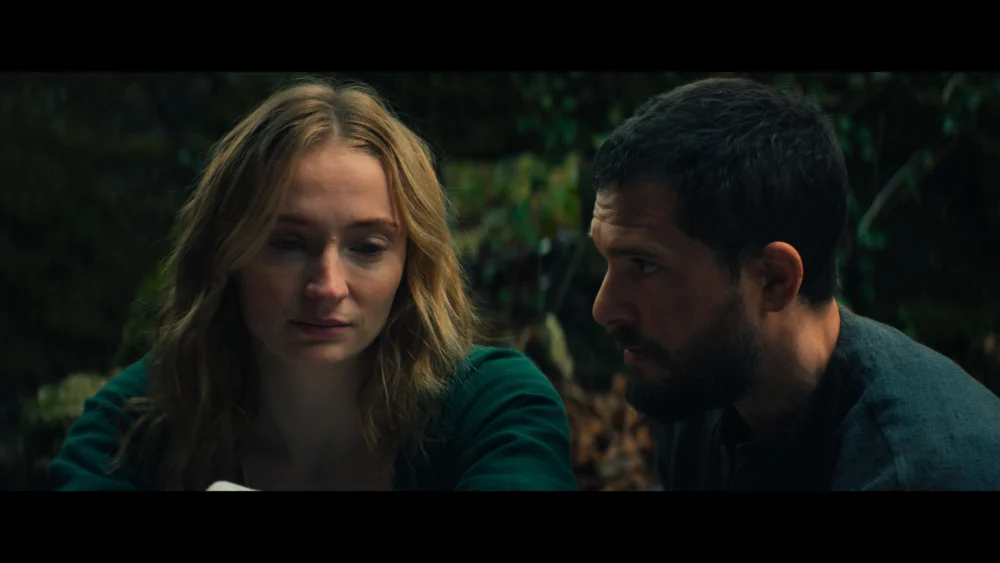
The film introduces audiences to Anne, portrayed with nuanced intensity by Sophie Turner, who finds herself marooned in this unforgiving landscape alongside her formidable mother-in-law, Morwen, brought to life by the incandescent Marcia Gay Harden. Their domestic existence, already strained by the dynamics of their relationship, is further complicated by Anne’s husband being away at war. The fragile peace shatters when Anne’s childhood friend, played by Kit Harington, arrives with news of her husband’s demise. This devastating revelation acts as a catalyst, drawing Anne and her friend closer, but also opening a terrifying chasm through which an insidious evil begins to seep into their lives, threatening to consume them all.
Kermani, who not only directed but also penned the screenplay for “The Dreadful,” is forthright about her deep affection for genre cinema. Yet, her approach is anything but conventional. She meticulously ensures that every scare, every moment of creeping dread, is in service of her characters’ internal and external struggles. “I don’t think anything I do is a horror conceit first,” she explains, articulating a philosophy that prioritizes narrative depth over superficial frights. “Everything I do is based on relationship and a character’s journey from Point A to Point B. The horror needs to express that journey. The horror needs to be a color in our palette that we’re using to tell this character’s story.”
This commitment means that the terror in “The Dreadful” is rarely arbitrary. It emanates from the characters’ deepest anxieties, their psychological unraveling, and the very real dangers of their environment. “Often these characters are experiencing fear, so it’s always the question of, ‘What is this character afraid of?'” Kermani posits. This introspective approach allows the horror to resonate on a more profound level, transforming it from mere spectacle into a visceral manifestation of internal conflict. The film’s eerie atmosphere and pervasive discomfort are not just stylistic choices; they are integral components of the characters’ lived experience, mirroring their psychological states and the oppressive weight of their circumstances.

Beyond the traditional mechanisms of horror, “The Dreadful” skillfully amplifies its unsettling quality through subtle yet powerful elements. One particularly intriguing meta-narrative emerges from the casting of Sophie Turner and Kit Harington as characters who develop a romantic entanglement. For many viewers, their iconic roles as Sansa Stark and Jon Snow, raised as siblings in HBO’s “Game of Thrones,” evoke a profound sense of “wrongness” when seeing them in a different, more intimate context. Turner herself has publicly admitted to finding the on-screen kisses with Harington “odd,” a sentiment shared by an audience steeped in the fictional history of Westeros.
Kermani, however, views this unexpected subtext as a “happy accident,” a layer of audience expectation that inadvertently enriches the film’s thematic tapestry. “These characters were always childhood friends,” she clarifies, delineating their in-film relationship from their ‘Game of Thrones’ history. The film, she explains, explores universal themes of maturation and re-evaluation. “One of the themes of the film is growing up, so she has these memories of this character as a child and their childhood together. Now here they are as adults, reevaluating their relationship.” While their characters in “The Dreadful” are not related by blood, the emergent love triangle and the emotional complexities of rekindled childhood bonds, especially under duress, naturally create a “forbidden fruit feeling.” This accidental resonance with the actors’ previous roles, far from being a distraction, deepens the film’s exploration of illicit desire and the challenging of societal norms in a desperate time.
Kermani’s directorial acumen extends to her ability to draw extraordinary performances from her cast. She particularly praises Sophie Turner’s uniquely intuitive portrayal of Anne, highlighting how Turner’s insights went beyond the written script. “One of the things she latched onto was the character’s spirituality and inner strength,” Kermani observes. The director initially envisioned Anne as potentially more childlike, a “blank slate” upon whom experiences would gradually imprint. Yet, Turner brought an unexpected depth. “What Sophie brought that I loved so much, and I’m so glad she did, is that you can actually see that strength and steeliness in her from the first time she appears onscreen. She has these instincts and intuition for the characters that she is able to string through in a very consistent way.” This revelation speaks volumes about Turner’s evolving craftsmanship and her ability to imbue characters with an understated resilience, a quality that is particularly compelling in the horror genre where female protagonists are often expected to be victims before they become heroes.
“The Dreadful” is a masterful blend of influences, a cinematic melting pot that draws inspiration from various artistic wells. Most notably, Kermani cites a reimagining of the folk tale that famously inspired the classic Japanese horror film “Onibaba.” Released in 1964, “Onibaba” is a seminal work of Japanese cinema, directed by Kaneto Shindō, known for its stark black-and-white cinematography, visceral portrayal of human desperation, and haunting exploration of survival, lust, and betrayal during a brutal civil war in 14th-century Japan. The story revolves around two women – a mother and her daughter-in-law – who survive by murdering samurai and selling their armor, only to have their lives complicated by a returned soldier and the insidious power of a demon mask. The thematic parallels with “The Dreadful” are clear: the focus on two women bound by circumstance, surviving in a barbaric war-torn landscape, grappling with moral decay and psychological torment. Kermani’s homage suggests a commitment to a horror that is atmospheric, psychologically rich, and rooted in the primal struggles of humanity, rather than relying on superficial frights. It signifies a film that understands the power of dread to emanate from human choices and the pressures of extreme environments.
Yet, despite its epic historical backdrop, its fantastical elements, and its genre leanings, Kermani insists that “The Dreadful” remains, at its heart, a small-scale, intimate story. “That core relationship between the two women, specifically the older generation and a younger generation, and the struggle between them as it starts to fray and to fall apart, and the one character is trying to move away, and the other one is trying to hold onto her, felt to me like an interesting sandbox to play in,” she reflects. This fundamental conflict – the push and pull between two generations, the desire for independence clashing with the desperate need for connection and control – is the engine that drives the entire narrative. “Everything else – the mythology, the fantastical elements, the period – really came out of exploring that core relationship.” This clarifies Kermani’s artistic method: the grander elements of the film are not mere window dressing but serve as powerful amplifiers for the deeply personal and often agonizing human drama at its core.
In a genre often saturated with predictable tropes, Natasha Kermani continues to carve out a distinctive niche, delivering horror that challenges, provokes, and lingers long after the credits roll. “The Dreadful” stands as a testament to her vision, offering a potent blend of historical drama, psychological tension, and visceral terror, all filtered through the lens of complex female relationships. It’s a film that asks profound questions about survival, connection, and the nature of evil, proving that sometimes, the most chilling horrors are found not in external monsters, but within the desperate hearts of those trapped in a world that has forgotten mercy.
Audiences are invited to witness the unraveling dread. Watch the trailer for “The Dreadful” below.