


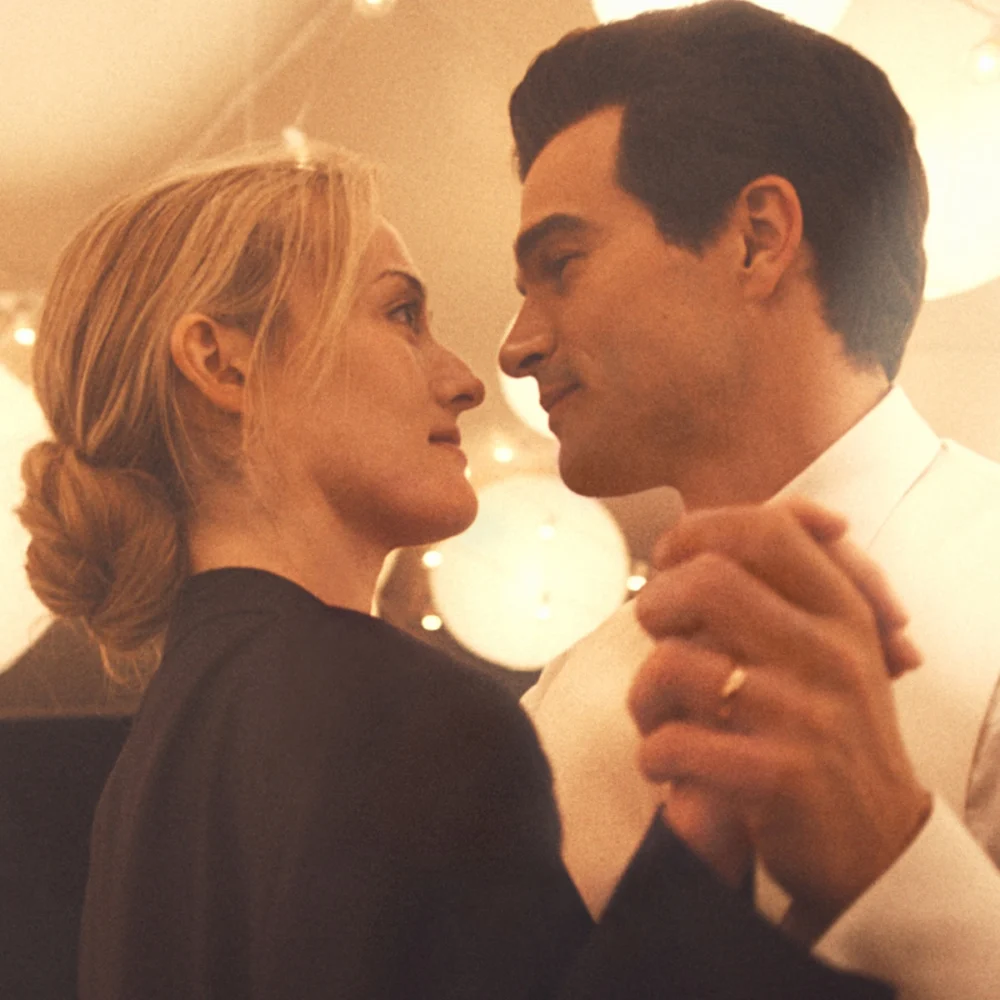
When Ryan Murphy decided to tackle the mythos of John F. Kennedy Jr. and Carolyn Bessette for his FX on Hulu limited series Love Story, he stepped into a minefield of American royalty and unresolved grief. The series, which stars Paul Anthony Kelly and Sarah Pidgeon as the ill-fated couple, arrives decades after the 1999 plane crash that claimed their lives, yet the fascination with their brief, high-octane romance remains as potent as ever. For a show centered on two of the most photographed yet private individuals of the 1990s, the challenge was always going to be separating the glossy paparazzi snapshots from the messy, human reality. By starting the series with the hours leading up to their final flight to Martha’s Vineyard, Murphy acknowledges the elephant in the room: no matter how glamorous the beginning, the audience is always bracing for the end.
The production of Love Story was met with immediate friction from the Kennedy camp. Jack Schlossberg, JFK Jr.’s nephew, publicly lambasted the project as a "grotesque" attempt to monetize his family’s tragedy. He even engaged in a digital war of words with Murphy after the producer suggested Schlossberg was too young to truly remember his uncle. This tension underscores the central difficulty of the series: how do you dramatize the lives of people who were essentially "silent" icons? Carolyn Bessette, in particular, never gave a single interview during her years in the global spotlight. She was a woman defined by her silence and her style, a blank slate onto which the public projected their own fantasies of modern royalty. Sarah Pidgeon, who takes on the daunting task of portraying Carolyn, described her subject’s commitment to privacy as "badass," noting that this very lack of public record made it easier for the media to invent narratives about her.
The aesthetic stakes were equally high. Before a single episode aired, Carolyn’s real-life hair colorist, Brad Johns, famously criticized the shade of Pidgeon’s blonde hair in early set photos. He argued that for a fashion icon like Bessette, getting the "ashy" tone wrong was a cardinal sin that would not go unnoticed by the "fashion people" who still worship her minimalist 1990s aesthetic. Despite these early critiques, the series dives deep into the substance behind the style, attempting to recreate the Manhattan milieu of the nineties while navigating the gaps in the historical record with a disclaimer that the show is "inspired by actual events but includes fictional elements."
One of the show’s primary focuses is Carolyn’s professional ascent at Calvin Klein. In the series, we see her advising high-profile clients like Annette Bening, played by Megan Channell. The show depicts Carolyn suggesting Bening wear a suit to the Bugsy premiere instead of a dress—a move that impresses Calvin Klein himself. While the specific dialogue may be scripted, the essence is rooted in fact. A 1996 New York Times profile confirmed that Carolyn was the "go-to" for Klein’s celebrity inner circle, including Diane Sawyer and Blaire Trump. Paul Wilmott, then the VP of public relations at the brand, recalled that she sold millions of dollars in clothing by guiding these women through the collections. The show also highlights Carolyn as an early champion of Kate Moss, who would go on to define the brand’s heroin-chic era—a claim that aligns with historical accounts of her sharp eye for talent and trend.
However, when it comes to the "meet-cute" between the prince of Camelot and the PR executive, Love Story takes some creative liberties. The show depicts a spark-filled introduction at a 1992 charity gala, followed by John showing up unannounced at the Calvin Klein offices for a "private fitting." In reality, Elizabeth Beller’s biography, Once Upon a Time, suggests a slightly more complicated start. While they did meet in the spring of 1992 during a VIP fitting, their first social interaction at a gala was marred by a misunderstanding. Carolyn reportedly declined John’s invitation to an after-party because she mistakenly believed another woman at his table was his date.
The series also heightens the drama surrounding John’s relationship with actress Daryl Hannah. Played by Dree Hemingway, Hannah is portrayed as a kooky, celebrity-savvy foil to Carolyn’s more grounded, private nature. The show’s producers admitted they did not seek Hannah’s input, viewing her character more as a "narrative adversary." One of the most heartbreaking subplots in the series involves the death of Hannah’s dog, Hank, who is hit by a taxi while John is walking him. This tragic incident did happen in May 1994, but the timing was even more fraught in real life. John flew to Los Angeles to help Hannah bury the dog just as his mother, Jacqueline Kennedy Onassis, was entering her final days of a battle with non-Hodgkin’s lymphoma. Friends of John later recalled that he felt deep resentment over being pulled away from his dying mother to attend a funeral for a pet.
The timeline of John and Carolyn’s relationship is also compressed for television. In Love Story, the romance feels like a continuous build, but the reality was a series of "stops and starts." They dated in the summer of 1992, cooled off for nearly two years, and only truly committed to one another after Jackie’s death in May 1994. Executive producer Brad Simpson explained that the "on-again, off-again" nature of their real lives was smoothed over to keep the audience engaged in the central romance.
One area where the show captures the "real" John is in his legendary absentmindedness. A scene where he forgets his keys before bringing Carolyn to his loft is a nod to his reputation for losing wallets, keys, and phones—a trait that would later contribute to Carolyn’s anxiety about his piloting. The series also dramatizes the tension between Carolyn and John’s sister, Caroline Kennedy. In the show, John surprises Carolyn by bringing her to Caroline’s birthday dinner unannounced. While the setting was actually a larger party, the essence of the meeting was captured in Carole Radziwill’s memoir, What Remains. Radziwill described Carolyn as "radiant and stubbornly original," though the show leans into the rumored friction between the two sisters-in-law. Beller’s biography disputes the idea of a feud, noting that the women were often seen lunching and laughing together in private.
The proposal, a pivotal moment in the series, takes place on a rowboat in Hyannis Port. John offers Carolyn a diamond and sapphire eternity band that he claims belonged to his mother. In truth, the proposal happened on a boat in Martha’s Vineyard during the 1995 Fourth of July weekend. The ring was not an heirloom but a custom piece designed by Maurice Tempelsman to mimic Jackie’s famous "swimming ring." Most notably, Carolyn did not give him an immediate "yes." She reportedly made the world’s most eligible bachelor wait three weeks for an answer, reflecting her deep hesitation about joining the Kennedy circus.
The series culminates in the infamous 1996 public argument in Washington Square Park. The scene is a near-perfect recreation of the paparazzi footage that shocked the world: John sitting on a curb in tears, the struggle over the dog’s leash, and the explosive shouting. However, the show ties the fight to John’s denial of their engagement to the press, whereas real-life accounts suggest the tension was more about John’s friends taking advantage of his fame. They had just attended a wedding where they were seated next to a reporter, and Carolyn felt John wasn’t doing enough to protect their privacy.
Ultimately, Love Story attempts to humanize a couple who became more like statues than people in the American consciousness. By weaving together documented facts with dramatized "what-ifs," the series seeks to answer the question that has lingered since that foggy night in 1999: what was it really like to be the most famous couple in the world, trying to find a private life in a very public cage? While the "fashion people" may still quibble over the hair color, the show’s exploration of the weight of legacy and the price of fame ensures that the story of John and Carolyn remains as captivating—and as tragic—as ever.