



Sapporo Snow Festival Ignites Winter Wonderland with Dazzling Sculptures
Sapporo, the vibrant capital of Hokkaido, has once again transformed into a breathtaking spectacle of ice and snow as its renowned annual Snow Festival officially commenced on Wednesday. This year’s 76th iteration promises a week of frosty enchantment, featuring an impressive collection of approximately 200 meticulously crafted ice and snow sculptures spread across three distinct venues within Japan’s northernmost prefecture’s largest city. From colossal historical replicas to beloved pop culture icons, the festival offers a diverse and captivating experience for visitors of all ages.
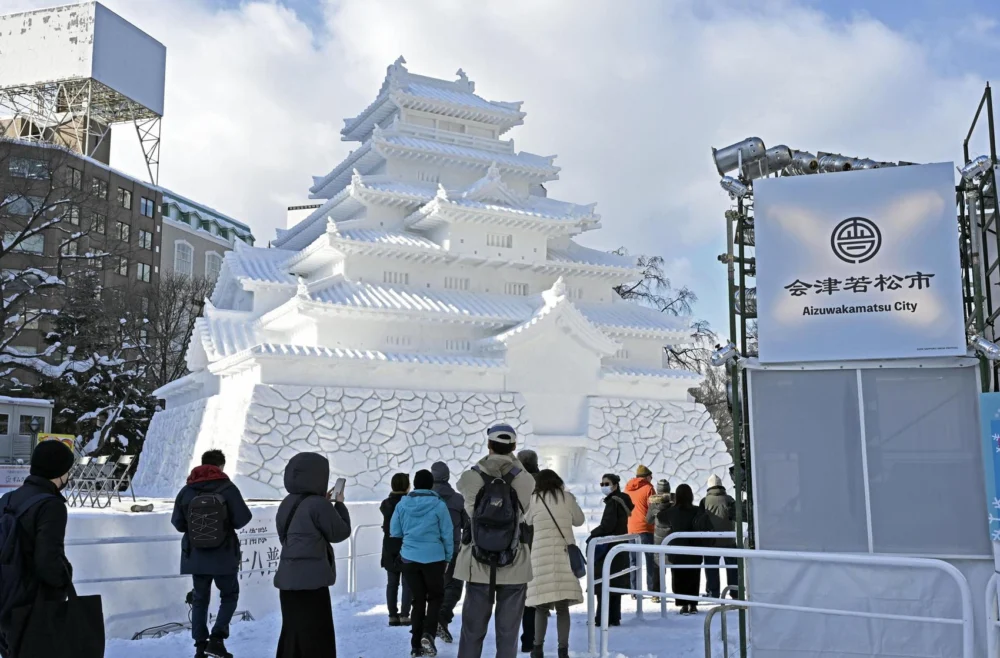
The heart of the festival beats strongest in Sapporo’s sprawling Odori Park, a central green space that has been dramatically reshaped into an open-air gallery of winter artistry. Here, attendees are greeted by a truly awe-inspiring array of creations. Dominating the landscape is a monumental sculpture paying homage to the iconic “Star Wars” universe, bringing to life the formidable Mandalorian and his adorable companion, Grogu. This intergalactic tribute stands as a testament to the festival’s ability to blend traditional craftsmanship with contemporary cultural phenomena, drawing in fans and art enthusiasts alike. Nearby, another colossal structure commands attention: a faithful rendition of Tsuruga Castle, a significant historical landmark located in Aizuwakamatsu, Fukushima Prefecture. Standing at an impressive height of approximately 15 meters, this architectural marvel carved from snow showcases the incredible skill and dedication of the artists who brought this piece of history to life in the heart of Hokkaido.
Beyond the immediate allure of pop culture and historical landmarks, the festival also celebrates local heritage and academic prowess. Odori Park is also home to a magnificent snow sculpture commemorating the 150th anniversary of Hokkaido University. This tribute specifically honors Furukawa Hall, a building with deep roots in the institution’s history, as it was originally founded as Sapporo Agricultural College. The sculpture serves as a poignant reminder of the university’s long-standing contributions to education and research in the region, adding an intellectual layer to the festival’s artistic display.
For those seeking more active engagement with the frosty landscape, the Sapporo Community Dome, affectionately known as “Tsudome,” offers a dedicated zone for family fun. This versatile indoor venue has been transformed into a winter playground, complete with an exhilarating snow slide that promises hours of joyous descent for children and the young at heart. The sheer scale of the snow used for this attraction is a spectacle in itself, providing a tangible and thrilling way for visitors to interact with the festival’s snowy medium.
Meanwhile, the vibrant Susukino entertainment district, renowned for its bustling nightlife and dazzling neon signs, takes on a different kind of luminescence with its own dedicated ice sculpture exhibition. Here, approximately 60 exquisite ice sculptures have been erected, their translucent forms catching and refracting the surrounding city lights, creating a magical and ethereal atmosphere. The delicate nature of ice carving presents a unique challenge and artistry, and the Susukino sculptures are expected to be a dazzling highlight, especially as they shimmer under the evening sky.
The opening day of the week-long festival saw a considerable influx of visitors flocking to Odori Park, eager to be among the first to witness the grandeur of these winter masterpieces. The atmosphere was palpable with excitement and wonder as people navigated the park, cameras in hand, capturing the sheer scale and intricate details of the sculptures. The crisp winter air was filled with the chatter of delighted attendees and the clicking of shutters, all converging to celebrate this unique artistic and cultural event.
Among the throngs of admirers was Yoshiaki Kuni, a 70-year-old first-time visitor, who expressed his profound admiration for the Tsuruga Castle sculpture. “The attention to detail, even at the high points, is impeccable. I wonder how they made it,” he remarked, his voice filled with a sense of awe as he gazed up at the towering snow edifice. His wife, Hideko, 69, echoed his sentiments, adding, “It’s impressive to see in person.” Their words encapsulate the universal sentiment of wonder that the festival inspires, bridging generational gaps and bringing people together through shared appreciation for art and ingenuity.
The Sapporo Snow Festival boasts a rich history, having first originated in 1950. Since its humble beginnings, it has evolved into a world-renowned event, drawing an estimated 2 million visitors annually from across Japan and from every corner of the globe. This consistent popularity underscores its status as a major cultural tourism draw, contributing significantly to the local economy and Hokkaido’s international profile. The festival is not merely an artistic exhibition; it is a symbol of resilience, community spirit, and the ability of human creativity to transform even the harshest of winter conditions into a source of beauty and joy.
Looking ahead, the festival is set to undergo a slight adjustment in its operational structure. It has been announced that from 2027 onwards, the Ground Self-Defense Force, a traditional and significant contributor to the festival’s grander sculptures, will reduce its participation from two large-scale creations to one. This change, while notable, is unlikely to diminish the overall impact and allure of the festival, which has a proven track record of adapting and thriving. The continued involvement of the Ground Self-Defense Force, even with a modified contribution, speaks to the enduring partnership and the deep connection between the military personnel and the festival’s legacy. Their participation has historically been crucial in realizing some of the most ambitious and technically challenging sculptures, often requiring heavy machinery and specialized engineering skills. The shift to one sculpture may signal a move towards other forms of community engagement or a strategic reallocation of resources, but the spirit of collaboration and the impressive results of their efforts are expected to continue.
The festival’s economic impact extends far beyond the direct revenue generated from ticket sales and local businesses. It fosters a sense of pride and identity within Sapporo and Hokkaido, positioning the region as a premier winter destination. The influx of tourists supports a wide range of industries, from hospitality and transportation to retail and dining, creating a ripple effect that benefits the entire community. Furthermore, the festival serves as a vital platform for cultural exchange, allowing international visitors to experience Japanese hospitality and the unique charm of Hokkaido, while also providing a space for locals to showcase their artistic talents and cultural heritage to a global audience. The meticulous planning and execution required for an event of this magnitude involve the collaboration of numerous local government agencies, private sector partners, and countless volunteers, highlighting the strong sense of community that underpins the festival’s success.
The artistic process behind these magnificent sculptures is a testament to human endeavor and artistic vision. Professional artists, local citizens, and members of the Ground Self-Defense Force dedicate months to conceptualizing, designing, and executing these temporary masterpieces. The selection of snow and ice as their medium presents unique challenges, requiring constant vigilance and adaptation to weather conditions. Sculptors must possess not only artistic talent but also a deep understanding of the properties of frozen water, employing specialized tools and techniques to achieve the desired forms and textures. The sheer scale of some of the sculptures, like the Tsuruga Castle replica, demands sophisticated logistical planning, including the transportation of vast quantities of snow and the coordination of work crews operating at significant heights. The ephemeral nature of the sculptures – their eventual melting with the arrival of spring – adds a poignant layer to their beauty, reminding viewers of the transient nature of art and life itself, and encouraging them to savor the moment.
Beyond the main attractions, the Sapporo Snow Festival is an immersive experience that engages all the senses. The aroma of local delicacies wafts from food stalls, offering warming treats like ramen, soup curry, and grilled seafood, perfectly suited to the chilly climate. The sound of laughter and music often fills the air, adding to the festive atmosphere. For many, the festival is an annual pilgrimage, a cherished tradition that marks the highlight of the winter season. Families plan their trips months in advance, eagerly anticipating the chance to create lasting memories amidst the snow-covered landscapes and the dazzling displays of artistic brilliance. The festival’s enduring appeal lies in its ability to consistently deliver a sense of wonder and delight, year after year, solidifying its place as one of Japan’s most beloved and iconic winter events.
© KYODO