


In the quiet, often overlooked corners of European cinema, a powerful narrative is emerging from Lithuania, weaving the intimate tapestry of personal strife with the stark, terrifying backdrop of global conflict. Andrius Blaževičius’s latest feature, "How to Divorce During the War," is not just a film; it’s a meticulously crafted mirror reflecting the disorienting dance between individual heartbreak and collective anguish, particularly for women navigating the complexities of modern life. It challenges us to ponder whether our personal woes are diminished by larger catastrophes, or if they are, in fact, amplified and reframed by them.
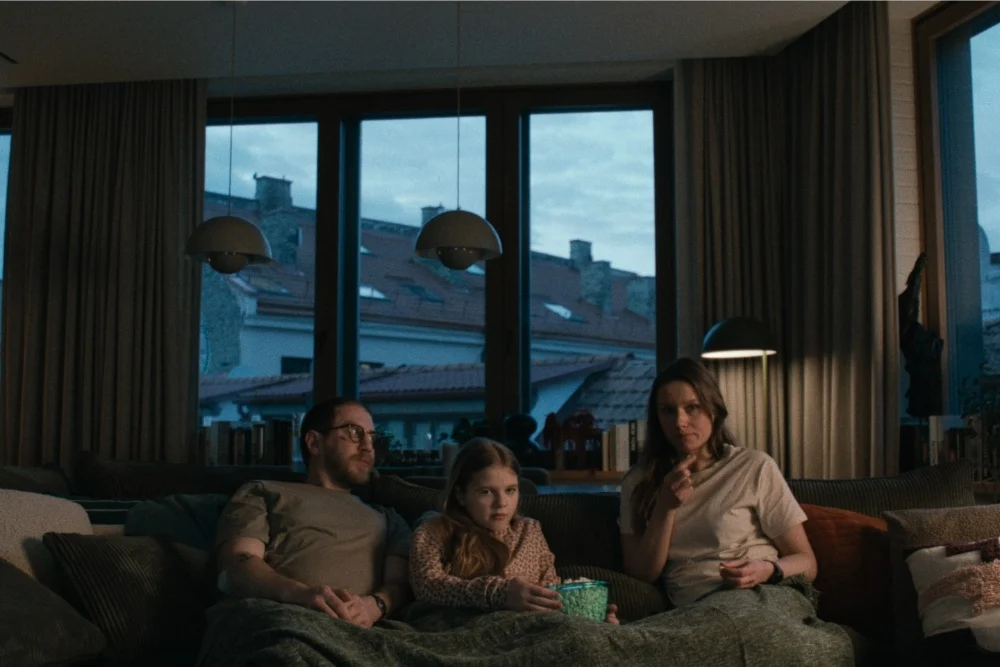
At its core, the film dissects the unraveling marriage of Marija (Žygimantė Elena Jakštaitė), a sharp, ambitious media executive, and Vytas (Marius Repšys), a creatively blocked, seemingly complacent screenwriter. Their comfortable, middle-class existence in Lithuania provides a veneer of stability that cracks precisely as the unthinkable happens: Russia’s full-scale invasion of Ukraine. For a couple in Vilnius, hundreds of kilometers from the frontline, the war might seem a distant tragedy. Yet, Blaževičius masterfully demonstrates how this geopolitical earthquake sends tremors directly through their domestic fault lines, jointly defining a period of profound disarray in their lives. The war, while undeniably putting their marital woes into a broader, sobering perspective, offers no easy solutions or emotional shortcuts. Instead, it becomes a catalyst, exposing the raw nerves of their relationship and forcing a reckoning with their own motivations and hypocrisies.
Blaževičius, a director lauded for his incisive observational style, presents a dryly witty, yet subtly searing comedy that is both empathetic to its characters’ struggles and surgically precise in its critique. He delves into the human tendency to sublimate personal anxieties and selfish angsts into outward displays of social activism, questioning the authenticity and efficacy of such gestures. This nuanced exploration of performative altruism versus genuine commitment resonates deeply, particularly for a contemporary audience grappling with how to respond to overwhelming global events.
This is Blaževičius’s third feature, and it marks a significant reunion with his superb lead actors, Jakštaitė and Repšys, who previously captivated audiences in his acclaimed 2021 sophomore effort, "Runner." That film, a time-compressed relationship thriller, garnered critical praise on the festival circuit but arguably deserved a wider global release. The director’s decision to cast Jakštaitė and Repšys again, even going so far as to name their characters Marija and Vytas in both "Runner" and his 2016 debut, "The Saint," speaks to a fascinating creative continuity. It suggests an exploration of archetypal Lithuanian characters, perhaps akin to Michael Haneke’s recurring "Anne" and "Georges," allowing Blaževičius to revisit and deepen his understanding of certain psychological and social dynamics through a familiar lens. This recurring casting choice lends a fascinating meta-narrative layer to his body of work, inviting audiences to consider the evolution of these "types" across different scenarios.
Following a successful premiere in the Sundance competition, where Blaževičius rightfully earned a directing prize, "How to Divorce During the War" is poised for broader international distribution. Its timely subject matter and accessible, yet sophisticated, storytelling make it a compelling candidate for audiences far beyond the festival circuit. The film arrives at a moment when Lithuanian cinema is experiencing a quiet but undeniable surge, particularly in the realm of intimate, finely-grained domestic dramas. While Blaževičius’s distinctive "arch realism" sets his work apart, it shares a palpable thread with recent festival successes like "Drowning Dry" and "Slow." These films collectively demonstrate a national cinematic voice characterized by tender everyday observation and a measured, controlled formal aesthetic—a testament to a burgeoning industry committed to nuanced storytelling.
One of the film’s most crucial and impactful scenes unfolds early on, capturing the escalating tension in a single, meticulously composed long take. Shot with a static camera through the windshield of a parked car, the scene encapsulates Marija’s devastating announcement to Vytas: she wants a divorce. The ensuing conversation is a masterclass in controlled chaos, cycling through raw stages of denial, desperate pleading, firm assertion, and sudden, violent anger. All of this unfolds as they wait for their pre-teen daughter, Dovile (Amelija Adomaityte), to emerge from her violin lesson. The physical barriers of the car glass and the encroaching dusk obscure the actors’ faces, making their expressions not entirely legible. Yet, the air within the confined space is thick with a palpable sense of curdling resentment, long-held grievances, and the sudden, sharp pang of grief. It’s a testament to the actors’ prowess and Blaževičius’s directorial vision that so much emotional weight is conveyed through subtle body language, vocal inflections, and the oppressive atmosphere itself. This scene alone serves as a microcosm of the entire film: a private crisis unfolding under a semi-public gaze, its raw emotion contained yet undeniable.
The root of their marital discord is gradually revealed. For several years, Marija’s career at a content creation company has been on an upward trajectory, a testament to her drive and competence. In contrast, Vytas, a screenwriter perpetually battling creative blocks, has comfortably settled into the role of homemaker. While Vytas appears content with this arrangement, Marija finds it increasingly stifling, a dynamic that will resonate with many women who have felt the subtle yet insidious pressure of societal expectations regarding partnership and ambition. She articulates her grievances with bruising candor, detailing the erosion of shared purpose and the burden she feels. However, she remains conspicuously silent about the potential role of a "third party" in her decision, a deliberate narrative choice that adds another layer of complexity to her character, hinting at internal contradictions and unspoken motivations.
Dovile, their daughter, reacts to the earth-shattering news with a solemn but remarkably composed demeanor. Her response, "Now you’re going to tell me you love me very much and my life isn’t going to change," is delivered with a weary familiarity, a line she’s clearly "learned the script" from friends whose parents have also divorced. This poignant moment underscores the generational ripple effect of marital dissolution and the precocious wisdom children often acquire when navigating their parents’ emotional landscapes. Yet, even Dovile’s mind, like almost everyone else’s, is not entirely focused on the domestic upheaval. The burgeoning war in Ukraine has just broken out, and casual conversations everywhere revolve around nothing else, pushing personal dramas to the periphery, or at least, making them share mental real estate with a far greater terror.
The war’s influence profoundly shapes Marija and Vytas’s reactions and choices, albeit in distinctly different ways that highlight their underlying characters. At work, Marija initially attempts to maintain a semblance of normalcy, instructing her colleagues to press on and advising them to turn off their phones during office hours to reduce stress levels. This pragmatic, almost detached approach speaks to her professional persona, yet it’s soon challenged. When her company refuses to close its Russian branch, Marija, perhaps driven by a blend of genuine moral outrage and a desire to align herself with the prevailing sentiment, resigns in protest. However, Blaževičius subtly hints at the gesture being somewhat "obligatory" or "half-hearted," leaving the audience to question the depth of her conviction. Her subsequent decision to take in a family of Ukrainian refugees, ostensibly an act of profound charity once Vytas moves out, quickly sours. Marija begins to regret her generosity, complaining about the new arrivals’ disruption of her household order, exposing a discomfort with genuine sacrifice and a preference for controlled environments. This arc is particularly insightful for a women-focused audience, as it delves into the often-unseen burdens and complex emotions that can accompany acts of care and hospitality, especially when they clash with personal comfort and order.
Vytas, now staying with his increasingly reactionary parents, embarks on a seemingly more "concerted effort" to join the resistance movement. He throws himself into public performance-art protests, volunteers at a local food bank, and even attempts to sever his parents’ access to Russian propaganda on satellite TV. His actions appear more overtly engaged, more physically committed to the cause. But the film, with its characteristic dry wit, prompts a crucial question: Is this, too, merely a temporary distraction from the internal collapse of his own life, a way to channel his personal chaos into a socially acceptable, even lauded, form of activism? Both characters, in their divergent approaches, reveal the complexities of human motivation when confronted with overwhelming external events—a mixture of genuine concern, personal escape, and perhaps a touch of self-aggrandizement.
The film’s aesthetic choices powerfully underscore its thematic concerns. Blaževičius’s "deadpan anti-rhetoric" in the script is perfectly complemented by the steadily poised, often standoffish gaze of DP Narvydas Naujalis’s camera. The cinematography largely eschews close-ups, favoring fixed, wide tableaux that immerse the viewer in the scene’s overall atmosphere rather than focusing on individual facial expressions. These shots are frequently washed in the dreariness of late winter, evoking a sense of chill and melancholia that pervades both the marital breakdown and the national mood. Jakub Rataj’s sparse, chilly score, characterized by ill-tuned piano melodies and jittery percussion, perfectly matches the general mood of uneasy drollery. This difficult balance, oscillating between understated humor and profound melancholy, is masterfully maintained in Jakštaitė and Repšys’s finely tuned, delicately ironic performances. They skillfully pivot between protective detachment and moments of raw, unvarnished emotional release, crafting characters that feel achingly human in their flaws and complexities.
Ultimately, "How to Divorce During the War" offers no easy answers, leaving viewers to grapple with the profound ambiguities of human nature. The film forces us to confront whether Marija and Vytas are simply "good people reacting in human, erratic ways to bad times," or if there’s "something more insidious" lurking in the compromises and hypocrisies they ultimately decide they can live with. This applies not only to their evolving political positions amidst the war but also to the redefinition of their living arrangements and the very essence of their relationship. For a professional women-focused audience, the film’s unflinching gaze at Marija’s journey—her career aspirations, her frustrations with traditional gender roles, her conflicted attempts at altruism, and her ultimate reckoning with personal responsibility—offers a rich and timely meditation on navigating the personal and political in an increasingly turbulent world. It’s a compelling, thought-provoking work that resonates long after the credits roll, urging us to look beyond the headlines and into the intimate wars fought within ourselves and our homes.