



As Japan gears up for a pivotal general election, a new generation of voters, particularly those in their crucial swing years and digitally native, are finding themselves at the forefront of political engagement. With the power of social media amplifying political messages and the ever-present threat of sophisticated disinformation campaigns, digital platforms and educational initiatives are stepping up to equip Generation Z with the critical thinking skills needed to discern truth from falsehood. The rise of advanced AI-generated content, including hyper-realistic deepfakes, presents an unprecedented challenge, making it imperative for young voters to understand the origins and veracity of the information they consume.
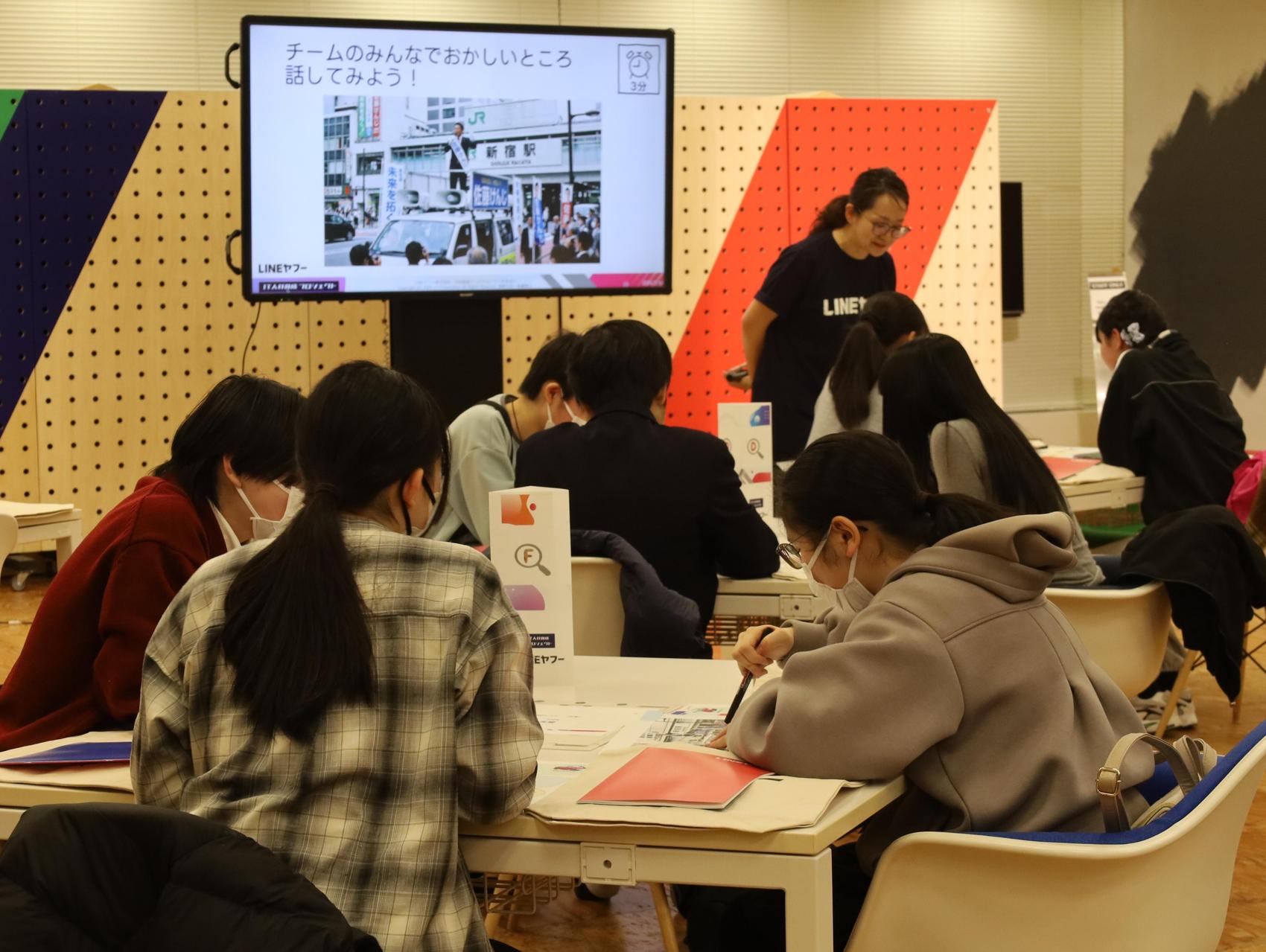
In a recent proactive measure aimed at bolstering digital literacy among the nation’s youth, a workshop held in Tokyo brought together approximately twenty junior high and high school students. The intensive session was meticulously designed to underscore the profound importance of information sourcing and the critical necessity of engaging with primary sources. In an era where digital fabrication can be remarkably convincing, the workshop sought to empower these young citizens with the tools to navigate a complex information landscape.
The participating students, organized into collaborative groups, delved into practical exercises focused on evaluating information reliability. They were presented with a spectrum of real-world examples, ranging from images ingeniously crafted by generative artificial intelligence to sophisticated composites pieced together from multiple photographs, and content that had been deliberately and misleadingly edited. The curriculum also shed light on the insidious risks associated with fake accounts, which are often deployed to spread propaganda and sow discord. The interactive nature of the workshop allowed students to actively engage with these challenges, fostering a hands-on understanding of the subtle nuances that can betray fabricated content.
A particularly striking moment during the workshop involved a lecturer presenting the teenagers with an image that appeared to depict a political candidate delivering a rousing speech from atop a campaign vehicle positioned in front of the iconic Shinjuku Station. The image bore all the hallmarks of authenticity, a testament to the advancements in AI-driven content creation. However, upon closer scrutiny, subtle but significant errors were revealed: a misspelled rendition of the station’s name and the presence of fabricated banners adorning the facade of a nearby building. These discrepancies, though small, served as potent reminders of the deceptive capabilities of AI.
The impact of this exercise was palpable, with one 18-year-old high school senior, who is set to cast her first-ever vote in the upcoming general election, sharing her candid reaction. “I couldn’t find any errors in those AI-generated images,” she admitted, her voice tinged with a newfound self-awareness. “It made me realize I may have overestimated my ability (to spot fake news).” This sentiment highlights a common pitfall for many, even those who consider themselves digitally adept. The ease with which realistic fakes can be produced means that traditional methods of spotting inaccuracies may no longer suffice. “With the election approaching, I want to sort through information while fact-checking it,” she added, articulating a growing resolve to approach political discourse with a more critical and discerning eye.
The urgency of this educational push is underscored by recent survey data. LY Corp., the influential operator of the popular Line messaging app and a key organizer of these workshops, conducted a survey that revealed a significant level of concern among respondents. An overwhelming 87 percent of those surveyed indicated that they believed they had encountered disinformation or misinformation. Even more concerning, a substantial 54 percent acknowledged that they might have been influenced by such misleading content. The survey also pointed to a widespread demand for greater awareness and education, with a resounding 88 percent of respondents highlighting a perceived lack of organized efforts to address the pervasive issue of disinformation and misinformation.
In the high-stakes environment of a general election campaign, particularly for seats in the House of Representatives, political parties are engaged in a vigorous race to connect with a broader electorate. They are strategically leveraging the unparalleled speed and expansive reach of social media platforms to disseminate their messages and mobilize support. In this tightly contested political landscape, capturing the attention and allegiance of unaffiliated voters is widely recognized as a critical determinant of electoral success. Current media polls suggest that the ruling coalition, comprising the Liberal Democratic Party and the Japan Innovation Party, is on track to secure at least a majority of the 465 contested seats. However, the opposition parties face the formidable challenge of not only galvanizing their existing base but also significantly expanding their appeal to a wider spectrum of voters.
Japan’s decision to lower the voting age to 18 from 20 in 2016 was a significant step towards enfranchising younger citizens. Yet, despite this progressive reform, turnout among teenage voters has historically lagged behind that of older age cohorts. This discrepancy presents a dual challenge for political parties: not only do they need to engage this demographic, but they also need to ensure they are equipped with the knowledge to make informed decisions.
While major political parties readily embrace the advantages offered by social media in reaching voters, they are also increasingly aware of its darker side. The Ministry of Internal Affairs and Communications has taken a proactive stance, formally requesting platform operators to implement swift response mechanisms for the deletion of harmful or misleading information in the lead-up to the nationwide election. This reflects a growing recognition at the governmental level of the significant societal impact of online falsehoods.
Narumichi Oyama, a manager at LY Corp., articulated the gravity of the situation, stating, “Fake news has become a social issue.” He elaborated on the paradox of technological advancement and educational preparedness, observing, “Although younger generations, including junior and senior high school students, appear adept at using social media and AI, it remains quite questionable whether education has kept pace with the growing influence of social media and the evolution of AI.” This statement points to a critical gap that needs urgent attention, suggesting that while young people are proficient users of these technologies, their understanding of the underlying mechanisms and potential for manipulation may not be as robust.
Further reinforcing Oyama’s concerns, a 2025 survey conducted by the communications ministry provided illuminating insights into the dissemination of false information. This survey, which garnered responses from approximately 2,800 individuals aged 15 and above, revealed a striking pattern: roughly half of those in their teens to thirties who reported encountering fake or false information in the past admitted to having shared it in some form with others. This highlights a concerning propensity for the uncritical propagation of misinformation within these age groups.
Oyama continued to elaborate on this trend, noting, “Most people vaguely know that fake news is terrifying and they need to be careful not to be misled, but relatively few students, particularly those in their teens, pursue the truth and verify (the information) on their own.” This observation underscores a passive acceptance of the dangers of fake news, coupled with a lack of proactive verification habits. The digital environment, with its constant influx of information, can foster a culture of quick consumption rather than deep analysis.
Looking towards the future responsibilities of these young citizens, Oyama emphasized the importance of developing these critical skills. “As they will soon become voters and are expected to contribute to society, they should do so to filter out various noises and purely benefit from social media, the internet or AI,” he concluded. This perspective frames digital literacy not merely as a personal skill but as a civic duty, essential for the health of democratic discourse and societal progress. By cultivating the ability to critically assess information, young voters can harness the immense potential of digital technologies while mitigating their inherent risks, ensuring their participation in society is both informed and constructive.
The evolving nature of political campaigning in the digital age presents both opportunities and challenges. Social media platforms, while offering unprecedented avenues for direct engagement and information dissemination, also serve as fertile ground for the rapid spread of misinformation. This dynamic necessitates a more informed and critical electorate, particularly among young voters who are increasingly shaping the political landscape. The ongoing efforts to enhance digital literacy among Gen Z are therefore not just about navigating online content but about safeguarding the integrity of democratic processes and empowering a new generation of informed and engaged citizens.
The complexities introduced by AI-generated content add another layer to this challenge. Deepfakes and other forms of synthetic media can be incredibly persuasive, blurring the lines between reality and fabrication. This requires a shift in how individuals approach information, moving beyond surface-level credibility to a deeper understanding of the provenance and potential biases of any given piece of content. Educational initiatives that focus on source verification, cross-referencing information from multiple reputable outlets, and understanding the tell-tale signs of manipulated media are crucial in this regard.
Furthermore, the role of digital platforms themselves is under increasing scrutiny. While many platforms are taking steps to combat disinformation, the sheer volume of content and the sophisticated nature of some campaigns make this an ongoing battle. The partnership between educational institutions, digital platforms, and civil society organizations is vital in creating a more resilient information ecosystem.
The inclusion of 18-year-olds in the electorate has democratized the political process, but it also places a greater responsibility on society to ensure these new voters are well-equipped to participate meaningfully. The workshops and surveys highlighted in this article represent a crucial step in that direction. By fostering critical thinking and a healthy skepticism, these initiatives aim to empower young people to become active participants in shaping their future, rather than passive recipients of potentially misleading narratives.
The challenge is not to deter young people from engaging with social media or AI, but to equip them with the discernment needed to navigate these powerful tools responsibly. As technology continues to advance at a rapid pace, so too must our educational strategies. The ability to distinguish fact from fiction, to identify manipulation, and to engage in reasoned debate are foundational skills for any informed citizen in the 21st century. The success of these efforts will ultimately be measured by the extent to which young voters can confidently and critically engage with the political process, contributing to a more informed and robust democracy.
© KYODO