
When the screen abruptly cut to black on June 10, 2007, the collective gasp of millions of viewers signaled more than just the end of a television season; it marked the conclusion of a cultural era. Set to the driving rhythm of Journey’s "Don’t Stop Believin’," the series finale of The Sopranos left the fate of Tony Soprano suspended in an eternal, agonizing ambiguity. For twenty-seven years, the shadow of that New Jersey mob boss has loomed large over the landscape of prestige television, and as the series celebrates its 25th anniversary, the world remains as captivated by the Pine Barrens and the backrooms of the Bada Bing as it was in 1999.
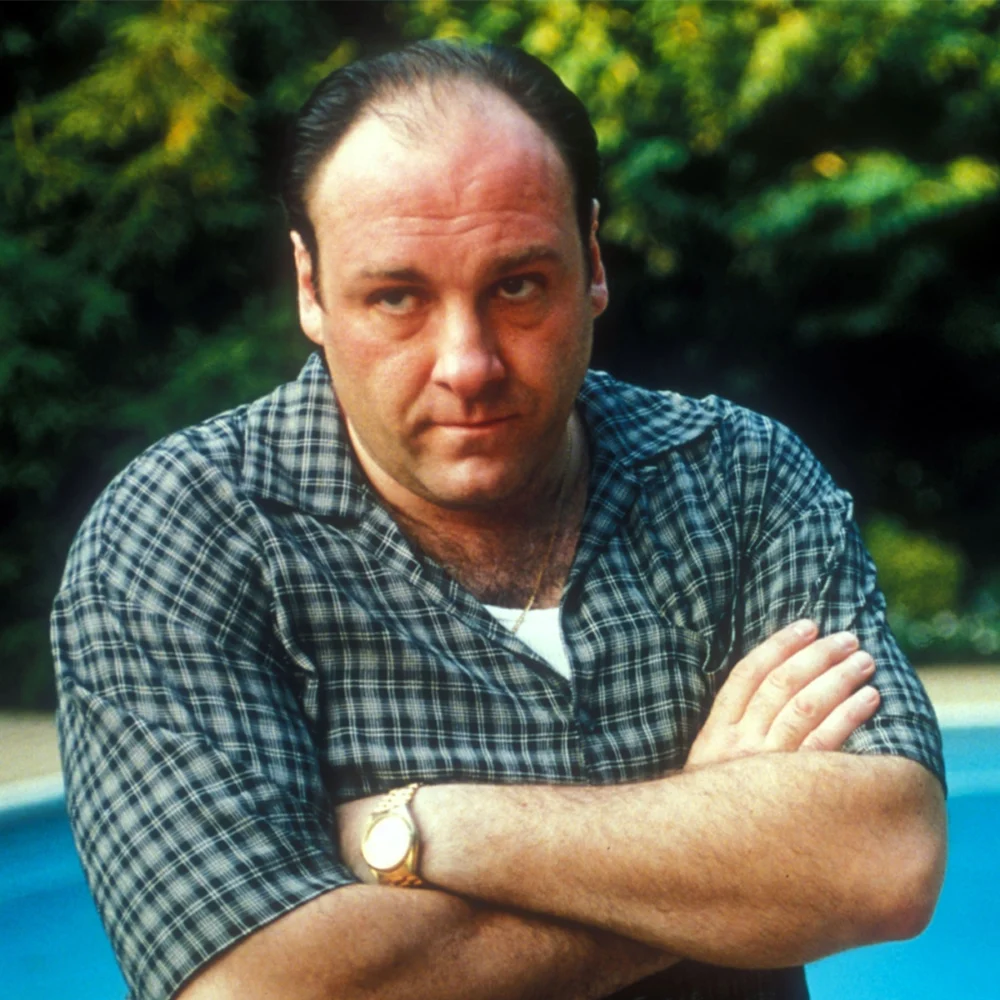
The show’s inception was far from a guaranteed success. Creator David Chase originally envisioned the story of a mobster in therapy as a feature film, imagining a titan like Robert De Niro in the lead role. It was only after a push from his manager, Lloyd Braun, that Chase considered the small screen. Even then, the path was rocky; the script was rejected by Fox and several other networks before HBO—then a fledgling home for original scripted content—recognized the potential in a crime drama that was as much about a man’s relationship with his mother as it was about the mafia. When the pilot premiered on January 10, 1999, it introduced the world to the late, great James Gandolfini as Tony Soprano, a man who famously mused, "Those who want respect, give respect."
The casting of The Sopranos is now the stuff of legend, but the iconic ensemble nearly looked very different. Chase’s first choice for Tony was actually Steven Van Zandt, the charismatic guitarist for Bruce Springsteen’s E Street Band. Chase had been struck by Van Zandt’s magnetic presence during a Rock and Roll Hall of Fame induction speech and felt he had the "it" factor. However, HBO was hesitant to cast a first-time actor in the lead role. Van Zandt eventually stepped into the role of the loyal Silvio Dante, but not before a memorable audition process where he found himself in a waiting room alongside James Gandolfini. Similarly, Lorraine Bracco, fresh off her success in Goodfellas, was the original pick for the mob wife, Carmela. Bracco, however, was determined to break the "mafia wife" mold. She insisted on playing Dr. Jennifer Melfi, Tony’s psychiatrist, paving the way for Edie Falco to deliver her career-defining performance as the resilient, complicated Carmela Soprano.
The character of Dr. Melfi wasn’t just a plot device; she was rooted in Chase’s own reality. He modeled the psychiatrist after his own therapist, Lorraine Kaufman, who even helped the writers develop the psychological profiles of the Soprano family. This commitment to authenticity extended to the show’s darker corners. Drea de Matteo, who became a fan favorite as Adriana La Cerva, was initially told she "wasn’t Italian enough" for the show. She started as an unnamed hostess with a single line, but her raw talent eventually convinced Chase to expand her role into a series regular—a journey that ended in one of the most heartbreaking exits in television history.
Behind the scenes, the production was often as dramatic as the scripts. The cast and crew faced real-world challenges that mirrored the turmoil on screen. Robert Iler, who grew up before the cameras as A.J. Soprano, faced a highly publicized arrest at age 16 for his involvement in an armed robbery. Meanwhile, Jamie-Lynn Sigler, who played Meadow, has since opened up about her battle with exercise bulimia during the show’s early years. She credits the show’s producers for intervening; they asked her to put on weight to more accurately reflect a girl from an Italian-American household, a move that Sigler says was a vital catalyst for her recovery.
James Gandolfini himself was a man of immense contradictions, possessing both a legendary generosity and a well-documented set of personal demons. Following a heated pay dispute with HBO after the fourth season, which briefly halted production in an event dubbed the "Occupy Vesuvio" sit-in, Gandolfini took matters into his own hands. He called the series regulars into his trailer and personally wrote each of them a check for $33,333, a gesture of gratitude for their loyalty. Yet, the pressure of playing such a volatile character took its toll. Gandolfini was known to struggle with substance abuse and would sometimes disappear from the set for days at a time. In one instance, he vanished for four days, only to resurface at a Brooklyn beauty salon where he asked to use the phone to call for a ride home. On set, his frustration with his own performance would sometimes manifest in self-inflicted physical outbursts, a "self-directed rage" that added a haunting layer of reality to Tony’s internal struggles.
The show’s realism was so profound that it caught the attention of the very people it depicted. FBI agents reported that during weekend wiretaps of real-life mobsters, the "wiseguys" would spend Monday mornings discussing the previous night’s episode. Many mafiosos were convinced the show had an informant on the inside because the details were so precise. However, they did have one critique: Tony’s attire. After the pilot aired, Gandolfini received a call from a real-life mob associate who told him, "A don never wears shorts." Tony Soprano was never seen in shorts at a barbecue again.
The production also had to navigate the tragic loss of Nancy Marchand, who played Tony’s domineering mother, Livia. Marchand, who suffered from cancer throughout the filming, asked Chase to keep her working as long as possible. When she passed away in 2000, the writers used early CGI technology—grafting Marchand’s head onto a body double and using outtakes of her dialogue—to give the character a final scene. While critics at the time found the effect jarring, it underscored the show’s commitment to Livia’s role as the primary architect of Tony’s psychological trauma.
Even the minor roles in The Sopranos served as a launchpad for future superstars. A 15-year-old Stefani Germanotta, now known to the world as Lady Gaga, made her acting debut in a 2001 episode as a high schooler laughing by a swimming pool. Years later, she would critique her own performance, noting that she hadn’t yet learned "how to listen" in a scene. The show also featured early appearances from Lin-Manuel Miranda, Michael B. Jordan, and Will Arnett, proving that the series was a scouting ground for the next generation of Hollywood talent.
The legacy of The Sopranos continues to evolve. In 2021, the prequel film The Many Saints of Newark returned fans to the streets of New Jersey, featuring Michael Gandolfini stepping into his father’s shoes to play a young Tony. While the film provided a glimpse into the origins of the DiMeo crime family, fans remain hungry for more. David Chase has since signed a five-year deal with Warner Bros. and HBO, fueling constant speculation about a potential spin-off series.
Whether Tony Soprano met his end in that diner or simply continued to live in a state of perpetual paranoia, the impact of The Sopranos remains undisputed. It was the first cable series to win the Emmy for Outstanding Drama Series, and it paved the way for the "Golden Age" of television, influencing everything from Mad Men to Boardwalk Empire. As David Chase once noted, he was bothered by how many people "wanted to see Tony killed" and "go face-down in linguini." By denying the audience that closure, Chase ensured that The Sopranos would never truly die. Instead, it lives on in the silence of that final black screen—a masterpiece of ambiguity that continues to demand our respect, decades later.