


**Decoding ‘The Moment’: Charli XCX, Authenticity, and the Pop Machine**
The opening frames of “The Moment” plunge viewers into a visceral, disorienting experience, mirroring the very essence of its subject: Charli XCX. Black-and-white strobe lights flash, momentarily illuminating the artist writhing on a stark floor, clad in intentionally torn, minimalist attire. An unrelenting industrial beat pounds through the speakers, evoking an apocalyptic soundscape that feels both urgent and raw. This electrifying sequence immediately signals that what follows is deeply intertwined with Charli XCX’s established artistic universe – a world often characterized by its boundary-pushing visuals and sonic aggression, readily familiar to anyone who has delved into her music videos. It’s a striking introduction that promises an intimate, perhaps unsettling, glimpse into the life of a pop icon at the peak of her powers.
The film quickly transitions from this intense personal portrait to a broader cultural phenomenon: “Brat Summer.” Through a meticulously crafted montage of news clips, we are immersed in the aftermath of “brat,” Charli XCX’s 2024 album that didn’t just top charts but ignited a global movement. “Brat Summer” is presented as an all-encompassing juggernaut – a convergence of music, style, celebrity, and savvy marketing that transcended typical album cycles to become a defining cultural moment. It’s a testament to Charli’s influence that her work could spawn such a widespread, multifaceted impact, reflecting her unique ability to tap into the zeitgeist and shape it. This initial setup establishes the dizzying heights of her success and the colossal machinery now operating around her.
“The Moment” positions itself, in theory, as a mockumentary, meticulously chronicling the weeks leading up to Charli XCX’s monumental worldwide “brat” tour launch. However, the term “mockumentary” here requires immediate re-evaluation, as the film deliberately sidesteps the genre’s most familiar tropes. Unlike the laugh-out-loud, often broad satirical jabs found in classics like “This Is Spinal Tap” – the progenitor of the form – or Christopher Guest’s understated yet undeniably comedic “A Mighty Wind,” or even Andy Samberg’s recent pop-star parody “Popstar: Never Stop Never Stopping,” “The Moment” opts for a remarkably different approach. It is a mock documentary played with an almost startling sincerity, delivered “straight.”
This commitment to a straight-faced portrayal means that the film’s humor, if it can be called that, is so subtle as to be almost imperceptible. Viewers seeking overt gags or obvious comedic setups will find themselves largely unrewarded. Instead, the film derives its dramatic and thematic weight from Charli XCX’s portrayal of a version of herself that feels profoundly authentic, albeit within a constructed narrative. The movie doesn’t aim to lampoon the pop music industry or its stars; rather, it crafts an alternate reality, a meticulously detailed world where Charli XCX not only exists but thrives, and where the lines between her public persona and private self are deliberately blurred. This choice creates a fascinating tension, inviting the audience to question the nature of celebrity, authenticity, and the constructed narratives that define our modern cultural landscape. It’s a bold artistic statement, challenging conventional expectations of the mockumentary genre and inviting a more introspective engagement with the subject matter.
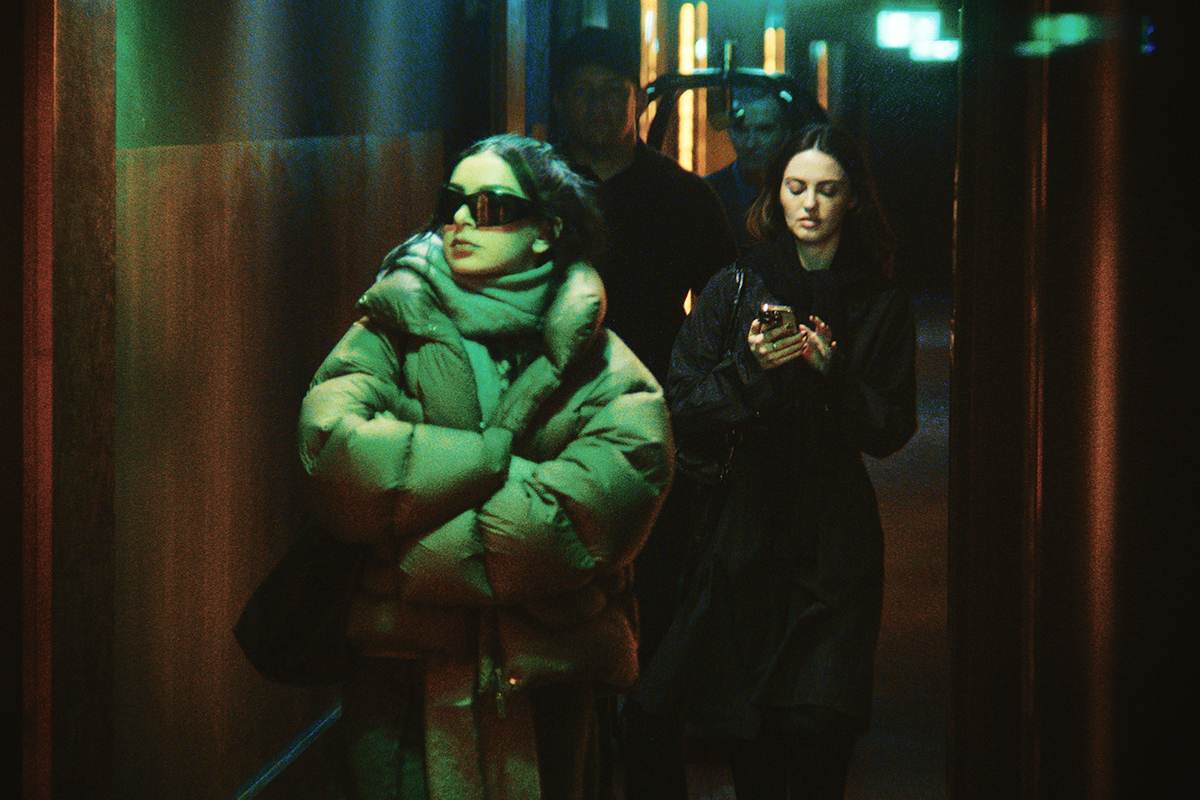
Within this meticulously constructed alternate reality, Charli XCX is depicted as the serene eye at the center of an incessant pop-media hurricane. Her life is a blur of constant motion, ferried from one engagement to the next in a fleet of anonymous SUVs, perpetually surrounded by a retinue of frenetic handlers whose energy barely keeps pace with her schedule. The film vividly portrays the relentless demands placed upon a global superstar: grueling photo shoots designed to capture her every angle, lucrative brand endorsements that capitalize on her immense influence, and high-profile media appearances on shows like “The Late Show with Stephen Colbert.” We even catch a glimpse of her participating in a quintessentially modern celebrity ritual: a British Vogue “What’s in My Bag?” segment, an intimate yet highly curated peek into the mundane objects that accompany a star.
Concurrently, the film delves into the corporate machinations behind this glamorous facade. At Atlantic Records, the formidable Tammy, portrayed with an authoritative gravitas by Rosanna Arquette, spearheads the strategic imperative to extend “Brat Summer” indefinitely. Her relentless focus is transparent: “How can we keep the money flowing?” This question underscores the stark commercial realities underpinning artistic success. The handlers, while outwardly fawning over Charli, deliver an unending barrage of demands, their praise inextricably linked to the economic output she represents. The film subtly highlights how even the most genuine admiration for Charli’s artistry—her undeniable talent as a dance-pop innovator and her status as one of the world’s most magnetic celebrities—is ultimately framed by her commercial value. She is, as the narrative poignantly illustrates, the “golden goose,” admired and placed on a pedestal not just for her talent, but for the steady stream of “golden eggs” – the profits – she continuously generates. This intricate dance between art and commerce forms a central theme, exploring the pressures that transform an artist into a valuable commodity in the unforgiving machinery of the music industry.
The relentless pursuit of extending the “Brat Summer” phenomenon leads the Atlantic Records executives down various commercial avenues. Their initial foray into diversification manifests in a strikingly contemporary proposal: Charli XCX is to endorse a new credit card, launched by Britain’s Howard Stirling Bank, specifically targeted at young queer people. This initiative, labeled by some as “hipster capitalism,” embodies a prevalent trend where brands strategically align with social causes or specific demographics, not purely out of altruism, but as a calculated move to expand market reach and cultivate a progressive image. It’s a fascinating, if cynical, commentary on how identity politics can be commodified within consumer culture.
The next logical step in the “Brat Summer” expansion plan, given Charli’s status as a global touring sensation, is the production of a concert film. This idea resonates immediately with all stakeholders, seen as a natural and lucrative extension of her brand. Amazon MGM Studios swiftly comes on board to back the ambitious project, signaling the scale of the endeavor. The only remaining puzzle piece is the director. The name that eventually rises to the surface is Johannes, played by Alexander Skarsgård, a seemingly “hot helmer” whose reputation precedes him. Celeste (Hailey Benton Gates), Charli’s creative director and close confidante, voices a crucial, almost prophetic, red flag: Johannes “basically makes adverts for women.” This description immediately casts a shadow of doubt, hinting at a potential clash between commercial aesthetics and artistic integrity. Despite this, after a perfunctory, hastily arranged Zoom meeting where Charli straightforwardly articulates her need for someone simply to “record the show,” and Johannes’s agreeable, if superficial, assent, the concert film appears to be a done deal. “Brat Summer” seems poised to roll on, seemingly unhindered, but with a nascent tension simmering beneath the surface.
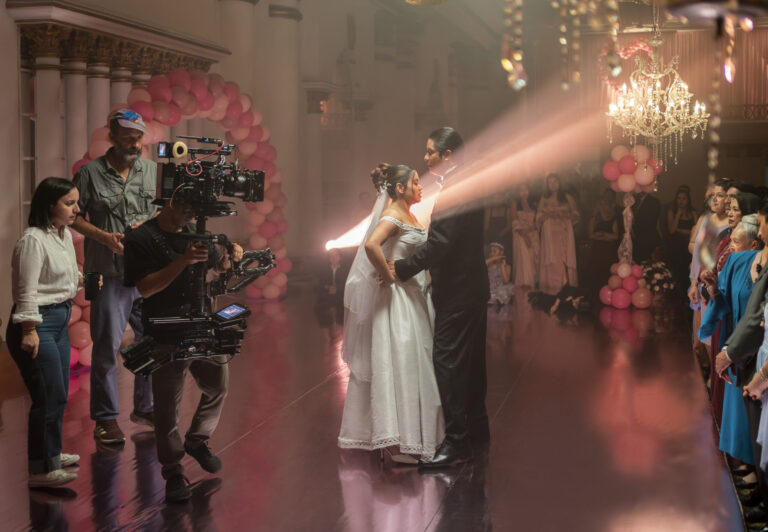
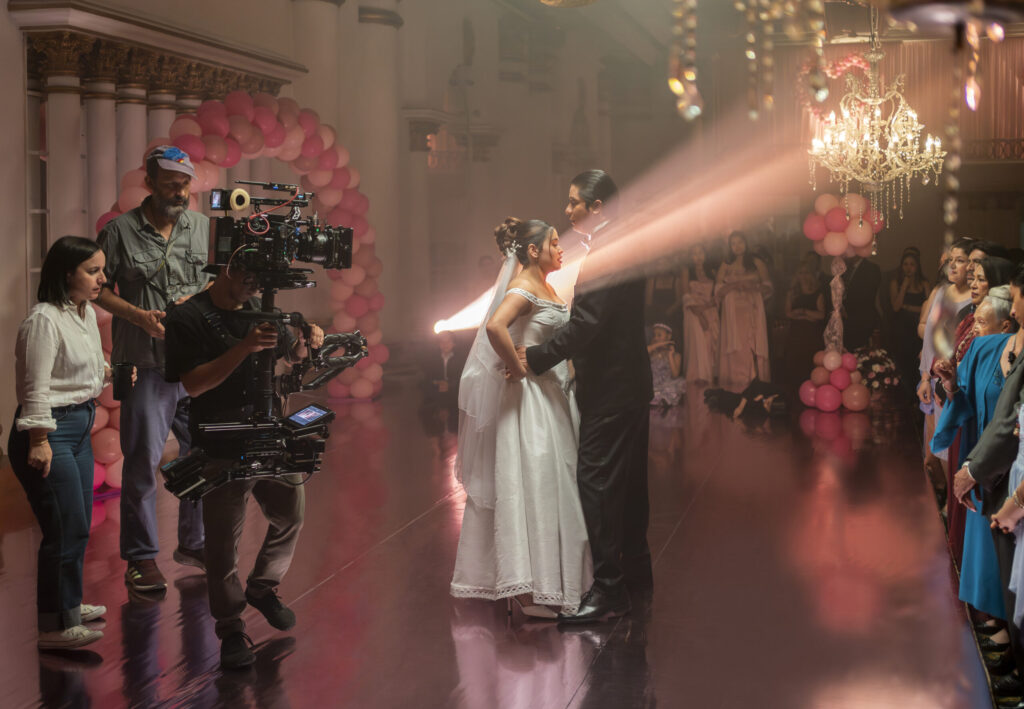
Aidan Zamiri, the 29-year-old Scottish photographer and music-video maven making his directorial debut with “The Moment,” exhibits a remarkable aptitude for capturing the initial scenes of the movie with an authentic, almost verité documentary feel. His background in crafting visually striking music videos clearly informs his approach, allowing him to ground the film in a raw, immediate reality. In these early segments, Charli XCX is presented as she truly is – or at least, as a close approximation of her public persona – and she is utterly captivating. Her distinct aesthetic, characterized by dark, expressive eyebrows and a captivating “fuck-it-all” attitude, resonates deeply. She embodies a unique blend of “middle-class-princess-of-Essex-gone-bad-girl,” a paradoxical charm that is both alluring and defiant. The film masterfully portrays the ceaseless hubbub surrounding her, effectively conveying the sheer magnitude and multitasking pressures that define the life of a contemporary pop star. Zamiri successfully sets the stage, drawing the audience into Charli’s world with an intimate lens, before the narrative introduces its primary antagonist.
That antagonist arrives in the form of Johannes. Alexander Skarsgård delivers a performance that perfectly encapsulates a specific type of creative professional: the passive-aggressive, fatuous director whose ego subtly eclipses his actual understanding. Skarsgård’s portrayal, with its hints of Jim Carrey’s physical comedy and detached absurdity, is both unnerving and compelling. Johannes, initially, is effusive in his praise, declaring everything about Charli and her show to be “fantastic!” Yet, this seemingly boundless enthusiasm quickly reveals itself as a thinly veiled precursor to his true intentions: to meticulously dismantle and reconstruct everything he claims to adore. His compliments are mere preambles to a litany of desired changes, signaling a profound disconnect between his artistic vision and Charli’s established, wildly successful brand.
To truly grasp the significance of Charli XCX in the current cultural landscape, one might simply need to utter her name. She stands as an unequivocal counterpoint to burgeoning movements like “tradwife culture,” a vibrant, defiant force that actively rejects restrictive, anachronistic gender roles. Her very existence, her artistry, and her persona serve as a powerful refutation. Consider, for instance, the magnetic allure of her video for “Guess,” a collaboration with Billie Eilish where Charli undeniably commands the screen. It is a masterclass in “come-hither-but-be-warned erotic abandon,” where every inch of her body seems to quiver with a liquid, sensual energy. Her voice, an intoxicating blend of posh British refinement and punk rock snarl, delivers lyrics with a captivating air of “dominatrix delirium.” She embodies a siren song of sexual danger, an almost irresistible force.
Throughout music history, certain artists have emerged as defining figures of their eras, embodying the zeitgeist with an unmatched intensity. Robert Plant channeled the untamed id of the 1970s; Madonna, Prince, and Axl Rose redefined pop and rock in the 1980s; Britney Spears epitomized the meticulously crafted yet rebellious innocence of the 1990s. Today, Charli XCX occupies a similar, pivotal role. She is not merely a pop star; she is a cultural phenomenon, a high priestess of dance-pop who wields immense influence over fashion, music, and the broader social conversation. In a world shaped by Charli XCX’s unapologetic expression and fierce independence, the notion of a woman willingly embracing a narrowly defined “tradwife” existence seems not just improbable, but almost comically anachronistic. Her presence alone challenges, confronts, and ultimately diminishes the appeal of such regressive ideals, affirming a future where female agency and self-expression reign supreme.
In “The Moment,” a striking consensus emerges: virtually everyone onscreen, from Charli’s dedicated handlers and the astute record-company executives to the genial talk-show hosts, the strategic advertisers, the meticulous Tim Gunn-esque costume designer, and the surging throngs of devoted fans, fundamentally understands Charli XCX. They grasp her brand, her appeal, her provocative essence. Yet, there remains one glaring exception: Johannes, the director tasked with immortalizing her concert. For reasons that remain baffling within the narrative, Johannes utterly fails to comprehend the very artist he is meant to capture.
Early in their collaboration, a pivotal conflict arises. Johannes, witnessing Charli boldly flash a sexually explicit word on stage and perform a song about cocaine, requests that she “tone it down.” His rationale is to make the film “presentable for a family audience.” This immediately casts Johannes as a familiar archetype – the stooge of corporate blanding, a character seen in countless satires who relentlessly fights the artist-hero to neuter their voice and sanitize their vision. His argument is the same tired refrain: “Let’s make more money!” It’s the timeless echo of Colonel Parker to Elvis, or of countless movie producers to visionary directors throughout cinematic history, prioritizing mass appeal and profit over artistic integrity.
However, in Charli XCX’s specific context, Johannes’s demands transcend mere corporate oppression; they become eccentrically nonsensical. Charli XCX is not just an awesome dance-pop star; she is a saturnine goddess who commands the world’s attention. Her success is not merely built on electric music, but fundamentally on her brand of “bad-girl subversion.” This raw, unapologetic aggression is precisely what moves her product, fuels her global phenomenon, and defines her unique connection with her audience. So, when Johannes, the self-appointed “doofus dictator,” instructs her to scale back, to shed the naughtiness, to diminish the strobe-light aggression and replace it with what everyone in the movie describes as an onstage “lava lamp,” he is, quite literally, asking her to neuter the very essence of her success. The question then becomes: why would Charli, a figure of such formidable artistic and commercial power, ever acquiesce to such self-defeating demands?
The film attempts to frame Charli’s compliance as a continued battle against the tyranny of a male-dominated music industry. Yet, this explanation feels deeply incongruous with the Charli XCX that “The Moment” so vividly portrays. This Charli has, by all appearances, already transcended and triumphed over such patriarchal structures, leveraging her own raw aggression and unparalleled pop-star power to firmly put male executives in their place. Consequently, the central conflict that unfolds in “The Moment” fails to truly resonate, neither as incisive satire nor as compelling mock drama. It hinges on a narrative inconsistency that undermines its own premise.
The narrative further strains credulity when Charli, in a moment of perceived tizzy, embarks on a spontaneous vacation to Ibiza. There, she has a seemingly chance encounter with Kylie Jenner, who plays herself. Jenner, in a pivotal scene, heaps effusive praise on Johannes, declaring him a “genius” and revealing that she herself had desperately wanted him to direct one of her projects, but he was already committed to Charli’s film. This interaction is ostensibly designed to trigger a “fatal fit of jealous insecurity” in Charli, a sudden vulnerability that pushes her to concede to Johannes’s artistic compromises. However, for a pop star of Charli’s demonstrated power and self-possession, such a reaction feels unearned and out of character, further weakening the film’s central dramatic arc.
Adding to the film’s narrative disarray is the convoluted “credit-card disaster.” This plot point unfolds with a bewildering lack of clarity, as Charli, through a vaguely defined text on social media, somehow triggers a chain reaction. All the young queer individuals who acquired the “brat card” simultaneously attempt to win free concert tickets, a mass digital surge that inexplicably crashes the entire banking system, ultimately leading to the financial ruin of the Howard Stirling Bank. The mechanics of this catastrophe are presented in such a slipshod and unconvincing manner that it becomes genuinely difficult for the audience to follow or believe.
This sequence, in particular, highlights the film’s critical missteps. For a mockumentary to be effective, its outlandish elements must either be grounded in a believable reality or pushed to such absurd extremes that their comedic intent is undeniable. “The Moment” struggles to strike this balance. This is not how an effective mockumentary operates; the narrative feels less like deliberate satire and more like a poorly conceived plot device. The film, in its attempt to portray a “real” version of Charli XCX within a mockumentary framework, sacrifices the very elements that could have made it a truly memorable and impactful piece of work. Had “The Moment” dared to push further into “crackpot satirical extremes,” it might have forgone the pretense of capturing Charli’s “reality” but would undoubtedly have delivered more genuine laughter and a more compellingly outlandish narrative, rather than one that ultimately feels unconvincing and narratively muddled.