



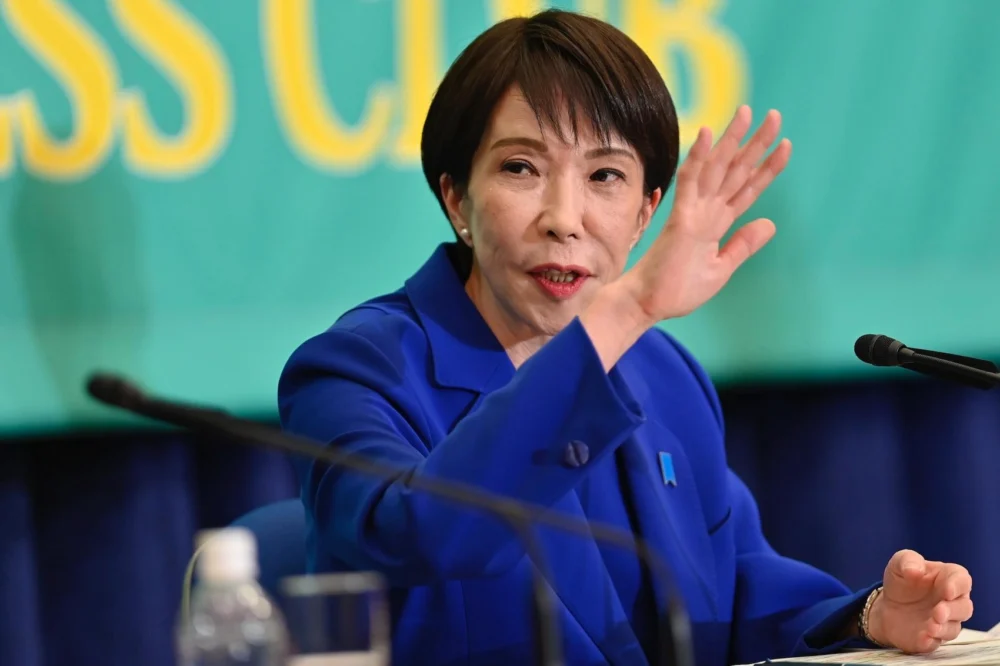
Japan’s Premier Faces Electoral Test Amidst Declining Approval and Economic Doubts
Prime Minister Sanae Takaichi, who has boldly positioned the upcoming national election as a referendum on her leadership and her ambitious economic agenda, is now navigating a period of shifting public sentiment. With the election looming next month, recent polls indicate a notable dip in her administration’s approval ratings, a trend that could complicate her efforts to secure a strong mandate and solidify her grip on power.
A comprehensive survey released by the influential Nikkei newspaper on Monday revealed a significant decline in public support for Takaichi’s government. For the first time since she made history as Japan’s first female prime minister in October, her approval rating has fallen below the 70% mark. The latest figures show support standing at 67%, a notable drop from the 75% recorded in December. This downward trend is echoed in other independent polls, suggesting a broader undercurrent of voter unease.
Adding to this picture, a separate voter survey conducted by the Kyodo news agency indicated a dip in approval to 63%, down from 68% in the previous measurement. The Mainichi newspaper’s poll offered an even more stark assessment, showing a ten-point decline in support, bringing Takaichi’s approval rating down to 57%. These figures, while still indicating majority support, signal a loss of momentum for a leader who has so far relied heavily on her personal popularity to drive her political agenda.
Takaichi’s decision to call a snap election, a move designed to contest all 465 seats in the powerful lower house of parliament, is a high-stakes gamble. Her primary objective is to leverage her considerable personal popularity to translate into widespread support for her signature expansionary fiscal policies. Simultaneously, she aims to reinforce her authority within the ruling Liberal Democratic Party (LDP), a cornerstone of Japanese political stability for decades. The LDP, in coalition with the Japan Innovation Party (Ishin), currently holds a razor-thin one-seat majority in the lower house, underscoring the critical importance of this election for their continued governance.
The diverging poll numbers appear to reflect growing voter skepticism regarding the efficacy of Takaichi’s economic strategies. The Nikkei survey, for instance, revealed that a significant 56% of respondents do not believe that the proposed stimulus package will adequately mitigate the impact of rising living costs on households. This concern is not confined to public opinion; financial markets are also closely watching the situation. Fears that Japan may need to issue additional government debt to finance these expansive measures have already contributed to an uptick in government bond yields, signaling increased market apprehension.
The timing of Takaichi’s election call has also drawn considerable criticism, particularly from opposition parties. By seeking a mandate before the full legislative approval of her record-breaking $793 billion national budget, Takaichi has been accused of political opportunism. The Mainichi survey captured this sentiment, with two-fifths of respondents expressing dissatisfaction with the timing of the election, a sentiment shared by fewer than a third who approved of the timing. This suggests that while Takaichi may be seeking a decisive mandate, the path to achieving it is fraught with political challenges and questions of strategy.
Adding another layer of complexity to the electoral landscape, Takaichi is leading a party that, according to several recent polls, enjoys significantly less popular support than she does personally. The LDP’s approval ratings are hovering around the 30% mark in various surveys, highlighting a potential disconnect between the leader and her party’s broader appeal. This disparity presents a significant challenge for Takaichi, as she must not only inspire voters with her vision but also galvanize support for the LDP as a whole.
Further complicating matters is the loss of support from the centrist Komeito party. Last year, Komeito concluded its 26-year alliance with the LDP and forged a new partnership with the main opposition force, the Constitutional Democratic Party of Japan. This realignment has deprived the LDP of a crucial bloc of voters, particularly in numerous urban constituencies where Komeito has historically been a strong vote-getter. The absence of this traditional ally could have a tangible impact on election outcomes in key electoral battlegrounds.
Analysts suggest that the outcome of this election will likely hinge on Takaichi’s ability to effectively translate her personal popularity into broader support for her party. Her strong individual polling numbers offer a potential springboard, but rekindling widespread enthusiasm for the LDP will be a formidable task. The election is being closely watched as a potential turning point in Japanese politics, with the results holding significant implications for the nation’s economic direction and its political future.
“This is shaping up to be the most unpredictable election in years,” commented Tobias Harris, founder of the political risk advisory firm Japan Foresight. His assessment underscores the high degree of uncertainty surrounding the upcoming vote and the potential for unexpected shifts in voter allegiance. The stakes are particularly high for the rank-and-file members of the LDP, who are acutely aware that their electoral success is intrinsically linked to Prime Minister Takaichi’s performance and her ability to navigate the current political climate.
“LDP backbenchers understand that their fates are now firmly in Takaichi’s hands,” Harris elaborated in a recent report. This sentiment highlights the concentration of power and expectation on the Prime Minister, who is carrying the weight of her party’s aspirations on her shoulders. The coming weeks will reveal whether her bold electoral strategy and her vision for Japan’s economic future will resonate sufficiently with the electorate to secure a decisive victory, or if the growing voter skepticism will lead to a more challenging outcome.
The narrative surrounding Takaichi’s premiership has been one of breaking barriers and pursuing ambitious policy objectives. As Japan’s first female leader, she has consistently sought to project an image of strength and decisive action, particularly in the economic sphere. Her ascent to power was met with significant public optimism, fueled by her perceived competence and her commitment to revitalizing the Japanese economy. However, the current polling data suggests that the initial enthusiasm may be waning, as voters begin to scrutinize the tangible benefits of her policies amidst a backdrop of rising costs and global economic uncertainties.
Takaichi’s economic platform is largely characterized by a commitment to fiscal stimulus and measures aimed at supporting households and businesses. The proposed stimulus package, which has been at the center of recent debate, is designed to inject liquidity into the economy, boost domestic demand, and cushion the impact of inflation. However, the effectiveness of such measures is often subject to varying interpretations and can be influenced by a multitude of external factors. The current public perception, as reflected in the polls, indicates a degree of doubt about the package’s ability to deliver the desired outcomes, particularly concerning the immediate challenge of rising living costs.
The decision to call a snap election is a strategic maneuver that aims to capitalize on a leader’s personal popularity before it potentially erodes. By forcing an early vote, Takaichi is seeking to secure a fresh mandate that can empower her to implement her agenda without the immediate threat of opposition challenges or internal party dissent. This approach, while common in parliamentary democracies, can also be perceived as a gamble, especially when public opinion is in flux. The timing of the election, occurring before the full parliamentary debate and approval of the national budget, has been a particular point of contention, raising questions about the democratic process and the balance of power between the executive and legislative branches.
The LDP’s historical dominance in Japanese politics has been built on a broad coalition of support, encompassing various interest groups and demographics. However, in recent years, the party has faced challenges in maintaining its appeal across the spectrum. Takaichi’s personal popularity offers a significant asset, but it may not be enough to offset the broader concerns about the LDP’s policy direction or its ability to address the evolving needs of the electorate. The defection of Komeito, a long-standing ally, represents a significant loss of electoral muscle, particularly in urban areas that are often decisive in national elections. This realignment highlights the dynamic nature of Japanese political alliances and the potential for shifts in voter loyalties.
The upcoming election is not just about determining the composition of the lower house; it is also a crucial test of Takaichi’s leadership and her vision for Japan’s future. Her success or failure will have profound implications for the country’s economic trajectory, its social policies, and its standing on the global stage. The coming weeks will be a period of intense campaigning, as Takaichi and her opponents seek to persuade voters and shape the narrative of the election. The outcome will ultimately depend on whether she can effectively rally support beyond her personal appeal and convince the Japanese public that her economic policies are the right path forward for the nation.
The role of media in shaping public perception during election campaigns cannot be overstated. The extensive coverage by major newspapers like Nikkei, Kyodo, and Mainichi, through their polling and analysis, provides crucial insights into the public mood. These surveys, while subject to margins of error, serve as barometers of voter sentiment and can influence campaign strategies and public discourse. The consistent reporting of declining approval ratings, even if marginal, creates a narrative that can impact voter confidence and sway undecided voters.
Furthermore, the Japanese political system, with its emphasis on consensus-building and coalition politics, means that even a strong personal mandate for the Prime Minister can be constrained by the need to maintain support within her own party and among coalition partners. The LDP’s internal dynamics, including the influence of different factions and the aspirations of individual lawmakers, will also play a significant role in shaping the post-election landscape, regardless of the final vote count. Takaichi’s ability to manage these internal party dynamics will be as critical as her success in wooing the broader electorate.
The international community will also be observing the Japanese election closely. Japan’s economic policies have a ripple effect on the global economy, and its political stability is a key factor in regional and international security. Any significant shift in leadership or policy direction could have far-reaching implications for trade, investment, and diplomatic relations.
In conclusion, Prime Minister Takaichi faces a pivotal moment in her political career. The upcoming election presents an opportunity to solidify her legacy and advance her policy agenda, but the recent dip in approval ratings and the growing skepticism about her economic plans underscore the challenges ahead. Her ability to bridge the gap between her personal popularity and her party’s broader appeal, while effectively communicating the benefits of her economic vision, will be the defining factor in determining the outcome of this crucial electoral contest.
© Thomson Reuters 2026.