
US to Oversee Venezuelan Oil Revenue for Essential Services Amidst Political Transition
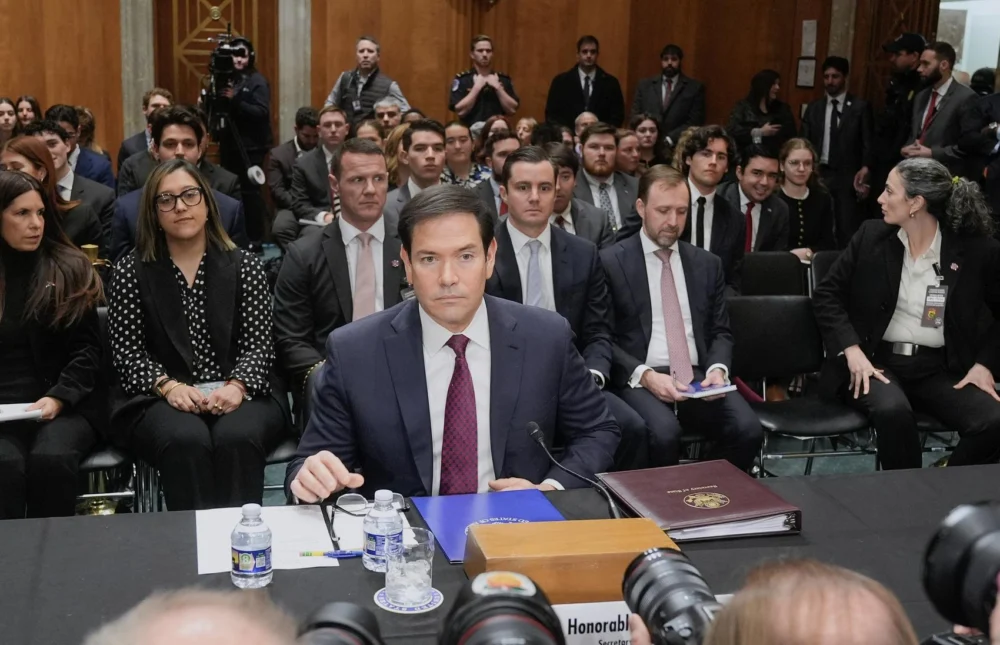
In a significant policy shift, the Trump administration is poised to permit Venezuela to resume oil sales previously restricted by U.S. sanctions. This move, detailed by Secretary of State Marco Rubio during a Wednesday Senate Foreign Relations Committee hearing, comes with stringent conditions: the revenue generated will initially be earmarked for critical government functions like policing and healthcare, and will remain under direct U.S. oversight. Rubio emphasized that this control is a short-term measure aimed at stabilizing the South American nation during its ongoing political transition.
“The funds from that will be deposited into an account that we will have oversight over,” Rubio stated, clarifying that the U.S. Treasury Department would manage the process. He assured the committee that Venezuela “will spend that money for the benefit of the Venezuelan people,” a promise that drew scrutiny from lawmakers concerned about transparency and fairness.
This announcement offers a clearer picture of the U.S. strategy for managing the vast oil wealth of Venezuela, a country boasting the world’s largest proven crude oil reserves. The U.S. plans to oversee the sale of tens of millions of barrels of sanctioned petroleum, leveraging the country’s oil resources to influence its future direction, particularly following recent U.S. actions targeting then-President Nicolás Maduro.
Rubio was quick to differentiate this initiative from direct financial support, stating that the U.S. would not subsidize oil industry investments in Venezuela. He characterized the oversight of sanctioned petroleum sales as an “interim step” designed to prevent a complete economic meltdown. “This is simply a way to divide revenue so that there isn’t systemic collapse while we work through this recovery and transition,” he explained.
The plan, however, was not met with universal approval within the committee. Both Democratic and Republican members pressed Rubio for more granular details regarding the Trump administration’s intentions for Venezuela’s oil assets. Senator Chris Murphy (D-Conn.) specifically sought assurances that the oil sales would be conducted in a fair and open manner, free from any bias towards companies with ties to the Trump administration. Murphy expressed a common concern among his colleagues, stating, “You are taking their oil at gunpoint, you are holding and selling that oil… you’re deciding how and for what purposes that money is going to be used in a country of 30 million people. I think a lot of us believe that that is destined for failure.”
Rubio contrasted the current approach with the previous administration of Nicolás Maduro, alleging that under his leadership, Venezuela’s oil industry primarily served corrupt officials and foreign entities, such as China, which benefited from discounted oil purchases. He highlighted that Venezuela’s interim leadership is now actively cooperating with the U.S. in intercepting illicit oil shipments, signaling a shift in alliances and priorities.
To ensure accountability, the U.S. will provide specific guidelines to Venezuela’s current leaders on how the funds can and cannot be disbursed. Regular audits will be conducted to verify that the money is used as intended, Rubio confirmed, suggesting potential uses such as funding policing operations or procuring essential medicines.
The mechanism for managing these funds involves an account initially established in Qatar. This arrangement was chosen to circumvent potential asset seizures by American creditors and to navigate complex legal challenges arising from the U.S. refusal to recognize Maduro’s government as legitimate. Rubio indicated that hundreds of millions of dollars have already been earmarked, with an anticipated additional $3 billion in potential revenue.
“It’s an account that belongs to Venezuela, but it has U.S. sanctions as a blocking mechanism,” Rubio clarified. “We only control the dispersal of the money, we don’t control the actual money.” This distinction underscores the U.S. role as a gatekeeper rather than an outright owner of the assets.
Earlier this month, acting Venezuelan President Delcy Rodríguez had announced plans for oil sale proceeds to be channeled into two sovereign wealth funds. One fund was designated to support the nation’s beleaguered health services, while the second was intended to bolster public infrastructure, including the critical electric grid. These announcements came amidst stark reports of the country’s healthcare system’s dire state, with hospitals often lacking basic supplies and patients being forced to purchase necessities like syringes and surgical screws, or pay for diagnostic tests at private facilities.
Rodríguez herself, speaking at a televised event on Tuesday focused on the refurbishment of health facilities, remarked that since Maduro’s capture, her government and the U.S. administration have established “respectful and courteous channels of communication.” This suggests a nascent dialogue, potentially paving the way for the U.S.-backed revenue management plan.
Neither Rodríguez nor her government’s press office had immediately responded to Rubio’s remarks on Wednesday. However, the Venezuelan National Assembly last week began debating proposed amendments to the country’s energy law, initiated at Rodríguez’s behest. These legislative efforts are reportedly aimed at creating an environment conducive to attracting much-needed private foreign investment into the struggling oil sector.
The broader context of Venezuela’s economic crisis cannot be overstated. Decades of mismanagement, corruption, and the collapse of oil prices have plunged the nation into hyperinflation, widespread shortages of food and medicine, and mass emigration. The U.S. sanctions, imposed with the aim of pressuring Maduro to step down and facilitate a democratic transition, have exacerbated these hardships, though critics argue they have disproportionately impacted the civilian population. The current U.S. policy appears to be a delicate balancing act: maintaining pressure on the Maduro regime while attempting to alleviate the humanitarian crisis and foster a stable environment for a post-Maduro Venezuela.
The role of Qatar in managing these funds is also noteworthy. As a significant financial hub with a history of mediating international disputes, Qatar’s involvement could lend an air of neutrality and facilitate transactions that might otherwise be complicated by the U.S.’s direct involvement. However, the ultimate control resting with the U.S. Treasury raises questions about the extent of true Venezuelan sovereignty over its own resources, even in this transitional phase.
The specific amount of oil to be sold and the timeline for this arrangement remain somewhat vague. However, the mention of tens of millions of barrels suggests a substantial volume, and the anticipated $3 billion indicates a significant financial injection into the Venezuelan economy, contingent on the successful implementation of the U.S.-led oversight mechanism. The U.S. stance on not subsidizing industry investments implies that while oil can be sold, the broader rebuilding of Venezuela’s oil infrastructure will likely require private capital, potentially from international investors who may be hesitant given the ongoing political instability.
The U.S. strategy appears to be predicated on the belief that by controlling the flow of oil revenue, it can incentivize responsible governance and prevent the funds from being diverted to illicit purposes or bolstering the Maduro regime. This approach reflects a long-standing U.S. foreign policy objective of promoting democracy and stability in Latin America, albeit through a more interventionist financial and administrative channel than typically seen.
The success of this plan hinges on several factors: the continued cooperation of Venezuela’s interim leadership, the willingness of international buyers to engage with sanctioned Venezuelan oil under U.S. oversight, and the ability of the U.S. Treasury to effectively monitor and audit the disbursement of funds. The involvement of international bodies or neutral third parties in the oversight process could further enhance transparency and build confidence among all stakeholders. The coming weeks and months will be critical in determining whether this novel approach to managing a nation’s essential resources during a political crisis can yield positive outcomes for the Venezuelan people.
© Copyright 2026 The Associated Press. All rights reserved. This material may not be published, broadcast, rewritten or redistributed without permission.