


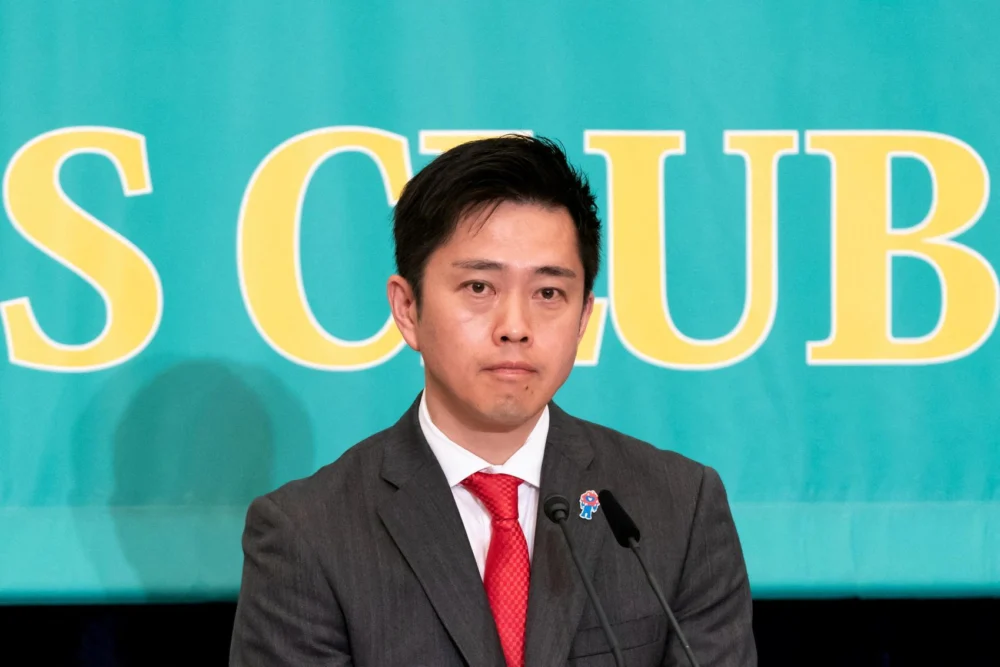
In a bold strategic move that could reshape Japan’s political landscape, the Governor of Osaka Prefecture, Hirofumi Yoshimura, and the Mayor of Osaka City, Hideyuki Yokoyama, are reportedly planning to step down from their current positions. Their resignations are expected to trigger a pivotal double election, through which they aim to secure a fresh public mandate for their signature policy initiative: the “Osaka Metropolis Plan.” This ambitious project, designed to fundamentally restructure the region’s governance and potentially elevate Osaka’s status nationwide, has been a cornerstone of their political agenda, despite facing past electoral defeats.
Sources close to the matter revealed on Tuesday that the timing of this high-stakes gamble is likely to be carefully orchestrated to coincide with a general election. This national vote is anticipated to follow a potential dissolution of the House of Representatives, the lower house of the Japanese parliament, at the commencement of the ordinary parliamentary session, which is slated to convene on January 23rd. This convergence of regional and national electoral cycles suggests a strategic attempt to harness broader political momentum and draw greater attention to Osaka’s aspirations.
Both Yoshimura and Yokoyama are prominent figures within the Japan Innovation Party, colloquially known as Nippon Ishin. This party, which has championed the metropolis plan with unwavering dedication, forged a significant coalition agreement in October with Prime Minister Sanae Takaichi’s Liberal Democratic Party (LDP). This alliance, while a testament to Nippon Ishin’s growing influence, also places them in a delicate political position, especially given the LDP’s historical opposition to the Osaka metropolis concept.
The core tenet of the Osaka metropolis plan is to dismantle the current dual administrative structure of Osaka Prefecture and Osaka City, consolidating their powers into a single, unified metropolitan government. Proponents argue that this will streamline governance, eliminate administrative redundancies, and foster greater efficiency and responsiveness in public services. The ultimate vision is to create a more dynamic and competitive urban center, capable of challenging Tokyo’s long-standing dominance as Japan’s sole primary hub. This aspiration is not merely about regional pride; it is rooted in a desire to decentralize power and stimulate economic growth across a wider geographical area, a crucial consideration for Japan’s aging and increasingly concentrated population.
The historical context of the Osaka metropolis plan is marked by significant public opposition. In two previous referendums, held in 2015 and 2020, Osaka residents voted against the proposal. The LDP, a formidable political force at both the national and local levels, has consistently voiced its objections to the plan, contributing to its electoral setbacks. However, the persistent advocacy by Yoshimura and Yokoyama underscores their deep conviction in the plan’s potential benefits for Osaka and, by extension, for Japan as a whole.
Governor Yoshimura, who has also served as the leader of the Japan Innovation Party since 2024, has repeatedly stressed the importance of a “democratic process” as a prerequisite for any renewed attempt at a referendum. His insistence on this point suggests a recognition of the need to build broader public consensus and to demonstrate a clear and undeniable popular will before revisiting the issue. The prospect of a fresh double election, encompassing both his gubernatorial seat and the mayoral position, is seen as the most viable avenue to achieve this, allowing him to frame the vote as a direct plebiscite on his governance and the future of Osaka.
In recent times, the Japan Innovation Party has further articulated its vision by advocating for a “second capital” initiative. This concept envisions establishing a supplementary center of national importance, capable of supporting Tokyo, particularly in times of national emergency, such as natural disasters or security threats. Governor Yoshimura has framed the Osaka metropolis plan as the “minimum requirement” for realizing this “second capital” ambition. He argues that by reorganizing Osaka into a cohesive and powerful urban entity, akin to Tokyo’s metropolitan structure, it can effectively serve as a vital secondary hub, enhancing Japan’s overall resilience and national capacity.
The strategic alignment of a potential House of Representatives dissolution in late January with the planned double election for Osaka’s top leadership positions is a significant political calculation. If the national parliament is indeed dissolved as anticipated, the general election would likely be scheduled for February 8th or 15th, according to the sources. This timeline presents a compelling opportunity for Yoshimura and Yokoyama to present their case to the electorate on a national stage, leveraging the heightened political attention to garner support for their regional reform agenda. The outcome of such a synchronized electoral event could have far-reaching implications, not only for the future of Osaka but also for the broader political trajectory of Japan, potentially signaling a shift in the balance of power between Tokyo and other major urban centers.
The “Osaka Metropolis Plan,” in essence, seeks to emulate the administrative structure of London or Paris, where a single metropolitan authority oversees a vast urban area. Currently, Osaka operates under a complex system where the prefecture and city governments have overlapping responsibilities and distinct administrative boundaries. This has, at times, led to bureaucratic inefficiencies and a lack of unified strategic direction. The plan proposes the abolition of the existing city and prefectural assemblies and the creation of five special wards, similar to those in Tokyo, each with its own local administration but unified under a single metropolitan government responsible for major policy decisions and infrastructure development.
The proponents of the plan, including Yoshimura and Yokoyama, argue that this consolidation will lead to significant cost savings through the elimination of redundant administrative functions and personnel. More importantly, they contend that it will enable Osaka to act with greater decisiveness and strategic foresight, fostering economic competitiveness and attracting greater investment. They point to Tokyo’s success as a testament to the efficacy of a unified metropolitan governance model, arguing that Osaka has the potential to become a similarly powerful economic and cultural engine for western Japan.
However, the plan has also faced considerable criticism. Opponents argue that the creation of special wards could lead to a fragmentation of local governance, potentially undermining the cohesive identity of Osaka’s constituent districts. Concerns have also been raised about the potential for increased bureaucracy at the metropolitan level and the risk of exacerbating existing inequalities between different wards. The previous referendum results, where a majority of voters rejected the proposal, highlight a deep-seated skepticism among a significant portion of the electorate regarding the purported benefits of the plan and a preference for the existing administrative framework.
The political landscape in which this double election is being considered is also of particular note. The Japan Innovation Party has been steadily gaining traction, particularly in the Kansai region, which includes Osaka. Their focus on regional revitalization and administrative reform has resonated with voters disillusioned with the perceived stagnation of national politics. The coalition with the LDP, while providing Nippon Ishin with a degree of national legitimacy, also presents a challenge in terms of maintaining their distinct identity and appealing to voters who may be wary of the LDP’s traditional policies. The decision to link the Osaka metropolis plan to a national election suggests a strategy to leverage the broader political discourse and potentially attract national voters who are interested in the idea of decentralization and the creation of alternative power centers to Tokyo.
The “second capital” initiative, as championed by Yoshimura, adds another layer of national significance to the Osaka metropolis plan. In a country highly vulnerable to natural disasters, the concept of a distributed administrative and economic center is gaining traction. Proponents argue that having a robust, well-governed secondary hub would enhance Japan’s crisis management capabilities and ensure continuity of government and essential services in the event of a catastrophic event affecting Tokyo. Osaka, with its strategic location and existing infrastructure, is seen as a prime candidate to fulfill this role. However, critics question the feasibility and the substantial financial investment required to develop such a “second capital,” as well as the potential for creating a rival power center that could lead to political fragmentation.
The timing of the proposed resignations and elections is a crucial element of the strategy. By aligning the Osaka vote with a national general election, Yoshimura and Yokoyama aim to maximize public awareness and participation. This strategy allows them to frame their regional ambitions within the broader context of national governance and Japan’s future development. It also presents an opportunity for the Japan Innovation Party to test its broader appeal and potentially increase its representation in the national parliament, thereby strengthening its position to advocate for its policies.
The upcoming months will be critical for Osaka and for Japan’s political future. The planned double election represents a significant gamble by Governor Yoshimura and Mayor Yokoyama, one that could either propel their vision for Osaka into reality or reaffirm the public’s hesitance towards such sweeping administrative changes. The outcome will undoubtedly be closely watched, as it has the potential to reshape not only the governance of Japan’s second-largest metropolitan area but also the ongoing debate about the nation’s economic and political future in an increasingly complex global landscape.
The strategic decision to resign and seek a fresh mandate reflects a calculated move to overcome the inertia that has plagued the metropolis plan since its inception. Previous referendums, while clear in their rejection, also highlighted the deep divisions within Osaka’s populace on the issue. Yoshimura’s repeated emphasis on a “democratic process” suggests an understanding that brute force or political maneuvering alone will not suffice. A decisive electoral victory, coupled with the national spotlight of a general election, could provide the necessary legitimacy and momentum to overcome entrenched opposition and finally realize the vision of a unified Osaka metropolis. The narrative being crafted is one of progressive reform, of modernizing governance to meet the challenges of the 21st century, and of creating a more resilient and dynamic Japan by empowering its regional centers.
The Japan Innovation Party’s positioning within the national political framework, particularly its coalition with the LDP, adds another layer of complexity. While this alliance grants them access to national-level policy discussions, it also necessitates a delicate balancing act. They must appeal to their core base of reform-minded voters while also demonstrating a capacity for pragmatic governance and compromise. The Osaka metropolis plan, a flagship policy that defines their regional identity, becomes a critical test case for their ability to translate their ideals into tangible political outcomes, even when faced with established political forces and public skepticism.
The prospect of Osaka emerging as a “second capital” also taps into a broader national conversation about regional revitalization and the over-concentration of power and resources in Tokyo. For decades, Japan has grappled with the demographic and economic consequences of Tokyo’s dominance, including rural depopulation and the strain on the capital’s infrastructure. Initiatives to decentralize economic activity and administrative functions have been debated and implemented with varying degrees of success. The Osaka metropolis plan, by aiming to create a more powerful and autonomous urban hub, aligns with this broader national objective, offering a potential model for other regions seeking to enhance their influence and attract investment.
The specific timing of the potential dissolution of the House of Representatives, early in the ordinary parliamentary session, is strategically advantageous. This period often sees heightened political activity as parties jockey for position and Prime Minister Takaichi seeks to consolidate his mandate. By intertwining the Osaka election with this national event, Yoshimura and Yokoyama can ensure maximum media coverage and public attention, transforming a regional vote into a national referendum on their governance and vision. This could potentially energize their supporters and attract swing voters who are drawn to the idea of bold leadership and transformative change.
The success of this gamble hinges on several factors: the public’s perception of the urgency and necessity of the metropolis plan, the effectiveness of Yoshimura and Yokoyama’s campaign messaging, and the broader political climate at the time of the elections. If they can successfully articulate a compelling vision for Osaka’s future and demonstrate a clear path to achieving it, they may be able to sway public opinion and secure the mandate they seek. However, if the public remains unconvinced, or if national political factors overshadow their regional agenda, they could face another electoral defeat, potentially jeopardizing their political careers and the future of the Osaka metropolis plan.
© KYODO