



**A New Dawn for News: Tony Dokoupil Vows to Rebuild Trust, Putting Audiences First at CBS Evening News**
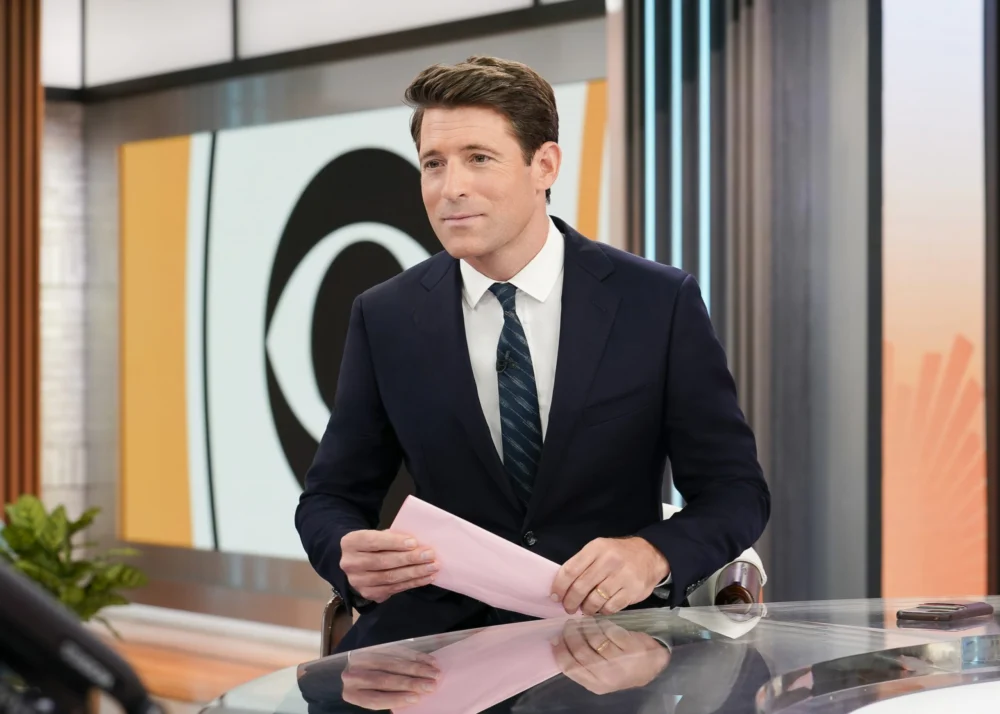
In a significant declaration that reverberated across the media landscape on New Year’s Day, Tony Dokoupil, poised to assume the prestigious anchor chair of the “CBS Evening News” this Monday, delivered a powerful critique of contemporary journalism and unveiled an ambitious vision for its future. His candid remarks, shared via a video on CBSnews.com and widely circulated across social media, were not merely a customary welcome message but a profound promise: to prioritize the audience above all else – a commitment he vowed would supersede the influence of advertisers, political agendas, or even the corporate interests of CBS’s parent company, Paramount Skydance.
Dokoupil’s opening salvo addressed the palpable crisis of confidence plaguing the news industry. “People do not trust us like they used to,” he stated, articulating a sentiment that has become increasingly prevalent in an era marked by deep societal divisions and a relentless barrage of information. This isn’t merely an anecdotal observation; it’s a reflection of persistent polling data that consistently reveals a precipitous decline in public trust in media institutions over the past two decades. From the polarized political discourse to the proliferation of misinformation, the chasm between news organizations and the public they serve has widened, leaving many Americans feeling unheard, misrepresented, or profoundly skeptical.
His critique extended further, pinpointing what he believes to be the core missteps of “legacy media.” Dokoupil asserted, “On too many stories, the press has missed the story… Because we’ve taken into account the perspective of advocates, and not the average American. Or, we put too much weight in the analysis of academics, or elites, and not enough on you.” This sharp assessment directly challenges the prevailing editorial norms within established newsrooms, suggesting a systemic bias towards particular viewpoints or intellectual frameworks that may inadvertently alienate a significant portion of the viewership. It implies that the quest for intellectual rigor or the desire to reflect diverse advocacy positions has, at times, overshadowed the fundamental journalistic imperative to connect with and serve the everyday concerns of ordinary citizens. This sentiment resonates deeply with a public that often feels talked down to or excluded from the narratives presented by mainstream news outlets.
Having served as a co-host on “CBS Mornings,” Dokoupil is no stranger to the daily grind of television journalism. Yet, he admitted to a persistent internal unease, a feeling that “the most urgent questions simply weren’t being asked” by his peers. This self-reflection from within the industry is particularly striking, as it echoes a common criticism leveled against the media from external observers and the public alike. It suggests a potential disconnect between what journalists perceive as important and what truly matters to the lives and concerns of the audience. For a journalist stepping into such a high-profile role, this acknowledgment of past shortcomings could be interpreted as a foundational pledge to recalibrate the focus of the “CBS Evening News.”
Dokoupil’s statement was remarkable not just for its content but for its timing and its alignment with certain criticisms often voiced by figures like former President Donald Trump – criticisms that mainstream journalists typically push back against. By implying that journalists haven’t been doing their jobs competently, Dokoupil stepped into a contentious debate, lending credence to the idea that some media outlets have indeed lost their way. He revealed that his perspective was shaped by conversations with individuals across the country who expressed doubts about coverage of pivotal events, citing examples such as Hillary Clinton’s email controversy and the questions surrounding a president’s fitness for office. These specific examples are potent, as they represent moments in recent political history where public perception of media fairness and accuracy was intensely scrutinized and often found wanting. His willingness to acknowledge these public grievances, rather than dismiss them, marks a potentially significant shift in how CBS aims to engage with its audience.
Dokoupil’s career trajectory has prepared him for this moment, though the challenge ahead is formidable. Prior to joining CBS in 2016, his professional journey spanned various prominent news organizations, including MSNBC, The Daily Beast, and Newsweek. This diverse background, encompassing both broadcast and print journalism, has likely afforded him a broad perspective on the evolving media landscape and the distinct pressures faced by different platforms. His transition to the “CBS Evening News” anchor role, announced by the network’s new editor-in-chief, Bari Weiss, immediately signals a fresh direction for the venerable broadcast.
The appointment itself generated considerable discussion, particularly given the historical context of the “CBS Evening News.” As Brian Steinberg of *Variety* aptly observed, Dokoupil inherits a “difficult mission.” The program, once synonymous with journalistic titans like Walter Cronkite, a figure whose very name evokes an era of unparalleled public trust in television news, has for years languished in a distant third place, consistently trailing behind ABC’s “World News Tonight” and NBC’s “NBC Nightly News.” This sustained underperformance isn’t merely a matter of ratings; it reflects a broader struggle to connect with contemporary audiences in a fragmented media environment, where viewers have an ever-expanding array of news sources at their fingertips. Revitalizing such a storied but struggling broadcast demands not only journalistic acumen but also a deep understanding of audience engagement and the courage to innovate.
The connection to Bari Weiss, a journalist and cultural critic known for her outspoken views on “cancel culture,” institutional bias, and a commitment to viewpoint diversity, is particularly noteworthy. Steinberg’s report highlighted that Dokoupil is “likely aligned with some of Weiss’ views, such as her pro-Israel stance.” This alignment could suggest a strategic editorial direction for the “CBS Evening News” under their combined leadership. Weiss, who famously resigned from The New York Times citing an “illiberal environment,” has become a prominent voice advocating for open discourse and a critical examination of established narratives. Her influence, coupled with Dokoupil’s stated mission to challenge “elite” perspectives, might signal an effort to broaden the ideological appeal of the broadcast, potentially attracting viewers who feel underserved or misrepresented by other mainstream outlets. While the “pro-Israel stance” might point to specific geopolitical coverage, it is perhaps more indicative of a broader philosophical approach to journalism that values robust debate and challenges dominant orthodoxies, even if those orthodoxies are held by segments of the media itself. This emphasis on a more critical, less ideologically constrained approach could be central to their strategy for differentiating CBS from its competitors.
Dokoupil’s promises are not just rhetorical flourishes; they outline a practical blueprint for how he intends to conduct himself and the broadcast. “I report for you,” he declared, framing his role as a direct conduit to the public. This promise is underpinned by a commitment to radical transparency: “which means I’ll tell you what I know, when I know it and how I know it.” In an age rife with speculation and anonymous sources, this emphasis on verifiable facts and clear methodologies could be a powerful tool for rebuilding trust. Equally significant is his pledge, “And when I get it wrong, I’ll tell you that too.” The willingness to admit mistakes, to issue corrections swiftly and openly, is a cornerstone of ethical journalism and a critical component in fostering credibility, especially when public skepticism is high. For many viewers, the perception of infallibility or a reluctance to correct errors can be a major barrier to trust.
His commitment extends to an unwavering standard of accountability. Dokoupil finished his impactful statement by promising to uphold the truth and, crucially, by inviting viewers to hold him to account. “It also means I’m going to talk to everyone, and hold everyone in public life to the very same standards.” This promise speaks to the core tenet of journalistic impartiality, aiming to transcend political divides and apply consistent scrutiny to all powerful figures, regardless of their ideological affiliation. It’s a rejection of selective outrage or a tendency to grant leniency to one side while rigorously questioning another.
“After all, I became a journalist to talk to people,” he reflected, highlighting a fundamental, human-centered motivation behind his profession. This simple yet profound statement cuts through the often-complex world of media operations, reminding audiences that at its heart, journalism is about human connection and understanding. He expressed a desire to engage with the fabric of American life, exploring “what works in this country, what doesn’t, and not only what should change, but the good ideas that should never change.” This nuanced approach suggests a broadcast that will seek to explore solutions and celebrate successes, not just dwell on problems, offering a more balanced and constructive view of the nation. For women navigating complex personal and professional lives, access to news that not only informs but also inspires and provides actionable insights is invaluable. Dokoupil’s vision, focusing on understanding the everyday realities and celebrating enduring values, could resonate strongly with an audience seeking substance over sensationalism.
His final words were a direct challenge to the audience, a direct plea for engagement and oversight: “I think telling the truth is one of them. Hold me to it.” This invitation for public accountability is a bold move, effectively transforming the relationship between anchor and viewer from a passive reception to an active partnership. In a media landscape where trust is a precious, dwindling commodity, Dokoupil’s commitment to transparency, impartiality, and audience-centric reporting, under the editorial guidance of Bari Weiss, represents a significant and potentially transformative undertaking for the “CBS Evening News.” The stakes are high, not just for Dokoupil and CBS, but for the broader conversation about the future and credibility of mainstream journalism itself. As he takes the helm, the television news world, and indeed the public, will be watching closely to see if these ambitious promises can indeed usher in a new era of trust and relevance for one of America’s most iconic news broadcasts.
Watch his compelling message below:
“On too many stories, the press has missed the story. Because we’ve taken into account the perspective of advocates and not the average American. Or we put too much weight in the analysis of academics or elites, and not enough on you.”
That changes now. The new CBS Evening News… pic.twitter.com/NKdvRJjYCS
— CBS Evening News (@CBSEveningNews) January 1, 2026