


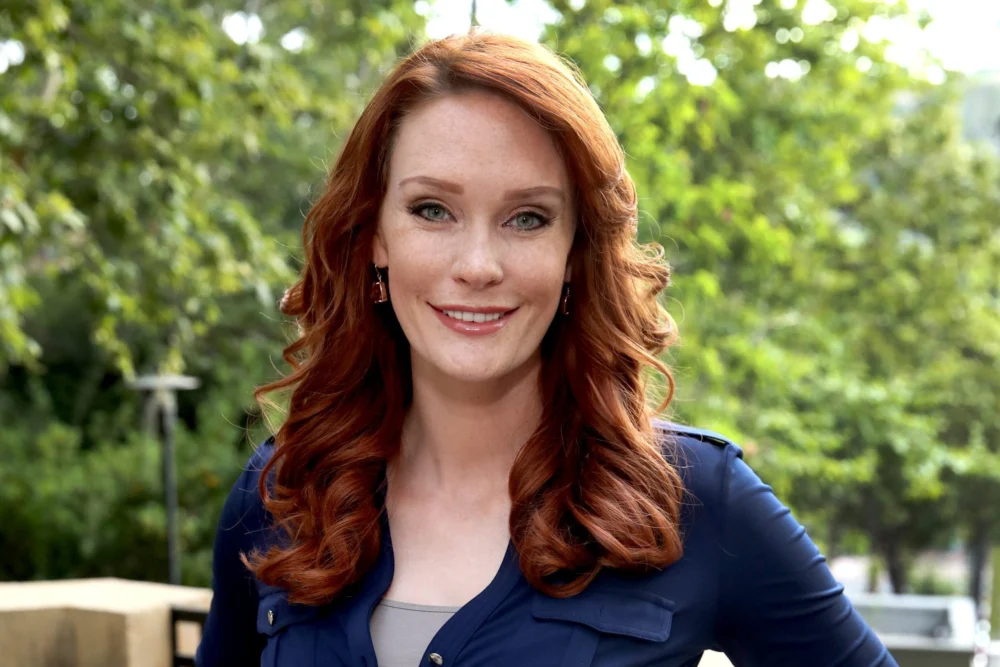
The final season of Netflix’s global phenomenon, Stranger Things, has sparked an unexpected and poignant dialogue within the entertainment industry, initiated by actress Jennifer Marshall. Known to fans as Susan Hargrove, the often-absent mother of fan-favorite Max Mayfield (played by Sadie Sink) in Seasons 2 and 4, Marshall recently took to social media to express her profound disappointment at not being called back for the series’ concluding chapter. Her candid posts, however, transcended mere professional grievance, weaving in a deeply personal narrative about her battle with cancer and the critical role consistent employment plays in an actor’s access to vital health insurance through their union.
Marshall’s character, Susan Hargrove, was a peripheral yet significant figure in Max’s tumultuous life, representing a fractured home environment that contributed to Max’s resilience and her eventual bond with the Hawkins gang. Max’s story culminated in a harrowing Season 4 finale, leaving her in a comatose state after a brutal confrontation with Vecna. As the narrative progressed into what is understood to be the majority of Season 5, Max remained hospitalized, with her boyfriend Lucas Sinclair (Caleb McLaughlin) steadfastly by her side. Yet, the conspicuous absence of Max’s biological mother, Susan, raised questions among viewers and, evidently, for Marshall herself.
In a direct and emotionally charged social media update, Marshall articulated her feelings regarding the decision to exclude her character from the final season. Her message resonated deeply, particularly as she revealed that the timing of the show’s production coincided with a crucial period in her personal health journey. "I had cancer, I get it," Marshall wrote, acknowledging the potential complexities involved in casting decisions. "But I was in remission during the shooting of Season 5. Shooting would have helped me obtain my health insurance though the union. Maybe they had too many characters, idk but obv Susan Hargrove is THE WORST MOTHER EVER LMAO. #strangerthings #strangerthings5 #cancer #cancersucks #butwhy."
This seemingly casual hashtag-laden post belied a deeper frustration, one that many working actors face concerning the often-precarious nature of their employment and its direct impact on essential benefits. For performers in the United States, particularly those belonging to unions like SAG-AFTRA, health insurance coverage is typically tied to meeting specific earnings thresholds or working a certain number of days within a qualifying period. Episodic roles, while offering valuable exposure and income, do not always guarantee the sustained work necessary to maintain continuous coverage. Marshall’s situation brought this frequently overlooked aspect of an actor’s life into sharp focus, transforming a simple casting omission into a broader commentary on professional security and personal vulnerability.
Speaking to Variety, Marshall clarified that her social media commentary was not intended to be malicious or accusatory. Instead, she described it as a lighthearted, albeit pointed, observation on her character’s perceived failings as a mother within the fictional universe. "I just made the reel as a funny thing and it blew up," she explained in an email. "I hold no ill will toward anyone and just wish things would have gone a different way. I was surprised to not be called back but cannot confirm why that decision was made. Regardless, I am grateful for the opportunity to be in the previous seasons." This clarification underscores her respect for the production team while still acknowledging her personal disappointment and the unforeseen ripple effects of her post.
Indeed, Marshall had previously hinted at her character’s unexplained absence. As the Stranger Things finale episodes were released on New Year’s Eve, she posted another query on Instagram, engaging fans with the question, "Okay folks! It’s over…but where was she? What kind of mother isn’t there for her child while she’s in the hospital? Give me all your theories…" This earlier post, too, highlighted the narrative inconsistency of a mother being absent during her child’s gravest hour, a plot point that resonates with the themes of parental neglect and found family central to Stranger Things. Max’s strained relationship with her mother and stepfather, Billy Hargrove (Dacre Montgomery), has always been a key component of her character’s background, explaining her fierce independence and her reliance on her friends. The show’s creators, the Duffer Brothers, are known for their meticulous plotting and character development, making such an oversight, if intentional, a deliberate narrative choice that further solidifies Susan’s perceived inadequacies as a parent.
Marshall’s journey with cancer itself adds another layer of profound significance to her story. In a deeply personal Facebook post from 2022, she publicly disclosed her diagnosis, revealing that she had undergone cancer treatment while actively filming Season 4 of Stranger Things. The physical toll was significant, necessitating the use of a wig by the fourth episode due to hair loss. It was during this challenging period that Marshall found unexpected solace and support on set.
"I confided in certain people on set, including Sadie, who plays my daughter, Max. Her kindness and compassion overwhelmed me and I’m forever thankful for those moments we shared behind the scenes," Marshall recounted. This interaction highlights the humanity behind the cameras, demonstrating the supportive bonds that can form even within the demanding environment of a major television production. She praised Sink not just as an "incredible talent," but, more importantly, as "a caring and kind human being."
Towards the conclusion of the Season 4 shoot, Marshall took the courageous step of speaking directly with the show’s creators, Matt and Ross Duffer. "At the end of the shoot, I asked if I could speak to Matt and Ross alone and explained to them what was going on. They looked alarmed and asked how I was," she detailed. Her confession that she had been undergoing treatment while filming was met with concern. Crucially, Marshall expressed her desire not to be written out of the show due to her health, emphasizing that her time on set provided a much-needed "bright light in an otherwise dark and depressing time." She also shared her intention to go public with her diagnosis eventually, hoping to encourage others to seek medical checks and avoid similar struggles. The Duffer Brothers, in turn, offered their well wishes and urged her to contact them if she needed anything, which Marshall described as an affirmation of their character: "Such lovely people I’m thrilled to know and have worked under."
This exchange paints a picture of mutual respect and understanding, making her subsequent omission from Season 5 all the more perplexing and, for Marshall, financially impactful. The entertainment industry, while glamorous on the surface, often operates with a ruthless efficiency that can overlook individual circumstances, even those as severe as a cancer diagnosis and recovery. Marshall’s story serves as a stark reminder that even for actors working on massively successful projects, the stability of a traditional career is often elusive, and the safety net of health benefits is conditional on continuous work.
Beyond her role in Stranger Things, Jennifer Marshall has built a diverse and impressive career across various mediums. Her credits include notable appearances in acclaimed series such as The Terminal List: Dark Wolf, Sugar, For All Mankind, NCIS: Los Angeles, and Reacher. Demonstrating her versatility, she has also served as the host of The CW’s investigative series, Mysteries Decoded. These roles showcase her range and dedication as a performer, underscoring her professional capabilities that extend far beyond a single character in a hit series. Her continued work across these varied projects speaks to her resilience and talent, making her voice on the challenges of an acting career, particularly in the context of health, a powerful and authentic one.
Jennifer Marshall’s experience resonates beyond the specific confines of Stranger Things. It illuminates the broader systemic issues within the entertainment industry, particularly concerning the welfare of working actors. Her candidness has opened up a vital conversation about the delicate balance between creative decisions, an actor’s personal well-being, and the often-unseen struggles for basic professional security like health insurance. As the final chapter of Stranger Things unfolds, Marshall’s story adds a layer of human reality to the fantastical world of Hawkins, reminding audiences of the real lives and challenges faced by those who bring beloved characters to the screen.