

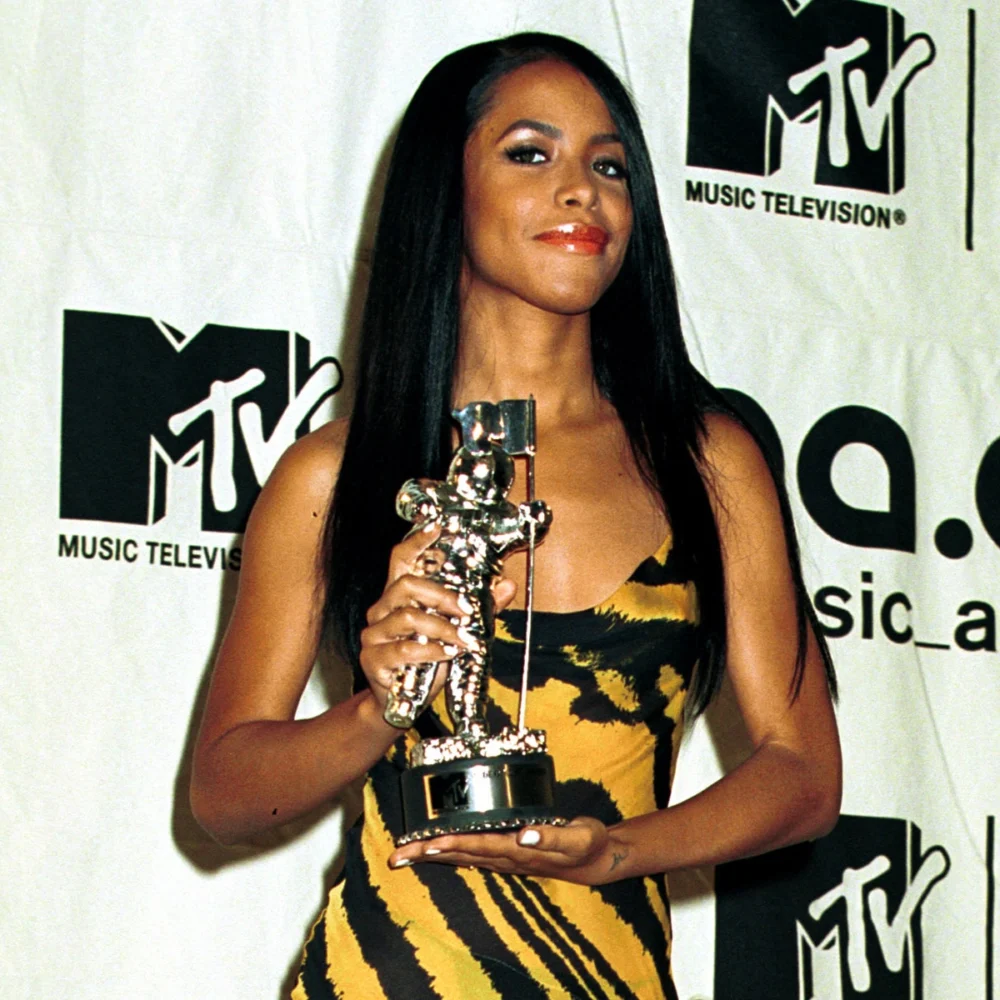
In the pantheon of modern music, few figures cast a shadow as long or as ethereal as Aaliyah Dana Haughton. To look back at her life is to view a masterpiece that was tragically interrupted, a narrative of immense talent and poise that was cut short just as it was reaching its most sophisticated heights. Had the stars aligned differently, January 16 would have marked the singer’s 47th birthday. Instead, the world is left to celebrate the memory of a woman who achieved more in twenty-two years than most do in a lifetime, leaving behind a legacy that continues to define the aesthetics of R&B, fashion, and pop culture decades after her passing.
Aaliyah’s story began in Brooklyn, but it was forged in the creative crucible of Detroit. She was a show business veteran before she even hit her teenage years. At an age when most children are navigating elementary school friendships, Aaliyah was singing at weddings. By age ten, she was competing on Star Search, and by eleven, she was performing in Las Vegas alongside the legendary Gladys Knight. Knight, who was briefly married to Aaliyah’s uncle, record producer Barry Hankerson, provided the young prodigy with a front-row seat to musical greatness. This early exposure instilled in Aaliyah a professional discipline and a preternatural calm that would become her trademark.
Despite the bright lights of the stage, Aaliyah remained grounded in her reality as a student. Promoting her first-ever performance at the legendary Apollo Theater, she famously beamed about her straight-A report card. She was a young woman who balanced the demands of the recording studio with the rigors of high school, expressing a desire to eventually major in music history and minor in engineering. "I do want to stay in this business as long as possible, ’cause I love it," she said at the time. Her family was her bedrock, particularly her brother Rashad, whom she frequently cited as her "best friend" and creative sounding board.
However, the early chapters of her career were also marked by a darkness that would not be fully reconciled by the legal system until decades later. Her 1994 debut studio album, Age Ain’t Nothing but a Number, was a commercial juggernaut, selling over six million copies and earning double-platinum status. The hits "Back & Forth" and "At Your Best (You Are Love)" established her as the "Princess of R&B." But the album was produced by R. Kelly, then 27, who exerted a profound and predatory influence over the fifteen-year-old singer.
In a scandal that resurfaced with harrowing detail during recent federal trials, it was revealed that Kelly and his associates bribed a government employee to obtain a fake ID for Aaliyah, falsely stating she was eighteen. The two were married in a secret ceremony in Rosemont, Illinois, on August 31, 1994. The union was eventually annulled in February 1995 following the intervention of Aaliyah’s parents. While Kelly’s legal team would later claim he had "no idea" of her true age, subsequent investigations and the 2019 Surviving R. Kelly docuseries painted a far more sinister picture of exploitation. Prosecutors later alleged the marriage was a tactical move to prevent Aaliyah from being compelled to testify against him regarding other crimes.
For her part, Aaliyah handled the ensuing media firestorm with the same "cool" that defined her public persona. She chose to let the rumors "roll off her back," focusing instead on a radical evolution of her sound. Distancing herself from Kelly and Jive Records, she moved to Atlantic and began a legendary collaboration with then-emerging producers Timbaland and Missy Elliott. Together, they crafted a futuristic, stuttering soundscape that would change the trajectory of R&B forever.
The result was 1996’s One in a Million, an album that has since been hailed by Rolling Stone as one of the essential recordings of the 1990s. With eight million copies sold, the project solidified Aaliyah’s status as a visionary. During this era, she perfected her "mysterious" image—often hiding behind dark sunglasses and sweeping bangs, favoring baggy streetwear over the hyper-feminine tropes of the time. She bridged the gap between tomboy-chic and high-fashion elegance, a duality that made her a natural choice as a face for Tommy Hilfiger.
"I dress in my baggy clothes every day and I am a laid-back person," she told MTV News in 1994. "I’m laid back, I’m mellow, kind of jazzy… it’s really not so much of a difference [between her personality and her professional persona]." This authenticity was her greatest asset. She refused to be rushed, choosing to graduate high school with her 4.0 GPA intact before diving fully into Hollywood.
Her transition into acting was seamless. After a guest spot on New York Undercover, she performed at the 1998 Academy Awards and earned a Grammy nomination for "Are You That Somebody?" from the Dr. Dolittle soundtrack. Her cinematic breakout came in 2000 with Romeo Must Die, a film that paired her with martial arts icon Jet Li. The film’s lead single, "Try Again," became her first Number One hit on the Billboard Hot 100, a feat achieved based solely on radio airplay—a first for any artist at the time.
By 2001, Aaliyah was at the zenith of her powers. She was filming Queen of the Damned in Australia while simultaneously recording her self-titled third album. Released in July 2001, Aaliyah (often referred to as "The Red Album") showcased a mature, neo-soul sensibility. It was the biggest debut of her career, but the celebration was tragically short-lived.
On August 25, 2001, after finishing the music video for "Rock the Boat" in the Bahamas, Aaliyah and her team boarded a twin-engine Cessna 402-B at Marsh Harbour Airport. Her boyfriend at the time, Damon Dash, later recalled that she had expressed apprehension about the small aircraft. "I don’t like that plane," she had told him via BlackBerry. Despite her reservations, she boarded the flight. Moments after takeoff, the plane—which was later found to be significantly overloaded—crashed and burst into flames just hundreds of feet from the runway.
Aaliyah was killed instantly, along with eight others, including members of her security, hair, and makeup teams, and record executives. A subsequent autopsy revealed that the pilot, Luis Morales III, had traces of cocaine and alcohol in his system. The loss sent shockwaves through the industry. Peers like Monica, Ludacris, and Ja Rule expressed a sense of profound numbness. "She was an easy person to like," Monica told Rolling Stone. "This is bigger than the music industry. She was a good person."
In the year following her death, the world grieved through her art. Her final album shot to Number One on the charts. When Queen of the Damned was released posthumously in 2002, critics noted that while the film itself was flawed, Aaliyah’s performance was magnetic, a haunting reminder of the screen legend she was destined to become. On the first anniversary of the crash, Jay-Z paused a concert in Detroit to play "Try Again" as a moment of silence fell over the crowd, punctuated only by the glow of lighters.
Today, Aaliyah’s influence is visible in every corner of the entertainment world, from the vocal stylings of artists like Drake and Rihanna to the fashion runways of Paris and New York. She remains a symbol of grace, a woman who navigated the highest highs and lowest lows of fame with a quiet, impenetrable dignity. Just months before her passing, she told E! News, "I’m 22, and I’ve accomplished so much… I just know I have to appreciate every moment." It is a sentiment that her fans, old and new, continue to hold dear as they remember the girl who taught the world to "try again."