


In a stunning display of resilience and fighting spirit, England has finally broken their 15-year drought on Australian soil, securing a hard-fought four-wicket victory in the chaotic fourth Ashes Test at the Melbourne Cricket Ground. This triumphant win, achieved in just two whirlwind days, has not only salvaged England’s battered pride but also injected a potent dose of confidence as they head to Sydney for the final encounter. The tourists, under immense pressure after a series of defeats and off-field scrutiny, dug deep to overcome Australia and cap off a remarkable turnaround.
The MCG, packed with an enthusiastic crowd of 92,045, witnessed a match of dramatic twists and turns, mirroring the frenetic pace of the entire series. Following a day one that saw an astonishing 20 wickets tumble, the Australian second innings concluded swiftly after lunch, with the hosts all out for a modest 132. This set England a target of 175 for victory, a challenge they met with a blend of calculated aggression and steely resolve. Harry Brook, with a composed 18 not out, and Jamie Smith, on three not out, guided their team home amidst deafening cheers from the travelling contingent of England supporters, affectionately known as the "Barmy Army." Earlier contributions from Jacob Bethell (40) and Zak Crawley (37) had laid a crucial foundation for the chase.
England arrived in Melbourne facing a deluge of criticism. The initial three Test matches had seen them falter, leading to widespread questioning of their preparation and even allegations of excessive drinking during a mid-series break. The narrative surrounding the team was one of underperformance and a lack of focus. However, the performance in Melbourne has definitively rewritten that script, demonstrating that this England side possesses a formidable capacity for bouncing back. Their victory in this crucial Test ensures they will travel to Sydney with their tails held high, brimming with newfound belief and momentum.
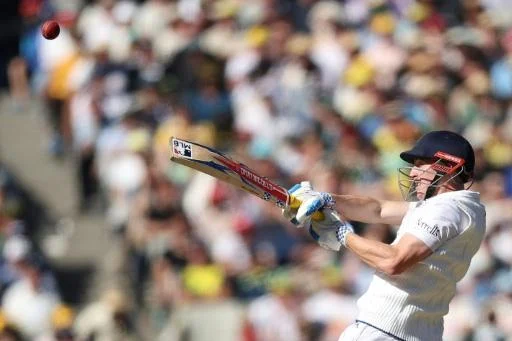
The weight of history had been a heavy burden for England. Their last Test victory on Australian soil dated back to January 2011 in Sydney. Since then, they had endured a demoralizing run of 16 losses and two draws, a stark testament to Australia’s dominance in home conditions. The objective for the opening pair of Zak Crawley and Ben Duckett was clear: to shatter this long-standing streak. Their strategy was unmistakably rooted in the "Bazball" ethos – ultra-aggressive, high-octane cricket. Duckett immediately set the tone, dispatching Mitchell Starc for a boundary in the opening over. Crawley followed suit, launching Michael Neser for a six followed by a four in successive deliveries, signaling England’s intent.
This audacious start propelled them to a rapid fifty-run opening partnership, a whirlwind display that seemed to suggest a swift end to the match. However, the aggressive approach, while effective, also carried inherent risks. In the very next ball after the fifty partnership, Duckett fell victim to a pinpoint Starc yorker, departing for 34. The unexpected dismissal brought fast bowler Brydon Carse to the crease at number three, a surprise tactical move ahead of Jacob Bethell. England’s pinch-hitting experiment at this crucial juncture proved short-lived. Carse’s brief cameo lasted only eight balls before he skied a Jhye Richardson delivery to Cameron Green in the deep.
The momentum, which had swung so decisively in England’s favour, began to waver. Zak Crawley, who had played a gritty and determined innings, was given out lbw to Scott Boland. Moments later, Bethell was caught by Usman Khawaja, also off the bowling of Boland, further tightening the screws on England’s chase. The Australian bowlers, sensing an opportunity, continued to press. Jhye Richardson then trapped Joe Root lbw for 15, and Mitchell Starc accounted for Ben Stokes for just two runs. By this stage, England were precariously placed, but crucially, only 10 runs remained to achieve victory. Harry Brook and Jamie Smith, with nerves of steel, navigated the final few runs, sealing the much-anticipated win to the unbridled jubilation of their supporters.
The stage for this dramatic conclusion was set by an equally astonishing opening day. Australia resumed their second innings on day two at 4-0, with the memory of the first day’s carnage still fresh. The sheer ferocity of the pace bowling on day one had seen an unprecedented 20 wickets fall. Australia, after being dismissed for 152 in their first innings, had England struggling at 110. This total of 20 wickets on day one was the highest in an Ashes Test since 1909 and surpassed the 19 wickets that tumbled on the opening day of the series in Perth.
The pitch itself had become a significant talking point. With approximately 10 millimeters of grass, it was undeniably a bowler’s paradise, offering ample assistance to seam and swing. However, a host of former cricket luminaries had voiced their concerns, criticizing the pitch for being overly "doing too much" and, in their opinion, "unfair for the batters." This sentiment underscored the extraordinary nature of the match, where the conditions played a pivotal role in shaping the narrative.
Resuming their second innings, Australia’s nightwatchman, Scott Boland, added two runs to his overnight score of four. However, his tenure was always destined to be fleeting, and he was eventually caught by wicketkeeper Jamie Smith off the bowling of Gus Atkinson. Atkinson’s outing was unfortunately cut short soon after, as he left the field clutching what appeared to be a left hamstring injury, raising concerns about his availability for the remainder of the series.
Josh Tongue, who had claimed the last two Australian wickets on day one to be on a hat-trick, was brought into the attack. However, Jake Weatherald greeted him with a well-executed whip shot for three. Weatherald, under pressure to secure his place at the top of the order, failed to deliver a substantial knock. He was bowled by Ben Stokes for a mere five, leaving a delivery that nipped back sharply.
Travis Head joined Marnus Labuschagne, but the partnership proved short-lived. Labuschagne made only eight before being caught by Joe Root in the slips off the bowling of Tongue. Travis Head, who had appeared in good touch, was eventually undone by a superb delivery from Brydon Carse. Carse produced a peach of a ball that beat Head’s outside edge and crashed into his stumps, ending his promising innings on 46. The departures of Usman Khawaja for a duck and Alex Carey for four in quick succession further swung the momentum firmly back in England’s favour.
As Australia reached the lunch interval at 98-6, the pressure intensified. Cameron Green, who had battled his way to 19, became the seventh wicket to fall, edging a rising Stokes delivery to Harry Brook at slip with the score on 119. The final vestiges of Australian resistance crumbled swiftly thereafter. Brydon Carse dismissed Michael Neser and Mitchell Starc without scoring, and Jhye Richardson was trapped lbw by Ben Stokes. The last four wickets fell for a mere 13 runs, leaving Steve Smith unbeaten on 24 as Australia’s innings concluded. This collapse, orchestrated by a resurgent English bowling attack, set up the tantalizing chase that England ultimately navigated with aplomb. The victory in Melbourne, more than just a win, represents a significant turning point for English cricket, demonstrating their capacity for grit, determination, and ultimately, triumph on the unforgiving Australian stage.