


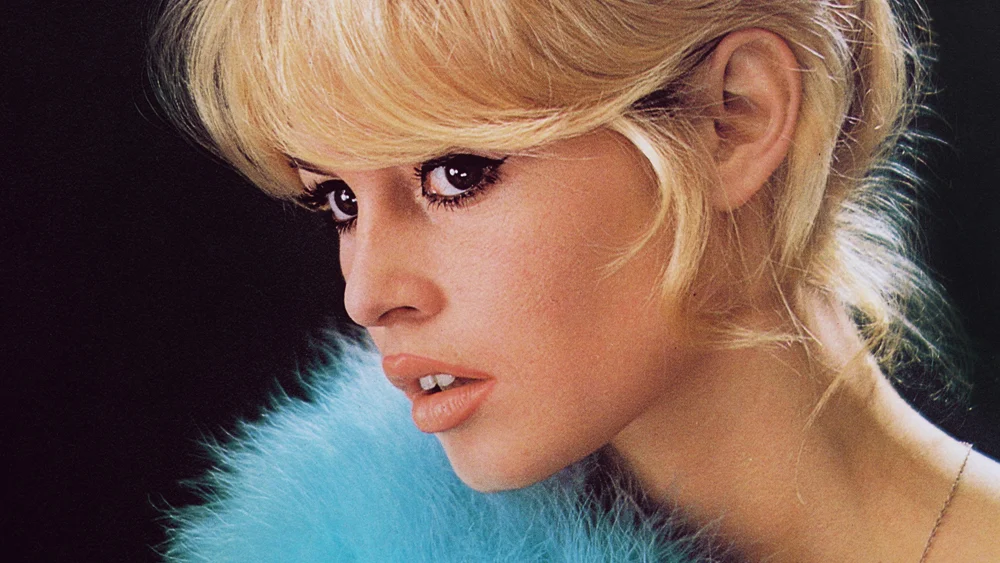
Brigitte Bardot, the French actress, singer, and undeniable sex symbol who captivated the world in the mid-20th century before retiring to become a controversial figure in animal rights and far-right politics, has passed away at the age of 91. The news of her death, confirmed by Bruno Jacquelin of the Brigitte Bardot Foundation for the protection of animals, was reported on Sunday from her home in southern France. No specific cause of death was immediately provided, though it was known she had been hospitalized just last month. Details regarding funeral or memorial services are yet to be announced.
Born in Paris in 1934, Bardot’s life was a whirlwind of international stardom, cultural disruption, and later, deeply polarizing activism. Her early career in the 1950s ignited a global fascination with a new, bolder brand of European sensuality on screen, a phenomenon largely ushered in by her first husband, director Roger Vadim, with films like the seminal “And God Created Woman.” This cinematic revolution challenged the prevailing moral codes of the era, making Bardot an overnight icon of liberation and desire.
While her peak as a box office draw was relatively brief, culminating in her retirement from filmmaking in the early 1970s, Bardot’s influence on cinema, fashion, and the perception of female sexuality proved remarkably enduring and profound. She was instrumental in shifting the cinematic ideal of the “blonde bombshell” from the more mature, voluptuous figure embodied by Marilyn Monroe to a youthful, pouty, and almost innocent yet undeniably provocative archetype. Alongside Audrey Hepburn’s elegant gamine, Bardot’s raw, uninhibited allure cemented youthfulness as a paramount characteristic of female sexuality in movies and across all media platforms, a trend that has never truly receded.
Bardot, often in collaboration with Vadim, also played a pivotal role in dismantling the stringent censorship that characterized mid-century American cinema. Foreign films, particularly those featuring Bardot, became synonymous with a daring exploration of sexuality that was largely absent from the uptight American productions of the 1950s. This boldness, even if sometimes more suggestive than explicit, gradually chipped away at decades of restrictive codes, paving the way for a more open and diverse cinematic landscape in the U.S. and beyond. Despite her initial groundbreaking success, Bardot’s subsequent attempts to establish herself as a serious dramatic actress, notably in Jean-Luc Godard’s critically acclaimed “Contempt,” met with only limited commercial success, though her performances were often lauded.
Her breakthrough moment arrived with “And God Created Woman” (original “Et Dieu… créa la femme”), a film written and directed by Roger Vadim and released in late 1956. The movie premiered at a tumultuous time in Bardot’s personal life, coinciding with the unraveling of her marriage to Vadim. Although it achieved only modest success in her native France, its impact overseas was monumental, grossing an astounding $8.5 million worldwide at a time when such figures for foreign films were rare. The film, which featured Bardot as the uninhibited, impulsive Juliette Hardy, dancing barefoot and embodying a raw, untamed sensuality, caused a sensation, particularly in the United States, where it was initially deemed scandalous and even banned in some areas. It was seen as a radical portrayal of female agency and desire, challenging traditional notions of morality and femininity.
The global success of “And God Created Woman” triggered a wave of re-releases and new distribution deals for Bardot’s earlier and contemporary films in the U.S., cementing her status as an international sex goddess. Titles like “Mam’zelle Pigalle” (also known as “Naughty Girl”), “Please! Mr. Balzac” (also known as “The Light Across the Street”), and even her 1952 debut, “The Girl in the Bikini” (original “Manina, la fille sans voiles”), suddenly found new audiences across American shores. In France, she ascended to the pinnacle of box office success with a string of diverse films, including “The Bride Is Much Too Beautiful” (“Une Parisienne”), which showcased her lighter, comedic side; the dramatic “The Night Heaven Fell” (“Les Bijoutiers du Clair de lune”); “The Woman and the Puppet” (“La Femme et le Pantin”); and “In Case of Emergency” (“En cas de malheur”).
Bardot’s meteoric rise and the cultural phenomenon she represented did not go unnoticed by intellectuals and feminists. In 1959, the renowned existentialist philosopher and feminist Simone de Beauvoir penned a significant essay titled “Brigitte Bardot and the Lolita Syndrome.” De Beauvoir analyzed Bardot not merely as an actress or sex symbol, but as a cultural archetype – a “natural woman” who defied societal conventions, embodying a controversial blend of girlish innocence and powerful, uninhibited sexuality. De Beauvoir argued that Bardot represented a new form of female liberation, one that challenged the traditional male gaze by existing for herself rather than for male approval. However, by the time de Beauvoir’s thoughtful treatise was published, Bardot’s image and girlish sensuality were so deeply entrenched in global culture that serious academic studies were unlikely to dislodge her popular appeal.
Already France’s highest-paid film performer, Bardot continuously sought to prove her acting prowess beyond her sex symbol image. She took on diverse roles, starring as a member of the French Resistance in “Babette Goes to War” (1959), exploring emotional depth in Louis Malle’s “A Very Private Affair” (1962), and delivering a powerful dramatic performance in Henri-Georges Clouzot’s “La Vérité” (1960), which earned her critical acclaim. During this prolific period, she continued to collaborate with Roger Vadim, even long after their marriage ended and she had moved on to her second husband, actor Jacques Charrier. Her personal life, marked by multiple marriages and high-profile affairs, often mirrored the drama unfolding on screen, contributing to her mystique.
Jean-Luc Godard’s 1963 New Wave masterpiece, “Contempt” (original “Le Mépris”), masterfully utilized Bardot’s existing reputation and media persona, offering a brilliant meta-commentary on her celebrity, the film industry, and the male gaze. Her iconic portrayal of Camille Javal, a wife whose love for her husband slowly erodes amid the chaos of a film production, showcased a vulnerability and complexity that many critics felt she was capable of but rarely given the chance to display. Bardot also ventured into American-made productions, making a memorable cameo in “Dear Brigitte” (1965), a film about an 8-year-old boy obsessed with her. She then co-starred with the legendary Jeanne Moreau in Louis Malle’s English-language Western-comedy “Viva Maria!” (1965), a performance that earned her a BAFTA Award nomination for Best Foreign Actress. Later in the 1960s, she appeared opposite Sean Connery in the Western “Shalako” (1968), further expanding her international reach.
Bardot’s cinematic career concluded in 1973 with two final films: Nina Companeez’s “The Edifying and Joyous Story of Colinot” (original “L’histoire très bonne et très joyeuse de Colinot trousse-chemise”) and the melancholic “Ms. Don Juan” (original “Don Juan 73”). The latter was another attempt by Vadim to capitalize on her iconic sexuality, though it proved to be a pallid and ultimately disappointing swansong, released in the U.S. in 1976. At just 39 years old, Bardot famously announced her retirement from acting, having starred in 47 films, recorded over 80 songs, and lived a life constantly under the intense glare of the public eye. She declared her desire for a more private existence, free from the pressures and demands of superstardom.
Born Brigitte Anne-Marie Bardot into an affluent, conservative Parisian family, her early life offered few hints of the rebellious icon she would become. Her father, Louis Bardot, was an industrialist, and her mother, Anne-Marie Mucel, was a socialite. From a young age, Brigitte displayed a talent for dance, leading her to study ballet at the prestigious Paris Conservatory after attending the private Hattemer’s school. It was at age 15, on the recommendation of a friend, that she found herself modeling for the cover of Elle magazine. This fateful appearance caught the eye of director Marc Allégret, who was scouting for new talent for his film “The Laurels Are Cut.” Although she didn’t secure that particular role, Allégret’s assistant, a young Roger Vadim, took her under his wing. Vadim helped her secure small roles in minor films before they married in 1952. Their highly publicized union, often seen as a strategic move, helped to promote the aspiring young actress. More small parts followed, with her first film released in the U.S. being Anatole Litvak’s “An Act of Love” (1953), starring Kirk Douglas, which was shot in France. She then appeared in Allégret’s “Future Stars” (1955) and secured her first leading role in a segment of the popular English “Doctor” series, “Doctor at Sea” (1955). Before her explosive turn in “And God Created Woman,” she also worked with the legendary French director René Clair in “The Grand Maneuver” (1955).
Beyond her iconic film career, Bardot also left her mark on the music world, recording approximately 80 songs, many of which became quite popular, primarily throughout the 1960s and early 1970s. Her distinctive voice and playful style contributed to hits like “Moi Je Joue” and the controversial Serge Gainsbourg duet “Je t’aime… moi non plus” (though her version was never officially released, Gainsbourg later recorded it with Jane Birkin). These musical endeavors further cemented her status as a multifaceted entertainer and cultural trendsetter.
Despite her definitive retirement from cinema, Bardot remained a fixture in the media spotlight, albeit for very different reasons. In 2010, she expressed outrage over rumors of an American-made biopic about her, fiercely asserting her desire for a quiet life away from the film industry. However, her post-acting life was anything but quiet, characterized by a series of high-profile love affairs, a fervent dedication to animal rights, and increasingly, her outspoken and controversial embrace of far-right politics.
In 1986, Bardot established the Brigitte Bardot Foundation for the Welfare and Protection of Animals, dedicating her considerable energy and personal fortune to animal activism. Her tireless efforts in this field, advocating for animal welfare, protesting against seal hunting, and campaigning for vegetarianism, garnered her international praise and recognition, including the offer of the French Legion of Honor, which she famously refused. She was not afraid to engage in direct action, participating in protests and even facing arrest for her unwavering commitment to protecting four-legged creatures, often putting herself on the front lines for her cause.
However, the latter decades of her life were also marred by a series of legal battles and widespread condemnation for her provocative and often inflammatory remarks regarding immigration and Islam in France. Bardot was repeatedly fined by French courts for inciting racial hatred, particularly after criticizing the presence of Muslim immigrants in France and expressing concerns about the impact on French culture and animal welfare practices. These controversial statements, which aligned with the rhetoric of the French far-right, deeply alienated many of her former admirers and cast a shadow over her otherwise celebrated legacy as a cultural icon. Her transformation from a symbol of liberation to a figure associated with xenophobia presented a complex and often contradictory public image.
Her personal life continued to draw attention. After her marriages to Roger Vadim and Jacques Charrier (with whom she had her only child, Nicolas-Jacques Charrier), she married German playboy Gunter Sachs in the late 1960s. In 1993, she married wealthy industrialist Bernard d’Ormale, a staunch supporter of France’s far-right National Front party, further cementing her political alignment.
Brigitte Bardot leaves behind her husband, Bernard d’Ormale; her son, Nicolas-Jacques Charrier; and two granddaughters. Her passing marks the end of an era, a life lived unapologetically, leaving behind a complex legacy that intertwines unparalleled cultural impact with deep personal conviction, and ultimately, enduring controversy. She remains a testament to the power of a single individual to reshape cultural norms, for better or for worse, and to remain defiantly herself until the very end.