



Tragedy on the Expressway: 67 Vehicles Collide in Icy Conditions, Claiming Two Lives and Injuring 26
A devastating multi-vehicle pileup, involving an astonishing 67 vehicles, unfolded on an expressway in Gunma Prefecture, northwest of Tokyo, on Friday evening. The horrific incident resulted in the tragic loss of two lives and left 26 individuals injured, five of whom sustained serious wounds. The catastrophe occurred on the outbound lane of the Kan-etsu Expressway in Minakami at approximately 7:30 p.m., amidst falling snow and treacherous icy road conditions that authorities believe were the primary cause of the initial skids.
The chain reaction of collisions, which spanned an estimated 300 meters, was reportedly initiated by a truck colliding with another truck that had come to a standstill following a separate, single-vehicle accident. The initial impact triggered a catastrophic cascade of crashes, with at least 20 vehicles becoming engulfed in flames. Firefighters battled the inferno for over seven grueling hours before finally bringing the blaze under control, leaving behind a scene of utter devastation.
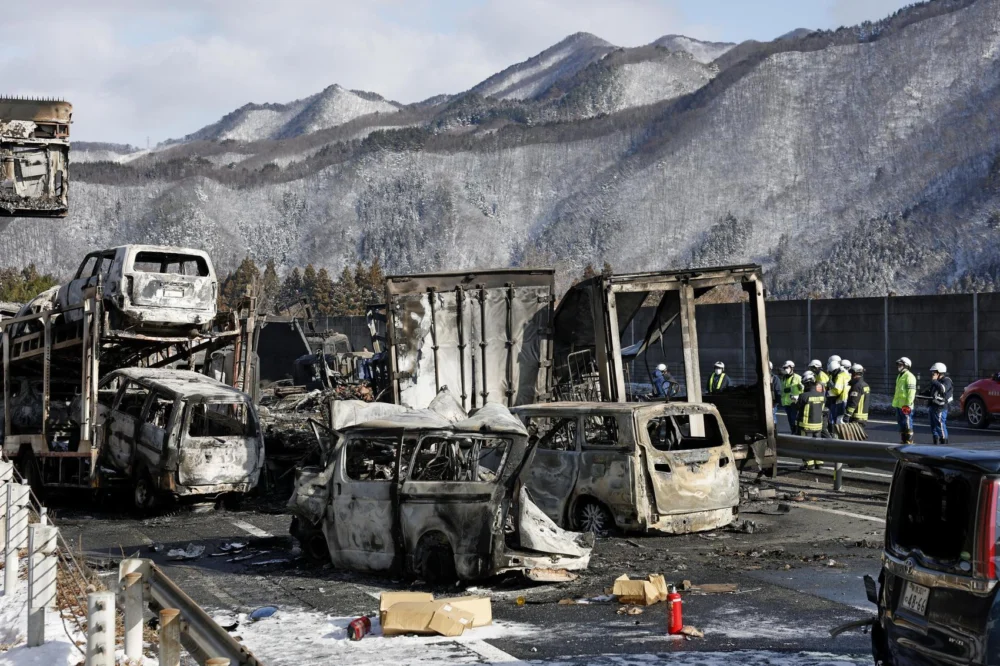
Among the fatalities was a 77-year-old woman from Tokyo, who was a passenger in a car driven by her family. The second victim was discovered in the driver’s seat of a large truck, their identity yet to be officially released. In addition to the fatalities, 21 people suffered minor injuries, receiving immediate attention at the scene and subsequently transported to nearby medical facilities. The sheer scale of the accident led to the immediate closure of a significant section of the expressway, with rows of mangled and charred vehicles, some burnt beyond recognition, forming a grim blockade on the outbound lane.
Compounding the danger of the evening, drivers on the Kan-etsu Expressway had been previously advised to reduce their speed to a maximum of 50 kilometers per hour due to the ongoing snowfall and anticipated icy conditions. This advisory, intended to enhance safety, tragically underscores the severity of the road surface at the time of the accident.
One survivor, a truck driver in his 60s, recounted the harrowing moments leading up to the pileup. He described how his vehicle swerved violently to avoid a car directly in front of him, ultimately colliding with the median barrier. In the terrifying moments that followed, he distinctly heard the sound of four explosions emanating from behind him, a chilling testament to the unfolding chaos. “The ice made it incredibly difficult for me to control the steering wheel,” he shared, his voice trembling with the lingering fear. “I genuinely feared for my life.” His experience paints a vivid picture of the sheer terror and helplessness felt by those caught in the heart of the disaster.
The incident has reignited concerns about road safety during severe winter weather, particularly on Japan’s extensive expressway network. While Japan is no stranger to snowy conditions, particularly in mountainous regions like Gunma, the scale of this pileup highlights the devastating consequences when multiple factors – heavy snowfall, freezing temperatures, and high-speed traffic – converge. Authorities are expected to launch a thorough investigation into the exact sequence of events, focusing on road conditions, vehicle maintenance, and adherence to speed advisories.
The impact of such a large-scale accident extends beyond the immediate casualties. The closure of a major artery like the Kan-etsu Expressway has significant implications for transportation and logistics, potentially causing widespread delays and disruptions for freight and passenger travel. Emergency services, including police, firefighters, and medical personnel, worked tirelessly through the night, demonstrating remarkable dedication in response to the crisis.
Eyewitness accounts, like that of the truck driver, provide crucial insights into the rapid and uncontrollable nature of the disaster. The sounds of explosions, likely from fuel tanks igniting, add a terrifying auditory dimension to the already catastrophic visual of burning vehicles. The fact that at least 20 vehicles caught fire underscores the intensity of the initial impacts and the rapid spread of the flames, further complicating rescue efforts and exacerbating the damage.
The victims, one from Tokyo and another from a large truck, represent the human cost of such preventable tragedies. The loss of life, particularly that of an elderly woman traveling with her family, is a stark reminder of the vulnerability of individuals in the face of such overwhelming natural and vehicular forces. The ongoing investigation will undoubtedly seek to understand if any contributing factors beyond the weather, such as speed or vehicle condition, played a role in the initial spark of the pileup.
The image of “badly damaged vehicles, some charred beyond recognition, clogging the outbound lane” paints a grim picture of the aftermath. This visual serves as a powerful symbol of the destructive potential of such accidents and the extensive cleanup and recovery operation that will follow. The meticulous work of forensic investigators will be crucial in piecing together the exact cause and sequence of events, aiming to prevent similar incidents in the future.
The mention of drivers being instructed to slow to 50 kilometers per hour due to snow is a critical piece of information. It suggests that road authorities were aware of the hazardous conditions and had implemented measures to mitigate risk. The fact that a pileup of this magnitude still occurred raises questions about the effectiveness of these measures, the adherence of drivers to these advisories, and the inherent dangers of driving on ice-covered roads, even at reduced speeds.
The testimony of the truck driver, who expressed fear for his life, is a poignant reminder of the psychological impact of such events. The sensation of losing control, the cacophony of crashes, and the immediate threat of fire and destruction can leave lasting trauma. His words resonate with the universal human instinct for survival and the profound terror that accompanies near-death experiences.
As the investigation progresses, it will be important to consider the role of infrastructure. Were warning signs adequate? Were de-icing measures in place and effective? The detailed analysis of the accident scene, including skid marks, impact points, and vehicle damage, will be crucial in answering these questions. The extended duration of the firefighting efforts also suggests the severity of the blazes, possibly exacerbated by flammable materials carried by the trucks involved.
The victims’ families are undoubtedly going through an unimaginable period of grief and shock. The loss of loved ones in such a sudden and violent manner is a profound tragedy, and the community will extend its deepest sympathies. The focus now shifts to supporting those affected, both physically and emotionally, and to learning from this devastating event to enhance road safety for all.
The sheer number of vehicles involved, 67, is staggering. It suggests a domino effect that rapidly overwhelmed the capacity of drivers to react and avoid collisions. The length of the pileup, approximately 300 meters, indicates that the initial incident rapidly escalated, drawing in vehicles from a significant stretch of the expressway. This highlights the challenges of managing traffic flow and providing rapid assistance in such expansive and chaotic scenarios.
The investigation will likely examine the specific types of vehicles involved. The presence of large trucks, particularly those carrying flammable materials, can significantly increase the risk of fire and explosion, as tragically demonstrated in this incident. The interplay between passenger vehicles and commercial transport on the same roadway, especially under adverse weather conditions, is a complex safety consideration that requires ongoing attention.
The human element of driving cannot be overstated. Even with speed advisories and warnings, individual driver behavior, alertness, and reaction times play a crucial role in preventing accidents. The icy surface, as the surviving driver noted, severely compromises a vehicle’s ability to respond to steering inputs, making even minor deviations potentially catastrophic. This underscores the importance of experienced and cautious driving, especially during inclement weather.
The incident serves as a somber reminder of the inherent risks associated with travel, particularly during extreme weather. While modern vehicles are equipped with advanced safety features, they cannot entirely negate the fundamental physics of driving on slippery surfaces. The collective actions of all drivers on the road contribute to the overall safety of the network. In situations like this, a moment of lost control by one vehicle can trigger a cascade of devastating consequences for many.
The recovery and repair efforts on the Kan-etsu Expressway will be extensive. The damaged vehicles will need to be removed, and the road surface inspected and repaired. The economic impact of such closures, particularly on a major transportation route, can be substantial, affecting businesses and supply chains. The resilience of the community in responding to such a crisis will be tested in the coming days and weeks.
Ultimately, this tragic pileup is a stark and heartbreaking illustration of how quickly conditions can change on the road and the devastating consequences that can arise. The loss of life and the injuries sustained are a profound tragedy for the individuals involved and their families. The lessons learned from this incident will, it is hoped, contribute to a safer future for all who travel on Japan’s roadways.