


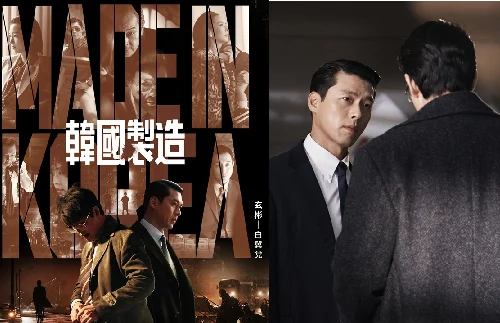
The critically acclaimed Disney+ original Korean drama, Made in Korea, has officially wrapped its inaugural season, leaving audiences captivated and buzzing with anticipation for what’s next. The series, lauded for its gripping narrative and stellar performances, has particularly shone a spotlight on actor Hyun Bin, whose daring portrayal of the morally ambiguous Baek Gi-tae has been a revelation, solidifying the drama’s status as a standout production in the competitive streaming landscape.
Made in Korea plunges viewers into the turbulent atmosphere of 1970s South Korea, a period marked by political upheaval and the shadowy machinations of power. At the heart of this intense drama is the escalating conflict between Baek Gi-tae, a formidable figure driven by an insatiable hunger for wealth and influence, and the tenacious prosecutor Jang Geon-young, brought to life by the equally magnetic Jung Woo-sung. Hyun Bin embodies Baek Gi-tae with a chilling intensity, portraying him as a high-ranking official within the Korean Central Intelligence Agency (KCIA) who expertly manipulates the desires and vulnerabilities of those around him to further his own ambitious agenda. This role marks a significant departure from Hyun Bin’s established persona as a charming romantic lead, showcasing a remarkable breadth of acting talent as he delves into the complexities of a dark and compelling antagonist. His performance has been widely celebrated, hailed as a significant expansion of his artistic repertoire.
The culmination of the season’s narrative arc in the final episode has ignited a fervent wave of reactions across online platforms, with viewers expressing their profound admiration for the series. Commentary frequently lauded the director’s masterful storytelling and striking visual aesthetic, with many describing the show’s refined Korean noir style as utterly mesmerizing. A recurring sentiment was the drama’s exceptional quality, with numerous viewers declaring it the best series they had encountered in a considerable time. The actors’ performances were universally praised, with particular emphasis placed on Hyun Bin’s transformative role. Many expressed a newfound appreciation for the actor, stating they had "discovered Hyun Bin all over again" and congratulating him on crafting another career-defining character. The high production value was also a consistent point of praise, with viewers acknowledging the overall excellence of the series. Looking ahead, the anticipation for a second season was palpable, with fans already speculating about the historical period or thematic focus that future installments might explore, with some even declaring their intention to rewatch the first season multiple times until new episodes become available.

The impressive reception of Made in Korea is further underscored by its remarkable performance on streaming charts. According to data compiled by FlixPatrol, the drama dominated the Disney+ Korea TV series chart for an impressive 21 consecutive days, a testament to its strong domestic appeal. Beyond South Korea, the series also achieved significant success in other Asian markets, securing the number one spot in Taiwan and ranking highly in regions such as Japan, Hong Kong, and Singapore. This widespread popularity highlights the universal resonance of its compelling storyline and sophisticated production. Notably, Made in Korea set a new benchmark for domestic viewership among Korean originals released on Disney+ in 2025, breaking previous records and cementing its status as a significant cultural export.
Hyun Bin’s portrayal of Baek Gi-tae is poised to be a pivotal moment in his illustrious career. By presenting a villain who operates in shades of grey, transcending simplistic notions of good versus evil, the actor has delivered a performance that is both nuanced and deeply impactful. This complex character study has allowed Hyun Bin to explore darker thematic territories and showcase a formidable dramatic range that has captivated audiences and critics alike. The confirmation of a second season of Made in Korea, which is currently in production, has been met with widespread enthusiasm. With the foundation of Baek Gi-tae’s compelling narrative firmly established in the first season, global audiences are now eagerly awaiting the unfolding of the next chapter in this enthralling saga. The creative team behind the series has set a high bar, and the prospect of further exploration into the historical and political landscape of Korea, coupled with the continued development of its complex characters, promises another season of gripping drama and exceptional storytelling.
The 1970s in South Korea were a period of profound societal and political transformation, characterized by rapid economic development under authoritarian rule. This era, often referred to as the "Miracle on the Han River," saw the nation achieve remarkable industrial growth, yet it was also a time of significant political repression. The government, led by President Park Chung-hee, implemented policies aimed at modernization and national security, but these often came at the cost of civil liberties and democratic freedoms. The KCIA, established in 1961, played a central role in maintaining the regime’s power, wielding considerable influence and operating in the shadows to suppress dissent and monitor potential threats. It was a period where the pursuit of progress and national strength was intertwined with a climate of fear and surveillance, creating a fertile ground for the kind of morally ambiguous power struggles depicted in Made in Korea. The series taps into this rich historical context, using the era’s inherent tensions to fuel its narrative of ambition, corruption, and the relentless pursuit of justice.
Baek Gi-tae, as portrayed by Hyun Bin, is a product of this complex environment. His ascent within the KCIA and his methods of operation reflect the realities of a system where power was often gained and maintained through clandestine means. The character’s obsession with wealth and power is not presented as mere personal greed, but rather as a symptom of a system that rewarded ruthlessness and ambition. By positioning Baek Gi-tae as a figure who understands and exploits the desires of others, the series delves into the psychological underpinnings of power. He is a master manipulator, adept at identifying weaknesses and leveraging them for his own gain. This makes him a formidable adversary for Jang Geon-young, the prosecutor who represents the forces of law and order.
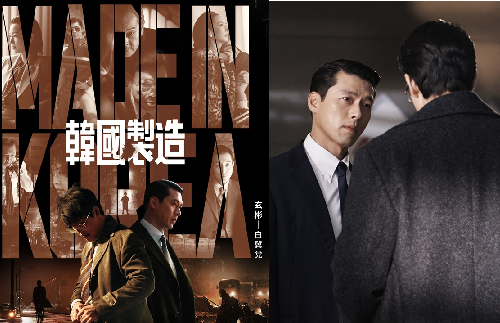
Jang Geon-young, played by Jung Woo-sung, embodies the unwavering pursuit of justice. His character serves as the moral compass of the series, representing the fight against corruption and the struggle to uphold the law in a society where it is often subverted. The dynamic between Baek Gi-tae and Jang Geon-young forms the central conflict of Made in Korea, a classic cat-and-mouse chase that is elevated by the depth and complexity of its characters. Their confrontation is not just a battle of wits and resources, but also a clash of ideologies, representing the broader societal struggle between authoritarian control and the yearning for a more just and equitable future.
Hyun Bin’s performance as Baek Gi-tae is particularly noteworthy for its nuanced portrayal of a villain. Rather than resorting to simplistic villainy, Hyun Bin imbues Baek Gi-tae with a certain charisma and a chilling pragmatism that makes him compellingly human, albeit in a deeply flawed way. This is a character who operates on a different moral plane, one where the ends often justify the means. His ambition is not presented as inherently evil, but as a force that has been shaped and amplified by the environment in which he operates. The actor’s ability to convey the internal machinations of such a character, the subtle shifts in expression, the calculated delivery of dialogue, all contribute to a performance that is both captivating and unsettling. This departure from his more familiar romantic roles demonstrates a conscious effort by Hyun Bin to challenge himself artistically and to explore the darker facets of human nature.
The visual storytelling of Made in Korea is another element that has garnered significant praise. The series employs a distinct Korean noir aesthetic, characterized by its moody cinematography, atmospheric lighting, and a sense of palpable tension. The production design meticulously recreates the era, immersing viewers in the sights and sounds of 1970s Seoul. This attention to detail enhances the overall viewing experience, lending an authenticity and gravitas to the unfolding drama. The visual language of the series is not merely decorative; it serves to underscore the themes of corruption, paranoia, and the undercurrent of unease that permeates the narrative.
The critical and commercial success of Made in Korea is a significant achievement for Disney+ in the Korean market. The platform has been actively investing in original Korean content, recognizing the global appeal of K-dramas. The success of this series not only solidifies Disney+’s position but also opens doors for future collaborations with Korean production houses and talent. The widespread international viewership suggests that the themes explored in Made in Korea, while rooted in a specific historical context, resonate with a global audience. The universal nature of power struggles, ambition, and the pursuit of justice transcends cultural boundaries, making the series accessible and engaging for viewers worldwide.
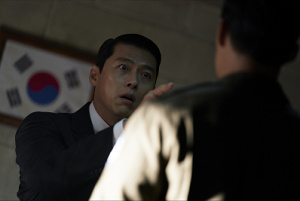
The confirmation of a second season is a clear indication of the studio’s confidence in the series’ potential and the audience’s appetite for more. The narrative arc of the first season has laid a strong foundation, introducing compelling characters and establishing a rich world. The cliffhangers and unresolved plot threads inherent in a season finale naturally pave the way for further exploration. The anticipation for Season 2 is not just about continuing the story, but about witnessing the further evolution of these characters, particularly Baek Gi-tae, and the potential for new conflicts and revelations. The production team has the opportunity to build upon the established success, perhaps delving deeper into the historical context or introducing new antagonists and allies that will further complicate the narrative. The prospect of Hyun Bin returning to embody Baek Gi-tae, perhaps exploring the consequences of his actions or the further escalation of his ambitions, is a major draw for fans.
The legacy of Made in Korea is likely to be defined by its bold exploration of complex characters and its unflinching depiction of a tumultuous period in Korean history. Hyun Bin’s performance as Baek Gi-tae stands as a testament to his versatility and his willingness to take on challenging roles that push the boundaries of his artistry. The series has not only entertained but also offered a compelling glimpse into a significant era, prompting reflection on the nature of power, ambition, and the enduring human struggle for justice. As audiences eagerly await the next installment, the impact of Made in Korea‘s first season is undeniable, marking it as a significant milestone in the landscape of international streaming content.