

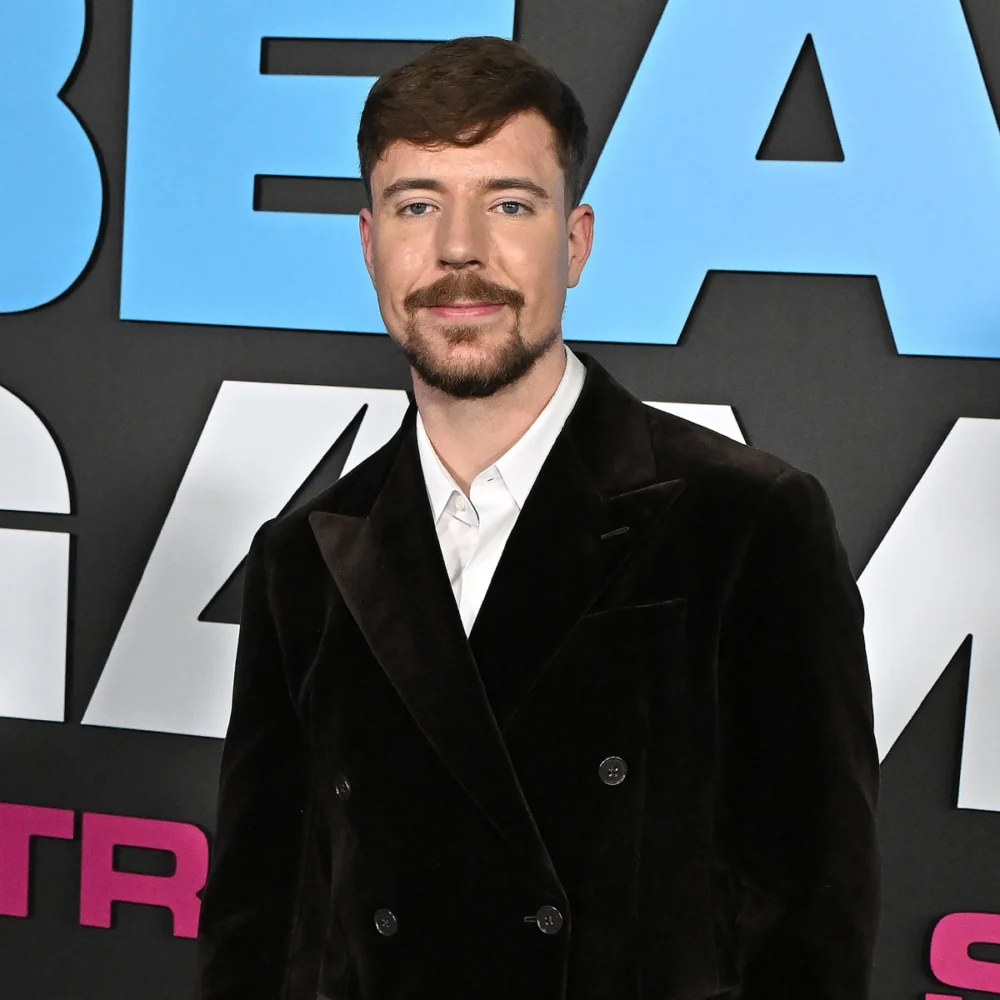
In the high-stakes world of the creator economy, the line between "net worth" and "cash on hand" has never been more blurred. For Jimmy Donaldson, known globally as MrBeast, being the most-subscribed individual on YouTube with a business empire valued in the billions does not necessarily translate to a hefty personal checking account. Despite a paper valuation that places him firmly in the billionaire bracket, the 27-year-old recently shocked fans by revealing that his actual liquid assets are surprisingly scarce. Speaking with The Wall Street Journal in an interview published this January, Donaldson admitted that while his company, Beast Industries, is worth an estimated $5 billion, his personal bank statements tell a very different story.
The discrepancy stems from Donaldson’s relentless drive to reinvest every cent back into his content. According to recent reports from Fortune, Donaldson owns more than half of his massive enterprise, giving him a theoretical net worth of roughly $2.6 billion. However, the reality of running a global brand with massive overhead means that the creator often finds himself in the red. "It’s funny talking about my personal finances, because no one ever believes anything I say," he explained. "They’re like, ‘You’re a billionaire!’ I’m like, ‘That’s net worth.’ I have negative money right now." This financial strategy—prioritizing growth and production value over personal savings—has become the hallmark of the MrBeast brand. He went as far as to suggest that the average viewer likely has more usable cash in their bank account than he does at any given moment, noting that equity in a multi-billion dollar company doesn’t even buy him "McDonald’s in the morning" without borrowing.
While Donaldson previously mentioned maintaining a balance of less than $1 million for personal use, his current state of "negative money" highlights the aggressive scaling of his business. He remains laser-focused on the singular goal of producing the most spectacular videos possible, often spending millions on a single production. However, even the most frugal of moguls has a breaking point when it comes to personal happiness. For Donaldson, that exception is his fiancée, Thea Booysen. The couple, who became engaged on Christmas Day 2024, have navigated a long-distance relationship while Booysen studied in the United Kingdom. Donaldson admitted to a rare splurge—a $150,000 private jet flight—just to see her. Living in a part of North Carolina far from a major international hub, he justified the cost as a necessity of time. A commercial trip would have eaten up nearly 40 hours of travel time, whereas the private flight allowed him to return to work and his partner with minimal delay.
Donaldson’s transparency is part of a growing movement among digital celebrities who are pulling back the curtain on the often-mystifying world of influencer earnings. While MrBeast represents the extreme end of reinvestment, other creators are finding lucrative success through diverse streams including OnlyFans, TikTok sponsorships, and brand deals. The financial landscape of the modern influencer is a patchwork of high-risk ventures and high-reward viral moments.
Take, for example, the adult subscription platform OnlyFans, which has become a primary engine for wealth among several top-tier creators. Sophie Rain recently revealed staggering figures, claiming to have earned over $43 million in a single year. Her transparency included proof of a single subscriber contributing a massive $4.7 million to her bottom line. Similarly, Lily Phillips, who made headlines for a high-profile "101 men in one day" content stunt, confirmed to E! News that her earnings are comfortably "in the millions." Even younger creators are seeing immediate windfalls; Lil Tay reported earning over $1 million in just three hours after joining the platform shortly after her 18th birthday in 2025. These figures highlight a specific sector of the creator economy where liquidity is high and the "paper wealth" vs. "cash wealth" divide is much narrower than in Donaldson’s case.
Beyond the world of subscription content, the "lifestyle" and "educational" sectors of social media offer a more traditional, yet still highly profitable, path. Bradley, the creator behind "Bradley on a Budget," showed that a combined approach can lead to a solid middle-class-plus income. By documenting his financial journey, he earned nearly $60,000 on OnlyFans while pulling in an additional $124,000 from influencer deals across his TikTok following of 1.5 million. This dual-stream approach is becoming the blueprint for creators who want to diversify their risk.
The power of a single platform is also evident in the careers of stars like Jeffree Star and JoJo Siwa. Star, a veteran of the beauty industry, has pivoted heavily toward TikTok Live. He revealed that he can earn $50,000 in a single morning just by hosting a casual livestream from his kitchen, whether he is actively selling his cosmetics line or simply chatting with fans who send digital "gifts." For Siwa, the transition from a child star on YouTube to a multi-platform influencer has been equally lucrative. She recalled making "six digits a month" easily when she was just 13 years old. Now, as an adult, she maintains her relevance and income by posting up to 300 times a day on Snapchat, capitalizing on the platform’s revenue-sharing programs.
Reality television has also proven to be a powerful springboard for digital wealth. Ariana Biermann, daughter of Kim Zolciak-Biermann, has parlayed her family’s fame into a TikTok career where she commands $1,000 per sponsored post. Following her move to New York City, Biermann has been vocal about the need to scale her earnings to match the city’s high cost of living, noting that the potential for "astronomical" paydays exists for those who can maintain their engagement. Similarly, Deepti Vempati and Natalie Lee, breakout stars of Netflix’s Love Is Blind, reported making half a million dollars each in less than two years by pivoting to full-time influencing after their time on the show.
However, the digital gold rush isn’t always as consistent as it appears. Heidi Montag and Spencer Pratt, famous for their time on The Hills, offered a reality check regarding their TikTok earnings. Despite a high volume of content—nearly 5,000 videos—Pratt clarified that a week of viral success resulted in a modest $3,500, rather than the millions the public often assumes. This serves as a reminder that while the ceiling is high, the floor can be quite low for those who don’t have the massive scale of a creator like MrBeast.
For some, the goal isn’t constant viral growth, but sustainable passive income. The ASMR community provides several examples of this. Julia, known as @itsblitzzz, shared that her library of old videos generates over $56,000 a year in ad revenue without her having to film new content. Over 14 years, she has amassed over $610,000 in passive earnings. Others, like King Caitlin ASMR and Kamillah Rae, manage to pull in several thousand dollars a month with relatively modest subscriber counts, proving that a dedicated niche audience can be more valuable than a broad, disinterested one.
The creator economy is also a space where ethics and brand alignment play a significant role. Miriam Ezagui, a popular creator, shared that she turned down a $100,000 deal with a sex toy company because it didn’t align with her brand, despite the life-changing amount of money involved. This highlights the long-term thinking required to survive in an industry where your reputation is your primary asset. On the other end of the spectrum, creators like Markell Washington and Gigi Robinson show that specialized content—whether it’s high-energy dance or chronic illness advocacy—can lead to annual earnings ranging from $150,000 to $700,000 through brand partnerships and platform-specific programs like Snapchat’s mid-roll ads.
Ultimately, the financial disclosures of these creators reveal a complex new world of work. From MrBeast’s billion-dollar "negative balance" to the million-dollar hourly earnings of OnlyFans stars, the digital age has redefined what it means to be successful. It is a world where being "annoying" can make you a millionaire, as TikToker Chris Olsen quipped, and where the most important currency isn’t just the numbers in a bank account, but the attention of the millions watching. For Donaldson, the goal remains the work itself, treating his billions as a score in a game where the prize is the next great video, while for others, the goal is the financial freedom that only a viral world can provide.