



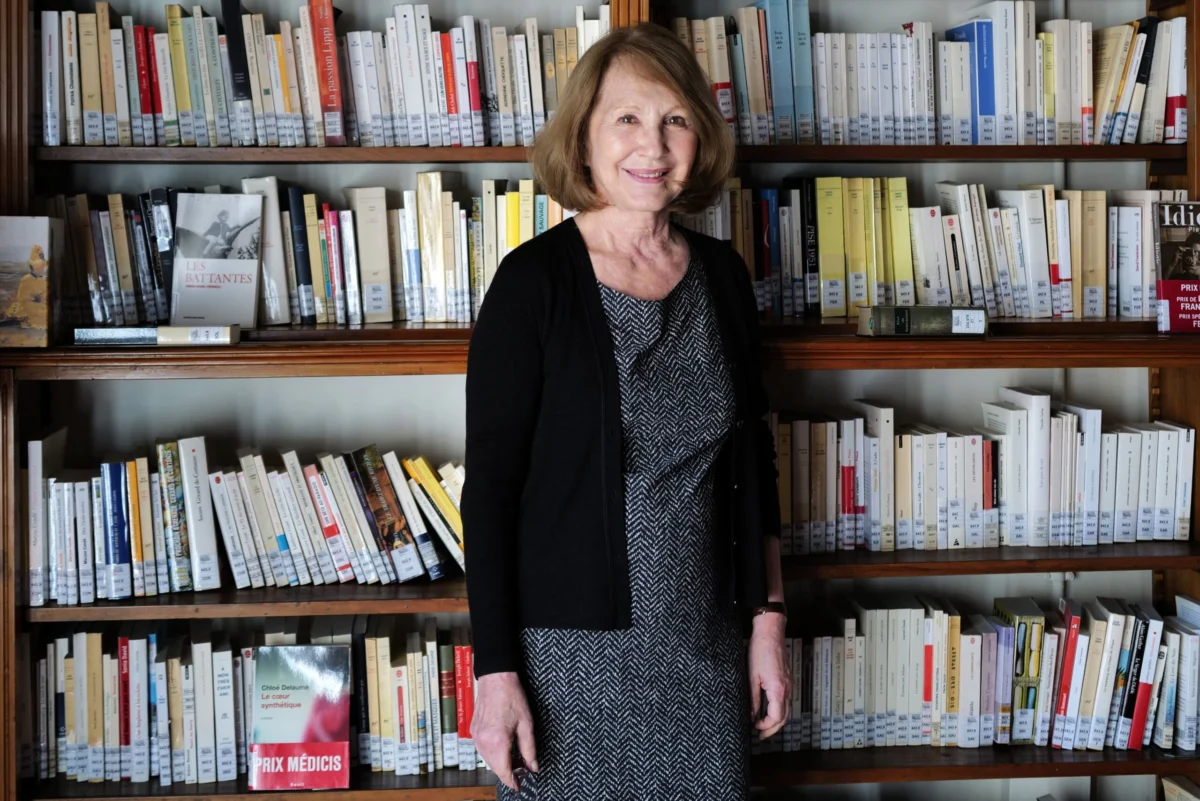
Paris bids farewell to one of its most cherished cinematic figures, Nathalie Baye, who passed away on Friday evening at her Parisian residence. The acclaimed French actress, celebrated for her profound versatility and captivating screen presence across more than five decades, was 77 years old. Her family confirmed to Agence France-Presse that her passing was due to complications arising from Lewy body dementia, a condition that slowly diminishes cognitive and motor functions, bringing a quiet end to a luminous career that began in the vibrant cultural landscape of the early 1970s.
Baye’s career was a testament to her extraordinary talent and unwavering dedication, earning her a revered status as a central pillar of French cinema while also garnering significant international acclaim. From her breakout role in François Truffaut’s iconic “Day for Night” to her memorable appearances in Hollywood blockbusters like Steven Spielberg’s “Catch Me If You Can” and the recent British period drama “Downton Abbey: A New Era,” Baye effortlessly transcended linguistic and cultural barriers, leaving an indelible mark on audiences worldwide.
Born on July 6, 1948, in the serene commune of Mainneville, nestled in the heart of Normandy, Nathalie Baye’s journey into the world of acting was destined for greatness. Her early life in the picturesque French countryside provided a quiet contrast to the dazzling career that awaited her. With an innate passion for performance, she gravitated towards the dramatic arts, eventually enrolling in the prestigious Conservatoire national supérieur d’art dramatique in Paris. This esteemed institution, a crucible for France’s finest acting talents, provided Baye with a rigorous classical training that honed her raw abilities and equipped her with the technical prowess and emotional depth that would become her hallmarks. The Conservatoire’s curriculum, steeped in tradition yet open to modern interpretations, allowed Baye to develop a robust foundation, preparing her for the diverse roles she would undertake. It was here, amidst the historic walls and demanding instructors, that the young Nathalie began to forge the nuanced style that would later define her.
Her entry into the film industry in the early 1970s coincided with a dynamic period in French cinema, still reverberating with the revolutionary spirit of the New Wave but also evolving into new forms of storytelling. It was during this fertile era that Baye quickly distinguished herself, catching the eye of cinematic giants. Her debut in “Day for Night” (La Nuit américaine) in 1973, under the masterful direction of François Truffaut, immediately catapulted her into the spotlight. In this meta-film, a loving ode to the filmmaking process itself, Baye played Joëlle, a script girl, demonstrating a natural ease and authenticity that belied her relative inexperience. The film, which won an Academy Award for Best Foreign Language Film, provided her with an unparalleled platform, exposing her talent to an international audience and firmly establishing her as a rising star.
Her early collaborations extended beyond Truffaut, connecting her with another titan of the New Wave, Jean-Luc Godard. In Godard’s 1980 film “Every Man for Himself” (Sauve qui peut (la vie)), Baye delivered a powerful performance alongside Isabelle Huppert and Jacques Dutronc. This collaboration showcased her versatility, proving her ability to navigate the avant-garde and often challenging narratives characteristic of Godard’s work. These formative experiences with two of France’s most influential directors were instrumental in shaping her artistic identity, imbuing her with a profound understanding of cinema and an adventurous spirit in her choice of roles.
As her career blossomed through the 1970s and 80s, Nathalie Baye became an indispensable presence in French cinema, known for her ability to embody complex, often vulnerable, yet resilient female characters. She garnered widespread critical acclaim and popular affection, solidifying her status as one of the country’s most respected actresses. Her contributions were recognized with an impressive collection of four César Awards, France’s highest national film honor, a testament to her consistent excellence across a wide array of genres and performances. These awards underscored her range: Best Supporting Actress for “Save Your Skin, Pal” (Sauve qui peut (la vie)) in 1981, Best Actress for “La Balance” in 1983, and later for “A French Woman” (Une femme française) in 1996, and Best Supporting Actress again for “Venus Beauty Institute” (Vénus Beauté (institut)) in 2000. Each award represented a different facet of her talent, from gritty realism to nuanced emotional depth, showcasing her adaptability and enduring appeal.
Among her many notable French titles, “The Return of Martin Guerre” (Le Retour de Martin Guerre) in 1982 stands out as a historical drama that captivated audiences and critics alike. Starring alongside Gérard Depardieu, Baye delivered a performance of quiet strength and deep emotional resonance, anchoring a complex narrative of identity and deception in 16th-century France. The film’s critical success further cemented her reputation as an actress capable of conveying profound human experiences with subtle power. Later, “Venus Beauty Institute” (1999) offered a more contemporary portrait, earning her further accolades. In this poignant and humorous exploration of women’s lives and relationships in a beauty salon, Baye’s portrayal of Angèle, a lonely aesthetician, was lauded for its honesty and vulnerability, resonating deeply with audiences and critics. These roles, among countless others, demonstrated her commitment to authentic character portrayals, often exploring the intricacies of female existence with grace and empathy.
While she remained a cherished icon in her homeland, Nathalie Baye also ventured successfully into international projects, broadening her appeal and introducing her formidable talent to a global audience. One of her significant early forays into American television was the Emmy-winning film “And the Band Played On” (1993). This powerful and poignant drama chronicled the early years of the HIV/AIDS crisis, a pivotal moment in global health history. Baye’s role in this ensemble cast, which featured a host of renowned actors, demonstrated her commitment to projects of social significance and her ability to seamlessly integrate into diverse productions, regardless of origin.
However, it was her compelling performance in Steven Spielberg’s 2002 biographical crime film “Catch Me If You Can” that truly brought her widespread recognition among international audiences. In this star-studded film, Baye portrayed Paula Abagnale, the French mother of Leonardo DiCaprio’s character, Frank Abagnale Jr., a charming and audacious con artist. Her performance, opposite Hollywood heavyweights like Christopher Walken as her husband and Tom Hanks as the FBI agent pursuing her son, was a masterclass in subtlety and emotional depth. Baye imbued Paula with an alluring yet melancholic quality, perfectly capturing the nuances of a woman caught between her European roots and American life, and grappling with the unraveling of her family. Her scenes, particularly those exploring her character’s strained relationship with her son and her quiet dignity amidst chaos, left a lasting impression, showcasing her ability to hold her own alongside some of the biggest names in cinema.
In the later stages of her illustrious career, Baye continued to grace both French and international screens, demonstrating an enduring passion for her craft. One of her final, and most charming, international appearances was in the 2022 film “Downton Abbey: A New Era.” In this much-anticipated sequel to the beloved British series, Baye played Madame Montmirail, the formidable and elegant mother of a French marquis. Her presence added a touch of continental sophistication and intrigue to the narrative, and her shared scenes with the legendary Maggie Smith, playing the Dowager Countess, were particular highlights, bringing together two titans of their respective national cinemas in a delightful cross-cultural exchange. It was a testament to her timeless appeal that even in her seventies, she remained a sought-after talent, capable of elevating any production with her unique blend of gravitas and charm.
Closer to home, Baye made a memorable and much-loved appearance in the highly popular French comedy series “Call My Agent!” (Dix pour cent). In an episode that playfully blurred the lines between fiction and reality, she appeared as a version of herself, offering a witty and self-aware portrayal of an actress navigating the complexities of her career. This particular episode held a special significance as she shared the screen with her daughter, Laura Smet, who also played herself. Their on-screen chemistry, infused with genuine warmth and familial affection, was a delight for viewers, providing a rare glimpse into their real-life bond. Laura Smet, following in her mother’s illustrious footsteps, has carved out a successful acting career of her own, and has recently gained further international attention with a role in the upcoming season of HBO’s critically acclaimed series “The White Lotus,” continuing the family’s legacy of artistic excellence.
Nathalie Baye’s life was not only defined by her professional triumphs but also by her personal connections, particularly her profound bond with her daughter. She is survived by Laura Smet and her family, who now carry forward the torch of her memory and artistic spirit. Baye’s passing marks the end of an era for French cinema, yet her legacy will undoubtedly endure. She was more than just an actress; she was a muse for some of the greatest directors, a mentor for younger generations, and a captivating storyteller who brought countless characters to life with unparalleled authenticity. Her ability to portray women across the spectrum of human experience—from the vulnerable and fragile to the fiercely independent and resilient—made her a relatable and inspiring figure for audiences, especially women, who saw reflections of themselves in her nuanced performances.
Her career trajectory, spanning from the experimental New Wave to mainstream international productions, speaks volumes about her adaptability and enduring relevance. Nathalie Baye embodied a quintessential French elegance, combined with an earthy realness that made her performances deeply human. She navigated the often-treacherous waters of the entertainment industry with grace and dignity, consistently choosing roles that challenged her and allowed her to explore the depths of the human condition. Her contributions to film are immense, leaving behind a rich tapestry of work that will continue to educate, entertain, and inspire future generations of filmmakers and actors. As the curtains close on her remarkable life, the brilliance of Nathalie Baye’s artistic spirit will undoubtedly continue to shine brightly through the cinematic masterpieces she so beautifully illuminated.