


Cultural Institutions Grapple with Political Polarization as Artists Withdraw from Renamed Kennedy Center
The hallowed halls of the John F. Kennedy Center for the Performing Arts, long a beacon of American culture and a tribute to a president’s legacy, have become an unexpected battleground in the ongoing cultural wars. In a move that has sent ripples through the arts community and ignited fervent debate, two additional prominent acts have announced the cancellation of their eagerly anticipated performances, citing the recent decision to append Donald Trump’s name to the historic venue. This growing exodus underscores a deepening chasm between artistic expression, institutional governance, and the volatile landscape of contemporary politics.
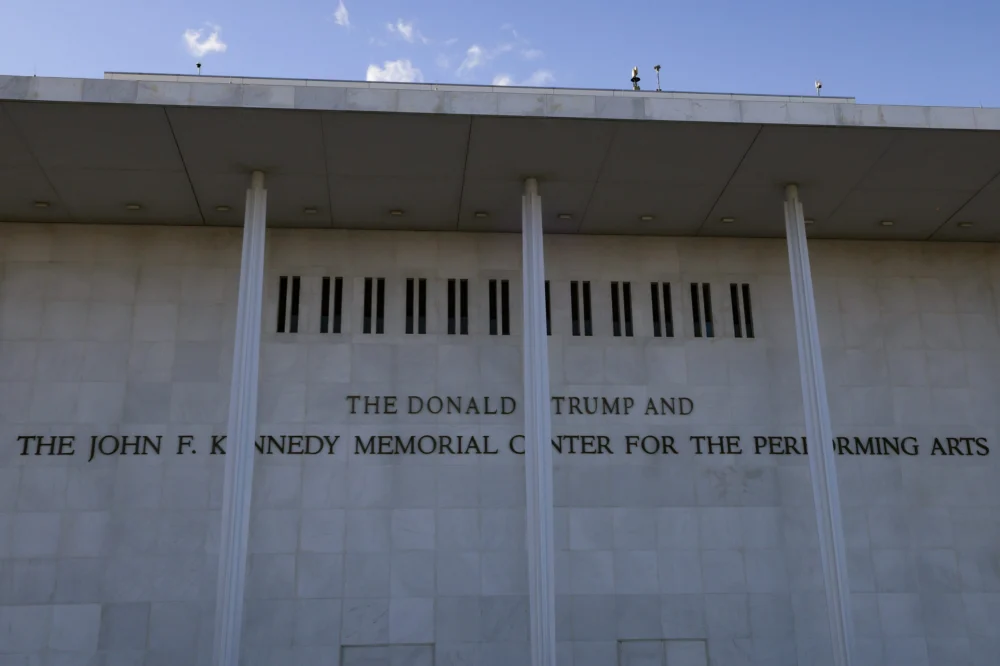
The latest cancellations join a nascent but impactful boycott, illustrating the profound ethical dilemmas artists face when their platforms become entwined with political narratives they find objectionable. For many, the Kennedy Center, established in 1964 as a living memorial to President Kennedy, embodies ideals of cultural exchange, intellectual freedom, and a bipartisan commitment to the arts. The abrupt renaming, officially designating it “The Donald J. Trump and The John F. Kennedy Memorial Center for the Performing Arts,” has been perceived by a significant segment of the artistic community as a politicization of a sacred cultural space, compelling some to choose moral conviction over contractual obligations and financial stability.
Among the acts making headlines are The Cookers, a venerated jazz septet whose roots run deep in the genre’s rich history. Known for their virtuosic performances and commitment to the authentic spirit of jazz, the group pulled out of two highly anticipated New Year’s Eve engagements. Their decision was articulated in a powerful statement released on Monday, which resonated deeply with the foundational ethos of their art form: “Jazz was born from struggle and from a relentless insistence on freedom: freedom of thought, of expression, and of the full human voice.” This declaration is not merely a philosophical musing; it’s a direct assertion of jazz’s historical role as a voice for the marginalized, a medium for social commentary, and a testament to the power of artistic dissent. Billy Hart, the group’s esteemed drummer, confirmed to the New York Times that the renaming “evidently” played a pivotal role in The Cookers’ difficult decision to withdraw, highlighting the direct link between the institutional change and their principled stand. For artists like The Cookers, whose work is intrinsically linked to narratives of struggle and liberation, performing in a venue now bearing the name of a figure associated with divisive policies and rhetoric would represent a profound compromise of their artistic integrity and moral compass.
The cancellations are not limited to the realm of music. Doug Varone and Dancers, a critically acclaimed New York-based contemporary dance troupe, also announced the cancellation of two performances scheduled for April. These shows were particularly significant, intended to commemorate the company’s 40th anniversary, a monumental milestone in the notoriously challenging world of professional dance. The financial repercussions of such a decision are substantial; Varone disclosed that the company would incur a loss of $40,000, a devastating blow for an independent arts organization. Yet, in an email discussing the choice, Varone articulated a sentiment that has become a rallying cry for protesting artists: “It is financially devastating but morally exhilarating.” This juxtaposition perfectly encapsulates the agonizing dilemma faced by many in the arts: the profound personal and organizational cost of taking a stand, weighed against the invaluable preservation of one’s ethical and artistic principles. For women leaders and artists in particular, navigating such high-stakes decisions often involves balancing the practical demands of sustaining an organization with an unwavering commitment to values, a balancing act familiar in many professional spheres.
The Kennedy Center’s leadership has not shied away from responding to the burgeoning controversy, though their perspective sharply contrasts with that of the withdrawing artists. Richard Grenell, the center’s president ambassador, issued a pointed statement in the wake of the recent cancellations, framing the artists’ actions as politically motivated rather than principled. “The artists who are now canceling shows were booked by the previous far left leadership,” Grenell asserted, implying a partisan bias in past programming decisions. He continued, “Their actions prove that the previous team was more concerned about booking far left political activists rather than artists willing to perform for everyone regardless of their political beliefs.” Grenell further escalated his critique by labeling the artists’ stance as a “form of derangement syndrome,” a term often used to dismiss or pathologize political opposition, stating, “Boycotting the Arts to show you support the Arts is a form of derangement syndrome.” This response suggests a deliberate strategy to reframe the debate, shifting focus from the renaming itself to the perceived political leanings of the artists and the previous administration of the center. From Grenell’s viewpoint, the cancellations are not a noble stand for artistic freedom, but rather an act of partisan protest that undermines the very institutions they claim to support.
Further elaborating on the institution’s stance, a representative for the Kennedy Center reiterated that the organization would not tolerate discrimination and would continue to book talent that appeals to all backgrounds and beliefs. This statement attempts to project an image of inclusivity and neutrality, yet it stands in stark contrast to the escalating rhetoric and the center’s previous actions against dissenting artists. The question arises: how can an institution claim to foster an environment “for everyone regardless of their political beliefs” while simultaneously accusing artists who express their beliefs through non-participation of “derangement syndrome” and threatening legal action?
Indeed, The Cookers and Doug Varone and Dancers are not the first to challenge the Kennedy Center’s renaming. Jazz musician Chuck Redd abruptly canceled his Christmas Eve concert in protest of the name change, setting a precedent for the current wave of withdrawals. The Kennedy Center’s response to Redd’s cancellation was swift and severe, with Grenell announcing that the organization would seek a staggering $1 million in damages. This aggressive legal posture, targeting an individual artist for a conscientious withdrawal, has sent a chilling message throughout the performing arts community, raising concerns about artistic freedom and institutional intimidation.
In a letter dated December 26, addressed to Redd, Grenell doubled down on his condemnation of the artist’s decision. He wrote, “Your decision to withdraw at the last moment — explicitly in response to the Center’s recent renaming, which honors President Trump’s extraordinary efforts to save this national treasure — is classic intolerance and very costly to a non-profit Arts institution.” This letter not only confirms the direct causal link between the renaming and the cancellation but also reveals the official narrative from the Kennedy Center: that the renaming is an honor for “extraordinary efforts” and that opposition to it constitutes “intolerance.” This framing attempts to cast the artists as intolerant and ungrateful, rather than individuals exercising their moral agency.
The controversy stems from the White House’s announcement on December 19 that the Kennedy Center board of trustees had “unanimously decided” to rename the venue. This decision effectively transformed the John F. Kennedy Memorial Center into “The Donald J. Trump and The John F. Kennedy Memorial Center for the Performing Arts.” The claim of a “unanimous” decision has been met with skepticism and calls for transparency from various corners, given the immediate and widespread backlash. The Kennedy Center, as a national memorial and a premier cultural institution, has historically been viewed as a non-partisan space, dedicated to celebrating artistic excellence and fostering cultural diplomacy. The addition of a living political figure’s name, especially one as polarizing as Donald Trump, fundamentally alters its symbolic meaning and public perception.
This saga at the Kennedy Center is more than just a dispute over a name; it is a microcosm of the broader struggle for cultural identity and integrity in a deeply fractured society. It forces a critical examination of the intersection between politics, patronage, and artistic freedom. Should national cultural institutions remain politically neutral, or are they inevitably shaped by the political currents of their time? What is the responsibility of artists when the institutions that house their work become associated with ideologies they find anathema? For many, especially women who have historically fought for their voices and artistic autonomy in male-dominated spaces, the principle of standing firm on one’s convictions, even in the face of significant personal and professional cost, resonates deeply. The decisions made by The Cookers, Doug Varone and Dancers, and Chuck Redd highlight the enduring power of art not just as entertainment, but as a potent vehicle for moral expression and a barometer of societal values. As the cancellations mount and the rhetoric intensifies, the future trajectory of the Kennedy Center, and indeed the broader relationship between art and politics in America, remains uncertain, caught in a delicate balance between institutional mandate and artistic conscience.