


SPOILER ALERT: This story contains significant plot details from Season 5, Volume 2 of “Stranger Things,” now streaming exclusively on Netflix. Proceed with caution if you have not yet experienced the latest chapter of the Upside Down saga.
Jamie Campbell Bower has become synonymous with the quintessential antagonist in the world of “Stranger Things,” expertly embodying the multifaceted villain known variously as Vecna, One, and Henry Creel. However, in the recently released Volume 2 of Season 5, Bower elevates his portrayal to an entirely new, unsettling dimension, introducing audiences to the chilling persona of “Mr. WhatsIt.” This latest iteration of his character is not merely a monster of physical terror but a master of psychological manipulation, delivering what many are calling his most insidious and creepiest performance to date, reminiscent of a real-world cult leader.
The genesis of this profoundly disturbing character draws from a dark chapter in human history. Bower reveals that his primary inspiration for crafting Mr. WhatsIt was none other than Jim Jones, the notorious leader of the Peoples Temple cult. Jones infamously orchestrated the mass suicide of over 900 of his followers in Jonestown, Guyana, in November 1978. This historical reference was not merely a superficial nod but a deep dive into the psychology of manipulation that informed Bower’s performance.
“Jim Jones was an early reference for me,” Bower states, explaining how the cult leader’s image and rhetoric were central to his mood board for the role. He meticulously considered the subtle nuances of language that could evoke such a powerful sense of control and false belonging. “Even with regard to certain things that he’s saying when the kids are all in front of him. There were points where I thought, ‘Do I say the word ‘you’ or do I use the word ‘we’? We’re a family now.’ That’s really grim! It totally can remove the idea of autonomy, so definitely there had to be that level of cult leader-esqueness about him.” This deliberate choice between “you” and “we” underscores the insidious nature of cult indoctrination—how a shared identity, however fabricated, can dissolve individual will and foster unwavering loyalty, even unto death. The shift from an individual address to a collective pronoun subtly erases boundaries, creating a forced unity that makes dissent feel like betrayal.
The terror Mr. WhatsIt evokes is distinctly different from the overt monstrosity of Vecna. While Vecna’s scarred form and telekinetic powers are overtly villainous, Mr. WhatsIt operates on a far more insidious plane—that of psychological torment and manipulation. Bower admits that portraying this character was just as, if not more, “terrifying” than embodying the physically imposing Vecna. “There was so much fear in playing that,” he confesses. This fear stems not from prosthetics or special effects, but from the internal moral landscape of a character who preys on vulnerability with a veneer of benevolence.
Bower’s approach to Season 5 marked a significant departure from his preparation for Season 4. In the previous season, much of his work involved meticulously crafting Henry Creel’s traumatic memories, allowing audiences to understand the origins of his villainy. Season 5, however, demanded a more complex, layered performance. “What you saw in Season 4 happened, and it was real,” Bower explains. “This is very much like, how nice can I be to these poor children to make them feel as comfortable as possible in this world? And how much of my experience am I burying within that?”
The actor describes the profound challenge of maintaining a deceptive façade while interacting with his young co-stars. “It’s always a really terrifying prospect when you’re sat opposite another actor, and your intentions are so deeply buried,” he reflects. “There’s a level of real dishonesty in that, and that’s really scary. It’s really hard, particularly opposite a child.” This internal conflict—projecting warmth while harboring sinister motives—requires immense psychological precision from an actor. It’s a tightrope walk between appearing trustworthy and subtly conveying the malevolence lurking beneath, making the performance unsettling not just for the audience, but for the actor himself, who must inhabit such a morally compromised space.
When Bower first took on the role of Vecna, he spoke to *Variety* about his focus on unearthing the character’s humanity. Even as Henry Creel transforms further into Vecna, accumulating more atrocities, Bower insists that a sliver of that humanity remains, albeit increasingly obscured. “There’s definitely a humanity that I can see,” he maintains. “How much of that is portrayed in this volume is open for discussion and interpretation — there’s definitely trauma and experience that is present but unexplored at this point.” This perspective invites viewers to consider the complex origins of evil, suggesting that even the most monstrous villains are shaped by past wounds, even if those wounds don’t excuse their present actions. It hints at a deeper narrative that could potentially be explored in future storylines, or at least provides a rich internal landscape for the actor.

Understanding Henry’s traumatic past became crucial for Bower. Having seen the prequel play, “Stranger Things: The First Shadow,” he was aware of a “monumental experience” that irrevocably altered Henry at the tender age of eight. This pivotal event, occurring in a cave, was described as “life-altering,” fundamentally shaping the boy who would become Vecna. Fueled by this knowledge, Bower felt an urgent need to delve deeper into Henry’s backstory, even if it meant gently pushing the show’s creators, Matt and Ross Duffer, for more details.
“It was something that I really felt like I had to pry out of Matt and Ross Duffer. They weren’t wildly forthcoming with that, because obviously, they wanted to protect it, but it was important for me to know what that was and why that was the case,” he recounts. This dedication highlights Bower’s commitment to delivering a fully realized, psychologically grounded performance, refusing to simply portray a villain without understanding his genesis. His persistence in “being irritating and asking questions” paid off, allowing him to weave the threads of Henry’s past trauma into the fabric of his present malevolence.
The narrative finally offers a glimpse into this formative trauma in Episode 6, as Max (Sadie Sink) and Holly (Nell Fisher) venture through the labyrinthine corridors of Henry’s fragmented mindscape. Their perilous journey leads them to a mine shaft, a cavernous space where a crucial memory resides. Here, a young Henry encounters an injured man clutching a silver suitcase. In a moment of panic and perceived threat, the man shoots young Henry in the hand, a visceral wound that foreshadows the violence he will later inflict. What follows is a brutal act of self-defense: Henry, overwhelmed by fear and nascent power, beats the man to death. The scene is raw and chilling, showing the precise moment a child’s innocence is shattered and replaced by a primal, destructive force.
Just as Holly and Max begin to open the mysterious silver suitcase—a potential Pandora’s Box—Max, sensing imminent danger or perhaps the unbearable weight of the revelation, pulls Holly away. The contents of that case remain tantalizingly unrevealed to the characters, and to the audience. When pressed about what lies within this enigmatic container, Bower offers a single, enigmatic word: “reason.” This cryptic tease suggests that the suitcase holds not just an object, but a profound explanation—perhaps the key to Henry’s powers, the root of his nihilistic philosophy, or the catalyst for his transformation into Vecna. It hints at a deeper philosophical underpinning to his reign of terror, a motive beyond simple evil.
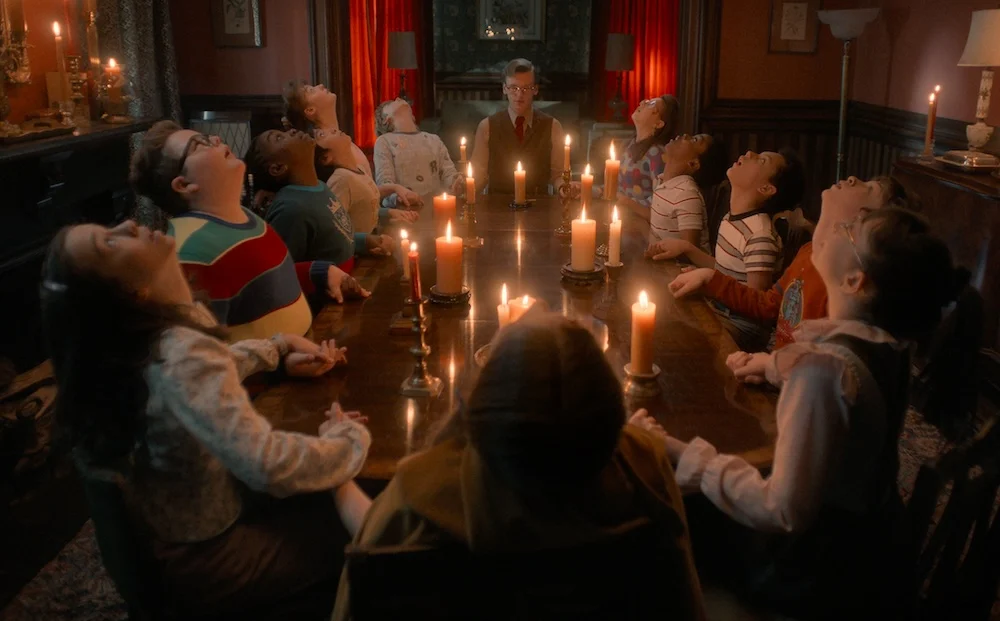
As the series hurtles towards its highly anticipated conclusion, the stage is set for an explosive finale, scheduled to drop on Netflix on December 31. Episode 7, titled “The Bridge,” culminates in a deeply unsettling tableau: Henry, surrounded by the twelve children he has kidnapped, sits at the Creel dinner table. Most of these children, indoctrinated and fearful, worship him with the fervent devotion of a cult. This chilling scene underscores the success of Mr. WhatsIt’s manipulative tactics, as he prepares them for their role in Vecna’s ultimate quest: to dismantle the existing world, the “Rightside Up,” and replace it entirely with the dark, chaotic realm of the Abyss.
Bower’s parting words regarding the series finale are designed to ignite fervent speculation and anticipation among fans. “The end of 7 is an incredible setup for what is to come,” he promises. But he quickly cautions against any assumptions: “And if you think you know what is to come at the beginning of 8, you’re probably wrong.” He emphasizes the sheer magnitude of the impending events: “It really does blow the f*ck up. Whatever you think you know will be exceeded.” This bold declaration suggests that the Duffer Brothers have crafted a conclusion that will not only resolve the central conflict but also redefine the boundaries of what viewers expect from the Upside Down saga, delivering twists and turns that surpass even the most elaborate fan theories.
The journey through Henry Creel’s mind, and the evolution of Jamie Campbell Bower’s performance, has become a cornerstone of “Stranger Things'” final act. From the physical horror of Vecna to the psychological terror of Mr. WhatsIt, Bower has consistently pushed the boundaries of villainy, promising a finale that will leave an indelible mark on television history.
Inside the Upside Down: Related Deep Dives
• The Duffer Brothers Break Down All the Volume 2 Spoilers
• The Duffer Brothers Break Down All the Volume 1 Spoilers
• Our 13 Burning Questions Ahead of the Series Finale
• Noah Schnapp on That Scene in Volume 2
• Noah Schnapp on Turning Into the [SPOILER] in Volume 1
• Why Will’s Coming Out is Seismic
• Director Shawn Levy on Will’s Huge Breakthrough
• Sadie Sink on Max’s Key Role in Volume 1
• Nell Fisher on Playing Holly Wheeler in Season 5
• The Cast of ‘Stranger Things’ on the Show’s Final Days
• Variety’s ‘Stranger Things’ Oct. 15 Cover Story About the Duffers
• Cara Buono on Karen’s Kick-Ass Hero Moment (At Last)
• The Duffer Brothers on the ‘Stranger Things’ Spinoff
• Linda Hamilton on Being Millie Bobby Brown’s ‘Biggest Fan’
• Shawn Levy on ‘Sticking the Landing’ for Season 5
• David Harbour on How ‘Stranger Things’ Has Changed Him